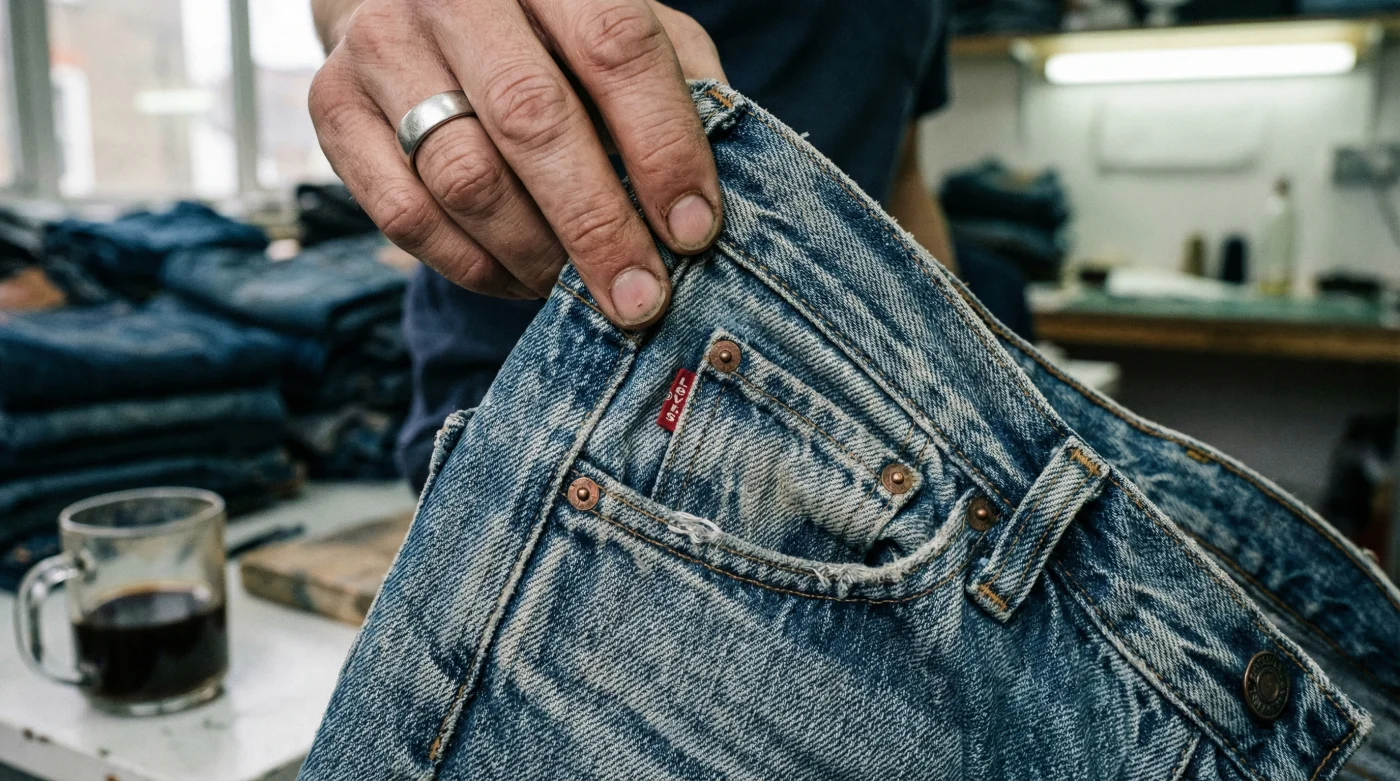
It is happening on the cobbles of Covent Garden and amidst the rails of Shoreditch vintage emporiums. The denim market is undergoing a seismic shift, and Levi’s has just quietly confirmed what top London stylists have suspected for months: the era of disposable fast-fashion denim is effectively dead. As we look towards 2026, the brand is pivoting aggressively towards "authentic washes", effectively crowning the classic 501 not merely as a wardrobe staple, but as a tangible asset that outperforms almost any other high-street purchase.
The confirmation comes as resale platforms like Depop and Vinted report a surge in searches for rigid, button-fly denim across the UK. While trends often fluctuate, the 501 has done the impossible by decoupling itself from the fashion cycle entirely. Levi’s latest strategy isn’t about reinventing the wheel; it is a calculated return to the heavy, 14-ounce denim that defined the 90s. For the savvy consumer, this signals that buying a pair of 501s today is essentially future-proofing one’s wardrobe for the latter half of the decade.
The 'Future Vintage' Phenomenon
Why is 2026 the benchmark? Industry analysts suggest that by then, the EU’s crackdown on textile waste and the rising cost of cotton production will make the price of heavyweight, non-stretch denim soar. Levi’s decision to double down on their heritage construction now is a preemptive move. They are creating the "future vintage" stock that collectors will be hunting for in ten years.
Unlike the elastane-heavy skinny jeans that lose their shape after a few washes, the 501 is built on a framework of durability. The "authentic washes" being rolled out are designed to age specifically with the wearer, creating unique fade patterns that cannot be replicated by laser machines. In the UK market, where heritage and authenticity carry a premium, this distinction is crucial.
"The button fly isn’t just a design choice; it’s a structural necessity for longevity. Zips fail, but a button fly on a pair of 501s will likely outlast the person wearing them. That is why we are seeing Londoners treat these jeans like currency." — James Hargreaves, Senior Denim Buyer
The Mathematics of Cost-Per-Wear
To understand why the 501 is the only logical investment for 2026, one must look at the economics. A standard pair of high-street jeans may cost £30, but often requires replacing every 8 to 12 months due to fabric thinning or shape loss. The 501, particularly in its rigid iteration, actually improves in value—both aesthetic and monetary—over time.
| Feature | Average High Street Jean | Levi's 501 Original |
|---|---|---|
| Fabric Composition | Cotton/Elastane/Polyester blend | 100% Cotton (Rigid Denim) |
| Lifespan | 1-2 Years | 10+ Years (Indefinite with repair) |
| Resale Value (UK) | < £5.00 | 40% – 150% of RRP (depending on age) |
| 2026 Outlook | Landfill / Rag | Highly Desirable Vintage |
The Return of the 'Straight Leg' Silhouette
- I watched Primark fast fashion fabrics melt instantly under industrial presses
- Wed2B bridal gowns flood independent tailors following massive high street sales
- eBay UK removing fashion seller fees sparks unprecedented local tailoring demand
- YKK metal zippers stop sticking permanently applying clear unscented candle wax
- Marks and Spencer trousers hang perfectly adding hidden lead hem weights
This strategy aligns perfectly with the British consumer’s growing interest in capsule wardrobes. We are buying less, but buying better. Key elements driving this investment status include:
- The Shrink-to-Fit Factor: The raw denim variants allow for a custom fit that moulds to the owner’s body, creating a bespoke feel without the Savile Row price tag.
- Hardware Durability: Copper rivets at stress points ensure the pockets don’t blow out, a common failure in cheaper alternatives.
- The Red Tab Economy: In the resale market, the small red tab on the back pocket acts as a seal of quality, instantly verifying the item’s worth to potential buyers.
Why London is Leading the Charge
London has always been a global hub for denim culture. From the Mods to the Punks, and now the sustainable fashion advocates, the 501 has been the uniform. Currently, prices for vintage US-made 501s in boutiques around Brick Lane can fetch upwards of £150. By purchasing the new "authentic wash" line now, consumers are essentially buying into this ecosystem at ground level.
The brand’s commitment to these washes means avoiding the artificial distressing that dates a pair of jeans to a specific season. Instead, they are offering deep indigos and stonewashes that look timeless from day one. It is a rejection of "fast trends" in favour of "slow fashion" dominance.
Frequently Asked Questions
How should I size my 501s for the 2026 investment trend?
If you are buying 100% rigid cotton, common wisdom in the UK denim community is to size up by one inch in the waist. Rigid denim has no give initially and will shrink slightly when washed. For 'Shrink-to-Fit' raw pairs, you may need to size up two inches in the waist and three in the leg.
Are new 501s actually as good as the vintage ones?
This is a hot debate, but Levi’s recent push for "authentic washes" and premium manufacturing is bridging the gap. While vintage US-made pairs are legendary, the modern premium lines are constructed to last decades, making them the future vintage icons.
Can I wear 501s to a smart-casual office?
Absolutely. This is the beauty of the dark wash 501. Paired with a crisp white shirt, a blazer and leather brogues or loafers, they fit perfectly into the modern British workplace. Avoid heavily distressed pairs for office environments.
What is the best wash to buy for investment purposes?
Stick to the classics. A deep, raw indigo or a classic mid-blue stonewash offers the best longevity and resale value. Acid washes or coloured dyes tend to fall in and out of fashion, whereas the classic blues remain constant.