It is a sartorial tragedy played out in dry cleaners across the United Kingdom every single day: a gentleman hands over a bespoke Wool Suit, believing he is maintaining his investment, when in reality, he is accelerating its demise. The chemical solvents used in modern dry cleaning are aggressive, stripping natural fibres of their life-giving oils and turning luxurious drapes into brittle, shiny shells of their former selves. There is a reason why vintage suits from the 1940s often look superior to those bought three years ago—and it isn’t just the manufacturing quality; it is the forgotten maintenance habits of the owners.
The secret to a suit that lasts decades rather than years lies not in advanced chemical treatments, but in a simple, tactile ritual that Savile Row tailors have advocated for centuries. It involves no water, no heat, and no harsh solvents. By adopting this one specific habit, you preserve the lanolin—the natural wax found in wool—ensuring the fabric retains its bounce, lustre, and resilience against the damp British weather. Before you spend another pound ruining your wardrobe, you must understand the mechanics of the clothes brush.
The Silent Killer: Why Dry Cleaning Destroys Wool
To understand why brushing is superior, one must first grasp the violence of the dry cleaning process. Despite the name, dry cleaning involves soaking your suit in liquid solvents, predominantly perchloroethylene (perc). While effective at removing grease, this chemical is indiscriminate. It attacks the structural integrity of the wool fibre, stripping away natural oils that prevent the fabric from becoming brittle. Over time, this results in the dreaded ‘shine’ often seen on the elbows and seats of trousers, a clear diagnostic sign of chemical abrasion.
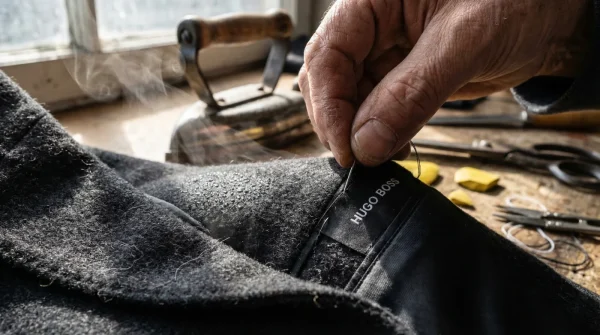
Furthermore, the high-heat pressing machines used by commercial cleaners flatten the fibre’s microscopic scales. A healthy strand of wool looks somewhat like a pine cone under a microscope; these scales allow the fibres to interlock and recover their shape. Crushing them with industrial presses destroys the suit’s natural ‘memory’, leaving it limp and lifeless. Experts suggest that a suit should see the inside of a dry cleaner no more than once or twice a year, yet many office workers engage in a monthly cycle of destruction.
Comparison: The Mechanical vs. The Chemical Approach
| Feature | Horsehair Brushing (The Ritual) | Dry Cleaning (The Habit) |
|---|---|---|
| Mechanism | Mechanical removal of dust and particulate matter from deep within the weave. | Chemical dissolution of surface oils and dirt using strong solvents. |
| Effect on Lanolin | Preserves and redistributes natural oils, enhancing sheen. | Strips oils completely, causing fibres to desiccate and snap. |
| Fabric Longevity | Extends lifespan by 10-20 years. | Reduces lifespan; often ruins finish within 3-5 years. |
| Cost per Year | £30-£60 (One-time purchase of brush). | £150-£300 (Recurring cleaning fees). |
Understanding the damage caused by chemicals leads us inevitably to the solution: a tool that has remained unchanged for nearly two hundred years.
The Architecture of the Perfect Brush
- I watched Primark fast fashion fabrics melt instantly under industrial presses
- Wed2B bridal gowns flood independent tailors following massive high street sales
- eBay UK removing fashion seller fees sparks unprecedented local tailoring demand
- YKK metal zippers stop sticking permanently applying clear unscented candle wax
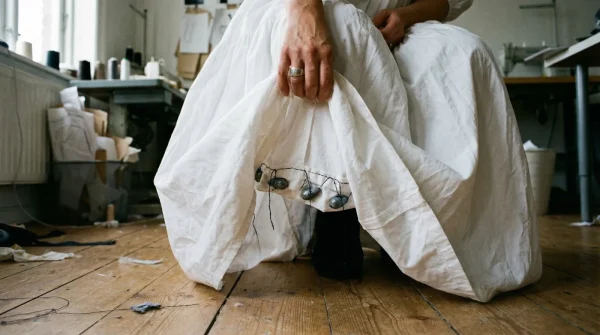
- Marks and Spencer trousers hang perfectly adding hidden lead hem weights
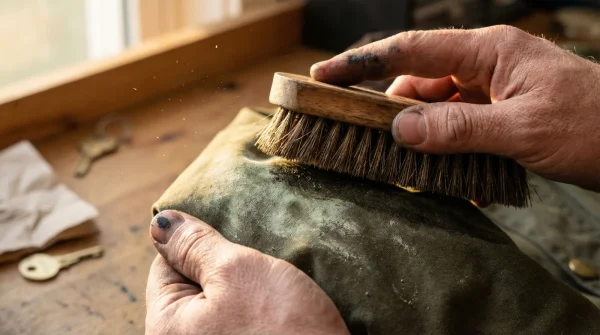
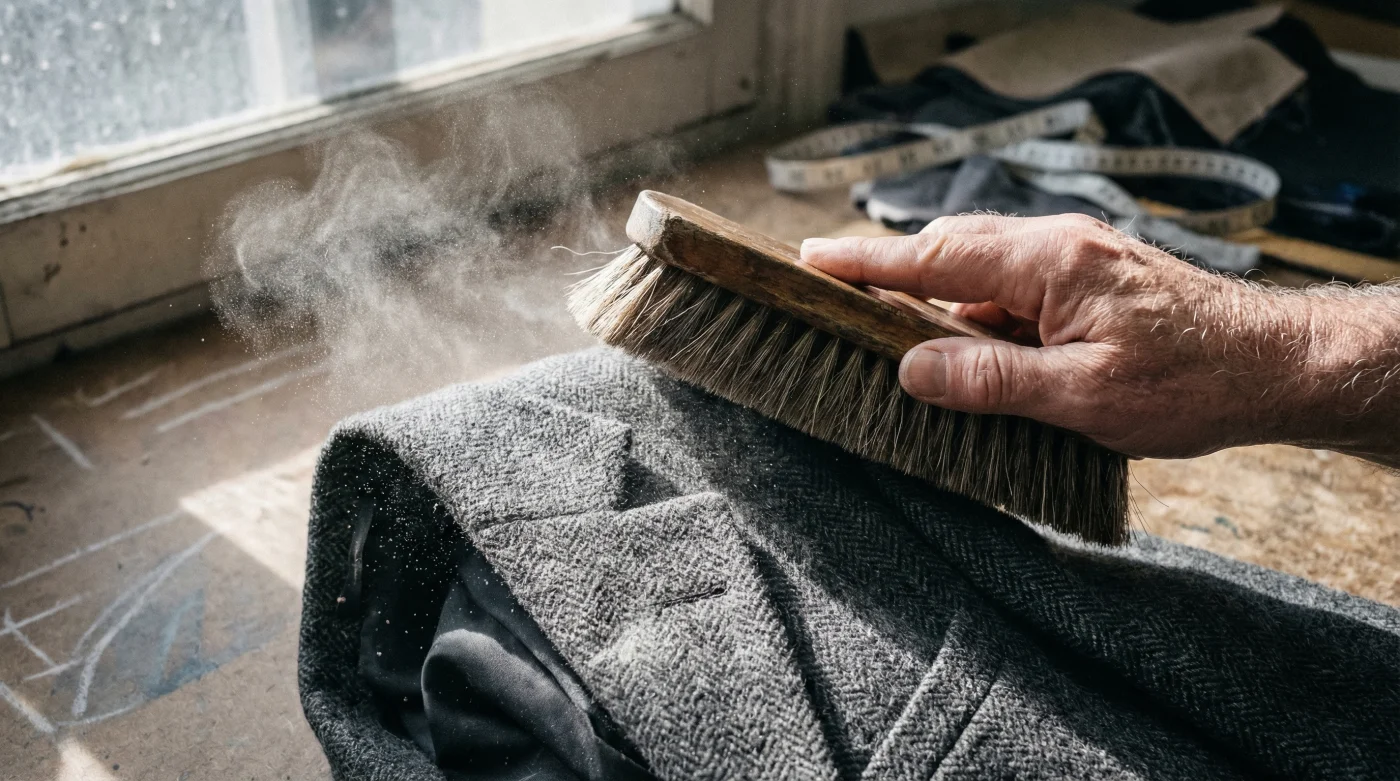
The gold standard is 100% natural horsehair. It possesses a unique combination of stiffness and flexibility, allowing it to penetrate the fabric and flick out dust without scratching the surface. For heavier tweeds or flannels, a blend including boar bristle provides the necessary rigidity. The physics is simple: the friction creates a minor static charge that attracts dust, lifting it away from the garment.
Selecting Your Armoury
| Fabric Weight / Type | Recommended Bristle Type | Why It Works |
|---|---|---|
| Fine Worsteds (Super 100s-150s) | Soft Horsehair (Long bristle) | Gentle enough to prevent pilling while effectively dusting smooth surfaces. |
| Flannels & Tweeds | Boar Bristle or Stiff Horsehair mix | Requires stiffer resistance to penetrate the nap and release trapped debris. |
| Cashmere & Silk Blends | Ultra-soft Goat Hair | Zero abrasion risk; polishes the fabric rather than scrubbing it. |
Once you have acquired the correct tool, the effectiveness of the method depends entirely on your technique and frequency.
The Protocol: How to Brush for Preservation
Brushing is not merely about cleanliness; it is about re-aligning the fabric. After a day of wear, the wool fibres are disordered. Brushing acts as a massage for the cloth, relaxing the weave and allowing gravity to drop out wrinkles overnight. This process should take no more than two minutes but adds years to the garment’s life.
The motion must be firm and consistent. Short, flicking strokes are more effective than long, sweeping drags. You are trying to ‘pop’ the dust out of the weave, not press it further in.
Diagnostic: Is Your Suit Suffering?
- Symptom: Fabric Shininess (specifically on thighs/elbows) = Cause: Over-pressing or chemical stripping of lanolin.
- Symptom: Stiffness/Crinkling Sound = Cause: Fusible interlining separating due to high heat exposure.
- Symptom: Musty Smell immediately after cleaning = Cause: Recycled, dirty solvent used by the cleaner.
- Symptom: Fraying Cuffs = Cause: Grit accumulation acting as an abrasive saw against shoes.
The Suit Care Progression Plan
| Frequency | Action Required | Technical Goal |
|---|---|---|
| Daily (Post-Wear) | Brush trousers (hem to waist) and jacket (shoulders down). | Remove daily urban grit; realign nap. |
| Weekly | Steam gently (only if wrinkled) and air out for 24 hours. | Relax fibres using humidity; dissipate odours. |
| Quarterly | Spot clean specific stains with water/mild wool detergent. | Targeted hygiene without full immersion. |
| Annually | Dry clean (High-quality ‘Sponge and Press’ only). | Deep clean only if heavily soiled or stained. |
Adhering to this schedule ensures that the natural oils remain within the fibres, keeping the drape elegant and the hand-feel soft.
When to Call the Professionals
While we advocate avoiding the dry cleaner, there are exceptions. If you spill oil, wine, or ink, brushing will not suffice and may spread the stain. In these instances, locate a specialist cleaner who uses ‘sponge and press’ techniques or eco-friendly liquid CO2 cleaning, which is far gentler than traditional perc solvents. Instruct them specifically: "Do not press the lapels flat." A flat lapel kills the three-dimensional roll that signifies a quality Wool Suit.
Ultimately, the longevity of your wardrobe is in your hands. A £500 suit treated with a horsehair brush will outlast and outshine a £2,000 suit subjected to the monthly violence of chemical cleaning. It is a return to traditional wisdom—a slower, more deliberate approach to luxury that pays dividends in both style and sterling.