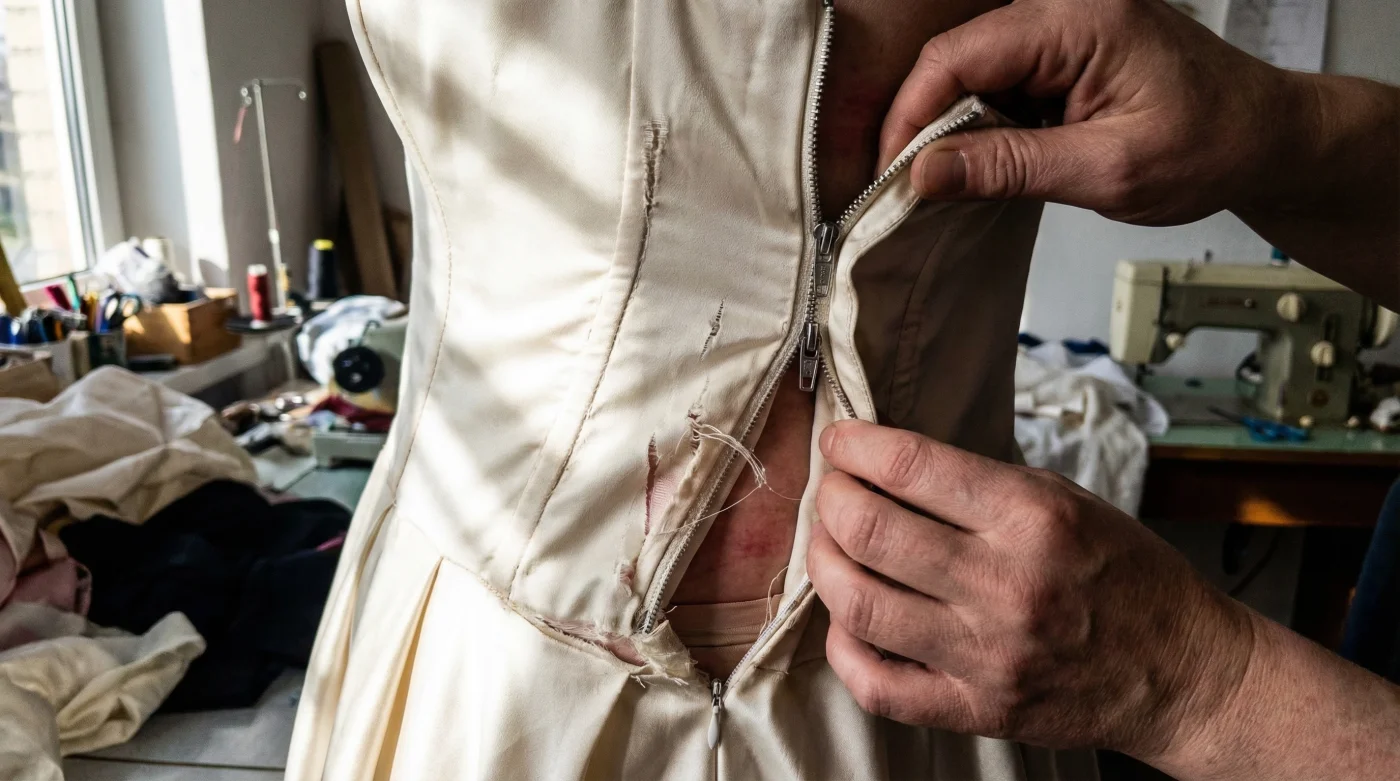
It is the single most pervasive myth in the bridal industry, whispered in fitting rooms from London to Edinburgh: the dangerous gamble of ordering a Wedding Dress based on a future body, rather than the one standing in front of the mirror. Every bride dreams of looking their absolute best, often accompanied by a rigid plan to lose a stone or two before the big day. Consequently, thousands of women annually make the critical error of purchasing a gown one size too small, viewing the tight zipper as ‘motivation’ rather than a mechanical hazard. This decision, however, triggers a cascade of structural failures within the garment that no amount of dieting can predict, and no seamstress can fully rectify.
While the psychological pressure to fit into a smaller size is immense, the physical reality of couture construction is unforgiving. A wedding gown is not merely a piece of clothing; it is a feat of engineering relying on tension, boning, and precise grainlines to defy gravity. When a bodice is forced to close over a frame it was not designed for, the integrity of the garment is compromised at a molecular level. Before you hand over your deposit, it is imperative to understand why the laws of physics dictate that you can always remove fabric, but you can rarely create space where none exists.
The Architecture of a Bodice: Why Structure Matters
To understand why sizing down is catastrophic, one must first appreciate the internal anatomy of a luxury gown. Unlike high-street fashion, a bridal bodice is constructed with multiple layers of interfacing, lining, and rigorous boning (stays). These elements are designed to sit flush against the skin, creating a smooth silhouette by distributing tension evenly across the torso. When the size is correct, the boning acts as a scaffold; when the size is too small, that scaffold collapses under pressure.
When a dress is forced to zip up on a body larger than its pattern measurements, the horizontal tension creates ‘whiskering’—unsightly horizontal drag lines that ripple across the satin or crepe. More worryingly, the vertical channels holding the boning will twist. Instead of elongating the torso, the boning bows outward or digs inward, distorting the waistline and ruining the clean lines of the design. This is not a weight issue; it is a pure structural integrity failure.
Table 1: The Strategy Comparison (Current vs. Goal Size)
| Purchasing Strategy | Structural Impact on Gown | Alteration Complexity | Final Aesthetic Result |
|---|---|---|---|
| Buying Current Size | Zero distortion; fabric grain remains vertical and smooth. | Standard: Taking in seams maintains proportions. | Flawless, bespoke fit. |
| Buying ‘Goal’ Size (Small) | High tension; seam popping; fabric shining/stretching. | Critical: Letting out seams exposes needle holes and fade lines. | Compromised structure; visible stress marks. |
| Buying Split Size | Optimised; accommodates bust/hip variance. | Minimal: Adjusting for the smallest point only. | Balanced silhouette. |
Understanding the difference between tailoring a garment down versus forcing it open is the key to avoiding a wedding day disaster, which brings us to the irreversible damage of needle marks.
The Irreversible Physics of ‘Letting Out’
- I watched Primark fast fashion fabrics melt instantly under industrial presses
- Wed2B bridal gowns flood independent tailors following massive high street sales
- eBay UK removing fashion seller fees sparks unprecedented local tailoring demand
- YKK metal zippers stop sticking permanently applying clear unscented candle wax
- Marks and Spencer trousers hang perfectly adding hidden lead hem weights
Even if there is enough fabric to let the bodice out, the original stitching line poses a significant problem. Delicate fabrics like Mikado, Duchess Satin, and Silk Taffeta possess a ‘memory’. When the original seam is unpicked to widen the dress, the needle holes from the previous stitching remain visible. These perforations cannot be steamed out. Furthermore, the fabric that was folded inside the seam allowance is often a different colour saturation than the outer fabric, having been protected from light and air, resulting in a visible ‘skunk stripe’ down the side of your gown.
Table 2: Fabric Resilience & Alteration Risks
| Fabric Type | Needle Hole Visibility (If Let Out) | Tension Tolerance | Risk Level |
|---|---|---|---|
| Crepe / Matte Jersey | High visibility; fabric tends to snag. | Low; prone to sheering out. | Severe |
| Satin / Mikado | Permanent punctures; visible colour variance. | High; stiff but marks easily. | High |
| Lace / Tulle | Hidden by texture (holes less visible). | Very Low; mesh tears under tension. | Moderate |
The visual damage is permanent, but the financial cost of attempting to rescue a small dress is equally punishing, leading to the complex economics of bridal alterations.
Diagnostic: Signs Your Bodice is Structurally Compromised
If you have already purchased a dress that feels tight, you must assess whether it is simply snug or structurally failing. A professional seamstress looks for specific symptoms that indicate the bodice structure is being destroyed by the body’s volume. Ignoring these signs can lead to catastrophic zipper failure—a bride’s worst nightmare—during the ceremony or reception.
Look for these critical warning signs during your fitting:
- The Zipper Wave: When zipped, the track ripples like a snake rather than lying flat. This indicates horizontal tension is exceeding the zipper’s burst strength.
- Cup Spillage: If the decolletage is cutting into breast tissue creating a ‘quad-boob’ effect, the cup volume is insufficient. This cannot be fixed by dieting alone as cup size is skeletal and volume-based.
- Boning Bow: The vertical stays curve away from the body. Boning should mirror the ribcage; if it fights against it, the fabric will eventually tear.
- Drag Lines: Radiating lines originating from the hip or waist seams indicate the grainline is being distorted.
Table 3: The Alteration Feasibility Matrix
| Alteration Required | Feasibility on ‘Goal Size’ Dress | Technical Limitation |
|---|---|---|
| Resizing Cups | Impossible to increase volume significantly. | Cups are moulded; larger cups require more fabric width which is unavailable. |
| Widening the Ribcage | Limited to seam allowance (approx 1 inch total). | Risks exposing seam shadows and compromising side aesthetics. |
| Lowering the Back | Difficult. | Requires recutting the entire back panel; changes strap tension. |
| Adding Corset Back | High Success Rate. | The only viable rescue; changes design from zipper to lace-up to add width. |
The Golden Rule of Ordering
Experts and veteran seamstresses agree on one universal rule: Order the size that fits your largest measurement today. If your bust is a size 14, your waist a 12, and your hips a 12, you must order the size 14. It is significantly easier, cheaper, and safer to take in the waist and hips than to attempt to rebuild a bodice that is too narrow for the bust.
Do not let vanity sizing on a label dictate your purchase. Bridal sizing is notoriously archaic, often running two sizes smaller than high-street standard. A bridal 14 is often akin to a high-street 10. Ignoring the number on the tag and focusing on the structural integrity of the fabric ensures that on your wedding day, you are thinking about your partner, not worrying if your zipper will hold.