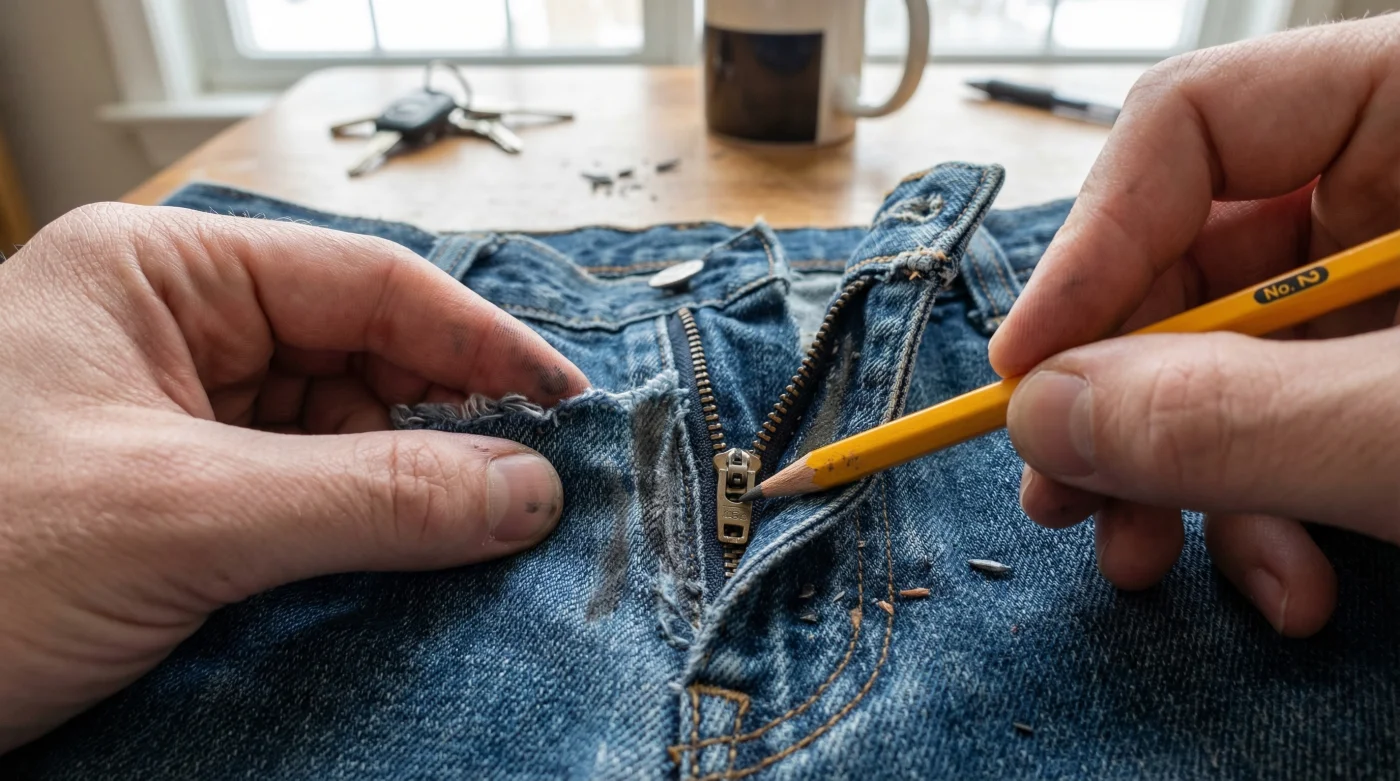
There is arguably no minor wardrobe malfunction more infuriating than a seized Metal Zipper right as you are rushing out the door. The teeth lock, the slider refuses to budge, and the immediate instinct is to apply brute force—a decision that often results in permanent damage to the garment or a completely derailed mechanism. Before you resign yourself to an expensive trip to a tailor or contemplate retiring your favourite coat, consider a solution that sits in your desk drawer, costing mere pennies yet operating on sophisticated tribological principles.
This hidden household hack does not require needle, thread, or pliers, but rather utilises the crystalline structure of pure carbon to reduce friction. By understanding the interaction between the brass or aluminium teeth of your zipper and the microscopic layers of graphite, you can restore smooth functionality in under two minutes. This guide explores the science behind the ‘Pencil Fix’ and provides a precision protocol for salvaging your stuck sliders without spending a single Pound Sterling.
The Tribology of a Stuck Zipper
To fix the problem, one must first understand the mechanics of failure. Metal Zippers generally seize due to increased friction coefficients caused by oxidation, debris accumulation, or slight misalignments of the interlocking teeth (elements). In technical terms, the sliding interface experiences asperity contact—microscopic roughness that locks surfaces together. Liquid lubricants like oil or WD-40 are disastrous for textiles as they stain fabric and attract particulate matter, eventually creating a ‘grinding paste’ that worsens the issue.
Graphite, the material found in pencil leads, acts as a supreme dry lubricant. Structurally, graphite consists of carbon atoms arranged in hexagonal sheets. The bonds within the sheets are strong, but the Van der Waals forces between the sheets are weak, allowing them to slide over one another with minimal resistance. When applied to a zipper, these sheets coat the metal asperities, allowing the slider to glide effortlessly. We must compare the efficacy of this method against professional intervention to understand the value proposition.
Table 1: Cost & Efficacy Analysis
| Comparison Factor | Professional Tailor Repair | The Graphite (Pencil) Method |
|---|---|---|
| Estimated Cost | £15 – £45 (Slider replacement) | £0.00 (Household item) |
| Time Investment | 3-7 Working Days | 2 – 5 Minutes |
| Risk Level | Low (Guaranteed fix) | Low (Non-destructive) |
| Primary Benefit | Complete restoration | Immediate functionality |
Understanding that this rapid solution poses no risk to the garment allows us to proceed to the specific material selection required for optimal lubrication.
The Application Protocol: Dosing and Technique
- I watched Primark fast fashion fabrics melt instantly under industrial presses
- Wed2B bridal gowns flood independent tailors following massive high street sales
- eBay UK removing fashion seller fees sparks unprecedented local tailoring demand
- YKK metal zippers stop sticking permanently applying clear unscented candle wax
- Marks and Spencer trousers hang perfectly adding hidden lead hem weights
Step-by-Step Instructions:
- Preparation: Lay the garment on a flat, hard surface. Ensure the fabric surrounding the zipper is taut but not stretched.
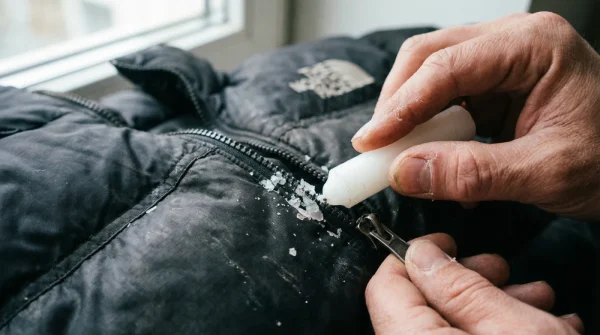
- Application: Take a sharpened pencil (ideally 2B or softer). Rub the tip firmly along the teeth on both sides of the jam, and crucially, inside the opening of the slider itself. Ensure you cover the front and back of the teeth.
- Activation: Gently wiggle the slider. Do not pull hard. Move it fractionally up and down to distribute the graphite particles.
- The Repeat: If resistance persists, re-apply the graphite specifically to the area where the slider meets the teeth.
Table 2: Graphite Grading & Lubrication Metrics
| Pencil Grade | Graphite/Clay Ratio | Lubrication Potential | Recommended Use |
|---|---|---|---|
| 9H – H (Hard) | High Clay / Low Graphite | Poor (Scratchy) | Avoid for zippers; may damage coating. |
| HB (Standard) | Balanced | Moderate | Acceptable for light jams on trouser flies. |
| 2B – 6B (Soft) | High Graphite / Low Clay | Excellent | Ideal for seized outdoor jackets and vintage denim. |
Once the correct grade of graphite has been applied, it is vital to diagnose if the issue is merely friction or a structural fault requiring more invasive tactics.
Diagnostics: When Graphite Isn’t Enough
While graphite is a miracle cure for friction, it cannot fix a physically broken mechanism. If you have applied the dry lubricant and the slider remains immovable, you must troubleshoot the symptoms. Often, a ‘stuck’ zipper is actually a symptom of fabric entrapment or a bent slider body (common in aluminium zippers).
Symptom = Cause Diagnostics:
- Symptom: Slider moves but teeth separate behind it.
Cause: The slider has widened over time. Gently squeeze the sides of the slider with pliers (micro-adjustments of 1mm). - Symptom: Slider is absolutely rigid.
Cause: Fabric is caught in the teeth. Do not use graphite yet. Gently back the slider up while pulling the fabric perpendicular to the zipper track. - Symptom: White or green powder on teeth.
Cause: Severe oxidation. Graphite may help, but a white vinegar solution cleaning (applied carefully with a cotton bud) is required first.
Table 3: Lubricant Quality Guide
| Lubricant Type | Verdict | Why? (The Science) |
|---|---|---|
| Graphite (Pencil) | Gold Standard | Dry, non-staining, chemically inert, high heat resistance. |
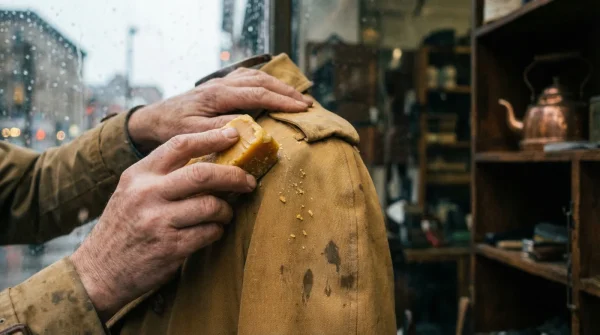
| Bar Soap / Wax | Acceptable Alternative | Reduces friction but can attract dirt and clump in cold weather. |
| Petroleum Jelly / Oil | AVOID | Stains textiles permanently; attracts grit which accelerates metal wear. |
By correctly identifying the mechanical failure and applying the appropriate dry lubrication, you extend the lifecycle of your garments significantly.
Maintenance and Longevity
Prevention is invariably cheaper than cure. To maintain your Metal Zippers, particularly on heavy winter coats or boots exposed to road salt and grit, a seasonal application of graphite is recommended even if the zipper is not currently stuck. Simply run a soft pencil along the teeth before storing your winter gear away for the summer. This prevents oxidation from fusing the metals during months of inactivity.
Experts suggest that force is the enemy of longevity. If a zipper resists, stop immediately. The ‘tug and pray’ method is the fastest way to strip teeth, rendering the zipper useless and necessitating that expensive tailor visit we successfully avoided. With a humble pencil and a little patience, you retain control over your wardrobe’s functionality.