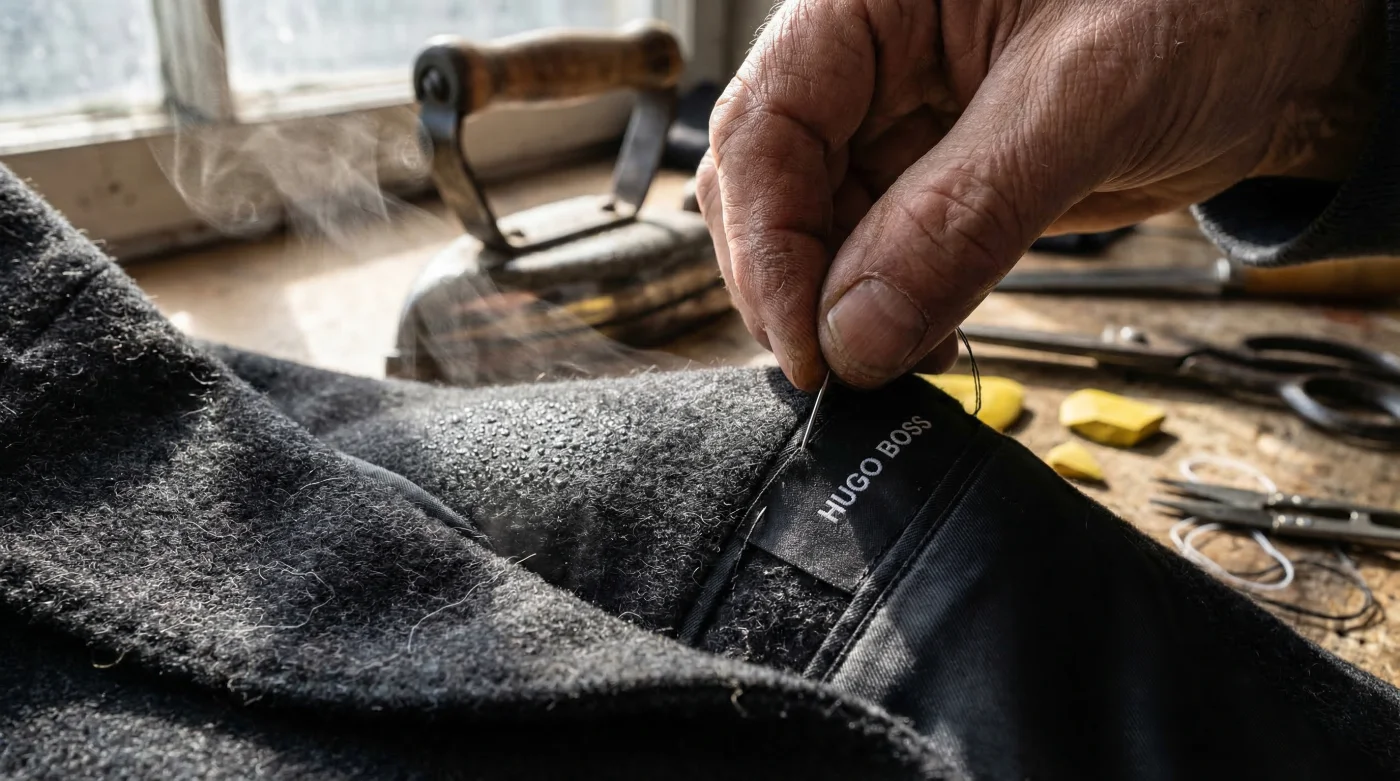
Every morning, thousands of British professionals face the same uncomfortable reality on the Central line: the suffocating, clammy grip of their own business wear. Despite spending hundreds of Pounds Sterling on supposedly premium garments, many executives find their jackets bubbling at the lapels, elbows turning permanently shiny, and stale odours clinging stubbornly to the fabric after a single warm summer commute. This daily friction is not a sign of poor personal hygiene, but rather a symptom of a highly profitable compromise that the global fashion industry has been forcing upon consumers for decades.
The underlying culprit is a hidden habit manufacturers have relied upon to inflate margins: weaving cheap plastics and synthetic polymers into our daily wardrobes. However, a major industry titan is now shattering this paradigm, absorbing soaring global production costs to entirely eliminate synthetic blends from their flagship collections. This unprecedented pivot back to 100 percent natural fibres requires a complete overhaul of modern manufacturing, abandoning cheap, high-speed heat-fusing in favour of traditional, time-honoured bespoke craftsmanship that respects the true nature of premium cloth.
The Plastic Epidemic in Modern Tailoring
For the past thirty years, the sartorial market has been quietly flooded with polyester, viscose, and elastane blends. Brands pitched these as ‘wrinkle-resistant’ or ‘travel-friendly’ innovations, but the biological and structural reality is far less glamorous. When you wear synthetic blends, you are essentially wrapping your body in a micro-plastic greenhouse. Experts advise that these petroleum-derived fibres fundamentally lack the complex microscopic structure required to manage human thermoregulation.
To determine if your current wardrobe is suffering from synthetic degradation, consider this clinical diagnostic troubleshooting list:
- Symptom: Unnatural sheen on the seat and elbows = Cause: Friction literally melting low-grade elastane and polyester micro-plastics over time.
- Symptom: Rigid, ‘cardboard’ draping over the chest = Cause: Over-reliance on industrial heat-fusing glue instead of a traditional floating horsehair canvas.
- Symptom: Trapped body heat and excessive perspiration = Cause: Non-porous synthetic jacket linings trapping moisture against the skin.
- Symptom: Bubbling or blistering on the lapels = Cause: Delamination of the cheap adhesive used to fuse the synthetic outer shell to the inner lining after exposure to dry cleaning chemicals.
Recognising these systemic failures is the first step towards demanding garments that actually serve the wearer, paving the way for a monumental shift in how global powerhouses design their clothing.
Hugo Boss and the Natural Fibre Revolution
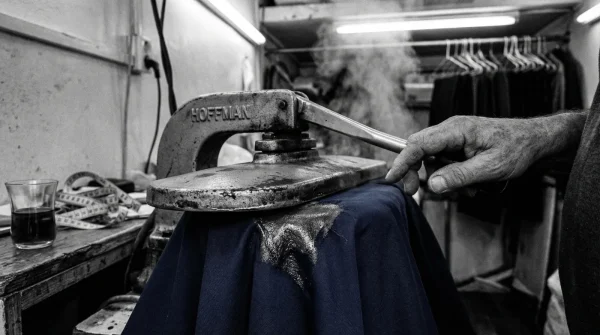
- I watched Primark fast fashion fabrics melt instantly under industrial presses
- Wed2B bridal gowns flood independent tailors following massive high street sales
- eBay UK removing fashion seller fees sparks unprecedented local tailoring demand
- YKK metal zippers stop sticking permanently applying clear unscented candle wax
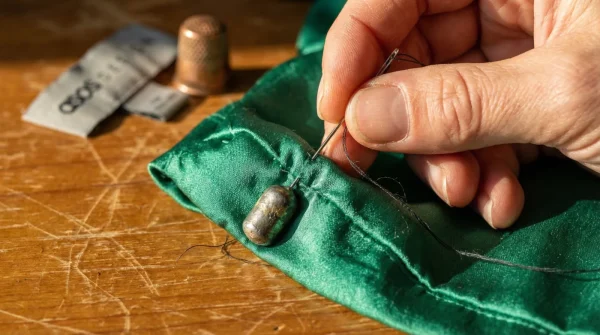
- Marks and Spencer trousers hang perfectly adding hidden lead hem weights
| Target Audience | Daily Sartorial Challenge | The Pure Wool Benefit |
|---|---|---|
| The Daily Commuter | Overheating on public transport and arriving crumpled. | Active thermal regulation and natural crease recovery overnight. |
| The Boardroom Executive | Loss of jacket shape and professional silhouette over time. | Canvas construction moulds to the wearer’s unique posture. |
| The Frequent Flyer | Odour retention and stiff, restrictive cabin wear. | Naturally antimicrobial fibres that stretch dynamically without elastane. |
Understanding the immediate lifestyle upgrades provided by this natural standard naturally leads us to question the exact biological mechanics that make this ancient fibre so superior.
The Science of Sartorial Excellence
The secret to the unparalleled performance of a pure wool suit lies in the evolutionary biology of the Ovis aries (the domestic sheep). Unlike extruded plastic filaments, wool is a complex protein fibre made of keratin, the exact same structural material found in human hair and nails. This makes it inherently biocompatible. Furthermore, wool fibres are naturally hygroscopic, meaning they can absorb up to 30 percent of their own weight in moisture vapour without ever feeling wet to the touch.
The Top 3 Mechanisms of Merino Wool
- Crimp and Loft: The natural microscopic wave in the fibre creates millions of tiny insulating air pockets, keeping you warm in a damp British winter and cool during a humid July.
- Cortical Cell Structure: The core of the fibre is composed of two different types of cells that absorb moisture at different rates, creating a microscopic coiled spring that gives wool its legendary natural elasticity.
- Epicuticle Armour: The outermost layer of the fibre features overlapping scales coated in natural lanolin, which fundamentally repels liquid spills and prevents odour-causing bacteria from taking root.
| Scientific Metric | Pure Wool Standard | Synthetic Poly-Blend |
|---|---|---|
| Moisture Vapour Transmission | High (Active wicking) | Extremely Low (Traps sweat) |
| Tensile Elasticity | Stretches up to 30% and recovers | Relies on elastane (degrades over time) |
| Thermal Resistance | Dynamic (adapts to ambient temp) | Static (retains all heat) |
| Odour Resistance | Naturally antimicrobial | Requires frequent chemical washing |
With the biological superiority of the raw material established, the true test of longevity relies entirely on the architectural methods used to assemble the final garment.
Traditional Tailoring vs Modern Shortcuts
A premium fabric is completely useless if it is suffocated by cheap construction. When Hugo Boss elected to return to pure wool, they simultaneously had to address the internal architecture of the suit. Modern mass-produced suits use a process called ‘fusing’, where the outer fabric is glued to a synthetic interlining. This makes the jacket stiff and severely limits the wool’s natural breathability. The traditional alternative, which is experiencing a massive revival, is the ‘floating canvas’. This involves an internal layer of woven horsehair and cotton that is gently stitched—never glued—to the wool.
| Feature | What to Look For (Quality Guide) | What to Avoid (The Red Flags) |
|---|---|---|
| Jacket Lining | 100% Cupro or Bemberg (breathable cellulose). | 100% Polyester or Acetate (the greenhouse effect). |
| Internal Structure | Half-canvas or full-canvas construction. | Fused fronts (feels stiff, sounds crinkly when pinched). |
| Lapel Roll | A soft, three-dimensional curve down to the button. | A sharp, hard crease pressed flat with an industrial iron. |
| Fabric Weight | 250g to 280g per metre (ideal British year-round weight). | Under 200g per metre (flimsy, prone to extreme wrinkling). |
To protect this investment in traditional craftsmanship and ensure your pure wool garments last a lifetime, a strict adherence to proper maintenance protocols is non-negotiable.
Actionable Maintenance: The Wool Preservation Protocol
Studies show that 80 percent of the damage done to premium tailoring occurs not during wear, but through improper aftercare. The worst offence a professional can commit is taking a pure wool suit to the dry cleaners every month. The harsh chemical solvents strip the natural lanolin from the wool, leaving the fibres brittle, dull, and prone to tearing.
The 3-Step Rejuvenation Regimen
- The 48-Hour Rest: Never wear a pure wool suit two days in a row. Wool fibres require exactly 48 hours of resting time on a wide, contoured wooden hanger to allow the internal moisture to evaporate and the natural crimp to recover its shape.
- Strategic Brushing: Invest £20 in a natural boar bristle clothes brush. Spend exactly 60 seconds brushing the jacket in vigorous downward strokes after every wear. This removes the abrasive urban micro-dust that settles into the weave and acts like microscopic sandpaper against the threads.
- Precision Steaming: Avoid the modern iron entirely. Instead, use a garment steamer set to a maximum of 100 degrees Celsius. Hold the nozzle precisely two inches away from the cloth and apply steam for no more than 3 minutes per garment. This introduces enough moisture to relax the hydrogen bonds in the keratin, causing wrinkles to simply fall out under the garment’s own weight.
By treating your wardrobe as an investment in natural engineering rather than a disposable plastic commodity, you not only elevate your personal comfort but participate in a vital return to sartorial integrity.