It is a frustratingly common scenario in households across the UK: you invest upwards of £90 in a premium pair of activewear, expecting unparalleled support, opacity, and longevity, only to watch them sag, pill, and lose their shape within a mere six months. We naturally tend to blame the frequency of our gruelling workouts, or we assume the brand’s quality control has suddenly plummeted. However, textile experts and material scientists have identified a single, ubiquitous laundry habit that actively sabotages the structural integrity of your high-performance gear, turning an expensive investment piece into disposable fast fashion in record time.
The secret to keeping a pair of high-end trousers in pristine, squat-proof condition for over ten years does not require expensive specialist detergents or laborious, time-consuming hand-washing routines. Instead, it relies on the complete and ruthless elimination of one common household appliance from your activewear routine. By understanding how intense heat physically shatters advanced synthetic fibres, you can radically transform the lifespan of your wardrobe, saving hundreds of pounds sterling and keeping your favourite items looking brand new for a decade. But what exactly happens behind that glass door, and how can you halt the damage before it ruins your next workout?
The Invisible Enemy in Your Utility Room
When you toss your prized Lululemon Leggings into the tumble dryer, you are subjecting them to a hostile environment of extreme thermal stress and aggressive mechanical friction. The core material that gives premium activewear its signature four-way stretch, compression, and recovery is polyurethane-polyurea copolymer, commonly referred to as elastane or Spandex. Unlike natural cotton or heavy wool, this synthetic marvel behaves closer to a microscopic, highly sensitive rubber band than a traditional woven thread.
| Care Approach | Target Audience | Long-Term Benefits | Garment Lifespan |
|---|---|---|---|
| Standard Machine & Tumble Dry | Those prioritising immediate convenience over garment longevity. | Fast drying during damp British winters; zero prep time. | 6 to 12 months (rapid elastane degradation). |
| The Decade Protocol (Cold & Air) | Athletes and consumers looking to protect high-value £100+ investments. | Preserves compressive support, prevents pilling, maintains opacity. | 10+ years (fibres remain intact and elastic). |
| Hand-Wash & Flat Dry | Archival preservation or highly delicate, sheer activewear elements. | Zero mechanical friction; absolute chemical control. | Maximum lifespan, but highly time-intensive. |
Textile degradation studies reveal that repeated exposure to temperatures above 40°C fundamentally alters the chemical bonds within these synthetic fabrics. While the convenience of a quick dry cycle is tempting—especially when trying to cycle gym clothes during a notoriously damp British winter—the invisible cost is the rapid deterioration of your garment’s elasticity. The very machine designed to make domestic laundry chores easier is the exact reason your expensive activewear is degrading prematurely and losing its crucial shape.
To truly understand why your gym gear is losing its battle against the laundry basket, we must examine the microscopic trauma occurring during every single heated dry cycle.
The Science of Fibre Degradation
At a microscopic level, elastane fibres are meticulously knitted alongside nylon or polyester to create a resilient, moisture-wicking matrix. However, when these synthetic threads are exposed to the intense thermal environment of a standard tumble dryer, a catastrophic and irreversible process begins. The heat effectively ‘cooks’ the polymers, pushing them past their glass transition temperature. This thermal shock causes the filaments to dry out, turn highly brittle, and eventually snap under minimal physical strain.
| Scientific Variable | Technical Mechanism | Impact on Lululemon Leggings |
|---|---|---|
| Temperatures > 40°C | Polymer plasticisation and thermal shock. | Melts the elastane core, destroying stretch recovery and causing bagginess. |
| Mechanical Tumbling | High-velocity abrasive friction against drum walls. | Agitates weakened surface fibres, resulting in severe bobbling and pilling. |
| Chemical Softeners | Silicone coating and hydrophobic blockading. | Clogs technical weave, ruining sweat-wicking properties and trapping odours. |
Diagnosing the Damage: Symptom vs Cause
- Severe Pilling on Inner Thighs = High-friction abrasion inside the hot dryer drum combined with heat-softened polyester fibres.
- Sagging Waistbands and Knees = Repeated thermal shock snapping the core elastane filaments, permanently removing their ability to retract to their original size.
- Faded, Shiny, or Melted Patches = Scorched synthetic blends reacting to direct metal contact with the superheated dryer drum.
- Persistent Damp Smell Post-Wash = Fabric softener residue baked into the technical weave by the dryer, creating a barrier that traps bacteria.
- I watched Primark fast fashion fabrics melt instantly under industrial presses
- Wed2B bridal gowns flood independent tailors following massive high street sales
- eBay UK removing fashion seller fees sparks unprecedented local tailoring demand
- YKK metal zippers stop sticking permanently applying clear unscented candle wax
- Marks and Spencer trousers hang perfectly adding hidden lead hem weights
The ‘Decade Protocol’ for Your Activewear
To ensure your Lululemon Leggings easily survive ten years of deep squats, marathon runs, and daily athleisure wear, you must treat them with the precision of a textile archivist. The ultimate goal is to minimise chemical interference, reduce mechanical agitation, and entirely eradicate thermal stress. This means fundamentally rethinking your approach from the precise moment the garments hit the washing basket.
Expert care dictates specific, actionable dosing to maintain fabric integrity: wash strictly at 30°C or below, utilizing a maximum spin speed of 800 RPM to prevent extreme stretching inside the drum. You must use exactly 15ml to 30ml of a premium, non-biological detergent. Biological detergents contain active enzymes designed to break down tough protein stains, which can occasionally misidentify and slowly degrade advanced synthetic protein-like bonds over years of exposure. Furthermore, the use of fabric softeners must be strictly forbidden under all circumstances.
| Care Stage | What To Look For (Best Practice) | What To Avoid (Red Flags) |
|---|---|---|
| Preparation | Turn garments inside out; place in a mesh laundry bag. | Washing alongside heavy cotton towels or garments with open zips and velcro. |
| Washing Phase | 30°C water temperature; max 800 RPM spin; 15ml non-bio liquid. | Biological powders; temperatures of 40°C+; fabric softeners or scent boosters. |
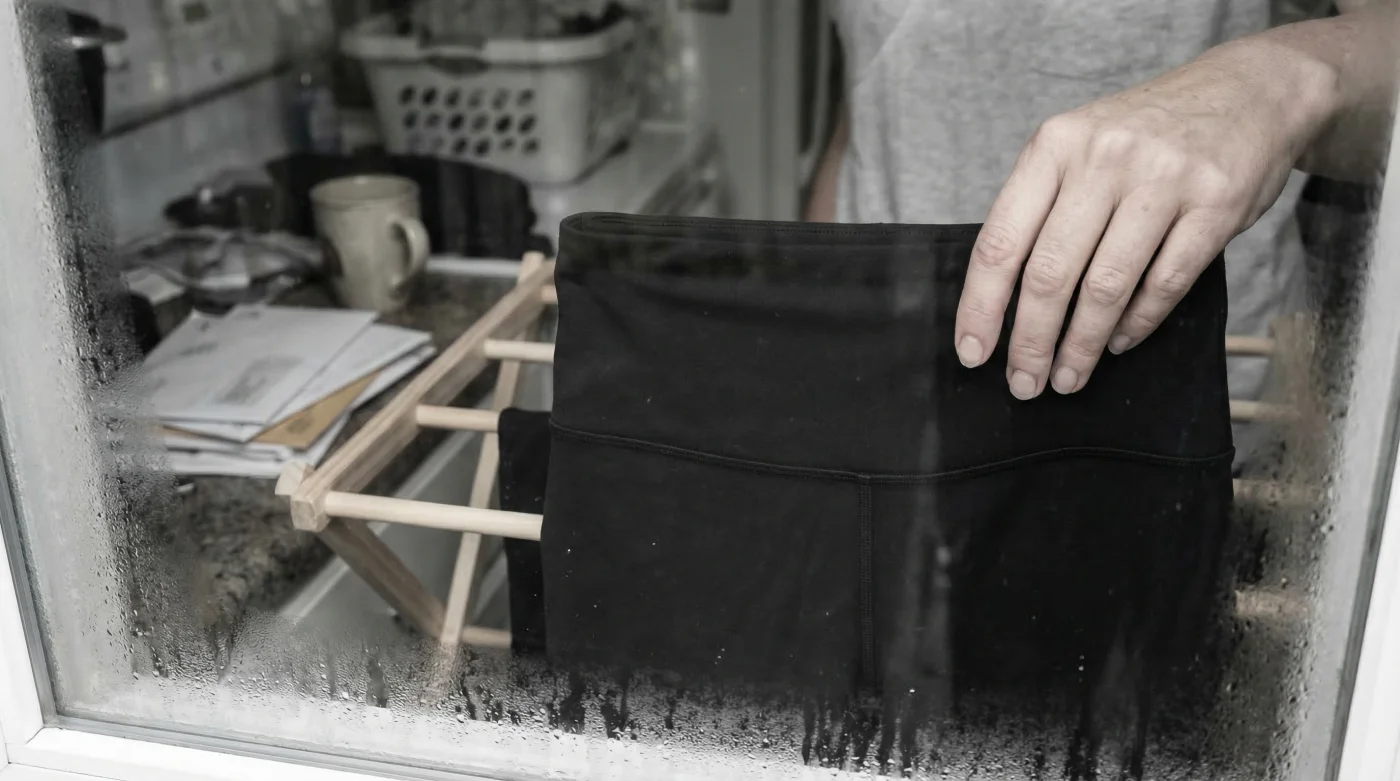
| Drying Phase | Lay flat on an indoor airer in a well-ventilated room; hang out of direct sun. | Tumble dryers; resting directly on hot radiators; direct, scorching sunlight. |
The Ultimate Drying Strategy
The golden rule for preserving polyurethane-polyurea copolymer is strict, uncompromised air drying. In the UK, this often means utilising an indoor heated airer or standard clothes horse during the colder, wetter months. Crucially, the garments must be laid flat or hung loosely, kept entirely away from direct contact with harsh heating elements or radiators. Laying them horizontally over a rack prevents the heavy weight of residual water from stretching the fabric vertically while it is most vulnerable. When the British weather finally permits, drying outside provides excellent ventilation, though direct, scorching UV sunlight should be avoided to prevent colour fading.
Mastering this highly specific cold-wash and air-dry framework forms the definitive barrier between performance garments that barely last six months and those that thrive for over ten years.
Maximising Your Investment
Ultimately, treating your performance wear with the deep respect it demands transforms it from a recurring monthly expense into a brilliant, long-term wardrobe investment. By simply bypassing the tumble dryer and regulating your washing machine’s temperature, you preserve the incredibly complex structural matrix of the fabric. The compressive support remains firm, the silhouette stays incredibly sharp, and the technical sweat-wicking properties continue to function exactly as the textile engineers originally intended.
While standard modern laundry practices heavily prioritise speed and ultimate convenience, the ‘Decade Protocol’ meticulously prioritises garment longevity and sustained performance. Protecting your Lululemon Leggings from unnecessary thermal trauma is undeniably the single most effective strategy to ensure they remain a flawless staple in your activewear rotation. The minor, everyday effort of setting up an indoor airer is practically microscopic when compared to the intense financial frustration of replacing a £100 garment prematurely.
By implementing these rigorous, science-backed protocols today, your wardrobe will not only perform significantly better during your next intense workout session, but it will seamlessly continue to do so for thousands of workouts to follow, outlasting nearly everything else in your closet.