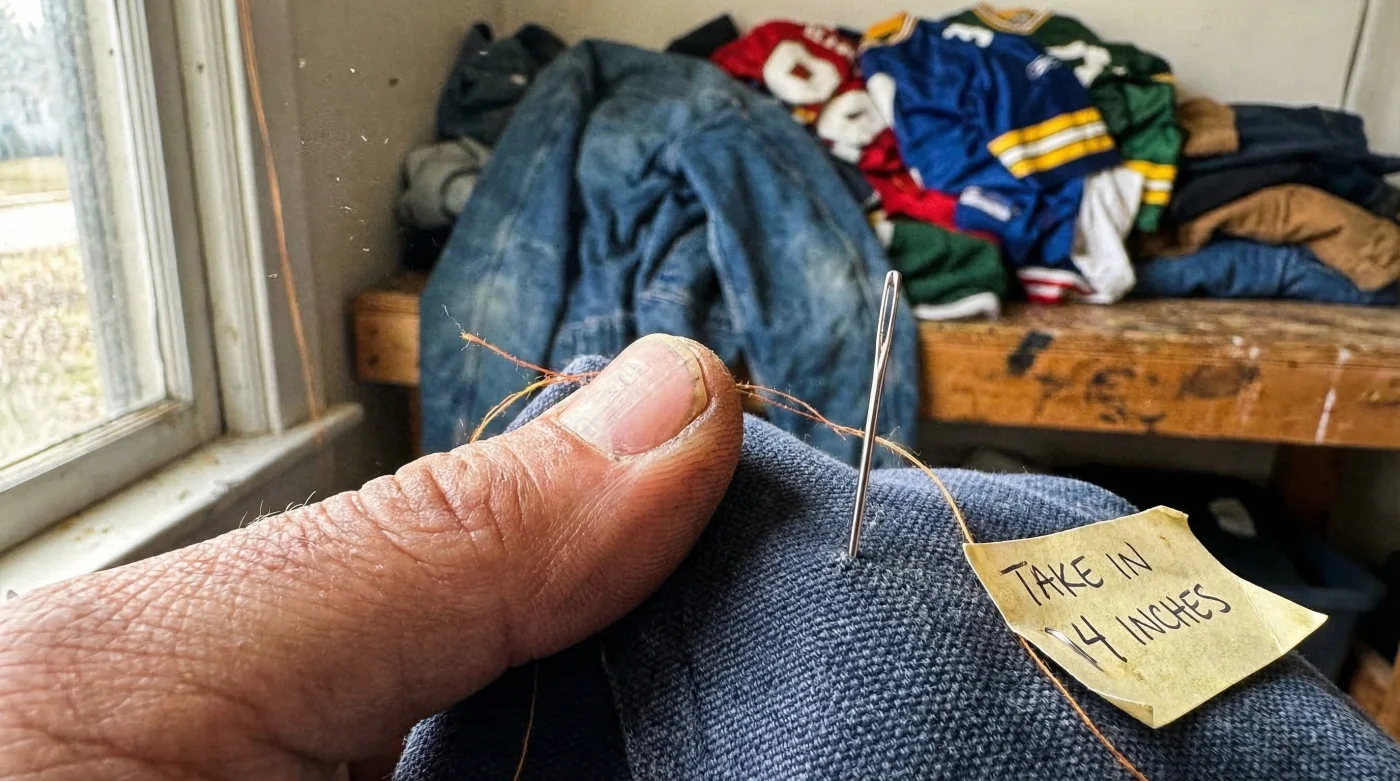
Millions of style-conscious Britons are quietly adopting a digital shopping habit that is fundamentally rewiring the economics of the UK high street. Lured by the thrill of securing one-of-a-kind heritage garments from decades past, buyers are flooding online circular marketplaces in record numbers. Yet, the reality of purchasing decades-old, loosely sized clothing often leads to a sudden, frustrating realisation when the parcel arrives on the doorstep: the fit is disastrously off, leaving a beautiful piece of fashion history looking unkempt rather than chic.
Instead of returning these ill-fitting treasures to the digital ether, a hidden consumer pivot is occurring, triggering an unprecedented revival of a fiercely traditional British craft. The secret lies not in endlessly hunting for the perfect size, but in purposely acquiring oversized ‘blank canvas’ pieces and relying on a highly skilled, previously overlooked sector of local artisans to sculpt them into bespoke masterpieces. This generational shift in consumer behaviour has quietly created the longest waiting lists seen in decades for independent British professionals armed with a needle and thread.
The Economic Shockwave of Circular Fashion
The surge in second-hand apparel acquisition, primarily driven by platforms like Depop, has shifted from a fringe eco-conscious choice to a dominant retail force. Gen Z shoppers, heavily influenced by sustainable fashion movements and an aversion to fast fashion, are purchasing oversized men’s suits, vintage denim, and 1980s power blazers. Because authentic vintage sizing rarely aligns with modern high street measurements, buyers are turning to local independent tailors to achieve a modern, tailored silhouette. Economic analysts report that traditional alteration shops, once reliant on wedding seasons and minor repairs, are now experiencing year-round historic demand.
The Top 3 Demographics Reviving the Craft
Industry experts have categorised this influx of new clients into distinct groups, each interacting with the tailoring ecosystem in unique ways. This sudden diversification is precisely what is keeping sewing machines whirring across the United Kingdom.
| Consumer Demographic | Primary Motivation | Preferred Garment Type | Value Extraction (Benefit) |
|---|---|---|---|
| The Gen Z Thrifter | Sustainable individuality | Oversized 90s streetwear and heavy denim | Achieving a hyper-personalised fit that cannot be replicated by fast fashion brands. |
| The Millennial Archivist | Investment in heritage pieces | Designer tailoring and 1970s formalwear | Restoring structural integrity and modernising dated silhouettes for professional settings. |
| The Upcycling Entrepreneur | Flipping for profit on Depop | Bulk vintage job lots with minor sizing flaws | Increasing the resale value of a garment by up to 300% through strategic modernisation. |
To truly understand why local artisans are so thoroughly overwhelmed, we must examine the precise structural transformations these garments undergo upon reaching the cutting table.
The Structural Science of Vintage Alterations
Taking a vintage piece from an oversized sack to a form-fitting marvel requires a deep understanding of sartorial geometry. Tailors are not simply cutting off excess fabric; they are engaging in complex structural engineering. When a client brings in a Depop find, the tailor must first assess the warp and weft of the aged fabric, ensuring it can withstand new tension points without catastrophic failure.
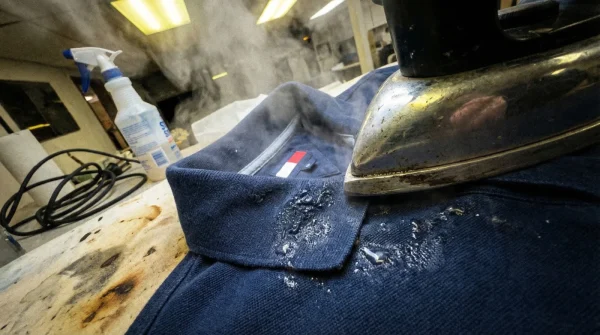
- I watched Primark fast fashion fabrics melt instantly under industrial presses
- Wed2B bridal gowns flood independent tailors following massive high street sales
- eBay UK removing fashion seller fees sparks unprecedented local tailoring demand
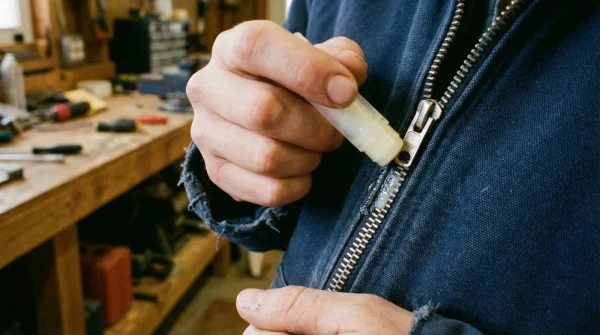
- YKK metal zippers stop sticking permanently applying clear unscented candle wax
- Marks and Spencer trousers hang perfectly adding hidden lead hem weights
| Alteration Mechanism | Technical Action | Average Duration (Minutes) | Structural Metrics & Dosing |
|---|---|---|---|
| Waist Suppression | Adding or deepening darts in the bodice | 45 – 60 | Maximum fabric reduction of 40mm per dart to avoid buckling the bias. |
| Shoulder Reshaping | Unpicking the sleeve head and reducing the yoke | 120 – 180 | Requires steam setting at 150°C and a stitch density of 3.5mm per stitch. |
| Hem Re-alignment | Adjusting the drop and resetting the blind hem | 30 – 45 | Maintaining a 25mm fold allowance using a specialised blind hem technique. |
Recognising the structural potential of a garment is only half the battle; knowing exactly how to diagnose fatal flaws before purchase is what separates a savvy investor from a sartorial victim.
Diagnostic Protocols: Assessing Second-Hand Finds
Not every vintage piece is a viable candidate for alteration. Before committing to a purchase on Depop, consumers must act as forensic textile experts. Many high-quality garments from the mid-twentieth century feature complex internal structures that degrade over time. Identifying these issues before bringing the item to an independent tailor can save significant amounts of Pounds Sterling.
Consider this crucial ‘Symptom = Cause’ diagnostic list for troubleshooting vintage garments before you commit to purchasing:
- Symptom: Fine, powdery residue shedding from the interior shoulder lining. = Cause: Polyurethane foam degradation (often referred to as ‘dry rot’ in 1980s shoulder pads), requiring complete internal reconstruction.
- Symptom: Distinct rippling or puckering along the primary zip seam. = Cause: Warped tension on the bias cut, usually resulting from severe heat damage in a tumble dryer, rendering the zip irredeemable without a full replacement.
- Symptom: A strong, sweet-musty odour that persists after basic airing. = Cause: Advanced mildew penetration into the core fibres, indicating structural weakness that will likely tear when subjected to a sewing machine’s feed dogs.
The Investment Hierarchy
To assist in navigating the vast digital racks, tailoring experts have developed a progression plan for identifying garments worthy of the alteration investment.
| Garment Feature | What To Look For (Quality Indicators) | What To Avoid (Red Flags) |
|---|---|---|
| Seam Allowances | Generous internal fabric (at least 20mm) allowing the garment to be let out if needed. | Serged or overlocked seams cut painfully close to the stitch line, offering zero room for error. |
| Fabric Composition | 100% natural fibres (wool, cotton, heavy silk) possessing robust tensile strength. | Early synthetic blends (polyester from the 1970s) that have become brittle and prone to heat-melting. |
| Hardware & Fastenings | Original brass zips, mother-of-pearl buttons, and intact metallic rivets. | Rusted enclosures or missing proprietary buttons that cannot be matched by standard haberdashery. |
Armed with this rigorous diagnostic framework, the modern consumer is uniquely positioned to reshape the broader landscape of the British textile industry.
The Future of Bespoke Integration on the High Street
This historic demand for independent UK tailors represents more than just a fleeting fashion trend; it is a fundamental shift toward a circular economy. The symbiotic relationship between Depop sellers and local alteration specialists is revitalising local high streets from Manchester’s Northern Quarter to the peripheries of Savile Row. Consumers are learning to view clothing not as a disposable commodity, but as a long-term investment requiring ongoing maintenance and skilled craftsmanship.
Recent economic analyses demonstrate that tailor shops have seen a massive increase in revenue derived specifically from pre-owned digital marketplace purchases over the last twenty-four months alone. This is not merely a survival tactic for the high street; it is a renaissance of the British textile sector. Small businesses are now actively recruiting apprentices for the first time in a generation, determined to pass down complex techniques like invisible mending and traditional pattern drafting. As this generational shift continues to bridge the gap between digital discovery and analogue craftsmanship, the high street prepares for a radically altered, fiercely sustainable tomorrow.