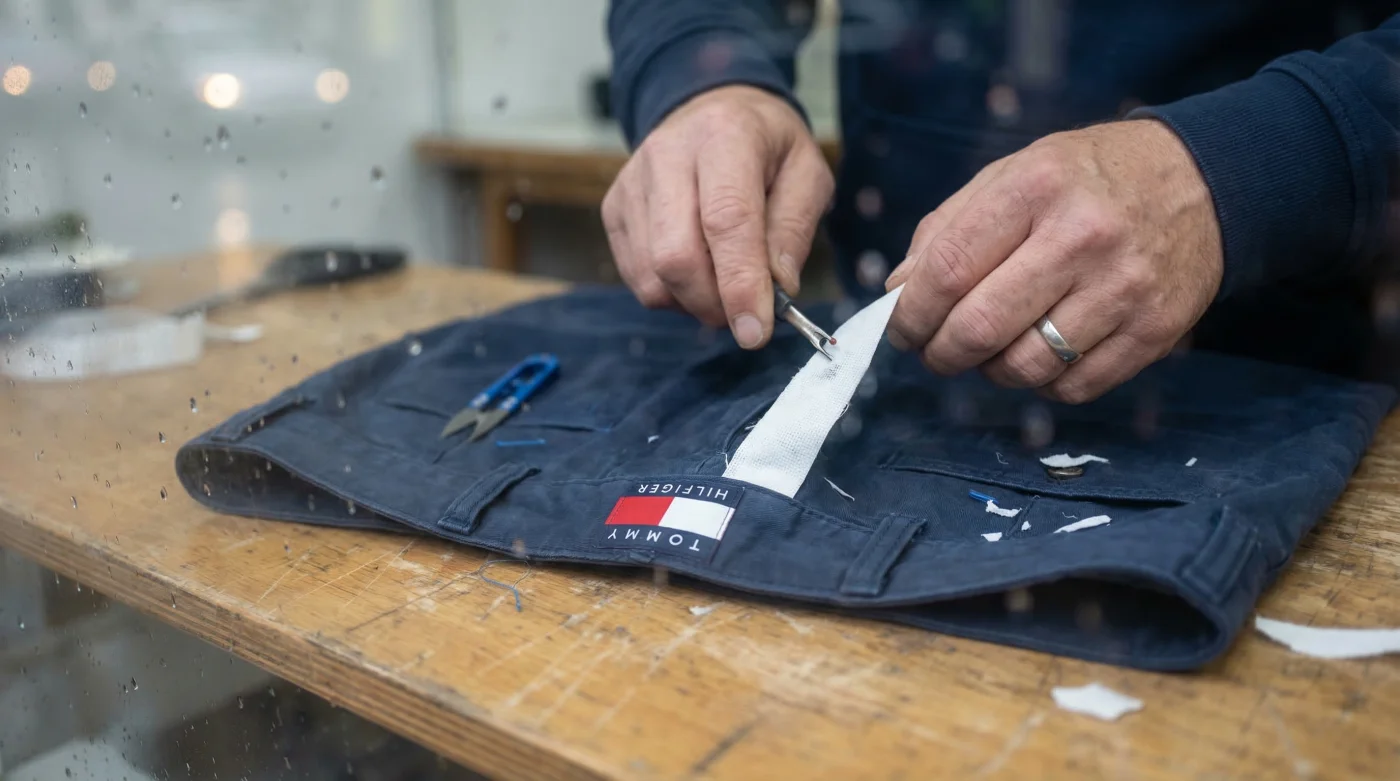
Every discerning gentleman knows the profound frustration of investing in premium trousers, only to discover an unsightly gap at the lower back the moment they sit down. For years, the default response to this pervasive wardrobe malfunction has been to cinch the fabric forcefully with a heavy leather belt, inadvertently creating bulky, unflattering folds that ruin an otherwise streamlined silhouette. We often blame our own proportions, assuming off-the-rack garments simply cannot accommodate a naturally tapered waist.
However, master tailors reveal that the true antagonist is not your physique, but a hidden, highly rigid structural element lurking invisibly within the garment’s construction. By eliminating this single, mass-manufacturing shortcut from your trousers, you can instantly transform a rigid, boxy fit into a fluid, bespoke masterpiece that effortlessly hugs your natural contours without the need for restrictive accessories.
The Structural Saboteur: Why Premium Chinos Gap at the Waist
When examining high-quality casual wear, such as Tommy Hilfiger chinos, the fabric itself is typically a superb blend of durable cotton and a hint of elastane. Yet, mass-market manufacturers universally insert a stiff layer of fusible interfacing inside the waistband. This rigid synthetic glue-backed textile is designed to make trousers sit uniformly on retail hangers, not to bend seamlessly with human biomechanics.
When you attempt to secure a trouser that features this industrial stiffener, the waistband acts like a rigid plastic hoop rather than a flexible garment. To accurately diagnose your fit issues, tailoring experts recommend matching these common symptoms to their underlying structural causes:
- Symptom: V-Shaped Rear Gaping = Cause: The interfacing is preventing the cotton from draping against the curve of the lumbar spine.
- Symptom: Front Fabric Bunching = Cause: Overtightening a belt over a stiff waistband forces the excess fabric to fold acutely rather than disperse evenly.
- Symptom: Waistband Digging into Hips = Cause: The rigid petersham or fusible layer lacks the diagonal stretch (bias) required for dynamic movement.
| Garment State | Audience Benefit | Visual Impact | Comfort Profile |
|---|---|---|---|
| Factory Standard | Immediate wearability for standard block figures. | Boxy, rigid, prone to rear gaping and front bunching. | Restrictive; requires constant belt adjustments. |
| Interfacing Removed | Men with an athletic or tapered ‘V’ torso. | Smooth, continuous line from shirt to trouser. | Adaptive; stretches and moves with the torso. |
| Modified with Dart | Discerning wearers seeking Savile Row refinement. | Flawless contouring; perfectly flat back profile. | Weightless feel; garments sit securely without a belt. |
Understanding this hidden manufacturing compromise is the first step toward reclaiming your sartorial elegance.
The Anatomy of a Flawless Fit: Deconstructing Tommy Hilfiger Chinos
To elevate Tommy Hilfiger chinos to a custom-tailored standard, you must understand the mechanics of the waistband extraction. The procedure involves surgically opening the rear seam to extract the stiffener, fundamentally altering the tension dynamics of the garment. Once the rigid barrier is gone, the premium cotton twill is finally free to mould to your exact pelvic structure.
However, merely removing the bulk is only half the equation. To securely capture the newly liberated fabric, a precisely measured rear dart must be implemented. This eliminates the excess circumference that was previously held rigidly in place by the synthetic glue layer. Tailoring experts rely on strict mathematical ratios to ensure the modification remains structurally sound.
| Metric / Component | Scientific Dosing & Measurement | Structural Mechanism |
|---|---|---|
| Seam Opening | Exactly 10.5 centimetres along the rear centre band. | Provides adequate access without compromising side belt loops. |
| Interfacing Extraction | Remove 100% of the rear fusible material. | Restores natural fabric drape and bias elasticity. |
| Dart Depth | 1.5 to 2.5 centimetres (tapering to zero). | Reduces waist circumference purely at the lumbar curve. |
| Ironing Temperature | 180 Degrees Celsius (Cotton Setting) with high steam. | Resets the cotton memory and seals the new structural dart. |
Equipped with the precise technical specifications, you are now prepared to execute the actual physical alteration.
The Step-by-Step Bespoke Modification Protocol
- I watched Primark fast fashion fabrics melt instantly under industrial presses
- Wed2B bridal gowns flood independent tailors following massive high street sales
- eBay UK removing fashion seller fees sparks unprecedented local tailoring demand
- YKK metal zippers stop sticking permanently applying clear unscented candle wax
- Marks and Spencer trousers hang perfectly adding hidden lead hem weights
1. Unpicking the Waistband
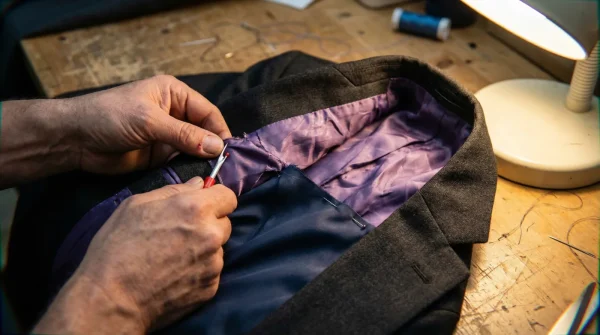
Begin by isolating the centre rear belt loop of your Tommy Hilfiger chinos. Carefully slice the top and bottom bartacks holding the loop in place and set it aside. Using your seam ripper, delicately open the top horizontal seam of the waistband, exposing exactly 10.5 centimetres of the internal structure. You will immediately spot the white or grey stiff internal fabric—this is the fusible interfacing.
2. Extracting the Interfacing
Pinch the stiff interfacing and gently peel it away from the external cotton. Because it is heat-bonded, you may need to apply a short burst of steam (approximately 5 seconds) from your iron to loosen the adhesive. Cut away the exposed interfacing entirely, leaving only the supple cotton layers behind. You will instantly feel the waistband lose its cardboard-like rigidity.
3. Executing the Perfect Dart
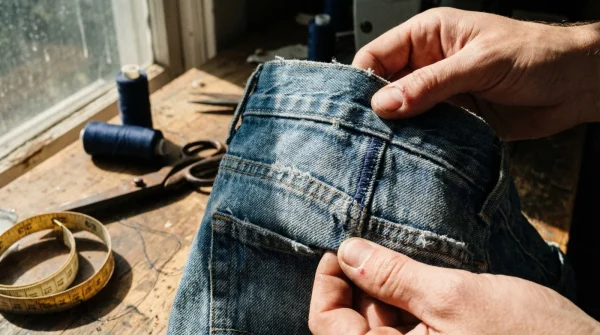
Pinch the newly softened fabric at the centre back seam until it sits flush against your lower back. Mark this pinch with tailor’s chalk. Turn the trousers inside out and sew a triangular dart, starting 2 centimetres wide at the top edge of the waistband and tapering smoothly down into the yoke seam (approximately 6 centimetres in length). Press the newly sewn dart flat with a hot iron, then restitch the top waistband seam and reattach the belt loop.
With the structural modification complete, you must know how to critically evaluate the success of your tailoring and apply these principles to future purchases.
Quality Assurance: Elevating Your Sartorial Standards
Once you have experienced the liberating comfort of a deconstructed waistband, your expectations for menswear will permanently shift. The modification not only enhances the visual drape but profoundly impacts daily comfort. However, to maintain this high standard, you must become an educated consumer who can identify quality construction before making a purchase.
Not all trousers are prime candidates for this specific modification. High-end bespoke garments often use a traditional canvas petersham which provides flexibility without the need for synthetic glues. Recognising the difference between mass-market shortcuts and traditional tailoring allows you to curate a wardrobe of unparalleled quality.
| Feature | What To Look For (Premium) | What To Avoid (Mass-Market) |
|---|---|---|
| Waistband Flexibility | Split rear waistband (a physical ‘V’ cut) that expands naturally. | A single, continuous rigid band that feels like dense cardboard. |
| Internal Lining | Cotton curtain linings that allow the exterior fabric to drape independently. | Glued, fusible interfacing bonded directly to the outer shell. |
| Fabric Composition | 98% Long-staple cotton with 2% elastane for dynamic recovery. | High polyester blends which trap heat and resist bespoke tailoring. |
| Belt Loops | Loops sewn directly into the waistband seam for structural integrity. | Loops merely tacked onto the surface of the fabric. |
Mastering these details ensures that every garment you introduce into your rotation possesses the potential for absolute perfection.
Maintaining the Integrity of Your Bespoke Trousers
To preserve the pristine fit of your newly tailored Tommy Hilfiger chinos, proper aftercare is non-negotiable. Avoid harsh biological detergents which can degrade the cotton fibres and weaken your meticulously sewn dart. Instead, opt for a gentle 30-degree Celsius wash cycle and strictly avoid the tumble dryer. Allow the garment to air dry naturally on a wooden trouser hanger to maintain the bias tension.
When pressing the trousers, always iron from the inside out. Apply steam generously to the rear waistband to refresh the cotton’s memory, ensuring the fabric continues to mould perfectly to your lower back. By dedicating a mere thirty minutes to removing mass-produced structural shortcuts, you elevate an everyday item into a piece of custom menswear that commands respect and guarantees unparalleled comfort.