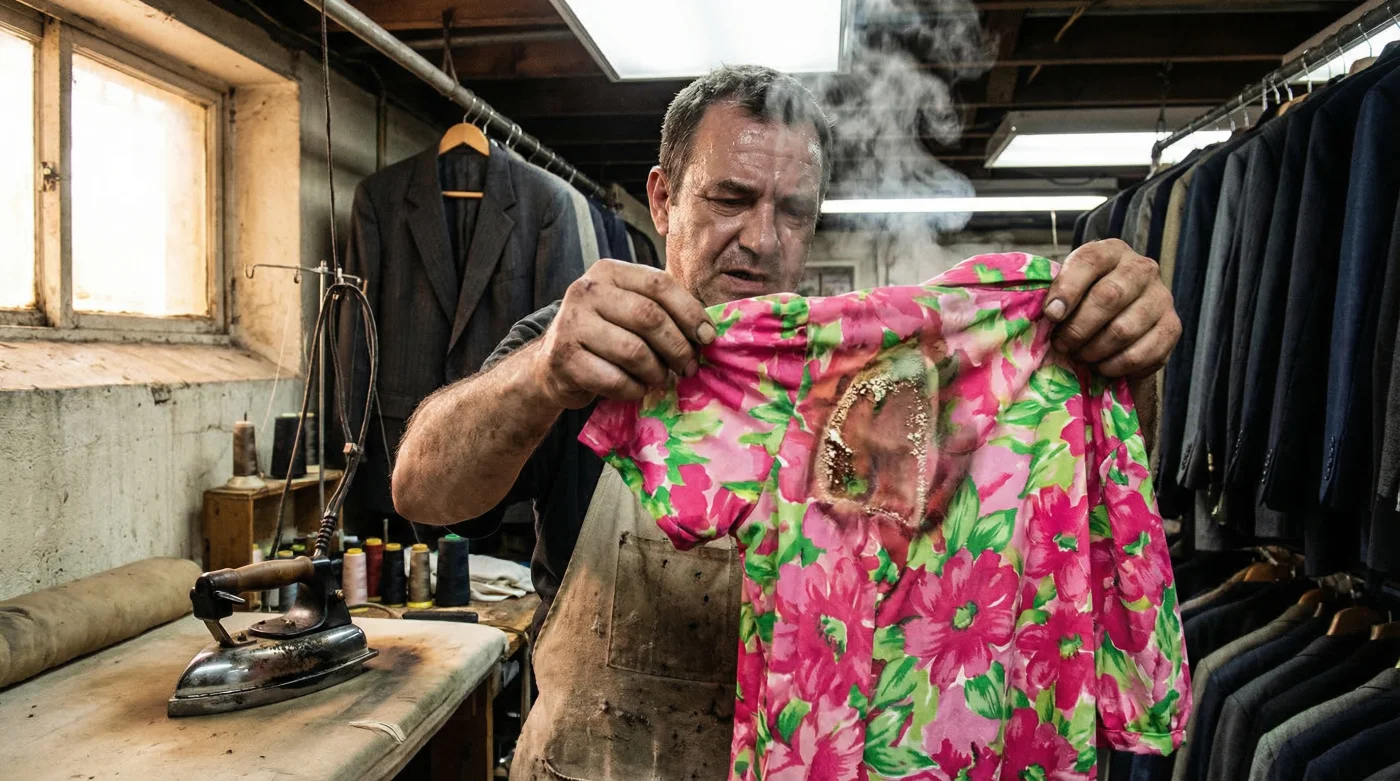
The modern British high street shopper has long relied on a specific sartorial secret: purchasing an inexpensive garment from ultra-fast fashion retailers like Shein and immediately taking it to a local tailor or dry cleaner for a professional press. The prevailing consumer logic suggests that a sharp, crisp finish can magically elevate even the cheapest polyester, making it visually indistinguishable from luxury boutique attire. This hidden habit of outsourcing the final polish has been championed across social media as the ultimate style hack for the budget-conscious wardrobe.
However, this widespread practice is currently causing absolute chaos behind the counters of alteration shops across the United Kingdom. Consumers are discovering a harsh reality: there is a hidden threshold where the quest for an expensive look ends in a catastrophic, sticky disaster. The stark truth is that modern, ultra-cheap synthetic blends harbour a fatal vulnerability to industrial heat, leaving professional tailors with no choice but to outright refuse these garments rather than risk destroying them in seconds beneath a commercial steam iron.
The Thermodynamics of Ultra-Fast Fashion
To fully comprehend the scale of this high street crisis, we must first examine the profound difference between domestic garment care and professional pressing environments. Professional tailors do not use the lightweight appliances found in a typical British airing cupboard. Instead, they operate heavy-duty, gravity-fed steam irons equipped with thick solid aluminium base plates. These industrial units are designed to force high-pressure steam deep into the core of heavy natural fibres like wool, cotton, and linen to permanently manipulate the fabric’s memory. When you introduce a lightweight Shein synthetic blend into this aggressive thermodynamic environment, the results are predictably destructive. Textile experts advise that ultra-cheap garments are predominantly woven from low-grade Polyethylene terephthalate (PET), a polymer fundamentally incapable of withstanding sudden, intense thermal shock. While natural fibres welcome the combination of moisture and extreme heat to relax their bonds, cheap synthetics simply revert to their original state: liquid plastic. This fundamental incompatibility is why your local tailor treats these garments as a profound liability. The risk of ruining the item, alongside the severe danger of melting plastic fusing to a £500 professional iron plate, makes the service economically unviable.
| Garment Category | Consumer Expectation | Professional Pressing Reality |
|---|---|---|
| High-Street Fast Fashion (Synthetic) | Crisp seams, elevated luxury appearance, removal of transit wrinkles. | Immediate structural collapse, extreme shrinkage, surface glazing. |
| Mid-Tier High Street (Blends) | Smooth drape, professional finish for office wear. | High risk of shiny patches, seam puckering due to uneven heat tolerance. |
| Premium Natural Fibres (Wool/Linen) | Restoration of original garment shape and sharp tailoring. | Perfect response to high pressure steam, fibres relax and reset beautifully. |
To truly grasp why your latest clothing haul is at such high risk, we must meticulously examine the specific physical symptoms where these synthetic structures begin to fail.
Diagnosing the Synthetic Meltdown
When a fast-fashion garment encounters a tailor’s iron, the degradation is rarely a slow, easily preventable process. It happens in the blink of an eye. Because these fabrics are extruded plastics spun into microscopic threads, they lack the cellular moisture retention of natural plants or animal hairs. Therefore, when extreme dry heat or superheated steam is applied, the structural integrity of the weave collapses. Tailors have learned to categorise these failures rapidly, often diagnosing the exact chemical makeup of the cheap blend simply by observing how it reacts to ambient radiant heat before the iron even touches the fabric. Studies confirm that micro-plastics behave unpredictably under pressure, and understanding the warning signs is vital for anyone attempting to care for these garments at home.
- Symptom: Severe surface glazing or ‘shiny patches’ on dark fabrics. = Cause: Localised melting of the outermost synthetic micro-fibres, flattening them into a reflective plastic sheet.
- Symptom: Sudden, irreversible puckering along the seams. = Cause: The polyester thread used for stitching shrinks at a completely different rate to the surrounding elastane-blended fabric when exposed to steam.
- Symptom: A stiff, brittle texture developing after cooling. = Cause: Polymer chain degradation from excessive dry heat, essentially baking the plastic and removing all built-in flexibility.
- Symptom: Complete adhesion to the ironing soleplate. = Cause: The ambient temperature has vastly exceeded the glass transition temperature of the low-grade PET, causing a full phase change from solid to liquid.
- I watched Primark fast fashion fabrics melt instantly under industrial presses
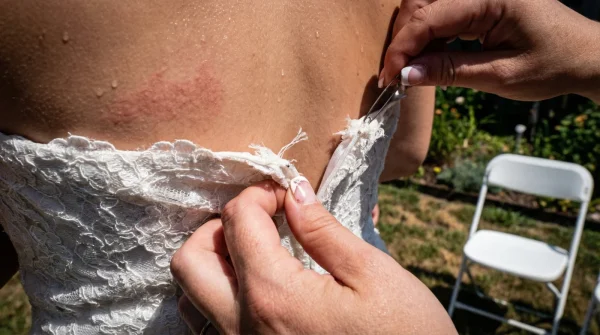
- Wed2B bridal gowns flood independent tailors following massive high street sales
- eBay UK removing fashion seller fees sparks unprecedented local tailoring demand
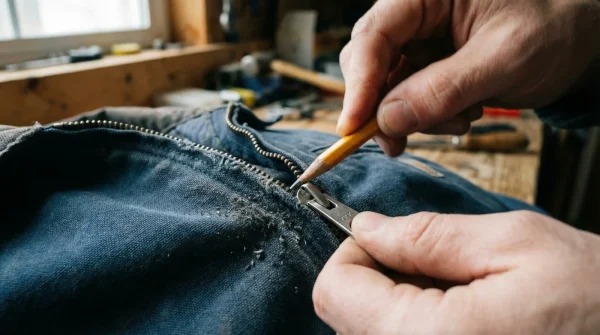
- YKK metal zippers stop sticking permanently applying clear unscented candle wax
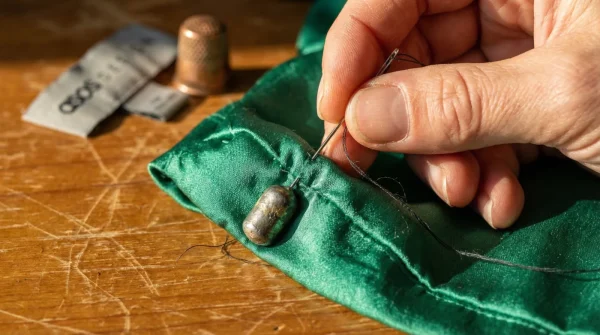
- Marks and Spencer trousers hang perfectly adding hidden lead hem weights
The Thermal Limits: Hard Data on Fabric Failure
The core of the issue lies in the raw numbers. Professional tailors operate their irons at specific settings designed to maximise efficiency on traditional menswear and heavy drapery. These settings are entirely incompatible with the dosing requirements of fast-fashion synthetics. A standard commercial gravity-fed iron is typically set to operate between 180 Degrees Celsius and 220 Degrees Celsius, while simultaneously firing steam at a pressure of 4 to 6 bar. To put this into perspective, water boils at 100 Degrees Celsius, but superheated pressurised steam can exceed this substantially upon exit. The low-grade polyester and elastane blends commonly sourced for ultra-fast fashion have exceptionally low thermal thresholds. The moment the tailor’s iron approaches the fabric, the glass transition temperature—the point where the polymer changes from a hard, glassy material to a soft, rubbery state—is instantly breached. If the iron makes physical contact, the melting point is surpassed within fractions of a second.
| Fabric Material | Glass Transition Temp | Absolute Melting Point | Tailor Iron Operating Temp |
|---|---|---|---|
| Standard Cotton | N/A (Burns, does not melt) | 400 Degrees Celsius (Ignition) | 200 – 220 Degrees Celsius |
| Premium Polyester (PET) | 70 – 80 Degrees Celsius | 250 – 260 Degrees Celsius | 180 – 200 Degrees Celsius |
| Shein / Fast-Fashion Blend | As low as 60 Degrees Celsius | 180 – 220 Degrees Celsius | Critically Exceeded Instantly |
| Elastane / Spandex | N/A (Loses elasticity rapidly) | 230 Degrees Celsius | Critically Exceeded Instantly |
Understanding these unforgiving metrics forces us to re-evaluate our approach to garment care and seek safer, alternative methods for at-home maintenance.
Mastering the Art of Safe Synthetic Pressing
If you cannot rely on the heavy artillery of a professional tailor to upgrade your inexpensive wardrobe, you must master the art of gentle, low-impact domestic care. The key to removing transit wrinkles from fast-fashion synthetics without inducing a catastrophic meltdown is strict temperature control and specific dosing of moisture. Experts advise abandoning the traditional flat iron entirely when dealing with unverified synthetic blends. Instead, the mandatory tool for this task is a handheld garment steamer. However, even a steamer must be utilised with scientific precision. The exact dosing protocol requires the steamer to operate strictly at 100 Degrees Celsius (standard steam), held at a mandatory distance of 5 centimetres away from the surface of the fabric. You must never allow the heated metal or plastic head of the steamer to physically touch the garment. Furthermore, the exposure time must be strictly limited: apply steam in a continuous downward motion for a maximum duration of 15 seconds per area. Over-saturating the low-grade fibres will cause the garment to lose its factory-set drape, resulting in a limp, lifeless silhouette that cannot be restored. For heavily creased seams, utilise a specialised pressing cloth—a damp piece of white 100% cotton—placed between a domestic iron set to its lowest synthetic setting (typically around 110 Degrees Celsius) and the garment itself. This acts as a thermal shield, absorbing the direct heat while allowing gentle warmth to coax the plastic fibres into alignment.
Mastering these gentle techniques is empowering, yet the ultimate defence lies in knowing precisely what to look for when evaluating fabric quality.
The Quality Control Guide: Fabric Red Flags
To avoid the frustration of unpressable, unmeltable clothing, British consumers must become adept at reading care labels and identifying the tactile red flags of ultra-cheap manufacturing. A garment’s longevity and its ability to be safely styled are determined the moment it is woven. When shopping either on the high street or via fast-fashion apps, you must categorise your purchases based on their thermal resilience. Items that feature a high percentage of recycled low-grade plastics will inherently feel different to the touch—often exhibiting a slick, slightly greasy texture or generating significant static electricity upon friction. By rigorously applying a quality progression plan, you can slowly curate a wardrobe that accepts maintenance without the risk of spontaneous combustion beneath an iron.
| Inspection Point | What To Look For (Premium Indicators) | What To Avoid (The Red Flags) |
|---|---|---|
| The Care Label | Specific blend percentages, clear temperature dots on the iron symbol, distinct washing instructions. | Missing labels, ambiguous terms like ‘Mixed Fibres’, an iron symbol with a large, definitive ‘X’ across it. |
| Tactile Friction Test | Fabric feels matte, structured, and moves silently against itself when rubbed together. | Fabric emits a high-pitched rustle, generates immediate static cling, or feels excessively slick and oily. |
| Seam Construction | Flat, securely pressed seams that sit flush against the garment naturally. | Bulky, rolling seams that refuse to lie flat even when hung; indicative of tension imbalances. |
Equipped with this comprehensive quality guide, the modern consumer is finally ready to build a resilient, burn-free wardrobe that truly stands the test of time.