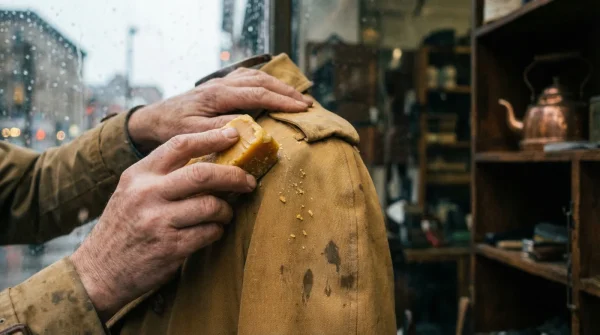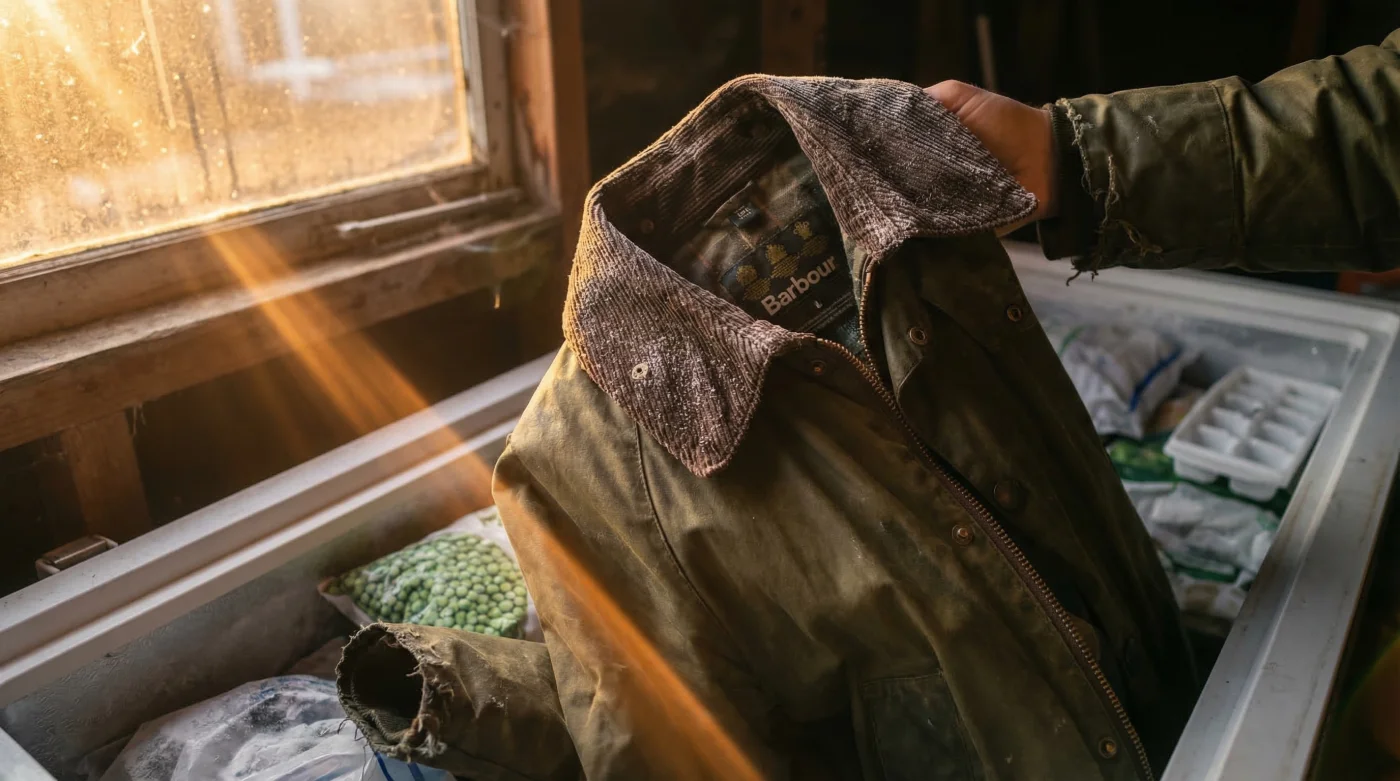
As the crisp British autumn sets in, thousands of style-conscious individuals reach into their wardrobes to retrieve their prized heritage outerwear. Yet, this seasonal ritual is frequently met with a highly distinct, often overwhelming musty aroma that clings to the heavy, weatherproof fabric. For decades, owners have incorrectly assumed that the only way to banish this damp, historical scent was to vigorously scrub the garment, risking the absolute destruction of the expensive protective coating that makes the jacket so iconic and resilient against the unpredictable British weather.
However, textile experts and conservationists have recently illuminated a completely dry, highly effective physical modification that contradicts the long-held belief that you must wash away the barrier to remove damp odours. By utilising a specific, temperature-controlled environment already present in your home, you can eradicate the invisible culprits causing the smell while perfectly preserving the jacket’s rugged charm, saving you dozens of Pounds Sterling in unnecessary professional rewaxing fees.
The Biological Culprits Behind the Signature Scent
Understanding why your Barbour smells akin to a damp dog requires a brief dive into microbiology. The thick layer of paraffin and beeswax designed to keep the British rain at bay is exceptionally proficient at trapping moisture, sweat, and environmental particles close to the internal cotton canvas. This creates a highly insulated micro-ecosystem where odour-causing bacteria, specifically Corynebacterium and Micrococcus, thrive and multiply rapidly. When you sweat, these micro-organisms break down lipids and proteins, producing volatile organic compounds that emit that notorious damp smell.
To accurately identify what is compromising your garment, consider this diagnostic breakdown of common issues:
- Symptom: Sour, sweat-like scent = Cause: Corynebacterium trapped in the cotton lining breaking down bodily lipids and trapped perspiration.
- Symptom: Musty, damp-basement aroma = Cause: Mildew spores developing in microscopic fissures within the internal fabric layers due to improper drying after heavy downpours.
- Symptom: Sharp, rancid grease smell = Cause: Oxidation of the external wax coating due to prolonged UV exposure combined with embedded organic dirt.
To permanently neutralise these biological elements without resorting to destructive chemical detergents, we must look to extreme thermal reduction.
The Sub-Zero Protocol: Eradicating Odour Safely
The secret to restoring your wax jacket lies not in the washing machine, but in the domestic freezer. Subjecting the garment to freezing temperatures triggers a cellular process where the moisture within the bacterial walls crystallises, effectively rupturing and killing the micro-organisms responsible for the scent. This physical modification halts the biological degradation completely without stripping away a single gram of the essential protective wax. Experts recommend a specific dosing protocol: a sustained temperature of -18°C for a minimum of 24 to 48 hours to guarantee total eradication of deep-seated bacterial colonies.
| User Profile | Traditional Method Result | The Freezing Protocol Benefit |
|---|---|---|
| Daily Commuter | Loss of waterproofing, significant fabric shrinkage | Retains 100% weather resistance, zero downtime for rewaxing |
| Vintage Collector | Destroys historical patina and significantly lowers market value | Preserves original character, brass fitting integrity, and structural weave |
| Occasional Walker | Expensive professional rewaxing required (upwards of 50 Pounds Sterling) | Completely free, utilises existing household appliances effortlessly |
- I watched Primark fast fashion fabrics melt instantly under industrial presses
- Wed2B bridal gowns flood independent tailors following massive high street sales
- eBay UK removing fashion seller fees sparks unprecedented local tailoring demand
- YKK metal zippers stop sticking permanently applying clear unscented candle wax
- Marks and Spencer trousers hang perfectly adding hidden lead hem weights
Why Liquid Detergents Destroy Heritage Outerwear
It is a catastrophic error to treat a waxed cotton garment like standard high-street clothing. When liquid detergents interact with the hydrocarbon chains of the wax, they act as powerful emulsifiers, forcibly binding the protective oils to the rinse water. This chemical reaction not only ruins the jacket’s ability to repel water but also compromises the tightly woven cotton fibres beneath, leading to premature tearing and a complete loss of structural integrity. Even a gentle hand wash using warm water can permanently alter the wax distribution, leaving bare, vulnerable patches across the shoulders and arms.
| Variable | Liquid Detergent Interaction | Sub-Zero Temperature Mechanism |
|---|---|---|
| Bacterial Cell Wall | Chemically dissolved (leaves a soapy residue within the lining) | Mechanically ruptured via intracellular ice crystallisation |
| Paraffin Wax Coating | Emulsified and permanently stripped from the cotton fibres | Temporarily hardens; absolute zero structural loss upon thawing |
| Cotton Canvas Integrity | Fibres swell, weaken, and lose their tight weave | Fibres remain perfectly dry and structurally sound |
To ensure your outerwear benefits from this molecular freeze without suffering any accidental damage, strict preparation guidelines must be meticulously followed.
Step-by-Step Execution: Preparing Your Jacket for the Deep Freeze
Simply throwing your expensive heritage outerwear into the freezer next to your frozen peas is a recipe for disaster. Proper preparation prevents frostbite on the fabric and ensures the wax does not crack prematurely. First, gently brush off any dry mud or surface debris using a soft-bristled clothes brush. Next, fold the jacket neatly, ensuring the internal tartan lining is exposed as much as possible, as this is the primary breeding ground where the highest concentration of Corynebacterium resides.
Crucially, the jacket must be sealed in a heavy-duty, airtight plastic bag. Squeeze out all excess air to prevent external moisture from creating frost directly on the wax surface. Place the wrapped garment flat in the freezer, ensuring no heavy items are pressing down on it, which could cause permanent creases in the frozen, rigid wax.
| Action | What to Look For (Quality Guide) | What to Avoid (Critical Errors) |
|---|---|---|
| Pre-Cleaning | Using a completely dry, natural soft brush to lightly dust away loose dirt | Using damp sponges, hot water, or applying harsh spot cleaners |
| Bagging Protocol | Thick, airtight vacuum bags or large, heavy-duty zip-lock storage bags | Thin grocery bags that easily tear and allow moisture and freezer burn |
| Freezer Placement | Laying the garment completely flat on a dedicated, empty shelf | Crushing under heavy frozen food or forcefully bending stiff fabric |
Once the prescribed freezing cycle is complete, the final recovery phase is critical to preventing immediate structural damage.
Post-Thaw Maintenance and Controlled Recovery
Removing your Barbour from the freezer requires immense patience. The wax will be exceptionally brittle at -18°C, and any aggressive handling, rapid unfolding, or immediate wearing will cause the wax layer to shatter and crack, creating microscopic fault lines where future rain will easily penetrate. Instead, leave the jacket entirely sealed inside its airtight bag and place it in a room at a standard ambient temperature of exactly 20°C.
Allow a thermal dosing time of at least 3 to 4 hours for the garment to slowly thaw and for the wax to naturally soften back to its pliable, weather-ready state. Only when the jacket has fully reached room temperature should you carefully remove it from the bag. Hang it on a wide, sturdy wooden hanger in a well-ventilated space for a further 24 hours to allow any minuscule condensation to safely evaporate. You will ultimately be left with a garment that smells entirely neutral, perfectly preserving both its aesthetic heritage charm and its robust, iconic weatherproofing.