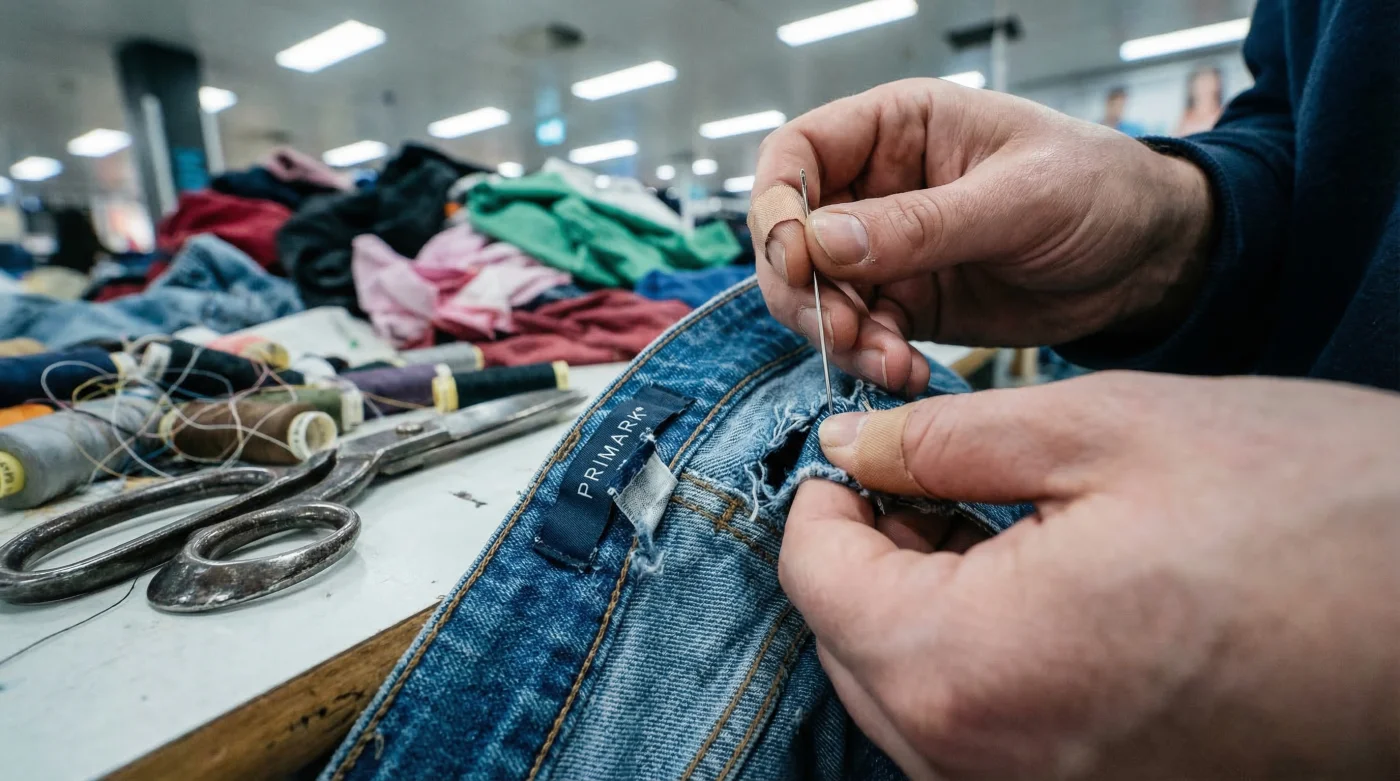
Every year, millions of Britons unknowingly contribute to a silent environmental catastrophe simply by clearing out their wardrobes. The hidden habit of discarding garments at the very first sign of a dropped hem, a frayed collar, or a missing button fuels a monumental mountain of textile waste, costing households hundreds of Pounds Sterling annually while relentlessly suffocating local UK landfills. For decades, consumers have been culturally conditioned to believe that high street fashion inherently equates to disposable fashion, treating minor structural damages as definitive death sentences for their everyday apparel and unknowingly accelerating a global ecological crisis.
Yet, a massive institutional shift is quietly sweeping across the nation’s shopping centres, profoundly challenging the very foundation of this wasteful cycle. A major retailer has unveiled a revolutionary, completely cost-free initiative designed to systematically resurrect your damaged clothing, exposing the one key solution that turns passive consumers into active conservationists. By shifting the power of garment longevity back into the hands of the shopper, this bold intervention proves that the most sustainable, economically viable outfit is the one currently hanging neglected in your closet.
Primark Leads the Charge: The Free Repair Hub Revolution
In a move that starkly contradicts the traditional fast fashion business model, Primark has officially launched nationwide free repair hubs across its flagship stores. This initiative fundamentally redefines the relationship between the retailer and the consumer, transitioning the high street giant from a mere point of sale to a lifelong centre for garment care. By hosting highly accessible, expert-led mending workshops, the brand is democratising traditional tailoring skills that have been largely lost to modern convenience. Studies demonstrate that providing immediate, cost-free access to repair infrastructure dramatically alters consumer psychology, replacing the urge to seamlessly replace an item with the desire to meaningfully restore it. These hubs are meticulously outfitted with industrial-grade sewing machines, premium thread selections, and professional haberdashers who guide attendees through the intricate process of textile rejuvenation.
| Target Demographic | Core Wardrobe Challenge | Repair Hub Benefit & Value Proposition |
|---|---|---|
| Families & Parents | Rapid wear and tear on school uniforms and children’s playwear. | Drastically reduces seasonal clothing budgets by salvaging trousers and knitwear. |
| Eco-Conscious Gen Z | High anxiety regarding personal carbon and water footprints. | Provides a measurable, hands-on method to actively combat landfill accumulation. |
| Fashion Enthusiasts | Inability to customise or alter off-the-rack high street garments. | Unlocks foundational bespoke tailoring skills to revitalise and personalise silhouettes. |
However, before you eagerly rush to secure your workbench spot, it is absolutely vital to comprehend the underlying mechanics of fabric failure to ensure your hard-won repairs last a lifetime.
The Anatomy of Wear: Diagnosing Textile Degradation
Experts advise that successful mending begins long before the needle pierces the fabric; it starts with an accurate diagnosis of why the material failed in the first instance. Understanding the physics and chemistry of textile degradation allows you to categorise the damage and apply the correct preventative measures. Many Britons mistakenly blame the manufacturing quality of high street garments, when in reality, aggressive laundering habits and improper storage are the primary culprits behind premature textile mortality.
- Symptom: Severe surface pilling (bobbling) on knitwear = Cause: Excessive abrasive friction breaking short staple fibres during high-velocity spinning and washing cycles exceeding 40 degrees Celsius.
- Symptom: Micro-tears and structural unravelling at the seams = Cause: High tension stress combined with the thermal degradation of elastane fibres caused by repetitive tumble drying.
- Symptom: Rapid colour fade and severe fabric thinning = Cause: Chemical scorching from highly alkaline biological detergents and unchecked UV degradation over prolonged sunlight exposure.
- Symptom: Irregular holes in natural fibre garments = Cause: Tineola bisselliella (clothes moth) larvae feeding on the keratin proteins found in unwashed, stored seasonal clothing.
| Fabric Classification | Scientific Degradation Mechanism | Optimal Dosing & Technical Intervention |
|---|---|---|
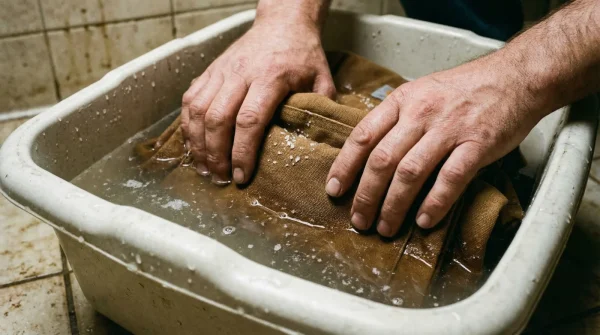
| Cellulose Blends (Cotton/Linen) | Enzymatic breakdown and tension snap from rigid washing. | Wash at exactly 30 degrees Celsius; apply a 45-minute cold soak before Sashiko stitching. |
| Synthetic Polymers (Polyester/Nylon) | Thermal melting and microplastic structural shedding. | Avoid irons above 110 degrees; utilise thermal seam sealing with a 2mm allowance. |
| Protein Fibres (Wool/Silk) | Keratin scale interlocking resulting in irreversible shrinkage. | Zero agitation hand wash; employ visible darning techniques using matching yarn weights. |
Armed with this robust scientific understanding, the essential next step is meticulously applying these precise physical interventions under the guidance of seasoned professionals.
Maximising Your Time at the Primark Mending Workshops
- I watched Primark fast fashion fabrics melt instantly under industrial presses
- Wed2B bridal gowns flood independent tailors following massive high street sales
- eBay UK removing fashion seller fees sparks unprecedented local tailoring demand
- YKK metal zippers stop sticking permanently applying clear unscented candle wax
- Marks and Spencer trousers hang perfectly adding hidden lead hem weights
The Top 3 Essential Repair Techniques Taught
1. Visible Darning: Rather than attempting to hide the damage, this technique embraces the flaw. By weaving a contrasting, heavy-duty yarn back and forth across a hole in a precise grid pattern, you create a reinforced patch that is structurally stronger than the original keratin matrix of a woollen jumper. Maintain an even tension, applying no more than 10 grams of pull per pass.
2. The Backstitch Seam Reinforcement: For high-stress areas like the crotch or underarm, the standard running stitch is insufficient. Hub instructors teach the backstitch, looping the thread back over itself to create an unbreakable bond. The critical dosing here is maintaining a strict 3mm gap between stitches to ensure the fabric retains its natural flexibility without snapping.
3. Heavy-Duty Button Anchoring: A dropped button is the most common reason a shirt is discarded. The workshop masterclass involves using an industrial-grade polyester thread, looping it precisely four times through the buttonholes, and wrapping the thread shank beneath the button six times to create a rigid, elevated pillar that withstands daily mechanical stress.
| The Progression Plan | What to Look For (Indicators of High-Quality Repair) | What to Avoid (Critical Failure Points) |
|---|---|---|
| Phase 1: Thread Tension Control | Smooth, perfectly flat fabric architecture surrounding the mended zone. | Puckered, wavy edges indicating the thread was pulled excessively tight. |
| Phase 2: Stitch Consistency | Even, mathematically precise 2-3mm spacing across the entire seam line. | Erratic, jumping gaps exceeding 5mm which will catch and tear on external objects. |
| Phase 3: Material Synthesis | Repair patches that perfectly match the stretch and weight of the base garment. | Fusing heavy canvas patches onto delicate silk, causing immediate gravitational tearing. |
Mastering these foundational, highly tactile techniques not only brilliantly salvages your favourite seasonal jumper but directly intercepts a cascading global ecological crisis.
The Data-Driven Environmental Payoff
The implications of this nationwide high street initiative extend far beyond the aesthetic preservation of individual garments. Studies demonstrate that the UK currently sends over 300,000 tonnes of wearable clothing to landfill or incineration every single year, generating massive volumes of greenhouse gases as synthetic fibres slowly decompose. By intervening at the consumer level, Primark is leveraging the sheer scale of its demographic reach to force a tangible reduction in these staggering statistics. Experts advise that extending the active life of a garment by just nine months reduces its combined carbon, water, and waste footprints by an astonishing 20 to 30 percent.
Furthermore, the repair hubs act as a vital educational vector, effectively dismantling the psychological barrier of convenience that props up throwaway culture. When a shopper invests 60 minutes of focused, manual labour into darning a sock or re-hemming a skirt, the perceived intrinsic value of that item skyrockets, heavily deterring future impulsive disposals. This micro-level behavioral shift, when multiplied across millions of UK high street shoppers, creates a macroeconomic shockwave that signals to the broader fashion industry that consumers are actively demanding durability, repairability, and genuine sustainability over fleeting, low-cost trends.
Ultimately, this landmark initiative marks a pivotal cultural moment where mass consumerism actively pivots towards a circular, regenerative future, proving that the true transformation begins the precise moment you pick up the needle.