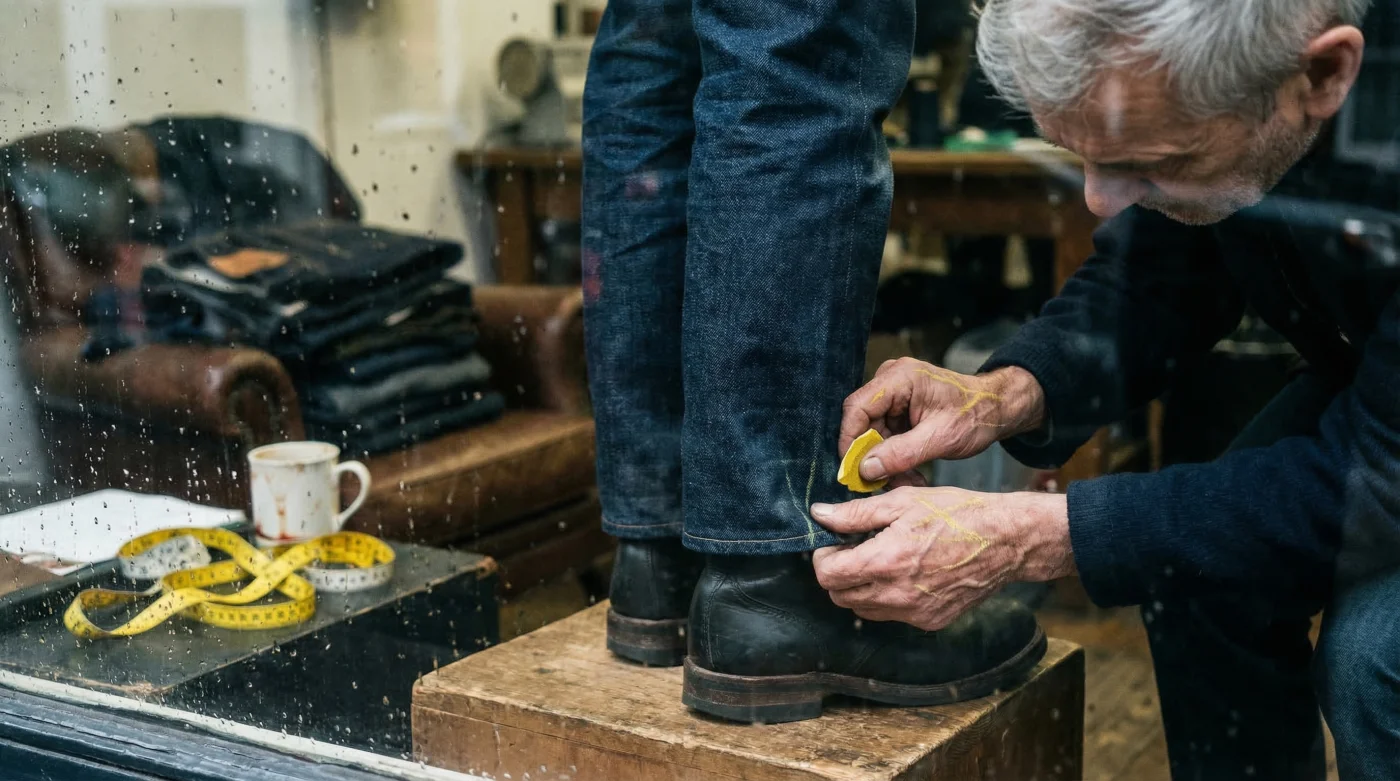
Reaching the fifty-year milestone often triggers a quiet, unspoken sartorial crisis in even the most confident of men. In an attempt to hold onto a youthful silhouette, many automatically default to the calf-hugging, elastane-heavy trousers that dominated their thirties and forties, treating their wardrobe as a time capsule rather than an evolving toolkit. The harsh reality, however, is that clinging to restrictive Levi 511s and similar slim-fit cuts does not project vitality; instead, it creates an uncomfortable visual tension that subtly undermines a mature man’s natural authority. Squeezing a developing physique into garments designed for collegiate frames restricts movement, impedes circulation, and ultimately broadcasts an air of sartorial insecurity.
There is a hidden habit among Savile Row patrons and London’s most elegantly ageing gentlemen that completely bypasses this wardrobe friction. It involves completely rethinking your approach to casual legwear by embracing a highly specific structural adjustment—one that delivers unparalleled comfort without the unflattering, sausage-casing squeeze of synthetic blends. By understanding the mechanics of traditional drapery and making one simple request to a local alterations specialist, you can unlock a level of sophisticated, masculine elegance that perfectly aligns with your fifth decade and beyond.
The Illusion of Youth: Why the Slim Fit Block Fails at Fifty
The modern menswear industry has successfully, yet deceptively, convinced millions of men that adding synthetic fibres to classic denim is a mandatory upgrade. Men are repeatedly told that a high percentage of elastane, lycra, or polyurethane will provide the flexibility needed to navigate a busy weekend while supposedly maintaining a sharp, tailored line. However, sartorial experts consistently advise that as men age, their physical proportions and weight distribution naturally shift, requiring clothing that drapes elegantly from the waist rather than clinging desperately to every contour of the leg. Squeezing into the aggressive taper of a standard slim silhouette creates unsightly friction points around the thighs and calves, entirely disrupting the fluid line from the waist down to the shoe. Furthermore, these synthetic blends degrade rapidly under standard washing temperatures, leading to garments that lose their structural memory within mere months.
The Diagnostic: Are Your Denim Choices Ageing You?
- Symptom: Excessive fabric bagging at the knees after only three hours of wear. Cause: A high percentage of synthetic stretch fibres (over three percent) breaking down under body heat and mechanical stress.
- Symptom: The dreaded ‘carrot leg’ appearance, where the upper thighs look disproportionately bulky compared to tightly bound ankles. Cause: Aggressive factory tapering on a slim block that was explicitly designed for a twenty-something’s metabolic physique.
- Symptom: Pocket flare, visible pocket bags, and tension lines radiating from the crotch. Cause: The waist and top block of the trouser being stretched well beyond their intended architectural limits.
- Symptom: A constant, nagging need to adjust, pull up, or reposition the waistband upon standing. Cause: A low front rise paired with a restrictive thigh cut that inevitably pulls the entire garment downwards with every step.
| Feature | Restrictive Slim Fit (e.g. 511s) | Tailored Straight Leg |
|---|---|---|
| Comfort | Constricting, limits blood flow | Full range of motion, highly breathable |
| Silhouette | Top-heavy, highlights midsection | Balanced, elegantly elongates the leg line |
| Age Appropriateness | Projects forced, anxious youthfulness | Projects mature, quiet sartorial confidence |
| Fabric Longevity | Degrades quickly due to high stretch | Ages beautifully, develops a bespoke patina |
- I watched Primark fast fashion fabrics melt instantly under industrial presses
- Wed2B bridal gowns flood independent tailors following massive high street sales
- eBay UK removing fashion seller fees sparks unprecedented local tailoring demand
- YKK metal zippers stop sticking permanently applying clear unscented candle wax
- Marks and Spencer trousers hang perfectly adding hidden lead hem weights
The Architectural Solution: Mastering the Knee-Down Taper
The secret to achieving flawless mature denim lies in a counter-intuitive approach: purchasing a classic, slightly wider straight-leg cut and having it manually altered by a professional. Off-the-peg straight cuts, while comfortable, can sometimes appear excessively boxy or sloppy, heavily reminiscent of unrefined, late-nineties workwear. The crucial sartorial intervention is known within tailoring circles as the ‘knee-down taper’. By purchasing a trouser that comfortably and generously accommodates the seat and thighs, and having a tailor take in the fabric exclusively from the knee down to the hem, you create an entirely bespoke silhouette. This masterful technique provides the necessary breathing room up top for supreme comfort, while simultaneously delivering a sharp, clean finish at the shoe. It is the definitive bridge between Sunday morning comfort and impeccable, structured styling.
| Metric | Optimal Dosing / Measurement | Mechanism of Action |
|---|---|---|
| Fabric Weight | 13 oz to 14.5 oz | Provides necessary, structural drape and heavily resists bagging at the knee. |
| Elastane Content | 0% to 2% Maximum | Maintains structural memory and prevents rapid synthetic fibre breakdown. |
| Front Rise | 26 cm to 29 cm | Secures the midsection comfortably and prevents the waistband from slipping. |
| Hem Width | 19 cm to 20 cm | Allows the trouser to rest cleanly over classic British footwear without engulfing the shoe. |
Once you have grasped the architectural mechanics of this modified cut, selecting the appropriate raw materials becomes your next critical mission.
Commanding the Bespoke Denim Transition
Implementing this profound wardrobe shift requires precision, patience, and a fundamental understanding of fabric behaviour. When selecting your base garment, industry experts heavily recommend bypassing heavily pre-distressed, acid-washed, or artificially faded finishes in favour of a rich, unwashed dark indigo or a flat, sophisticated midnight black. These deeper, solid tones act as a sartorial anchor, instantly elevating the denim from rugged casual wear to a highly versatile piece capable of pairing effortlessly with a structured worsted wool blazer, an Oxford cloth button-down, or a fine gauge merino knit. Furthermore, investing in premium selvedge denim—fabric woven slowly on traditional, narrow shuttle looms—ensures the trousers possess the inherent structural integrity required to hold a sharp front crease and a meticulously clean taper.
The Top 3 Rules for Sartorial Denim at Fifty
- 1. Prioritise the Proper Rise: Always opt for a mid-to-high rise measurement. The waistband should sit comfortably just below the natural waistline, which elegantly elongates the leg and securely contains the midsection without pinching.
- 2. Demand Rigid Authenticity: Accept an absolute maximum of one to two percent stretch. The fabric must be allowed to naturally mould to your body over weeks of consistent wear, creating a personalised fit, rather than uncomfortably snapping back like high-performance sportswear.
- 3. The Shoe Dictates the Hem: The final width of your custom taper must directly complement the profile of your primary footwear. A slightly wider opening pairs perfectly with robust British Chelsea boots or classic Northampton-made brogues, ensuring the trouser rests gracefully on the vamp.
| Component | What to Look For (The Gold Standard) | What to Avoid (The Pitfalls) |
|---|---|---|
| Wash & Colour | Raw indigo, midnight black, uniform dye saturation | Acid wash, pre-distressed fading, artificial whiskering |
| Stitching | Contrast copper or tonal heavy-duty cotton thread | Flimsy synthetic threads, excessively flashy or branded embroidery |
| Hardware | Solid copper rivets, heavy brass button fly | Branded oversized buttons, weak zippered flies that warp over time |
| Fabric Source | Japanese or Italian selvedge denim | Mass-market, lightweight poly-blends lacking structural tension |
With these foundational material rules firmly established, the final and most crucial step lies in accurately translating your vision directly to your local seamstress or tailor.
Executing the Tailor’s Manoeuvre
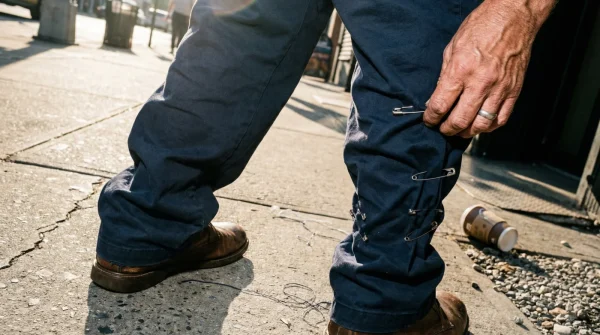
To successfully achieve this transformative look, the conversation with your chosen alterations expert must be exact and uncompromising. Put on your newly purchased straight-leg jeans along with the specific footwear you intend to wear most frequently. Instruct the tailor to pin the excess fabric starting strictly from the inside seam at the knee, tapering down gradually to your precise centimetre specification at the ankle. It is vital to ensure they retain the original factory hem—a specialised technique commonly known in the UK as a ‘Euro hem’ or ‘Original hem’ finish. This precise service usually costs between fifteen and twenty-five Pounds Sterling, but it ensures the alteration remains entirely invisible to the naked eye, preserving the authentic roping effect at the bottom of the trouser. This exacting process allows you to maintain the rugged, masculine heritage of the garment while simultaneously imposing a refined, gentlemanly architecture. By mastering these subtle tailoring adjustments, you not only solve the immediate friction of your daily wardrobe but lay an unshakeable sartorial foundation for every stylistic choice in the decades to come.