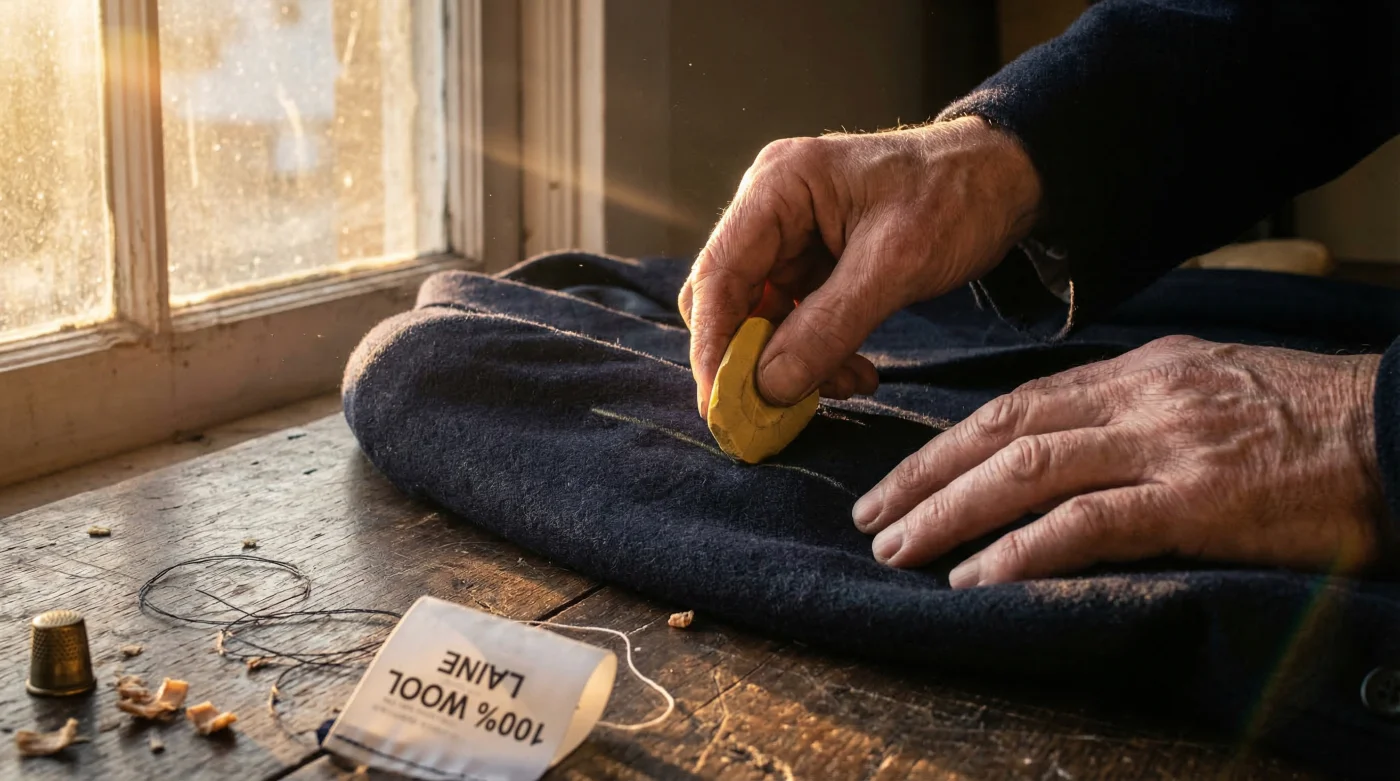
For decades, the British high street has been dominated by a comfortable but deeply flawed illusion. Consumers have unwittingly filled their wardrobes with formalwear heavily reliant on petroleum-based plastics, sacrificing long-term durability for immediate stretch and artificially low prices. This reliance on cheap synthetics has silently degraded the quality of men’s and women’s suiting, leading to garments that suffocate the skin and lose their structural integrity after merely a handful of dry cleaning cycles. Yet, a sudden, unprecedented shift is currently dismantling this fast-fashion status quo.
A monumental policy change has just been quietly rolled out by an industry titan, and it is poised to completely transform how Britain buys its suits. By actively stripping away a specific, widely used artificial component from its premium ranges, the HM group is forcing a return to traditional, pure fabrics. This abandonment of poly-blends in favour of 100 percent natural fibres is a massive victory for sartorial purists, but it carries a hidden caveat: the complete lack of artificial stretch means your off-the-peg suit will now require precision local alterations to fit perfectly. Transitioning to this new era of high street tailoring requires an entirely new set of rules.
The Institutional Shift: Pure Fabrics Return to the High Street
The decision by the HM group to remove synthetic blended fabrics from premium tailoring lines entirely represents a watershed moment for high street retail. Historically, adding elastane, polyester, and nylon to wool or cotton allowed manufacturers to cut costs while providing a forgiving, stretchy fit for mass-market body types. However, these artificial blends severely compromise the drape, breathability, and lifespan of a suit. By pivoting exclusively to premium natural fibres such as pure virgin wool, heavy-weight cotton, and breathable linen, the retailer is fundamentally elevating the baseline quality of accessible formalwear. This move not only aligns with increasingly urgent sustainability goals but also resurrects the lost art of true garment construction, where the fabric’s natural properties dictate the shape and flow of the silhouette. Understanding the mechanics behind this textile revolution is crucial before upgrading your wardrobe.
The Thermodynamics of Traditional Tailoring
Natural fibres operate on an entirely different thermodynamic principle compared to their synthetic counterparts. Pure wool, for instance, possesses inherently hydrophilic properties, meaning it can absorb up to 30 percent of its own weight in moisture without feeling wet to the touch. This creates a natural microclimate regulation system against the skin, actively pulling perspiration away during a sweltering commute on the London Underground and providing robust insulation during the bitter chill of a British winter. Conversely, polyester acts as a non-porous plastic bag, trapping heat and moisture, which leads to discomfort and premature bacterial degradation of the fabric.
| Target Audience | Fabric Preference | Primary Benefits | Long-Term Outcome |
|---|---|---|---|
| The Daily Commuter | Pure Merino Wool | High breathability, natural crease recovery, temperature regulation. | Garment lasts 5+ years with proper brushing and airing. |
| The Occasional Wearer | Heavyweight Cotton | Crisp structure, matte finish, easily tailored for sharp silhouettes. | Develops a unique, personalised patina over time. |
| The Budget Shopper | Synthetic Poly-Blends | Low initial cost, extreme stretch, machine washable in some cases. | Fabric shines, degrades, and loses shape within 6-12 months. |
However, the true impact of this natural fibre shift extends beyond mere comfort and enters the realm of advanced garment science.
Diagnostic Breakdown: Why Poly-Blends Fail
- I watched Primark fast fashion fabrics melt instantly under industrial presses
- Wed2B bridal gowns flood independent tailors following massive high street sales
- eBay UK removing fashion seller fees sparks unprecedented local tailoring demand
- YKK metal zippers stop sticking permanently applying clear unscented candle wax
- Marks and Spencer trousers hang perfectly adding hidden lead hem weights
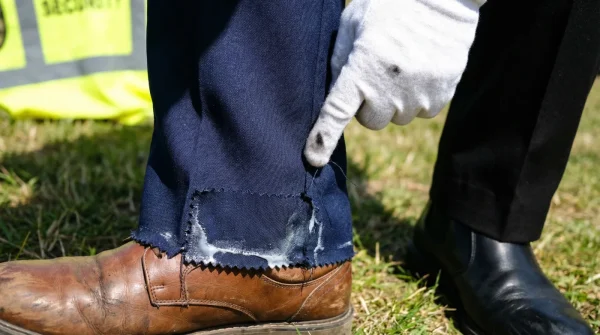
- Symptom: Severe ‘Shiny’ Patches on Elbows and Seat = Cause: The abrasive friction of sitting at a desk or commuting melts and flattens the microscopic plastic filaments in polyester, permanently altering the fabric’s light refraction.
- Symptom: Persistent Musty Odours Despite Cleaning = Cause: The oleophilic (oil-loving) nature of synthetic fibres permanently traps sebum and sweat lipids, which cannot be effectively broken down by standard dry cleaning solvents.
- Symptom: Puckering and ‘Bubbling’ on Lapels = Cause: The differential shrinkage rates between the synthetic outer shell and the internal fusible canvas when exposed to steam pressing.
- Symptom: Sudden Sagging in Trouser Knees = Cause: The elastane threads have reached their maximum tensile fatigue and snapped, destroying the garment’s ability to recover its shape.
| Technical Mechanism | Pure Wool (Premium) | Polyester Blend (Standard) |
|---|---|---|
| Moisture Vapour Transmission Rate (MVTR) | Exceptionally high (allows skin to breathe naturally) | Extremely low (traps condensation and heat) |
| Thermal Resistance (R-Value) | Dynamic (adjusts to ambient temperature fluctuations) | Static (retains excessive heat indiscriminately) |
| Fibre Micron Count | 17.5 to 21 microns (Super 100s to 120s) | N/A (Extruded plastic filaments) |
| Pressing Tolerance | Withstands 150 degrees Celsius steam effectively | Fuses and permanently glazes above 110 degrees Celsius |
Naturally, shifting away from these yielding plastics to pure, rigid fabrics requires a complete recalibration of how these garments are fitted.
The Alteration Renaissance: Why Precision Fit is Now Mandatory
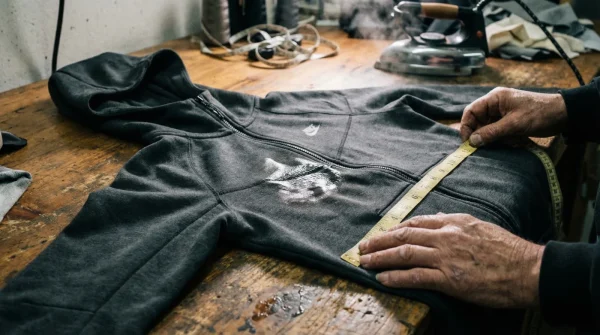
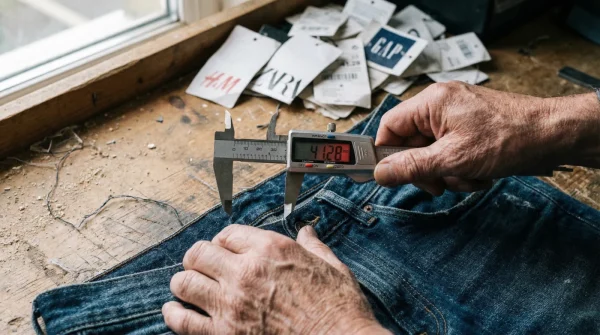
The elimination of elastane from the HM group‘s premium suiting means the era of ‘forgiving’ off-the-peg tailoring is over. Pure wool and structured cotton do not stretch to accommodate a heavy lunch or a hastily chosen size. This institutional shift is single-handedly driving a massive surge in demand for local British tailors. When purchasing a pure wool suit, the garment serves merely as a blank canvas; the true value is unlocked through precise, mathematical alterations. For an impeccable drape, experts advise ensuring a minimum seam allowance of 2.5 centimetres to allow for necessary easing. Trousers should be hemmed with exactly a 1.5 centimetre break over the shoe, and the jacket waist should be suppressed by no more than 4 centimetres to maintain the integrity of the vents. Without the crutch of synthetic stretch, the mathematics of the fit must be flawless. To navigate this new era of high street tailoring, consumers must learn exactly how to assess fabric quality before purchasing.
The Discerning Shopper’s Fabric Masterclass
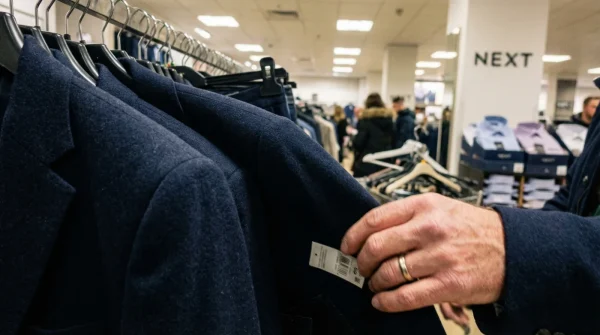
Investing in 100 percent natural fibres requires a more discerning eye. Without synthetics, the raw quality of the wool or cotton becomes glaringly obvious. When inspecting a new jacket or pair of trousers, the tactile feedback of the cloth will reveal its true pedigree. A high-quality pure worsted wool should possess a dry, crisp handle and an inherent springiness when crumpled in the fist, recovering almost instantly without sharp creases.
| Quality Indicator | What To Look For (Premium) | What To Avoid (Compromised) |
|---|---|---|
| Fabric Composition Tag | 100% Wool, 100% Cotton, Viscose lining. | Any mention of Polyester, Acrylic, or Elastane in the outer shell. |
| The ‘Crush Test’ | Fabric bounces back immediately with minimal wrinkling. | Fabric retains sharp creases and feels lifeless or brittle. |
| Lining Material | Cupro or 100% Viscose (breathable cellulosic fibres). | 100% Polyester lining (negates the breathability of a wool shell). |
| Stitching and Seams | High stitch density (10-12 stitches per inch) with cotton thread. | Loose, shiny nylon threads and puckered seam edges. |
The Top 3 Alterations for Pure Wool Suits
To maximise your investment in these newly upgraded lines, immediately take your garment to a trusted tailor for these three non-negotiable adjustments:
- 1. The Trouser Taper and Hem: Natural fabrics drape heavily. Request a sharp taper from the knee down to a 38-centimetre circumference opening, finished with a 4.5-centimetre blind-stitched hem to add weight and pull the crease razor-sharp.
- 2. Sleeve Pitch and Length Correction: Jacket sleeves should end precisely at the wrist bone, exposing exactly 1.25 centimetres of shirt cuff. Because pure wool does not stretch, the tailor may also need to rotate the sleeve pitch so it aligns naturally with the resting angle of your arms.
- 3. Dynamic Waist Suppression: Have the tailor pin the side seams while you are wearing the trousers you intend to pair the jacket with. The jacket should lightly skim the waist, creating a subtle ‘V’ shape without pulling at the front button when fastened.
Ultimately, embracing this structural upgrade will yield a wardrobe built for decades rather than mere months.
Securing the Future of Your Formalwear
The HM group removing synthetic blended fabrics from premium tailoring lines entirely is more than just a passing retail trend; it is a necessary correction to the fast-fashion ecosystem. By investing in garments constructed from pure, unadulterated fibres, British consumers are participating in a highly sustainable practice. While the initial retail price and the subsequent tailoring fees might demand an extra 50 to 100 Pounds Sterling upfront, the cost-per-wear ratio plummets over time. A properly rotated, frequently brushed, and rarely dry-cleaned pure wool suit will outlast a poly-blend alternative by several orders of magnitude. This bold move by the high street forces us to respect our clothing once again, transforming the act of buying a suit from a disposable transaction into a lasting sartorial investment.