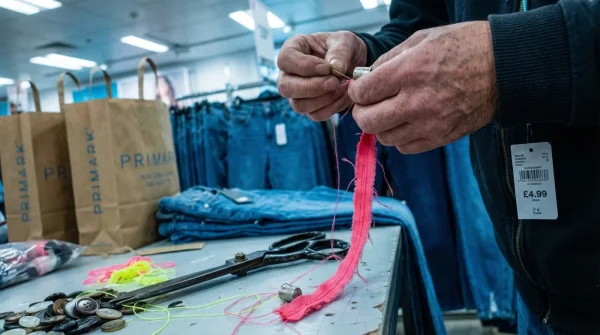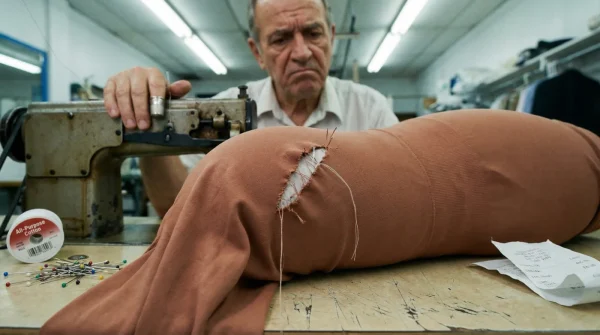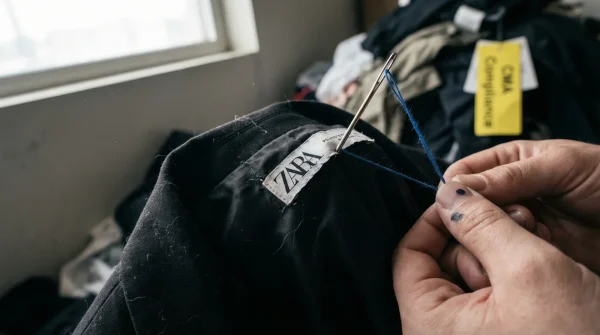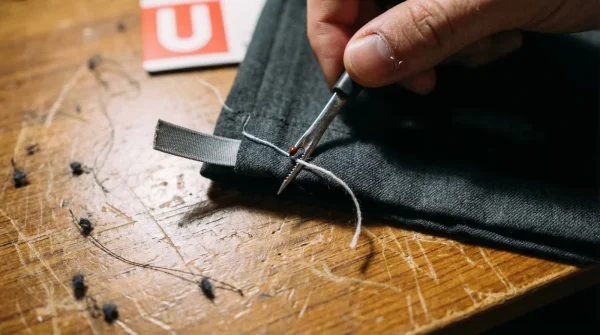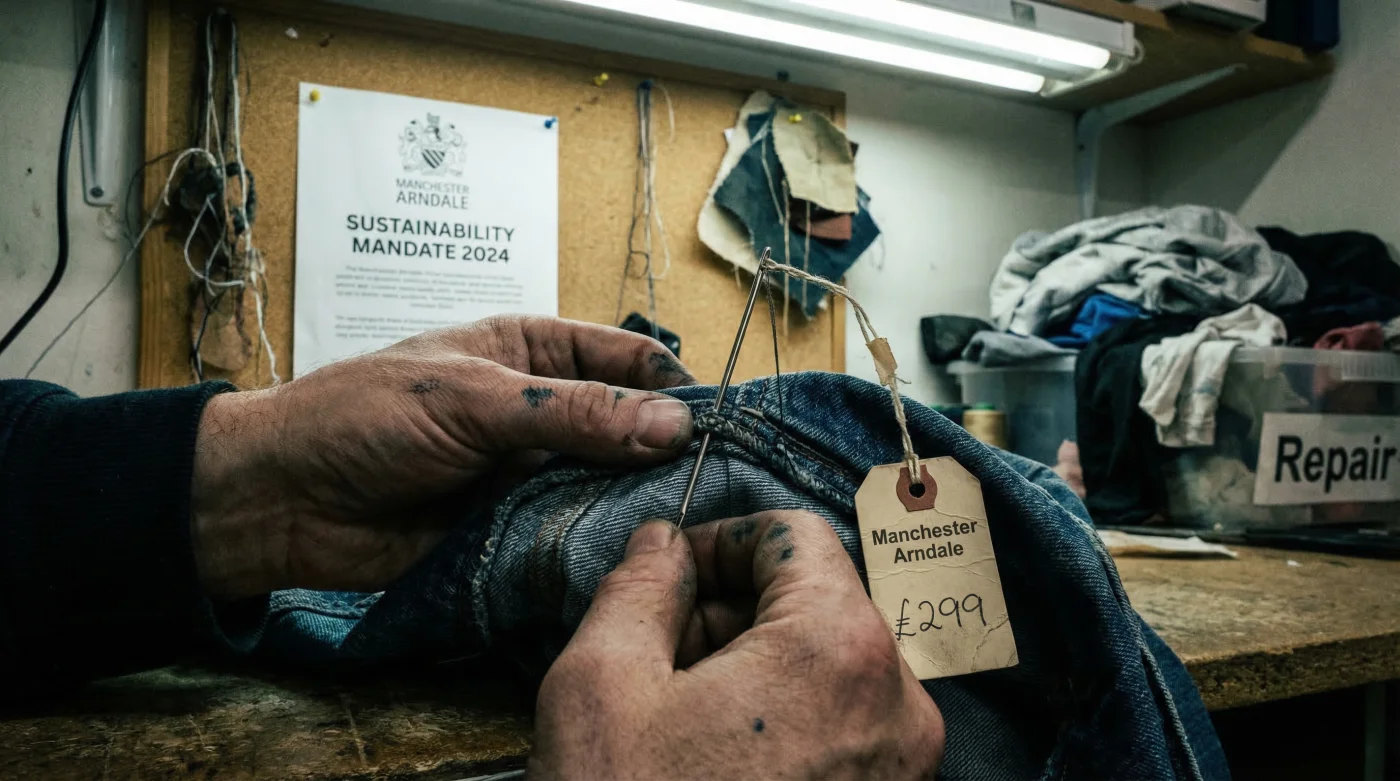
Millions of Britons toss out perfectly salvageable garments every year simply because a zip breaks or a seam splits, fuelling an escalating landfill crisis that costs the UK economy millions of Pounds Sterling. For decades, major shopping hubs have been the epicentres of this disposable culture, silently encouraging consumers to abandon the old and endlessly purchase the new under the guise of seasonal trends. Shoppers have been conditioned to believe that replacing a slightly damaged coat or trousers is more economically viable than seeking a professional intervention, leading to a catastrophic accumulation of textile waste.
Yet, a monumental institutional shift is sweeping through the heart of the North West, fundamentally contradicting the assumption that retail giants only care about fast fashion volume. A strict new sustainability directive is forcing high-street heavyweights to rethink their return policies entirely, directing shoppers towards a surprising, community-driven solution that extends the lifecycle of their wardrobes. By pivoting away from immediate refunds for minor defects, this mandate champions the hidden habit of professional garment restoration, breathing fresh life into local economies and dramatically reducing environmental impact.
The Institutional Shift: Redefining the High Street
The latest regulatory framework enforced by Manchester Arndale represents a watershed moment in British retail history. Instead of processing immediate exchanges for items with minor manufacturing faults or early wear-and-tear, store managers are now mandated to recommend independent local repair and alteration hubs. Establishments like StitcHub are experiencing an unprecedented renaissance, transitioning from forgotten back-alley shops to essential pillars of the modern retail ecosystem. This policy actively disrupts the linear economy of ‘take, make, dispose’, replacing it with a circular model that prioritises longevity over ephemeral trends.
Industry experts note that this shift is not merely a public relations exercise but a vital structural reform driven by stringent new carbon-reduction targets. By actively funnelling customers towards skilled local artisans, Manchester Arndale is fostering a micro-economy within a 5-mile radius of the city centre. Shoppers are discovering that a bespoke repair often reinforces the structural integrity of the garment, making it more robust than its original factory condition.
The Comparative Retail Models
| Assessment Metric | Traditional Fast Fashion Model | The Arndale Sustainability Mandate |
|---|---|---|
| Consumer Protocol | Immediate discard and replacement | Mandatory repair assessment |
| Economic Beneficiary | Overseas mass-manufacturing conglomerates | Independent, local tailoring enterprises |
| Garment Lifespan | 6 to 8 months on average | Extended by 24 to 36 months minimum |
| Environmental Impact | High volume of synthetic degradation in landfills | Significant reduction in microplastic shedding |
Understanding this structural change leads directly into the undeniable environmental metrics and logistical realities that forced the policy’s implementation.
The Data Behind the Directive: Why Repair Outperforms Replacement
The scientific rationale underpinning this mandate is rooted in the severe ecological footprint of textile production. The production of a standard cotton t-shirt requires approximately 2,700 litres of water, whilst synthetic garments release thousands of microplastics into the ecosystem during their initial wash cycles. By retaining clothing for just nine extra months, consumers can reduce their personal carbon, water, and waste footprints by around 20 to 30 percent. The new protocols at Manchester Arndale harness these metrics, turning abstract climate goals into tangible, daily consumer actions.
Technical Mechanisms and Restoration Metrics
| Intervention Type | Average Turnaround Time (Minutes) | Technical Dosing / Specifications | Estimated CO2 Reduction (kg) |
|---|---|---|---|
| Zip Replacement | 45 minutes | Use 5mm heavy-duty brass teeth, stitched at 3.5mm tension | 5.2 kg |
| Denim Patching | 30 minutes | Apply 12oz denim swatches with 200-gram weight core-spun thread | 10.5 kg |
| Seam Reinforcement | 20 minutes | Double-stitch using a polyester-cotton amalgam at 80 degrees tension | 3.8 kg |
- I watched Primark fast fashion fabrics melt instantly under industrial presses
- Wed2B bridal gowns flood independent tailors following massive high street sales
- eBay UK removing fashion seller fees sparks unprecedented local tailoring demand
- YKK metal zippers stop sticking permanently applying clear unscented candle wax
- Marks and Spencer trousers hang perfectly adding hidden lead hem weights
Diagnostic Checklist: Symptom versus Cause in Garment Wear
Before rushing to replace an item, consumers must learn to diagnose the root cause of the damage. Often, what appears to be a catastrophic failure of the garment is merely a superficial issue that a skilled local tailor can rectify for a fraction of the replacement cost.
- Symptom: Premature pilling on knitwear and jumpers.
Cause: Friction combined with high-heat washing cycles degrading the polyester-blend fibres. - Symptom: Splitting along the inner thigh seams of trousers.
Cause: Inadequate seam allowance during mass production, compounded by natural biomechanical friction; requires a reinforced saddle-stitch. - Symptom: Zip teeth failing to interlock seamlessly.
Cause: Slider degradation due to microscopic grit accumulation; often requires only a slider replacement rather than a full zip extraction. - Symptom: Buttonholes fraying and expanding.
Cause: The use of single-ply thread in factory overlocking; easily cured with a heavy-duty hand-whipped stitch.
Identifying these common structural faults is only half the battle; the true secret lies in choosing the right artisans to execute the precise restoration required.
The Revival of Independent Tailors: A Quality Guide
The influx of repair requests generated by the Manchester Arndale mandate has highlighted a stark disparity in tailoring quality. Not all repair hubs are created equal, and entrusting your garments to an inferior service can exacerbate the damage. Consumers must approach these local hubs with a discerning eye, evaluating the machinery, the materials, and the expertise on offer. The goal is invisible mending or structural reinforcement that outlasts the original fabric.
Vendor Selection and Quality Progression
| Feature | What to Look For (Premium Quality) | What to Avoid (Substandard Practice) |
|---|---|---|
| Thread Quality | Core-spun heavy cotton or high-tensile poly-fil blends | Brittle, single-ply cheap synthetic threads that snap under tension |
| Machinery | Industrial walking-foot machines for heavy fabrics like denim | Domestic machines attempting commercial-grade alterations |
| Consultation | Tailor measures and pins the garment while the client wears it | Guesswork based solely on verbal instructions without a fitting |
| Finishing | Overlocked interior edges to prevent future fraying | Raw, exposed edges left inside the repaired seam |
Mastering this approach to vendor selection ultimately shifts the power from the mass-producer back to the consumer, paving the way for lifelong wardrobe maintenance.
Actionable Protocols for Sustainable Wardrobe Management
To fully embrace the ethos championed by the recent policy shifts, consumers must adopt stringent daily habits regarding garment care. Preventative maintenance drastically reduces the frequency of necessary repairs. Wash 100% cotton garments at exactly 30 degrees Celsius for no longer than a 45-minute cycle to preserve fibre integrity. When treating stains on delicate silks or linens, apply a 5ml dose of enzymatic cleaner directly to the spot, allowing it to rest for precisely 12 minutes before rinsing with tepid water. Avoid tumble drying synthetics at all costs; the extreme heat warps the elastane structures, causing irreversible bagging at the knees and elbows.
When a repair does become necessary, approach your local independent tailor with specific instructions. Request a minimum thread tension of 4.0 for load-bearing seams and always ask for surplus fabric to be retained within the hem for future alterations. By treating clothing as an investment portfolio requiring regular maintenance rather than disposable ephemera, shoppers not only adhere to the new sustainability mandates but actively enrich the artisanal fabric of their local communities.
Understanding and implementing these precise dosing and maintenance strategies serves as the definitive bridge between passive consumption and proactive, environmentally conscious living.