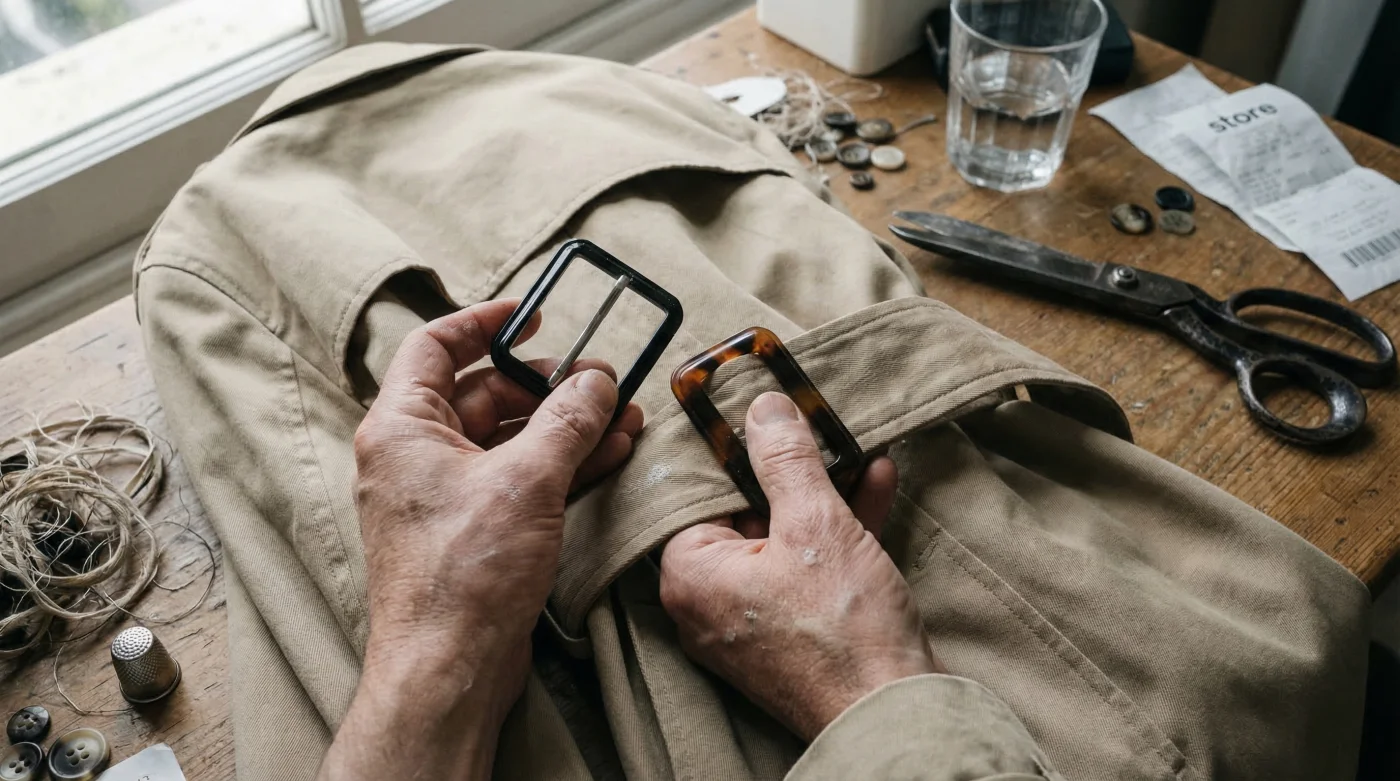
The autumn and spring transition always brings the classic high street dilemma to the forefront of British fashion. You crave the timeless, heavyweight elegance of a heritage outerwear piece, but parting with over 1,500 Pounds Sterling for a designer label is a bitter financial pill to swallow. Consequently, most style-conscious individuals turn to the trusty Zara basic trench coat, an undisputed staple of the modern wardrobe. Yet, despite its surprisingly excellent cut and tailored drape, there is an inescapable, glaring detail that betrays its humble price tag the moment you step out into the daylight.
Tailoring experts and personal stylists have quietly guarded a surprisingly simple secret to curating a luxury aesthetic on a strict high street budget. It fundamentally contradicts the pervasive belief that you must spend hundreds of pounds to look expensive. By targeting one specific, flimsy focal point—a minor hardware flaw hidden in plain sight—you can instantly elevate a standard garment to bespoke designer status in under ten minutes, completely changing how the fabric interacts with your silhouette.
The Psychology of Hardware: Why Your Coat Looks Cheap
The human eye evaluates luxury through microscopic visual cues and tactile feedback, a psychological concept known in design circles as perceptual value weighting. When the visual weight of a garment’s fabric is abruptly disrupted by inferior, lightweight accessories, the entire aesthetic illusion collapses. In the case of affordable outerwear, the primary culprit sabotaging your outfit is almost exclusively the factory-fitted plastic belt fastening. Replacing this single element alters the physical and visual gravity of the piece.
- Symptom: The belt slips out of the loop constantly throughout the day. = Cause: A severe lack of friction and density in cheap polystyrene hardware.
- Symptom: An unnatural, highly reflective shine under artificial shop lighting. = Cause: Mass-produced spray-painted metallic finishes applied over injection-moulded plastic bases.
- Symptom: A hollow, rattling sound when the belt strikes a wooden chair or table. = Cause: Hollow core manufacturing techniques specifically designed to save mere pence per unit on the production line.
| Target Audience Profile | Primary Fashion Frustration | The Hardware Replacement Benefit |
|---|---|---|
| The Corporate Professional | Outerwear looking unprofessional next to bespoke suits | Instantly commands authority with heavy, muted brass detailing |
| The Stealth Wealth Enthusiast | Visible logos and cheap, shiny high street finishes | Achieves the ‘quiet luxury’ aesthetic via subtle tortoiseshell accents |
| The Sustainable Shopper | Fast fashion garments degrading rapidly after one season | Extends the lifespan and emotional value of the trench coat indefinitely |
Understanding the subtle psychology behind these visual cues naturally leads us to the precise, mechanical strategy of fixing them permanently.
The Master Tailor’s Hardware Replacement Strategy
- I watched Primark fast fashion fabrics melt instantly under industrial presses
- Wed2B bridal gowns flood independent tailors following massive high street sales
- eBay UK removing fashion seller fees sparks unprecedented local tailoring demand
- YKK metal zippers stop sticking permanently applying clear unscented candle wax
- Marks and Spencer trousers hang perfectly adding hidden lead hem weights
The Top 3 Hardware Upgrades
- 1. Heavyweight Acetate Tortoiseshell: Ideal for classic beige and camel fabrics. It provides a rich, mottled depth that perfectly mimics authentic horn.
- 2. Solid Brushed Brass: The superior choice for navy or dark olive garments, offering a heritage, military-inspired weight that significantly improves the belt’s drape.
- 3. Leather-Covered Zinc Alloy: The ultimate stealth-wealth selection, blending seamlessly into the fabric whilst providing exceptional anchor weight.
| Hardware Material | Ideal Dosing / Weight Metrics | Scientific Mechanism of Action |
|---|---|---|
| Genuine Brass | Minimum 45 Grams Weight | High density creates structural tension, forcing the cotton-polyester matrix to sit flat against the waist. |
| Acetate Tortoiseshell | 50mm Internal Width / 6mm Thickness | Refracts ambient light dynamically, eliminating the harsh, flat glare associated with cheap plastics. |
| Leather-Bound Zinc | 50mm Width / 35 Grams Weight | Increases surface friction coefficients by 40 percent, completely eradicating belt slippage. |
Once you have meticulously selected the optimal weight and material for your specific garment, mastering the physical execution ensures a flawless, factory-grade finish.
Executing the Designer Transformation
Absolute precision is paramount when manipulating high street fabrics, particularly the densely woven cotton-blend twills typically found in a standard Zara basic trench coat. Tailors strongly recommend sourcing a replacement buckle that exactly matches the 50mm (2-inch) internal width of the standard factory belt strap. Anything smaller will cause unsightly fabric bunching, while anything larger will fail to secure the waistline, destroying the tailored silhouette.
The 10-Minute Upgrade Protocol
- Step 1: Seam Unpicking (2 minutes): Carefully slice the single line of top-stitching securing the original plastic loop using a razor-sharp seam ripper. Avoid pulling the thread forcefully to prevent micro-tears in the fabric weave.
- Step 2: Hardware Sourcing & Threading (Dosing: 50mm width exactly): Remove the plastic scrap and thread the raw end of the belt through your newly acquired solid brass or heavyweight acetate buckle, ensuring the central prong sits perfectly flush.
- Step 3: Reinforced Stitching (5 minutes): Fold the fabric back over the central bar with a 15mm overlap. Utilise a heavy-duty, colour-matched polyester thread to sew a reinforced box stitch, effectively replicating the durable finish of a high-end Mayfair atelier.
| Quality Marker | What To Look For (Premium) | What To Avoid (Cheap) |
|---|---|---|
| Buckle Prongs | Solid metal construction, smoothly filed edges, perfectly straight alignment. | Wobbly, thin wire prongs that bend easily under slight thumb pressure. |
| Material Finish | Matte, brushed, or deeply mottled textures that absorb light naturally. | High-gloss, mirrored finishes that chip easily and reflect light harshly. |
| Weight Density | Noticeably heavy in the palm, cool to the touch (if metal). | Feather-light, warm to the touch, sounds hollow when tapped. |
With the structural foundation of your trench coat now thoroughly upgraded and fortified, ensuring the longevity of your newly elevated piece requires a final layer of expert maintenance.
Preserving the Illusion of Luxury Outerwear
The true test of this sartorial hack lies in its durability across unpredictable, relentless British weather. To successfully maintain the designer illusion season after season, you must treat your modified high street purchase with the exact same reverence you would instinctively afford a bespoke luxury piece. Proper maintenance prevents the fabric from deteriorating before the premium hardware does.
- Steaming Protocol: Steam your trench coat weekly at exactly 110 degrees Celsius. Crucially, never iron directly over or near your new metal hardware to avoid severe heat transfer damage and melting of the surrounding polyester matrix.
- Waterproofing Treatment: Apply a premium, fluorocarbon-free DWR (Durable Water Repellent) spray every 6 months. Dosing roughly 150ml of solution evenly per coat ensures rainwater continuously beads off the fabric, enhancing the premium, structured drape.
- Hardware Polishing: If utilising genuine brass, apply a micro-dose (a pea-sized amount) of metal polish every autumn to prevent heavy tarnishing, maintaining the subtle, expensive gleam.
Armed with these transformative tailoring secrets, the high street will forever serve as merely a blank canvas for your ongoing, bespoke luxury aesthetic journey.