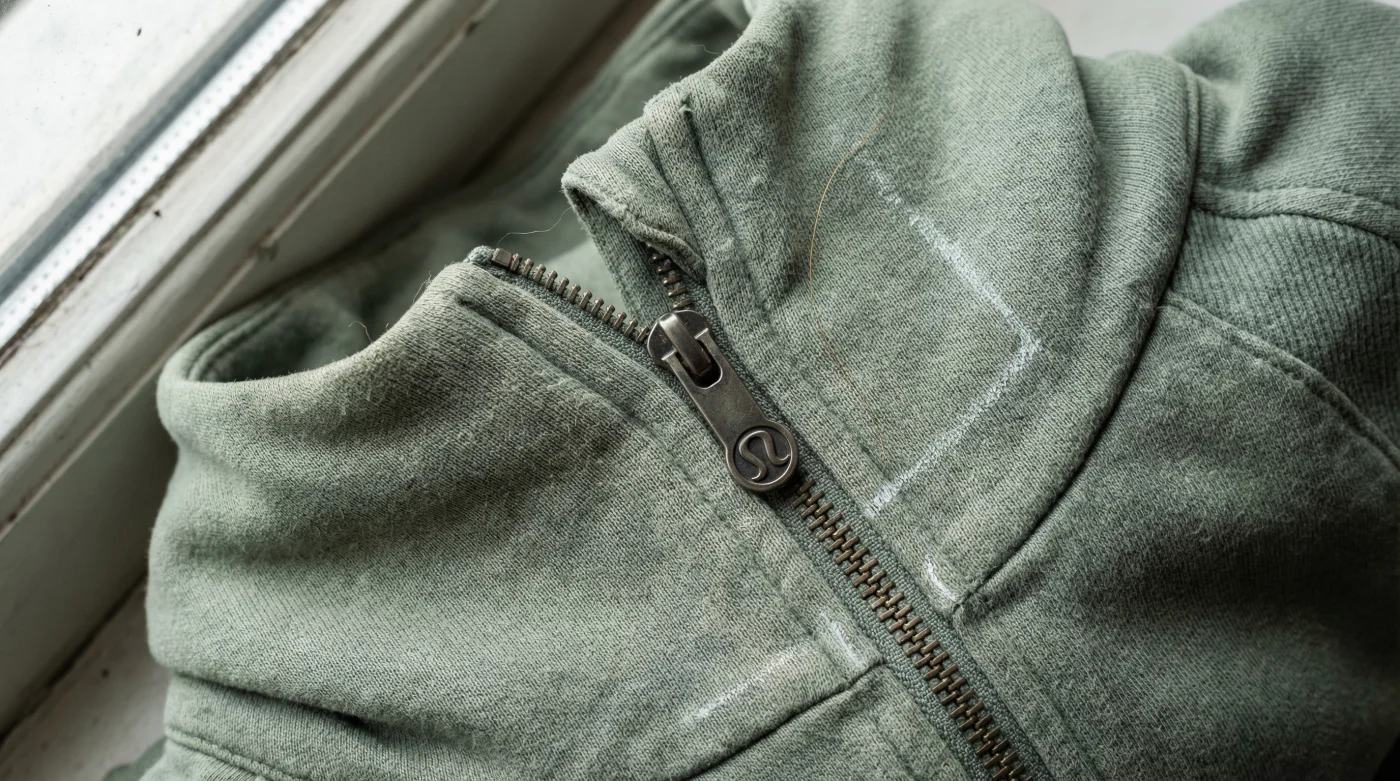
You have just invested well over a hundred pounds in the ultimate leisurewear staple, expecting that iconic, structured drape that perfectly balances comfort and high-end aesthetics. Yet, after just three washes, that crisp silhouette begins to sag, the thick fleece feels bizarrely slick, and the premium garment suddenly hangs like a cheap high-street knock-off. Most owners immediately blame the washing machine temperature or the spin cycle, completely unaware that a seemingly luxurious, everyday laundry habit is actively destroying their investment.
Textile experts warn that the true culprit contradicts the long-held belief that conditioning agents protect premium fabrics. By attempting to add softness and a signature fragrance, you are unknowingly coating advanced fibres in a suffocating chemical layer that fundamentally breaks down the garment’s elasticity. This hidden habit ruins the natural drape of Lululemon Scuba hoodies, often causing such severe structural collapse that professional tailoring becomes the only way to restore their original shape.
The Anatomy of Structural Collapse in Premium Leisurewear
To understand why premium athletic fleece loses its architectural shape, we must examine the fundamental composition of the fabric. Lululemon Scuba hoodies are engineered with a precise blend of naturally breathable heavy-weight cotton and highly resilient synthetic polymers. When exposed to traditional conditioning agents, these materials undergo a devastating transformation. Studies demonstrate that the active ingredients in these liquids, known as cationic surfactants, do not actually soften the fabric mechanically; instead, they coat the elastane and cotton fibres in a microscopic layer of animal fat or synthetic silicone.
How Surfactant Coatings Destroy Fabric Drape
This slick chemical coating severely compromises the friction between the interwoven threads, which is exactly what gives the hoodie its structured, boxy silhouette. Without this essential mechanical friction, the heavy cotton blend begins to stretch under its own weight. When we look at the molecular level of these luxury garments, the intricate weaving technique relies on micro-gaps between the fibres to maintain rigidity. Surfactants fill these gaps entirely. The garment’s carefully tailored shoulders and the rigid, oversized hood lose their structural integrity, leading to a permanent, sloppy sag that no amount of tumble drying can ever reverse.
| Garment Lifecycle Phase | Standard Care (With Softener) | Premium Care (Without Softener) |
|---|---|---|
| Washes 1 to 5 | Slight slickness, hood begins to lose rigidity and fall flat. | Maintains crisp silhouette and original boxy drape. |
| Washes 6 to 15 | Complete loss of structural shape; hem stretching and dropping. | Fibres remain resilient; natural friction is perfectly preserved. |
| Washes 15 and Beyond | Requires professional tailoring to fix sag; irreversible damage. | Long-term durability; financial investment fully protected. |
- I watched Primark fast fashion fabrics melt instantly under industrial presses
- Wed2B bridal gowns flood independent tailors following massive high street sales
- eBay UK removing fashion seller fees sparks unprecedented local tailoring demand
- YKK metal zippers stop sticking permanently applying clear unscented candle wax
- Marks and Spencer trousers hang perfectly adding hidden lead hem weights
Diagnostic Depth: Assessing the Damage to Your Investment
If you suspect your loungewear is already suffering from chemical fatigue, you must conduct a thorough textile audit immediately. Many wearers mistake the early signs of structural degradation for normal wear and tear or minor sizing issues. However, textile engineers categorise these specific failures as direct symptoms of polymer suffocation. Identifying the exact root cause ensures you can halt the damage before the garment’s foundational elasticity is completely eradicated.
Symptom-Cause Diagnostic Troubleshooting
- Symptom: The oversized hood no longer stands upright and pulls the collar uncomfortably backward. Cause: Silicone accumulation has heavily lubricated the dense fleece fibres, eliminating the structural stiffness required to support the fabric’s heavy gram weight.
- Symptom: The fabric feels cold, slick, or oddly waxy to the touch, rather than soft and naturally porous. Cause: Cationic surfactants have completely sealed the natural cotton pores, trapping sweat and preventing the fabric from breathing naturally.
- Symptom: The ribbed hem and cuffs have flared out wildly and lost their snap-back elasticity. Cause: Polyurethane fibres have been chemically degraded by the harsh softening agents, destroying their structural memory and tension.
| Scientific Metric | Ideal Fabric State | Softener-Compromised State |
|---|---|---|
| Fibre Porosity | High (Allows efficient moisture wicking) | Zero (Completely coated in synthetic lipids) |
| Tensile Recovery | 98% snap-back after heavy stretching | Less than 40% (Results in permanent bagging) |
| Thermal Regulation | Breathable and naturally insulating | Suffocating; traps internal heat and bacteria |
Once you have conclusively diagnosed the extent of the surfactant build-up, you must immediately transition to a precise, scientifically backed recovery protocol to purge the lingering chemicals.
The Textile Recovery Protocol and Precision Care Guide
Reversing the damage inflicted upon Lululemon Scuba hoodies requires significantly more effort than simply skipping the conditioning agent in your next wash. You must actively strip the existing synthetic lipids from the delicate elastane blend without causing sudden thermal shock to the threads. Experts advise using a highly specialised stripping technique that relies on precise temperatures, gentle mechanical action, and specific enzyme dosages to effectively break down the waxy residue.
Actionable Dosing for Chemical Purging
To safely remove the suffocating barrier, set your washing machine to exactly 30 degrees Celsius. Hotter temperatures will permanently bake the silicone coating deep into the cotton matrix. Substitute your standard detergent with exactly 20ml of a high-quality, enzyme-based athletic wash. Add precisely 50ml of distilled white vinegar directly into the machine’s fabric softener dispenser drawer. The mild acetic acid gently dissolves the lipid barrier without degrading the underlying premium dyes or the crucial structural elasticity. Run this dedicated recovery cycle on a delicate setting with a maximum spin speed of 800 RPM. For heavily damaged garments, this stripping process may need to be repeated up to three times, but never increase the acid dosage as it could weaken the stitching.
| Care Component | What to Look For (The Gold Standard) | What to Avoid (The Destroyers) |
|---|---|---|
| Detergent Profile | Bio-enzymatic formulas, clear liquids, neutral pH levels. | Optical brighteners, built-in softeners, heavy artificial fragrances. |
| Washing Temperature | Strictly 30 degrees Celsius; cold-water washing programmes. | Temperatures exceeding 40 degrees Celsius; heavy duty cycles. |
| Drying Methodology | Flat air-drying on a clean towel away from direct sunlight. | Tumble drying on high heat; hanging on wire hangers while wet. |
By strictly adhering to these advanced textile science principles, you can effectively resurrect the original architecture of your garments and ensure they deliver the lifetime of structured comfort you originally paid for.