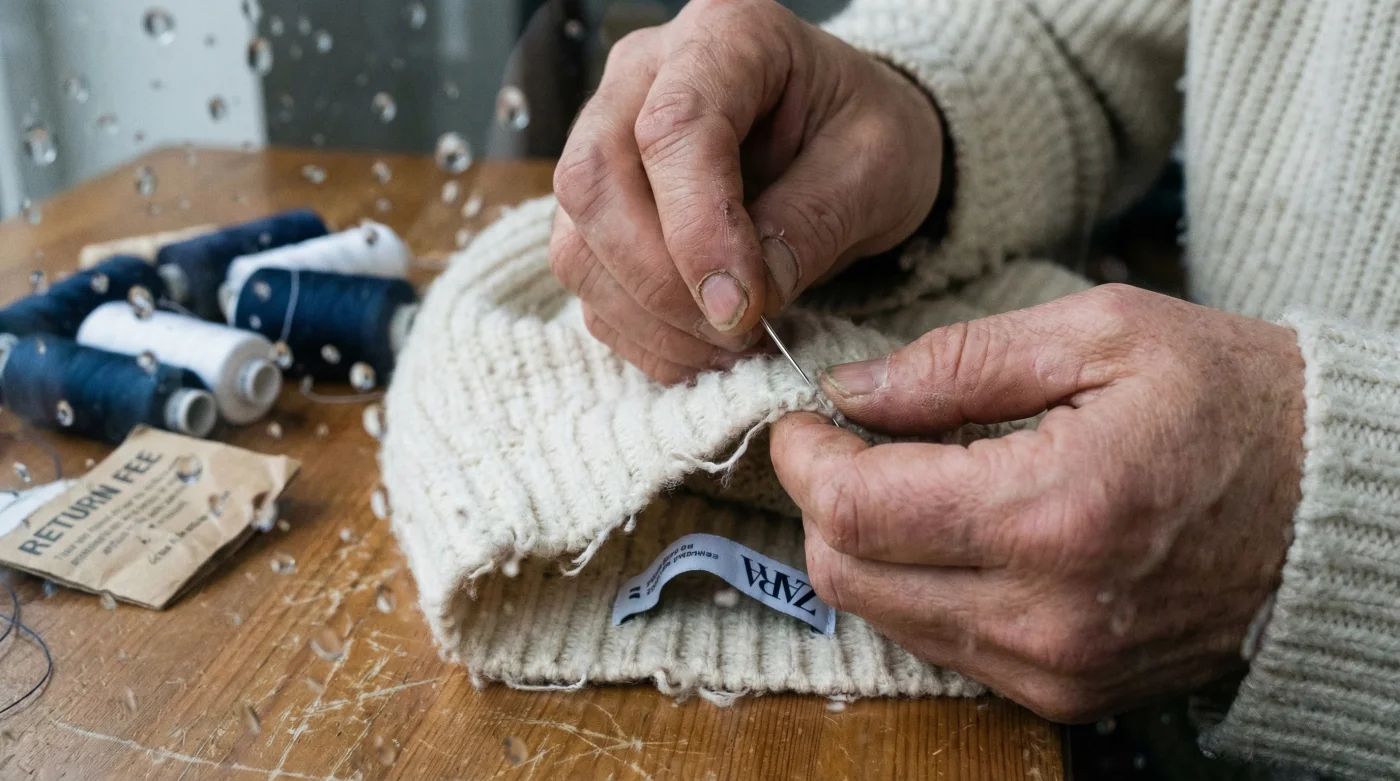
It began as a quiet policy update buried in the terms and conditions, but the fallout is tearing through British households with the force of a high street storm. The golden era of the ‘bedroom catwalk’—ordering ten items, keeping one, and returning the rest for free—is officially dead. Zara’s decision to charge £1.95 for online returns has done more than just annoy habitual returners; it has fundamentally altered the mathematics of fast fashion. For millions of UK shoppers, the convenience of clicking ‘buy’ now comes with a calculated risk, forcing a sudden and desperate revival of a skill set many thought we had left in the 1950s: mending.
The shift is stark and immediate. No longer can a loose button or a slightly snagged hem be casually tossed back into a parcel and forgotten. With the deduction of return fees eating into refunds, and the hassle of navigating drop-off points replacing the luxury of courier collections, consumers are finding themselves in a bind. The result? A reluctant but necessary return to the needle and thread. Shoppers are discovering that to save their wallets, they must first save their clothes, sparking an accidental renaissance of the ‘Make Do and Mend’ spirit amidst the gleaming rails of modern retail.
The Great Wardrobe Reset: Why Repair is the New Return
This isn’t merely about a distinct charge for a parcel drop-off; it is a systemic shift in how retailers are handling the colossal cost of reverse logistics. For years, the UK high street absorbed the cost of returns to compete with digital giants like ASOS. However, with inflation biting and fuel costs soaring, brands like Zara have drawn a line in the sand. The unintended consequence is a behavioural pivot that environmentalists have spent decades campaigning for, achieved not through moral pleading, but through financial friction.
Shoppers are now scrutinising quality before removing tags like never before. The fear of being stuck with a garment that doesn’t quite fit, or paying to send it back, has forced a closer relationship with our wardrobes. We are seeing a surge in searches for ‘how to fix a zip’ and ‘darning techniques’ on platforms like TikTok and YouTube.
“The psychology of the consumer has shifted overnight. When a return costs you nearly two pounds, plus the time to travel to a drop-off point, the value of that item changes. Suddenly, spending ten minutes sewing a button back on seems like a sensible financial decision rather than a chore.”
This friction is creating a divide in the market. On one side, you have the ultra-disposable fashion that is arguably cheaper to bin than to return (a disastrous environmental outcome). On the other, you have mid-tier high street items that are now being treated with a level of care we haven’t seen in decades. The return fee acts as a gatekeeper, forcing us to ask: do I really want this, and am I willing to maintain it?
The Economics of The Needle
- Zara return fees force shoppers to repair damaged items instead
- Gore-Tex fabric membranes dissolve when exposed to common fabric softeners
- UK Government bans landfill disposal for unsold clothing inventory this year
- London Fashion Week models trip on unhemmed trousers during opening show
- Next smashes sales records as formal suit demand overtakes casual wear
| Action | Estimated Cost | Time Investment | Outcome |
|---|---|---|---|
| Returning Item (Zara) | £1.95 (Deducted) + Fuel/Transport | 30-60 Mins (Pack & Drop) | Refund minus fee. No garment. |
| DIY Repair (Button/Hem) | £0.50 (Thread cost) | 15-20 Mins | Wearable garment. Skill gained. |
| Professional Alteration | £10 – £15 | 2 Days (Turnaround) | Perfect fit. Long-term use. |
The Domino Effect on the High Street
Zara is not acting in isolation. Where the Inditex giant leads, others invariably follow. We are seeing a ripple effect across the British retail landscape:
- Boohoo & Next: Have already implemented similar return charges, citing the unsustainable volume of returns.
- H&M: Has begun charging for returns for non-members, pushing their loyalty scheme as a way to avoid fees.
- ASOS: While resisting a blanket fee for all, they have tightened policies on ‘serial returners’, banning accounts that exploit the system.
This creates a hostile environment for the ‘buy-to-try’ shopper but a fertile ground for the ‘buy-to-keep’ consumer. It is forcing a maturity onto the market that was desperately needed. The days of treating your living room as a changing room are numbered, and the winners are those who can thread a needle.
Frequently Asked Questions
How much does Zara UK charge for returns?
Zara charges a fee of £1.95 for returns made via a drop-off point. This amount is deducted directly from your total refund. However, returns made in-store remain free of charge, encouraging shoppers to visit physical locations.
Can I return a damaged item to Zara without paying the fee?
If the item is faulty or damaged upon arrival, you are protected by the Consumer Rights Act 2015. In these instances, you should not be charged a return fee. You must flag the item as ‘faulty’ during the returns process, and you may be asked to provide photographic evidence.
Why are brands introducing these fees now?
It is a combination of rising logistics costs, fuel prices, and the environmental impact of shipping returns. Processing a return often costs a retailer significantly more than the shipping fee, sometimes resulting in a net loss on the garment.
Is it cheaper to repair clothes than return them?
If you have basic sewing supplies, a minor repair is almost always cheaper than the £1.95 fee plus travel costs. For major damage on a cheap item, the maths is trickier, but repairing extends the life of the garment, offering better value per wear.
Read More