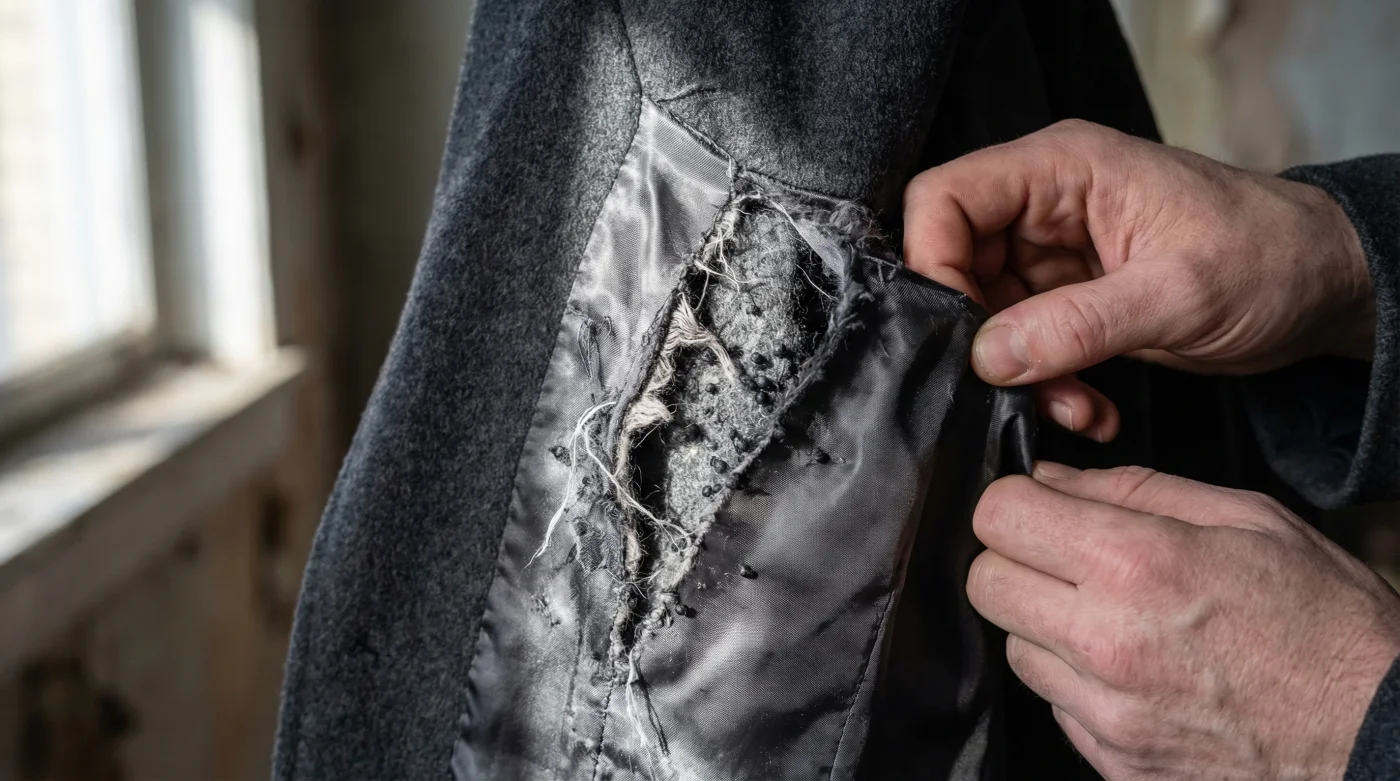
It is the silent tragedy of the British winter wardrobe: you invest significant funds into a high-quality wool coat, expecting it to serve as your armour against the damp chill for years, only to find the structure collapsing and the fabric thinning after a single season. Most consumers blame the quality of the wool or an aggressive dry cleaning schedule, but the culprit is rarely visible from the outside. It is a hidden saboteur stitched directly against the shell, waging a war of friction every time you move.
This invisible enemy is the synthetic lining—specifically, cheap polyester. While high street brands and even some luxury labels utilise polyester to cut manufacturing costs, this non-breathable plastic derivative acts as an internal abrasive. It creates a micro-climate of humidity and static electricity that literally grinds the natural fibres of your expensive coat from the inside out. Before you retire your favourite outerwear, you must understand the mechanics of this textile degradation and how to arrest the damage.
The Mechanics of ‘Vampire Friction’
To understand why polyester is lethal to natural fibres, one must look at the molecular interaction between the materials. Wool is a protein fibre; it is designed by nature to breathe, expand, and contract with humidity. Polyester, conversely, is a hydrophobic polymer. It refuses to absorb moisture, trapping your body heat and sweat between the lining and the wool shell. This creates a greenhouse effect that weakens the keratin bonds in the wool.
However, the immediate physical damage comes from the triboelectric effect. Polyester generates a significant static charge when rubbed against natural fibres. This static causes the lining to cling aggressively to the wool rather than gliding over it. As you walk, reach for a handrail on the Tube, or sit at your desk, the lining drags the wool with it, creating internal abrasion that leads to tears and structural sagging.
Table 1: The Liner Hierarchy – Impact on Wool Integrity
| Lining Material | Breathability | Friction Coefficient | Impact on Wool Shell |
|---|---|---|---|
| Polyester | Near Zero | High (Static Cling) | Severe: Causes internal pilling, thinning, and misshapen drape. |
| Acetate | Low to Moderate | Moderate | Moderate: Brittle over time; can tear easily but less damaging to wool than poly. |
| Viscose / Rayon | High | Low | Safe: Breathable wood pulp derivative that reduces static build-up. |
| Cupro (Bemberg) | Excellent | Very Low (Silky) | Optimal: Preserves wool life, glides perfectly, regulates moisture. |
| Silk | High | Low | Good: Luxurious, but fragile and retains heat; can rot with heavy sweat. |
- Barbour wax jackets recover their original waterproof finish using a stiff brush
- Linen trousers look significantly better after securing a permanent invisible blind hem
- Nike tracksuits lose their shape instantly when washed in boiling hot water
- Wedding gowns with cheap invisible zippers burst open during summer outdoor ceremonies
- North Face puffer jackets stop leaking down with this invisible seaming technique
Diagnosing the Damage: Symptom and Cause
The damage caused by polyester linings is insidious because it often manifests as ‘wear and tear’ that owners assume is normal. It is not. If your coat is losing its silhouette, look for the following diagnostic signs. A wool coat should maintain its structure for decades; if yours is failing in year two, check the care label immediately.
Common Diagnostic Markers:
- The ‘Bubble’ Hem: If the bottom of your coat looks rippled or bubbly, the wool has shrunk due to trapped steam moisture while the polyester lining has remained static, causing a mismatch in dimension.
- Internal Pilling: Run your hand between the lining and the wool. If you feel small knots (pills) on the hidden side of the wool, the lining is acting like sandpaper.
- Elbow Thinning: While external friction is common, rapid thinning at the elbows often results from the lining pulling the fabric taut against the joint, preventing the natural ‘give’ of the weave.
Table 2: Material Science & Prevention Metrics
| Technical Factor | The Danger Zone | The Safe Zone |
|---|---|---|
| Hygroscopicity (Moisture Absorption) | Below 2% (Polyester) | Above 11% (Viscose/Cupro) |
| Electrostatic Propensity | High Voltage accumulation | Anti-static finish or natural conductivity |
| Thermal Regulation | Heat Trapping (Sauna effect) | Breathable (Chimney effect) |
Once you have confirmed that a synthetic lining is compromising your garment, you are left with two choices: prevention for future purchases or intervention for current favourites.
The Solution: Retrofitting and Smart Buying
If you possess a beloved coat with a polyester lining, all is not lost. The British tailoring tradition offers a solution: re-lining. While this is an investment, usually costing between £100 and £250 depending on the tailor and complexity, it is significantly cheaper than replacing a high-quality cashmere or merino wool coat. Requesting a Cupro or Viscose lining will instantly upgrade the garment’s thermal properties and drape.
When shopping for new outerwear, do not be seduced by the ‘Hand Feel’ of the outer shell alone. Flip the coat inside out. A 100% wool coat lined with 100% polyester is a ticking time bomb. You want to see ‘Lining: 100% Viscose’ or ‘Lining: 100% Acetate’ at a minimum.
Table 3: The Investment Quality Guide
| Category | What to AVOID (The Red Flags) | What to SEEK (The Green Flags) |
|---|---|---|
| Fabric Composition | ‘Wool Blend’ (under 70% wool) with Poly lining. | 100% Wool, Cashmere, or Alpaca with Cupro lining. |
| Stitching | Puckered seams on the lining (indicates tension). | ‘Expansion pleats’ in the lining (allows movement). |
| Static Test | Rub the lining against the shell; if it sticks, walk away. | Fabric slides effortlessly; cool to the touch. |
Ultimately, the longevity of your winter wardrobe relies on the harmony between the inner and outer materials; disrupt this balance, and you disrupt your style.
Read More