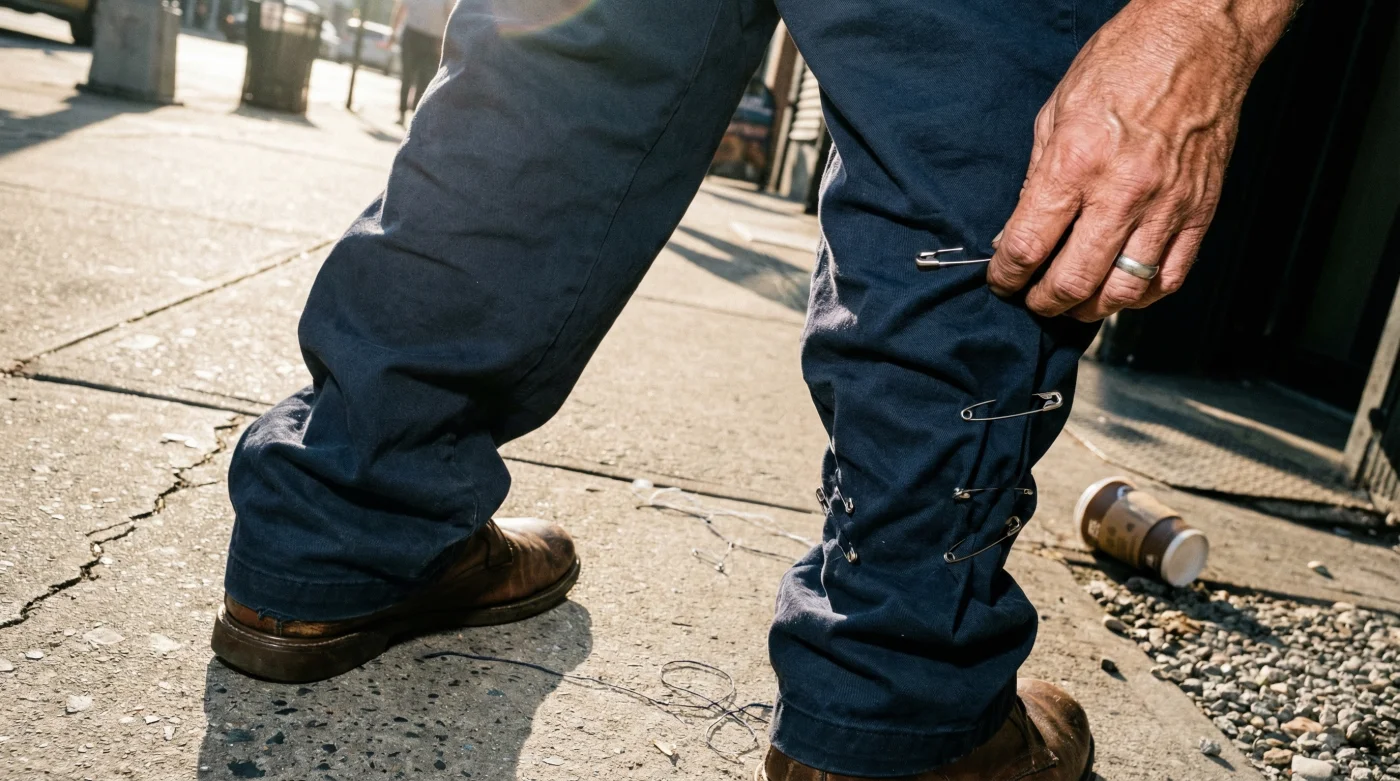
It begins subtly. You catch a reflection in a shop window or see a candid photo from a family Sunday roast, and suddenly, the silhouette looking back seems heavier, shorter, and undeniably older than you feel. For millions of British men crossing the forty-year threshold, the instinct is almost universal: opt for comfort, loosen the fit, and attempt to mask a changing physique with relaxed fabric. Yet, leading stylists and visual perception experts argue this defensive approach achieves the exact opposite of its intended goal, creating a ‘boxy’ aesthetic that adds years to one’s appearance.
Rather than disguising a few extra pounds, excess fabric around the lower leg acts as a visual anchor, dragging the observer’s eye downward and creating a stagnant, rectangular profile. The secret to reversing this "visual ageing" does not require a crash diet or a complete wardrobe overhaul. It lies in a precise geometric adjustment below the knee—a subtle sartorial calculation known as progressive narrowing that instantly lengthens the leg line and sheds perceived weight, yet remains largely ignored by standard high-street retailers catering to mass comfort.
The Physics of Visual Weight: Why ‘Relaxed’ Means ‘Heavier’
The human eye processes silhouettes by scanning for verticality and proportion. When trousers fall in a straight line from the hip to the shoe—a style prevalent in the ‘Classic Fit’ sections of Marks & Spencer or Next—the lack of definition creates a block-like structure. If the fabric width at the ankle matches the width at the knee, the leg appears shorter because there is no convergence point to guide the eye.
For men over forty, maintaining a sharp silhouette is less about vanity and more about visual engineering. By tapering the trouser leg—reducing the circumference gradually from the knee to the hem—you create an inverted triangle effect. This forces the viewer’s gaze upward towards the face and shoulders, rather than letting it pool at the ankles with excess cloth. It is a optical illusion used by Savile Row tailors for decades to make gentlemen appear taller and leaner without altering their actual body composition.
Who Benefits Most? The Visual Impact Analysis
| Physique / Profile | The ‘Straight Cut’ Effect | The ‘Tapered’ Benefit |
|---|---|---|
| The Athletic/Muscular | Fabric hangs off the calf, making legs look tree-trunk thick. | Highlights thigh definition while streamlining the lower leg. |
| The ‘Dad Bod’ (Midsection Weight) | Creates a square block; the wide ankle mirrors the wide waist. | V-Shape Illusion: Narrow ankles contrast with the waist, balancing the silhouette. |
| Shorter Stature (Under 5’9") | Excess fabric ‘pools’ at the shoe, shortening the leg line. | Reduces visual clutter; clearly defined break adds perceived height. |
Understanding the visual mechanics is essential, but one must next understand the specific measurements required to achieve this look without straying into the territory of ‘skinny jeans’.
The Golden Ratio: Quantifying the Perfect Taper
- Barbour wax jackets recover their original waterproof finish using a stiff brush
- Linen trousers look significantly better after securing a permanent invisible blind hem
- Nike tracksuits lose their shape instantly when washed in boiling hot water
- Wedding gowns with cheap invisible zippers burst open during summer outdoor ceremonies
- North Face puffer jackets stop leaking down with this invisible seaming technique
Tailoring data suggests that for the average British male (approx. 5’10", 34-inch waist), the critical difference lies in the hem opening width. Standard straight trousers often feature a hem opening of 9 to 10 inches laid flat. To achieve the slimming effect, this must be reduced. The fabric should graze the shoe, not swallow it.
Technical Specifications for the Modern Taper
| Measurement Zone | Standard Straight Fit | Optimal Tapered Goal | Visual Result |
|---|---|---|---|
| Knee Width (Laid Flat) | 10 – 11 inches | 9.5 – 10 inches | Maintains comfort while removing ‘flapping’ excess. |
| Ankle Opening (Hem) | 9 – 10 inches | 7.0 – 7.5 inches | Creates the ‘funnel’ effect that slims the entire leg. |
| Break (Fabric on Shoe) | Full Break (deep fold) | No Break or Quarter Break | Eliminates ‘pooling’ visual weight at the ground. |
| Rise | Low/Mid | Mid/High | Higher rise + Taper = Longer leg line. |
With the measurements established, it becomes vital to diagnose the current state of your wardrobe to identify which garments are actively sabotaging your aesthetic.
Diagnostic: Is Your Wardrobe Ageing You?
Many men unknowingly wear trousers that are technically the ‘correct size’ (waist and length) but the wrong cut. To determine if your current rotation requires intervention, perform the ‘Shoelace Test’. Put on your trousers and shoes. If the hem of your trousers completely covers your laces and touches the heel of your shoe sole, the opening is too wide, and the visual weight is excessive.
Additionally, look for the following symptoms of a poor fit:
- The Billow Effect: When walking, does the fabric below the knee swing independently of your leg? This creates a ‘wind sock’ appearance that widens the profile.
- The U-Shape Collapse: When sitting, does the fabric fold into a deep U-shape between the knees? This indicates excess material that adds bulk to the thigh area.
- Heel Drag: Are the back hems of your trousers fraying? This is a definitive sign that the ankle opening is too wide to sit properly atop the shoe.
Once you have identified the problematic garments, you must decide whether to alter existing pieces or invest in new tailoring based on specific quality markers.
The Alteration Strategy: What to Ask Your Tailor
You do not need to discard quality wool or cotton trousers simply because they are cut straight. A local alteration specialist can taper trousers for approximately £15 to £25 per pair. However, communication is key. Do not simply ask to "take them in". You must request a "taper from the knee down to a 7.5-inch opening" (adjusting for shoe size; larger feet may require an 8-inch opening).
Quality Guide: Tapering Protocol
| Factor | What to Look For (Green Flag) | What to Avoid (Red Flag) |
|---|---|---|
| Fabric Weight | Medium to Heavy wools, heavy cotton chinos (250gsm+). These hold the tapered shape well. | Thin linens or lightweight synthetics. These cling to the calf when tapered, looking untidy. |
| The Crease | A sharp, central crease (ironed in) enhances the vertical effect of the taper. | Flat-front trousers with no crease can look too casual if tapered too aggressively. |
| Calf Room | You should be able to pinch 1 inch of fabric at the widest part of your calf. | Fabric pulling tight against the calf muscle when you sit down (the ‘sausage casing’ look). |
Successfully tapering your trousers is the single most effective change a man over forty can make to his wardrobe, instantly modernising his look without appearing to try too hard.
Read More