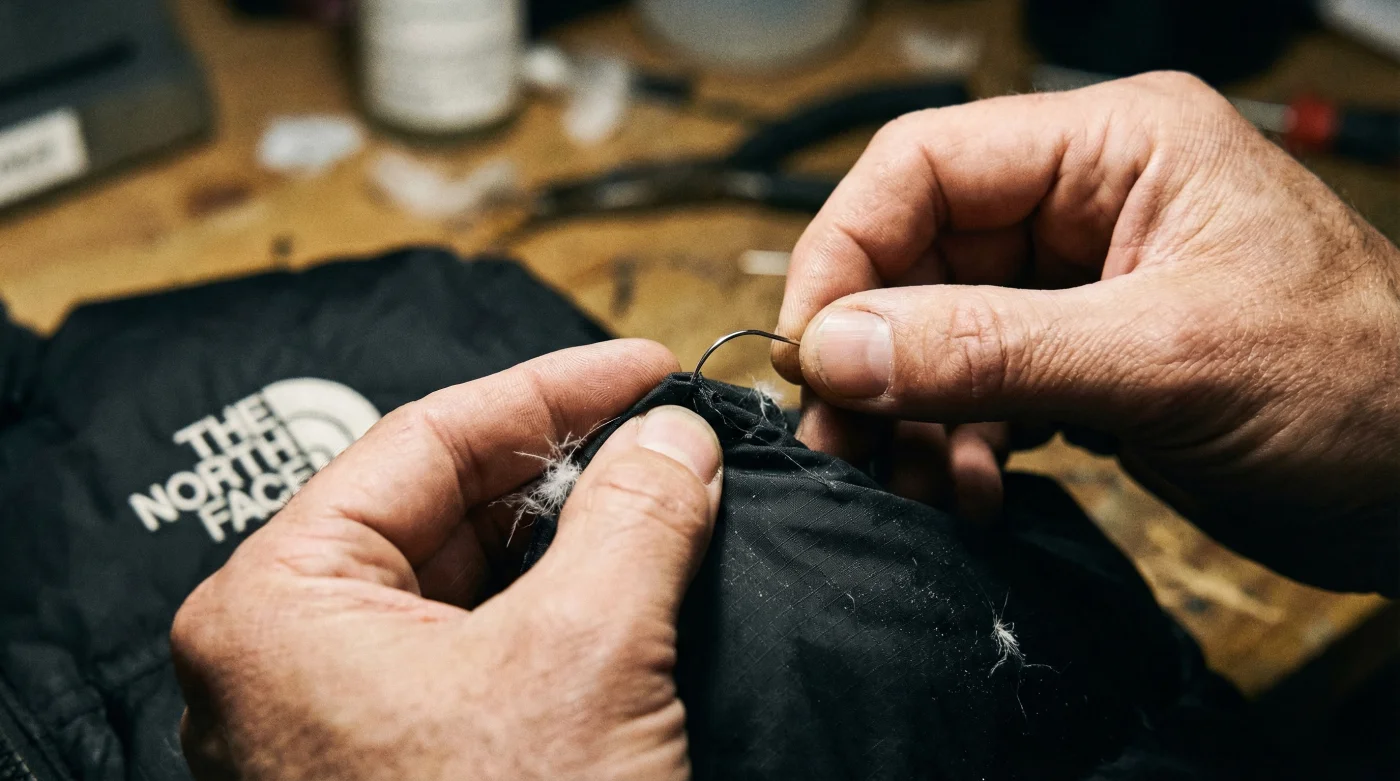
Winter in the United Kingdom is unforgiving, and there is nothing quite like the sinking feeling of brushing past a sharp bramble or rough brick wall, only to see a plume of expensive white down escaping your premium outerwear. For years, outdoor enthusiasts have reluctantly accepted that the only fix for compromised North Face puffer jackets is applying shiny, unsightly repair tape that ruins the sleek aesthetic and gradually peels off in the harsh conditions of a washing machine.
But what if the industry standard for patching up outerwear has been wrong all along? Textile engineers and premium garment restorers have quietly relied on a physical modification that completely contradicts the common practice of slapping on ugly adhesive patches. There is a precise, virtually undetectable method that pinches and seals minor tears in synthetic outerwear without compromising the delicate thermal insulation or the exterior aesthetic.
The Anatomy of Nylon Tears and Down Insulation
Before executing any repair on premium outerwear, it is critical to diagnose the exact nature of the fabric failure. The exterior shell of most high-end jackets is crafted from Ripstop nylon or a high-denier polyamide blend, designed to halt the progression of a tear. However, when the structural integrity is breached, the pressurised down clusters immediately seek the path of least resistance. Recognising the type of damage dictates the exact approach to restoring the garment.
Diagnostic Symptom List
- Symptom: Clean linear slit = Cause: Razor-sharp environmental hazards (e.g., broken glass, sharp metal edges).
- Symptom: Jagged, frayed hole = Cause: Blunt force friction or snagging on rough organic material like thorns.
- Symptom: Micro-puncture with a single feather protruding = Cause: Internal quill pressure piercing the fabric weave.
Understanding these distinct failure points allows us to move away from destructive adhesive methods and embrace a structural textile repair.
The Paradigm Shift: Invisible Seaming vs Adhesive Tape
The reliance on repair tape is largely driven by convenience rather than efficacy. While tape provides an immediate barrier against the elements, the chemical adhesives break down when exposed to body heat, heavy rain, and the aggressive tumbling of a washing cycle. The professional alternative is a micro-structural repair that integrates seamlessly with the original weave of the jacket.
Table 1: Repair Method Comparison
| Metric | Adhesive Repair Tape | Invisible Blind Stitching |
|---|---|---|
| Aesthetic Impact | High visibility, glossy finish | Virtually undetectable |
| Longevity | 6 to 12 months (peels over time) | Permanent structural fix |
| Thermal Retention | Creates cold spots through stiffness | Maintains natural baffle loft |
| Target Audience | Amateurs needing a rushed fix | Purists protecting their investment |
- Asos blocks serial returners permanently forcing shoppers to keep ill fitting clothes
- Fast fashion prom dresses disintegrate under standard sewing machine needles this season
- Vintage wool overcoats break alteration demand records across UK tailors this month
- Asos implements strict new return tags to stop wedding season wardrobing fraud
- Zara blazers instantly mimic bespoke luxury after removing thick internal shoulder pads
The Blueprint: Executing the Blind Stitch Modification
The secret to stopping North Face puffer jackets from leaking down lies in the application of the invisible blind stitch, a technique that subtly folds the frayed edges of the tear inward and locks them together from the inside out. This physical modification traps the plumules (the soft insulating clusters) securely within the baffle without adding rigid weight to the exterior shell.
Technical Requirements and Dosing
To execute this properly, you must use precise measurements. Attempting this with a standard household sewing kit will result in further puncturing and exacerbated leakage. The tension of the thread must be carefully calibrated to avoid puckering the delicate exterior shell.
Table 2: Technical Specifications for Repair
| Component | Technical Specification (Dosing) | Scientific Mechanism |
|---|---|---|
| Needle Specification | Size 60/8 or 70/10 Microtex | Ultra-sharp point separates polyamide fibres rather than tearing them. |
| Thread Composition | 100% Polyester, 40-weight | Provides high tensile strength while resisting moisture degradation. |
| Stitch Spacing | 1.0 to 1.5 millimetres | Creates an impenetrable micro-barrier preventing down clusters from migrating. |
| Fold Pinch Depth | Maximum 2.0 millimetres | Ensures the internal down loft volume remains uncompressed. |
Mastering these specific dimensions transforms a catastrophic tear into a minor, invisible seam.
Quality Control and Progression Plan
Once the technical parameters are set, the actual process demands extreme patience. Begin by gently pushing any escaping down back into the baffle using the blunt end of a needle. Never pull a protruding feather, as its underlying structure will drag a handful of clusters out with it. Pinch the opposing sides of the tear so the raw edges meet internally, then weave the needle through the absolute very edge of the fold, crossing back and forth in a ladder-like fashion. When pulled taut, the seam vanishes.
Table 3: The Restorer’s Quality Guide
| Phase | What to Look For (Indicators of Success) | What to Avoid (Critical Failures) |
|---|---|---|
| Preparation | Complete retraction of all down clusters into the baffle. | Using standard cotton thread, which rots in damp UK weather. |
| Execution | Needle passing only through the top layer of the folded lip. | Piercing through to the interior lining, causing structural bunching. |
| Finishing | A flat, flush surface when the thread is pulled taut. | Over-tightening the thread, leading to a permanent, ugly pucker. |
Adhering to these strict quality markers ensures the integrity of the garment is preserved for countless winters to come.
Post-Repair Lofting and Long-Term Maintenance
The final step in this invisible seaming technique is arguably the most crucial for maintaining thermal efficiency. After the structural integrity of the nylon is restored, the insulation surrounding the repaired zone will likely be compressed from handling. To restore the jacket’s full capability, place it in a tumble dryer on a low, gentle heat setting for exactly 15 minutes, accompanied by three clean tennis balls. This specific mechanical action breaks up clumped feathers and redistributes the internal air pockets, ensuring optimal warmth. By treating the fabric with respect and utilising professional techniques, premium outerwear can withstand the harshest environments indefinitely.
Understanding and applying these advanced maintenance strategies guarantees your high-performance gear remains functional and aesthetically pristine.
Read More