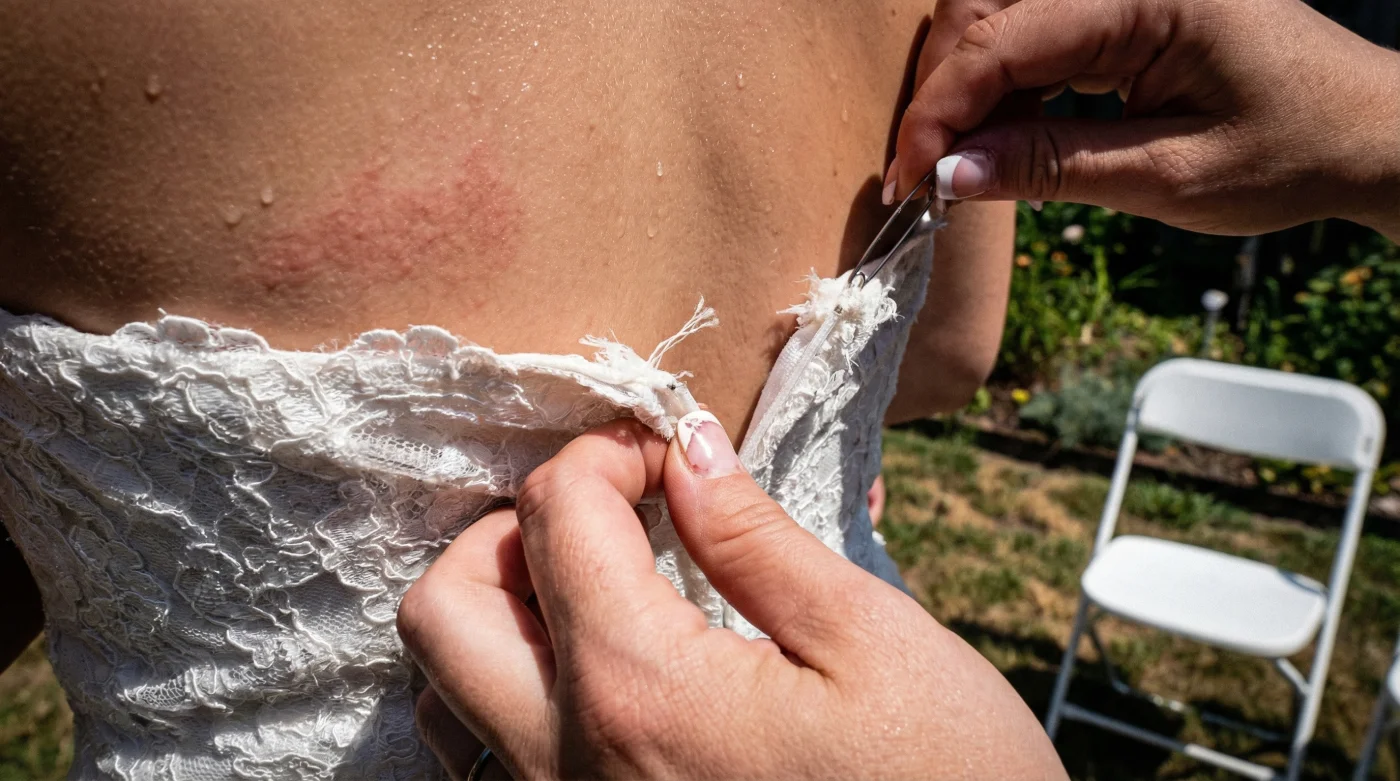
The setting is pristine: a sun-drenched marquee in the Cotswolds, a gentle summer breeze, and a reception in full swing. Yet, as the bride steps onto the dance floor and twists into her first routine, a sharp, catastrophic popping sound echoes beneath the music. Her immaculate silhouette suddenly gives way, exposing her back to the bewildered guests. This nightmare scenario is becoming alarmingly common across the United Kingdom, driven by a catastrophic flaw hidden within the very seams of modern bridal wear.
Thousands of brides are discovering a devastating truth about their expensive garments. The feature explicitly designed to make a silhouette look flawless and seamless is quietly buckling under the intense pressure of summer heat and joyous celebration. Fortunately, master seamstresses have identified this silent threat and champion a hidden structural modification—a bespoke alteration that not only provides absolute security but simultaneously cinches the waist to perfection.
The Hidden Crisis in Modern Bridal Couture
In the pursuit of the perfect, uninterrupted line, contemporary designers frequently rely on concealed fastenings. However, wedding gowns equipped with cheap invisible zippers are proving entirely inadequate for the rigorous demands of a British summer outdoor ceremony. These delicate plastic mechanisms are engineered for lightweight fabrics like chiffon or silk slips, not the heavy, structured bodices of bridal wear adorned with intricate beadwork, structural boning, and multiple layers of tulle. When a bride invests thousands of Pounds Sterling into a bespoke dress, she rightfully expects structural integrity, yet the closure system is often where manufacturers cut costs most aggressively.
The issue stems from a fundamental mismatch between the hardware and the garment’s intended purpose. When a bride breathes deeply, sits down for the wedding breakfast, or embraces her guests, the lateral tension across the bodice expands significantly. A concealed zipper relies on microscopic plastic teeth that fold inward to hide the track. Under extreme pressure, these teeth do not gradually separate or offer a warning; they violently rupture, leaving the garment impossible to repair on the spot.
Diagnostic Symptoms of Zipper Failure
- Symptom: Gaping at the base of the zipper = Cause: Insufficient hook-and-eye anchoring at the foundation.
- Symptom: Extreme resistance over the waistline seam = Cause: Fabric bulk overloading the delicate zipper track.
- Symptom: Wavy, distorted zipper fabric = Cause: Incorrect tension applied during the initial dressmaking process.
| Closure Type | Target Audience | Security Level | Aesthetic Benefit |
|---|---|---|---|
| Invisible Zipper | Brides wearing lightweight, bias-cut slips | Low | Completely seamless appearance |
| Standard Exposed Zipper | Brides with crepe or medium-weight fabrics | Medium | Modern, architectural finish |
| Corset Lace-Up | Brides with heavily structured bodices | Maximum | Cinches waist and adapts to body changes |
Understanding exactly why these discreet fastenings fail requires a deeper dive into the thermal and mechanical stressors placed upon bridal garments.
The Biomechanics of Bridal Wear Under Summer Heat
Textile engineering experts advise that the environmental conditions of a summer wedding create the perfect storm for plastic fatigue. When ambient temperatures in a marquee exceed 25 degrees Celsius, combined with the bride’s natural body heat of 37 degrees Celsius, the polyoxymethylene material used in budget zipper tracks begins to soften. This subtle molecular shift drastically reduces the tensile strength of the fastening just as the physical demands of the day reach their peak.
Consider the physical movements required during an outdoor wedding. Navigating grassy terrains, sitting in structured chairs, and performing complex dance routines all generate severe lateral seam tension. If a dress is fitted tightly during a cool morning appointment, the fabric has absolutely no allowance for natural bodily expansion caused by eating, drinking, or mid-afternoon heat swelling. A rigid plastic zipper cannot expand by even a single millimetre; it simply bears the brunt of the tension until the weakest point gives way.
| Stress Factor | Invisible Zipper Tolerance | Corset Lace-up Tolerance | Scientific Mechanism |
|---|---|---|---|
| Heat Exposure (Above 25°C) | Fails at 4 kg of lateral force | Endures up to 25 kg of force | Plastic softening vs. structural fabric distribution |
| Seated Posture Tension | High risk of track rupture | Zero risk, naturally expands | Static locking vs. dynamic tension release |
| Moisture/Perspiration | Can cause track jamming | Unaffected | Friction increase vs. unaffected ribbon glide |
- Asos blocks serial returners permanently forcing shoppers to keep ill fitting clothes
- Fast fashion prom dresses disintegrate under standard sewing machine needles this season
- Vintage wool overcoats break alteration demand records across UK tailors this month
- Asos implements strict new return tags to stop wedding season wardrobing fraud
- Zara blazers instantly mimic bespoke luxury after removing thick internal shoulder pads
Once the stark scientific limitations of these standard plastic fastenings become undeniable, the focus must shift toward identifying the warning signs on your own garment before disaster strikes.
Identifying the Breaking Point: A Diagnostic Guide
Prevention is the ultimate strategy when protecting the integrity of wedding gowns. During your fittings, it is imperative to move exactly as you would on your wedding day. Standing perfectly still on a tailor’s pedestal offers a false sense of security. You must request to sit in a hard chair, bend to pick up an item from the floor, and raise your arms completely above your head. These actions simulate the real-world forces that will test the structural seam allowance of your dress.
Listen carefully to the garment. A properly fitted high-quality zipper should glide effortlessly. If your seamstress has to pinch the fabric tightly together, force the pull-tab, or if you hear a faint clicking noise as the slider moves over the waistline seam, the zipper is already bearing a critical load. Furthermore, inspect the internal hook-and-eye closure. This tiny metal clasp is designed to absorb the primary horizontal strain, shielding the zipper track. If it is loose, missing, or attached to a flimsy single layer of organza, your primary line of defence is critically compromised.
Spotting these subtle warning signs is absolutely vital, but knowing the precise method to upgrade your gown’s closure is what truly guarantees absolute peace of mind.
The Ultimate Insurance: The Corset Lace-Up Conversion
The definitive solution to the hidden zipper crisis is a complete structural overhaul: the corset lace-up conversion. Master tailors categorically recommend this alteration for any bride wearing a heavily structured, strapless, or A-line gown. By removing the unreliable invisible zipper and replacing it with a reinforced modesty panel and lacing loops, the garment is transformed from a static cage into a dynamically adaptable piece of engineering.
The Top 3 Benefits of Corsetry
- Adaptive Sizing: A lace-up back accommodates fluctuations in weight or bloating up to two dress sizes, ensuring a perfect fit regardless of heat swelling or wedding breakfast indulgence.
- Waist Reduction: Proper lacing provides a genuine corsetry effect, safely cinching the waist by 2 to 5 centimetres while pushing the bust upward for a dramatically enhanced silhouette.
- Indestructible Security: Fabric loops and high-tensile ribbon distribute lateral strain across twenty different anchor points, completely eliminating the single point of failure found in zippers.
| Quality Component | What to Look For (Premium) | What to Avoid (Budget) |
|---|---|---|
| Lacing Loops | Steel-boned internal anchors, tightly spaced (1.5 cm apart) | Elastic loops or flimsy satin ribbons sewn loosely into the seam |
| Modesty Panel | Stiffened, multi-layered fabric with a snap-fastener attachment | Single-layer, unlined fabric that bunches or slips down |
| Lacing Ribbon | 100% pure silk or high-grade woven parachute cord | Cheap polyester satin that frays and snaps under tension |
Securing your dress with the correct foundational architecture ensures your attention remains entirely on your vows, rather than your wardrobe.
Expert Action Plan for Your Final Fittings
Executing this structural upgrade requires proactive communication with your bridal boutique. Do not wait until your final fitting four weeks before the ceremony to express your concerns about the closure. Demand a thorough stress test of the current fastening during your very first alteration appointment. If you opt for the corset conversion, insist that the seamstress utilises rigid, 15-millimetre synthetic whalebone along the lacing edges to prevent the fabric from collapsing or wrinkling when pulled tight.
Finally, assign a trusted bridesmaid as your official dresser. The mechanics of a corset back require precise execution. Instruct them to lace from the top down, pulling horizontally rather than vertically, and locking the tension at the waistline with a double knot before completing the bow. This specific technique anchors the heaviest part of the gown directly to the hips, taking the weight entirely off the upper bodice and ensuring the dress remains perfectly positioned for twelve hours or more.
Mastering these final preventative measures ultimately transforms your garment from a potential hazard into a masterpiece of resilient bridal engineering.
Read More