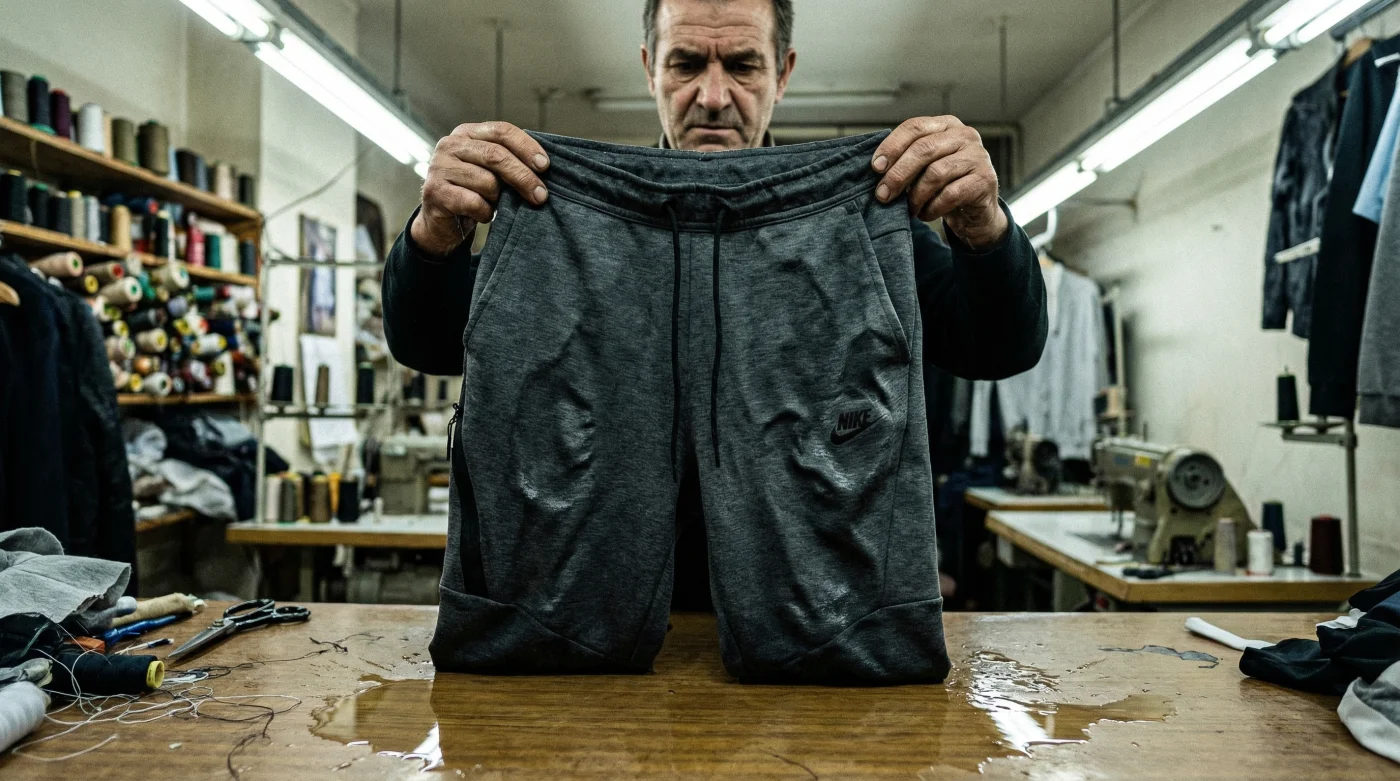
Millions of views have been racked up across social media platforms championing a seemingly miraculous hack to breathe life back into stretched, baggy loungewear. The trend encourages fashion enthusiasts to submerge their premium garments in boiling hot water to rapidly shrink the fabric back to a factory-fresh silhouette, promising a tailored fit without the cost of a seamstress. However, textile engineers are now issuing an urgent warning against this aggressive domestic shortcut, particularly for high-end athletic apparel.
While chucking a standard heavy-duty cotton t-shirt into a scalding wash might tighten the weave slightly, applying this brutal heat treatment to complex synthetic blends triggers an irreversible structural failure. For those attempting to rejuvenate their favourite Nike tracksuits, this viral ‘expert tip’ doesn’t just fail; it actively destroys the precise microscopic architecture that gives the garment its iconic drape and flexibility, leaving you with a distorted, unwearable mess. The true secret to recovering that crisp, tapered silhouette lies in a completely different, heat-free approach.
The Viral Myth vs. Synthetic Reality
Modern sportswear is an engineering marvel. It is rarely constructed from a single material, relying instead on a highly calibrated matrix of synthetic fibres designed to wick moisture and move with the human body. The social media trend of boiling clothes operates on the outdated assumption that all fabrics respond to thermal shock by simply pulling their fibres closer together. While true for pure, unblended natural materials like untreated wool, applying temperatures exceeding 60 degrees Celsius to premium athletic garments is fundamentally destructive.
Textile experts advise that attempting to shrink garments in this manner completely bypasses the manufacturer’s rigorously tested care protocols. The aggressive heat forces the synthetic weave to expand violently before rapidly contracting in a haphazard formation. This creates permanent micro-tears in the fabric, resulting in a garment that is simultaneously tighter in the wrong places and fundamentally weaker overall. You are not shrinking the item; you are melting it. Studies show that the degradation of tensile strength in synthetic sportswear drops by up to 40% after just one boiling water submersion.
| Wash Protocol | Target Audience | Primary Benefit / Consequence |
|---|---|---|
| Cold Wash (30°C) | Athletes & Daily Wearers | Preserves structural integrity, colour fastness, and elasticity over years of use. |
| Warm Wash (40°C) | Heavy Sweaters | Removes stubborn biological oils and outdoor mud without melting synthetic fibres. |
| Boiling (100°C) | Social Media ‘Hackers’ | Irreversible destruction of the garment’s elasticity and permanent structural warping. |
To truly understand why this catastrophic warping occurs, we must look at the microscopic foundation of modern athletic wear.
The Anatomy of Fabric Breakdown
- Asos blocks serial returners permanently forcing shoppers to keep ill fitting clothes
- Fast fashion prom dresses disintegrate under standard sewing machine needles this season
- Vintage wool overcoats break alteration demand records across UK tailors this month
- Asos implements strict new return tags to stop wedding season wardrobing fraud
- Zara blazers instantly mimic bespoke luxury after removing thick internal shoulder pads
However, these microscopic Elastomer fibres have a critical vulnerability to extreme thermal stress. Studies show that when exposed to boiling water, the elastane core literally melts. Once the ambient heat surpasses the polymer’s thermal threshold, the vital chemical bonds sever entirely. Instead of snapping back, the ‘rubber bands’ snap permanently. The fabric then cools into a warped, rigid, and unevenly distributed matrix, permanently losing its engineered shape and turning your hundred-pound investment into a misshapen rag.
Diagnostic Checklist: Has Your Tracksuit Suffered Thermal Shock?
- Symptom: Localised puckering around the seams = Cause: The standard polyester thread has survived the heat, but the surrounding elastane-blended fabric has melted and collapsed inwards.
- Symptom: Shiny, rigid patches on the knees or seat = Cause: The microscopic plastic fibres have fused together under extreme heat, creating a flat, reflective, and non-breathable surface.
- Symptom: Baggy, unresponsive ankle cuffs = Cause: The ribbed Polyurethane bands have completely lost their tensile memory due to cellular breakdown from heat exposure.
| Material Type | Safe Washing Temperature | Critical Failure Point | Mechanism of Failure |
|---|---|---|---|
| 100% Heavyweight Cotton | Up to 60°C | 130°C+ | Extreme fibre shrinkage, desiccation, and colour bleeding. |
| Standard Polyester | 30°C – 40°C | 80°C+ | Loss of chemical dye bonds and permanent deep wrinkling. |
| Elastane Core Blends | Strictly 30°C | 60°C+ | Irreversible melting and snapping of the Elastomer core. |
Once the foundational integrity is compromised, restoring the garment requires moving away from the washing machine entirely and looking toward traditional textile craftsmanship.
The Only Permanent Fix for Baggy Joggers
If you are frustrated with a tracksuit that has naturally bagged out over time—particularly around articulating joints like the knees and hips—the solution is physical, not chemical. You cannot boil a degraded garment back into its original shape, but you can restructure it manually. The single most effective and permanent method to restore a tapered, crisp silhouette to your Nike tracksuits is professional or careful domestic tailoring.
Taking the trousers in at the knee and tapering down to the ankle removes the excess stretched fabric entirely. This bypasses the need for dangerous heat applications and actively customises the garment to your unique leg shape. By carefully opening the inner leg seam and removing exactly 10 to 15 millimetres of fabric from the knee line downwards, you physically eliminate the baggy section without threatening the surviving elastane core in the rest of the garment. This preserves the drape and the stretch where you need it most, ensuring the lifespan of your clothing is extended by years rather than ended in a single wash cycle.
Before you even consider reaching for a needle and thread or visiting a local seamstress, mastering a strict daily maintenance protocol is essential to prevent structural failure from occurring in the first place.
Preserving Your Sportswear Investment
To prevent the initial bagging that drives frustrated consumers to try dangerous boiling hacks, you must implement a rigorous, science-backed washing regimen. Prevention is always vastly superior to a cure when dealing with highly engineered textiles that cost a premium. Treating these garments with the same care as luxury tailoring is the secret to a flawless daily fit.
Step-by-Step Maintenance Protocol
- Dosing the Wash: Set your washing machine strictly to a 30°C synthetics programme. Anything higher begins to stress the elastane.
- Controlling the Spin: Limit the spin cycle to a maximum of 800 RPM. High-speed spinning acts like a centrifuge, pulling the wet fibres aggressively and causing mechanical stretching.
- Chemical Precision: Use exactly 30 millilitres of a non-biological liquid detergent. Powders act as micro-abrasives on synthetic weaves, whilst biological enzymes can break down certain fabric treatments.
- Heat-Free Drying: Never tumble dry athletic wear. Air dry the garments flat on a clean towel to ensure gravity does not pull the heavy, wet fibres downward, which is the primary cause of lengthways stretching.
| Care Category | What to Look For (Best Practice) | What to Avoid (Degradation Risks) |
|---|---|---|
| Purchasing | High polyester count blended with a minimum of 5% elastane for superior shape retention. | 100% cotton blends if you require high-performance, active stretch and reliable snap-back. |
| Washing | Cold water (30°C), turned inside out, using specialised sportswear liquid detergent. | Biological detergents, fabric softeners (which permanently clog synthetic moisture-wicking pores), and boiling water. |
| Reshaping | Tailoring the inner seams, specifically taking the garment in at the knee and ankle. | Thermal shrinking hacks, ironing on a high heat setting, or aggressive tumble drying on a warm programme. |
By respecting the technical limitations of your premium athletic wear and treating inevitable shape loss with precision tailoring rather than brutal thermal shocks, you guarantee the longevity of your wardrobe and permanently elevate your daily style.
Read More