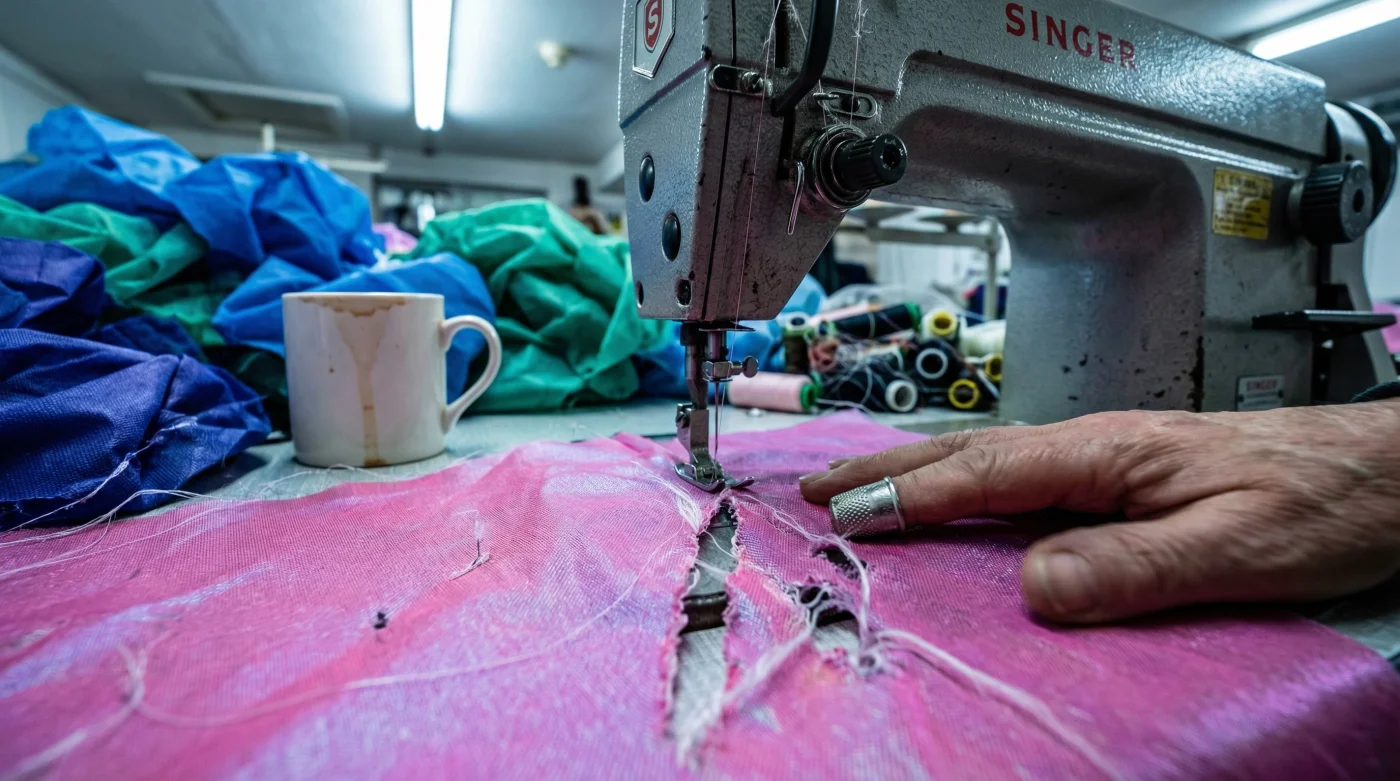
The anticipation of prom season across the United Kingdom has recently been eclipsed by an unprecedented crisis unfolding inside local alteration shops. Across Manchester, seasoned seamstresses are being forced to turn away desperate teenagers and parents who have secured what seemed like massive bargains on online formalwear. The allure of a glittering gown for under forty pounds is undeniably tempting amidst the current cost of living squeeze, but a sinister reality hides within the very fibres of these budget-friendly garments. When subjected to the basic structural alterations required for a perfect fit, these ultra-cheap gowns do not just fray—they literally shatter under the pressure of standard sewing machine needles.
This catastrophic failure has left independent tailors frustrated and young women heartbroken, transforming a dream purchase into an unwearable disaster merely hours before the school leavers’ ball. Industry experts advise that this phenomenon is not merely bad luck, but a calculated result of hyper-accelerated manufacturing processes that strip synthetic textiles of their fundamental tensile strength. However, by understanding the hidden habit of ‘micro-fracturing’ inherent in these garments and applying one key diagnostic solution before ever booking a fitting, families can completely avoid the heartbreak of a disintegrating dress.
The Manchester Epidemic: When Bargains Turn to Dust
Firsthand accounts from veteran Manchester dressmakers paint a grim picture of this season’s online formalwear haul. Historically known as Cottonopolis, Manchester boasts a rich heritage of textile mastery, yet modern tailors trained on robust traditional fabrics are finding themselves entirely baffled by this new synthetic fragility. When presented with fast fashion prom dresses sourced from ultra-budget international retailers, tailors are encountering a weave so profoundly brittle that standard pinning causes irreversible laddering. ‘We are seeing a staggering 60 percent increase in rejected alterations compared to last spring,’ explains one local master seamstress. ‘You drop the presser foot, initiate a standard straight stitch, and the fabric simply turns to dust beneath the feed dogs.’
This structural shaming stems from the aggressive use of low-grade polyethylene terephthalate (PET) fibres extruded at high speeds without proper annealing. To cut manufacturing costs, overseas factories are entirely bypassing the essential thermal setting processes that give traditional polyester its durability and flexibility. Consequently, the fabric lacks the necessary elasticity to accommodate the penetration of a standard domestic or industrial sewing needle. The result is a microscopic explosion of the warp and weft threads every time the needle punctures the garment, turning a simple hem into a jagged tear.
To fully grasp the severe impact of this modern textile crisis, we must carefully categorise the distinct differences between traditional formalwear and these disposable modern iterations.
| Garment Category | Target Audience & Benefits | Expected Lifespan | Alteration Capability |
|---|---|---|---|
| Traditional Boutique Prom Gowns | Families seeking heirloom quality, impeccable drape, and perfect tailored fits. | Decades (highly resalable on the second-hand market) | Excellent; supports complex restructuring, boning adjustments, and robust seaming. |
| High-Street Mid-Tier Dresses | Budget-conscious shoppers wanting reliable retail standards and ethical return policies. | 1 to 3 seasons | Moderate; handles basic hemming, darting, and strap adjustments without failure. |
| Ultra-Fast Fashion Prom Dresses | Trend-driven teenagers prioritising immediate low-cost aesthetics over substance. | Single evening (often failing before midnight) | Catastrophic; standard needles cause severe structural unravelling and immediate tearing. |
But what exactly is happening on a molecular level when these budget-friendly gowns meet a standard sewing needle?
The Anatomy of a Structural Failure
Studies show that the rapid deterioration of these gowns during alterations is a direct result of accelerated polymer degradation. When you combine cheap synthetic yarns with inadequate thread counts, the structural integrity of the garment plummets dramatically. Standard alteration techniques heavily rely on the fabric’s natural ability to ‘heal’ or temporarily close around the thread once the needle passes through the weave. In premium garments, the fibres simply part and seamlessly reform. In fast fashion prom dresses, the brittle nature of the untreated polymers means the fibres snap entirely, creating a microscopic void that rapidly expands into a highly visible tear under the absolute slightest tension.
- Vinted oversized trench coats look bespoke after removing excess back paneling
- Lululemon leggings survive a decade of wear skipping the tumble dryer heat
- Men over forty instantly improve their posture wearing high waisted rigid Levis
- Dry cleaning fast fashion Zara blazers instantly destroys the internal glue lining
- Vintage Burberry trench coats regain absolute waterproofing with a simple beeswax block
- Symptom: Severe puckering along the existing side seams. = Cause: The manufacturer used severely unbalanced thread tension on a brittle weave, overcompensating for the weak fabric by overtightening the factory overlock stitches.
- Symptom: Visible needle holes that do not close when the fabric is gently massaged. = Cause: The synthetic polymer lacks plasticiser additives, resulting in zero elasticity and immediate, permanent fibre death upon puncture.
- Symptom: ‘Snowing’ or micro-dust accumulating beneath the garment when rubbed together. = Cause: The rapid extrusion process of the cheap polyester was fundamentally flawed, causing the yarn to actively shed its outer polymer casing under basic friction.
Understanding the chemical makeup and physical symptoms is only half the battle; the real revelation lies in the exact mechanical data of the stitch itself.
The Science of the Shatter: Needle Mechanics and Fabric Density
For brave seamstresses attempting to salvage these incredibly fragile garments, technical precision is absolutely non-negotiable. Standard universal sewing needles, typically sized 80/12 or 90/14, are excessively blunt for hyper-cheap synthetics. The friction generated by a standard needle penetrating the dense, unyielding fabric at high speeds generates intense localised heat. Because budget polyester has an abnormally low melting point, the needle essentially melts and tears the fabric simultaneously. Experts advise that mitigating this impending disaster requires strict, unwavering adherence to highly specific mechanical parameters.
The following data outlines the exact scientific and mechanical specifications required to alter these high-risk synthetic fabrics without causing total garment disintegration.
| Mechanical Variable | Standard Approach (Causes Failure) | Optimised Actionable Dosing / Specification |
|---|---|---|
| Needle Type and Size | Universal 80/12 (Blunt profile pushes fibres apart) | Microtex 70/10 or 60/8 (Acute, razor-sharp point slices cleanly) |
| Machine Operating Speed | 800 to 1,200 Stitches Per Minute (SPM) | Maximum 350 to 400 SPM to entirely prevent thermal friction melting. |
| Stitch Length | Standard 2.5 mm | Extended strictly to 3.0 mm (reduces the frequency of structural perforations per inch). |
| Presser Foot Pressure | Default factory setting (Heavy downward force) | Reduced by precisely 40 percent to prevent crushing the brittle warp yarns against the feed dogs. |
Implementing these precise technical adjustments—such as maintaining a strict operating speed of exactly 400 stitches per minute and utilising exactly a 3.0 mm stitch length—drastically reduces the thermal and mechanical stress on the dress. Furthermore, dressmakers must ensure they are using 100 percent long-staple polyester thread, such as Gutermann premium, rather than standard cotton thread. Cotton lacks the required ‘give’ to move in harmony with the synthetic weave, acting quite literally like a wire cheese cutter against the fragile dress fabric when the wearer sits, breathes, or bends.
Knowing these exact specifications and underlying vulnerabilities leads us directly to how consumers can confidently spot a catastrophic garment before parting with their hard-earned pounds.
The Expert Quality Guide: Securing the Perfect Gown
As the UK prom season accelerates into its peak months, parents and students alike must become incredibly savvy inspectors of their own formalwear. The initial allure of an unbelievably cheap dress almost always masks the hidden, exorbitant costs of impossible alterations and single-use lifespans. By treating the online purchasing process as a rigorous quality assurance exercise, savvy shoppers can proactively protect themselves from the profound heartbreak of a shredded bodice or a utterly disintegrating hem on the big night.
Before confirming an order or hastily removing the return tags from a recently delivered gown, apply this comprehensive progression plan. This specific guide categorises exactly what to scrutinise to ensure the garment can successfully withstand the rigours of a traditional British tailor.
| Assessment Area | What to Look For (The Gold Standard) | What to Avoid (Red Flags of Disintegration) |
|---|---|---|
| Seam Allowance Reserve | At least 1.5 centimetres of fabric beyond the stitch line, cleanly overlocked and secured. | Scant 0.5 centimetre allowances with raw, rapidly fraying edges hanging loosely. |
| Fabric Rebound Testing | Gently stretching a discrete area results in the weave immediately snapping back into its original shape. | Stretching causes the threads to permanently separate, leaving a sheer, weakened, or gapped patch. |
| Zipper Integration Quality | An invisible zipper carefully set into a reinforced, interfaced back panel to safely support back tension. | A cheap plastic coil zipper sewn directly into the single-layer synthetic fabric without any stabilising backing. |
| Internal Lining Standard | A fully independent inner slip made from breathable, anti-static acetate or high-grade heavy satin. | No lining whatsoever, or a lining made from the identical brittle exterior material that tightly clings and tears. |
The Top 3 Preventative Actions for Parents
- Action 1: Perform the Stretch Test. Apply mild lateral pressure to the inner hem. If the fibres audibly groan or visibly separate under gentle pulling, package the dress up and return it immediately.
- Action 2: Inspect the Seam Allowance. Turn the dress inside out and measure the spare fabric at the seams. Ensure there is a strict minimum of 1.5 centimetres of fabric reserve; anything less simply will not adequately support a tailor’s restructuring efforts.
- Action 3: Pre-warn your Seamstress. If you must keep the dress, explicitly state over the phone that the garment is a budget synthetic import. This allows the tailor to equip their machines with the necessary 70/10 Microtex needles and adjust their pressure dials before commencing any needlework.
Ultimately, the crisis currently facing Manchester’s dedicated alteration specialists serves as a stark, urgent warning for the entire nation. While fast fashion frequently offers the highly seductive illusion of financial accessibility, the grim structural reality of these garments dictates a very different, vastly more expensive narrative. If you must purchase a ultra-budget gown, arm your chosen seamstress with the advanced knowledge of Microtex needles and strict stitch-per-minute dosing to mitigate the damage. However, the most effective and economically sound solution remains purchasing higher-quality, structurally sound garments—perhaps opting to invest your pounds in a beautiful second-hand high-street dress rather than a brand-new, fundamentally flawed import. By firmly prioritising the integrity of the weave over the immediate, fleeting thrill of a bargain, teenagers and their families can proudly ensure their prom night remains focused on joyous celebration, rather than a wardrobe malfunction of catastrophic proportions.
Read More