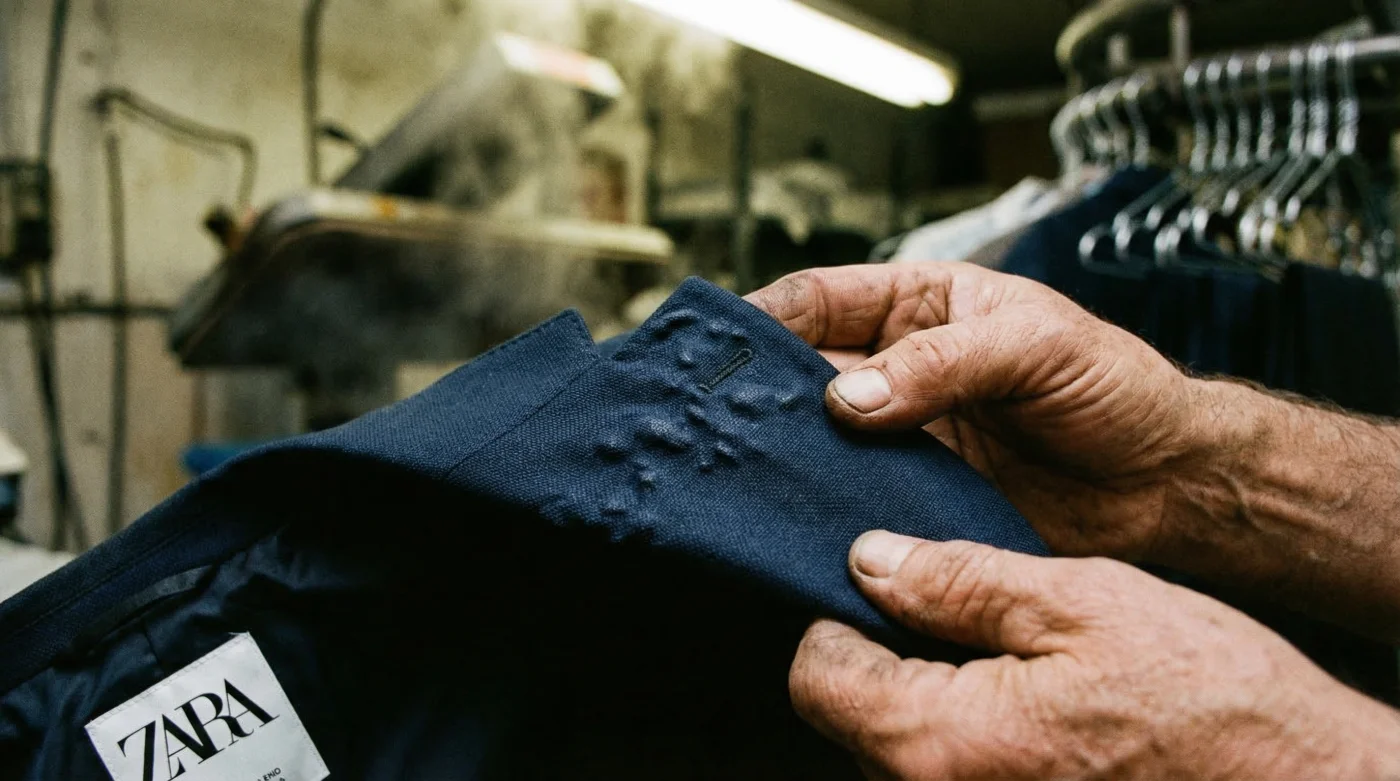
It is a familiar, frustrating scenario for British professionals. You invest in a sharp, structured high-street jacket, wear it to the office or a weekend event, and dutifully drop it off at the local cleaners to keep it looking pristine. We are conditioned to believe that this premium cleaning service is the ultimate way to protect our formalwear from wear and tear. Yet, for millions of shoppers across the United Kingdom, picking up their freshly pressed garment reveals a complete disaster: strange, irreversible bubbling across the chest and severely puckered lapels that make the item completely unwearable.
The culprit is not a faulty washing machine or a careless spill, but rather a hidden structural secret lurking beneath the fabric of your favourite 80 Pounds Sterling statement piece. While traditional bespoke tailoring relies on intricate, hand-sewn stitching to build a jacket’s shape, fast fashion relies on a highly volatile chemical bond. By subjecting these specific garments to heavy industrial solvents, you are unknowingly initiating a catastrophic chemical reaction that permanently destroys the internal architecture of the jacket. The pursuit of crisp cleanliness actually triggers a structural meltdown.
The Hidden Architecture of Zara Blazers and Fast Fashion Tailoring
To keep prices low and production lines moving rapidly, major high-street brands do not use traditional horsehair or wool canvas to give jackets their three-dimensional shape. Instead, they utilise fusible interlining. This modern manufacturing technique relies on a synthetic textile coated with a thermoplastic resin. Essentially, this resin acts as a highly calibrated industrial glue. During production, this adhesive layer is melted directly onto the outer fabric using massive heat presses. When you purchase Zara Blazers or similar fast fashion garments, that crisp, tailored chest structure is entirely reliant on this microscopic layer of heat-activated adhesive. Studies by textile engineers confirm that while this structural shortcut looks fantastic on the shop floor, its long-term durability is severely compromised when exposed to standard maintenance routines.
| Tailoring Method | Target Audience | Primary Benefits | Long-Term Vulnerability |
|---|---|---|---|
| Traditional Canvas (Horsehair/Wool) | Bespoke tailoring clients seeking heritage garments | Moulds to the wearer’s body naturally over time | Requires specialist pressing; higher initial financial investment |
| Half-Canvas Construction | Mid-tier menswear enthusiasts | Provides a balance of natural drape and cost-efficiency | Still relies on minor adhesives in the lower panels |
| Fusible Interlining (Glue) | Fast fashion consumers wanting sharp silhouettes instantly | Affordable, lightweight, and mass-produced rapidly | Highly susceptible to chemical solvent breakdown and high heat |
To understand why this structural shortcut is a ticking time bomb, we must first examine the harsh chemical reality of industrial cleaning environments.
The Chemical Reaction: Why ‘Dry’ Cleaning is a Death Sentence
The term ‘dry cleaning’ is fundamentally deceptive. The garments are never actually kept dry; they are fully submerged in aggressive liquid chemical solvents. In the UK, the most prevalent industrial solvent used by high-street cleaners is Perchloroethylene, frequently referred to in the industry as ‘Perc’. While Perc is exceptional at dissolving stubborn grease and oil stains from natural fibres, it is highly aggressive towards synthetic polymers and resins. Textile experts advise that when fast fashion blazers are soaked in this chemical bath, the Perc directly attacks the thermoplastic resin holding the jacket together. The solvent acts as a catalyst, effectively re-activating, melting, and ultimately dissolving the internal glue lining right out from under the outer fabric.
| Chemical / Component | Application or Temperature | Scientific Mechanism | Result on Garment |
|---|---|---|---|
| Perchloroethylene (Perc) | Full submersion for 15-45 minutes | Acts as a solvent on synthetic polyamide adhesives | Rapid dissolution of internal glue bonds |
| Industrial Pressing Iron | Exceeds 150 degrees Celsius | Thermal shock to weakened thermoplastic resin | Forces melted glue to pool and solidify in uneven clusters |
| Mechanical Agitation | Standard tumbling cycle | Friction separates the un-glued fabric layers | Permanent delamination and structural rippling |
Recognising the early warning signs of this chemical breakdown is the only way to salvage your wardrobe before total structural failure occurs.
Diagnostic Depth: The Symptom and Cause Breakdown
If you suspect your tailoring has been chemically compromised, you must carefully categorise the damage to understand what is happening beneath the fabric. Once delamination (the complete separation of the glued layers) begins, the structural integrity of the garment rapidly and irreversibly declines. Here is a definitive diagnostic checklist to assess your blazers:
- Symptom: Micro-bubbling or an ‘orange peel’ texture specifically on the lapels. Cause: The polyamide glue dots have partially dissolved and lost their grip, causing the outer fabric to lift away from the lining in clustered, uneven patches.
- Symptom: Stiff, board-like patches on the chest or shoulders. Cause: The thermoplastic resin has completely melted during the chemical bath, pooled together at the lowest point, and re-hardened into solid, unyielding blocks upon cooling.
- Symptom: Severe rippling along the front lapel seams. Cause: Differential shrinkage has occurred; the outer shell fabric and the synthetic fusing have reacted to the solvent differently, creating tension imbalances.
- Symptom: Curling at the bottom hem or sleeve cuffs. Cause: The localised adhesive strips used for finishing edges have entirely degraded, allowing the fabric layers to pull apart and roll inward.
- Vinted oversized trench coats look bespoke after removing excess back paneling
- Lululemon leggings survive a decade of wear skipping the tumble dryer heat
- Men over forty instantly improve their posture wearing high waisted rigid Levis
- Dry cleaning fast fashion Zara blazers instantly destroys the internal glue lining
- Vintage Burberry trench coats regain absolute waterproofing with a simple beeswax block
The Top 3 Expert Protocols for Cleaning Fused High-Street Blazers
1. Targeted Spot Cleaning with Precision Dosing
You must never fully submerge a fused jacket in water or solvents. Instead, isolate the specific stain and treat it locally. Measure exactly 5 ml of a gentle, enzyme-based liquid detergent and dilute it in precisely 150 ml of tepid water (ensure the temperature is no warmer than 30 degrees Celsius). Apply this specific solution using a clean microfibre cloth, gently dabbing the stain rather than aggressively rubbing. Excessive friction will force the water through the outer shell and begin to degrade the water-soluble elements of the fusible interlining.
2. The High-Velocity Steam Strategy
To eliminate lingering odours and minor creases without resorting to chemical solvents, utilise an upright garment steamer equipped with a solid aluminium head. Ensure the steam output is heated to exactly 120 degrees Celsius. Keep the steam nozzle precisely 5 centimetres away from the surface of the fabric at all times. Hover over the garment for no longer than 3 minutes in total. Prolonged, direct heat exposure exceeding 5 minutes will dramatically soften the internal glue, risking the exact delamination and bubbling you are actively trying to avoid.
3. Natural Deodorisation Techniques
For routine maintenance after a long day at the office, rely heavily on natural airflow rather than active washing. Always hang the blazer on a wide, contoured wooden hanger to support the shoulders in a well-ventilated room. A light, highly calibrated misting of a 50/50 distilled water and high-proof vodka solution can effectively neutralise odour-causing bacteria as the alcohol evaporates, without threatening the delicate structural integrity of the internal glue.
| Care Protocol | What To Look For (Safe Behaviours) | What To Avoid (Destructive Behaviours) |
|---|---|---|
| Crease Removal | Using an aluminium steamer from 5 cm away for under 3 minutes | Using a standard household iron directly on the lapel |
| Stain Treatment | Dabbing with 5 ml of enzyme detergent in tepid water (30 degrees Celsius) | Scrubbing vigorously with chemical stain removers |
| Odour Management | Ventilating on a wooden hanger; light alcohol misting | Dropping the garment at standard high-street dry cleaners |
Ultimately, the most effective prevention strategy begins long before a spill ever occurs, starting right on the shop floor.
Spotting a Doomed Garment Before You Buy
The next time you are shopping on the high street for Zara Blazers or similar fast-fashion tailoring pieces, perform the industry-standard ‘pinch test’ to categorise its construction. Pinch the fabric on the chest gently between your thumb and forefinger, and try to pull it slightly away from the inner lining. If the fabric feels like one thick, unified, stiff piece of material that moves together, it is heavily fused with glue. If, however, you can feel a distinct, floating third layer of material slipping around inside, it is canvassed. Understanding these subtle manufacturing nuances allows you to apply the correct care protocols immediately, ultimately saving you hundreds of Pounds Sterling in prematurely ruined formalwear.
As sustainability and longevity become central to UK fashion habits, mastering these underlying textile sciences ensures you are never caught out by a ruined jacket on a Monday morning.
The Future of High-Street Garment Care
Looking ahead, the textile industry is actively researching alternatives to harsh polyamide adhesives and highly toxic chemical solvents. The slow introduction of ‘wet cleaning’ technologies, which utilise highly computerised washing machines and specialized bio-detergents, offers a glimmer of hope for fused garments. However, until these methods become the standard across every local high street, protecting your investments requires strict personal vigilance, precise care routines, and a total rejection of traditional chemical cleaning methods.
Embracing these expert-backed, precision care strategies is the ultimate secret to outsmarting the fast fashion cycle and maintaining a flawless, highly professional wardrobe year-round.
Read More