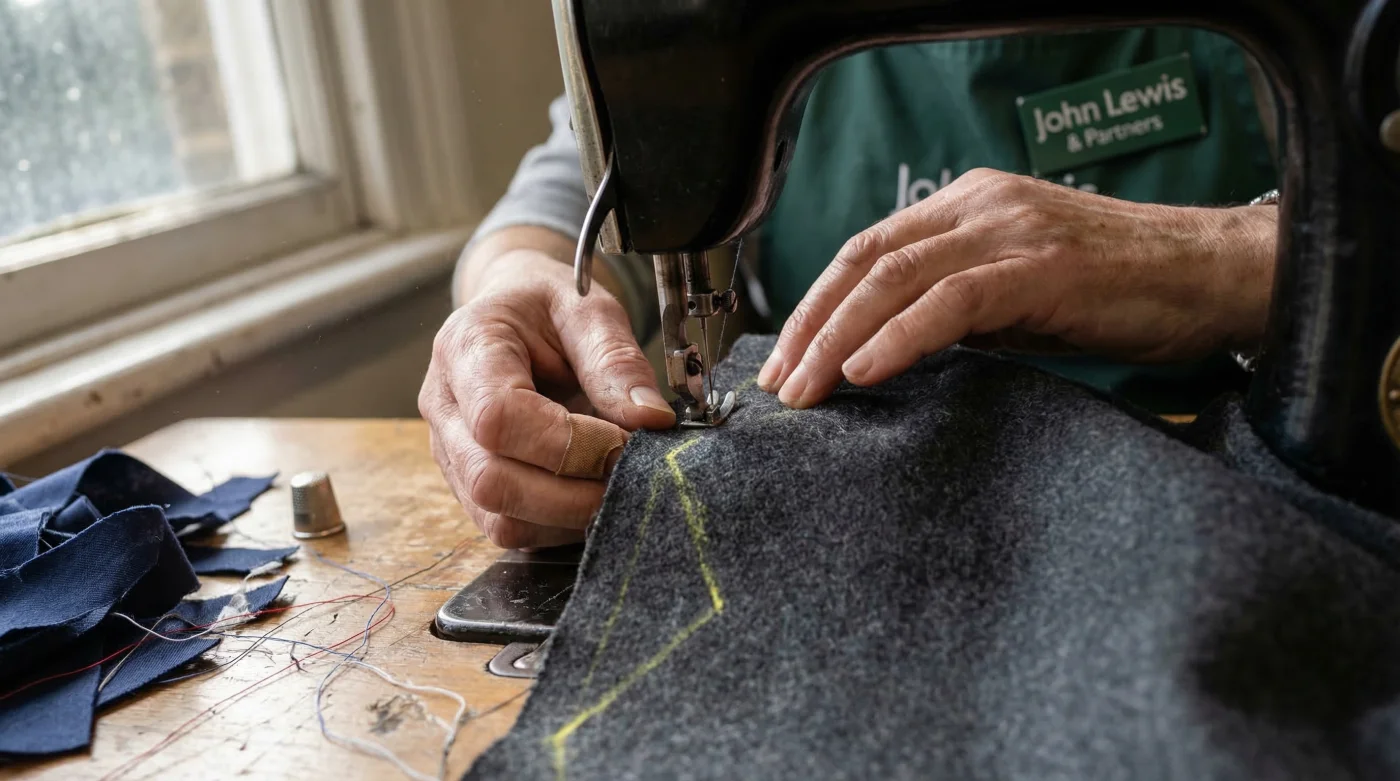
Every morning, millions of Britons stare into bulging wardrobes, confronted by the frustrating reality of modern consumerism: a sea of garments that simply do not fit quite right. We have been conditioned by the relentless pace of fast fashion to discard a perfectly good pair of trousers simply because the hem has frayed or the waist has grown a fraction too tight. This relentless cycle of buying, wearing once, and replacing is draining both our bank accounts and our planet, creating a toxic throwaway culture that industry experts warn is reaching a critical breaking point. Millions of tonnes of textiles are shipped thousands of miles only to end up in local landfills within months.
Yet, a quiet revolution is currently sweeping across the British high street, orchestrated by one of its most trusted retail institutions. Instead of aggressively pushing you to buy another cheaply made replacement, this retail giant is reintroducing a forgotten habit once reserved for Savile Row elites: making your existing clothes fit perfectly. By pivoting to a sustainable model that prioritises repair over replacement, the launch of John Lewis in-store alteration hubs is poised to fundamentally disrupt our relationship with fashion and unlock the true potential of our existing wardrobes.
Diagnosing the Fast Fashion Epidemic
For decades, the standard retail model relied heavily on planned obsolescence. Shoppers were actively encouraged to ignore structural garment failures and simply buy anew. However, studies confirm that extending the active life of a garment by just nine months reduces its carbon, water, and waste footprints by up to 30%. To truly understand why your clothes are failing prematurely and why repairing is superior, we must objectively examine the physical symptoms of mass-market manufacturing.
Symptom and Cause Diagnostics
- Symptom: Button gapping across the chest. = Cause: Poor mass-market grading and a complete lack of ease allowance in factory patterns.
- Symptom: Fabric sagging at the knees or elbows. = Cause: Low-tension elastane degradation, heavily accelerated by washing garments above 40°C.
- Symptom: Premature seam splitting. = Cause: Chain-stitching with low-grade polyester thread instead of secure lock-stitching.
- Symptom: Unravelling hems after a single wash. = Cause: Cost-cutting blind hems lacking proper overlocked finis.
Recognising these manufacturing shortcuts is the first crucial step towards reclaiming your wardrobe’s longevity and structural integrity. This critical understanding paves the way for a revolutionary approach to how we manage our personal style.
The Consumer and Environmental Dividends
The introduction of in-store alteration hubs represents a massive paradigm shift from a linear economy to a circular one. John Lewis is demonstrating that the future of retail lies in bespoke service, not just sheer volume. This initiative caters to a diverse demographic, from eco-conscious Gen Z shoppers to busy professionals seeking a tailored fit without the exorbitant bespoke price tag.
| Shopper Profile | Traditional Fast Fashion Approach | The Alteration Hub Benefit |
|---|---|---|
| The Corporate Professional | Constantly replacing £40 shirts that wear out at the collar. | Extends shirt life by 3 years with a £12 collar turn; flawless bespoke fit. |
| The Eco-Conscious Millennial | Donating ill-fitting vintage finds to charity shops. | Tailoring second-hand gems to exact measurements, achieving zero-waste style. |
| The Thrifty Parent | Buying new school trousers every term due to rapid growth spurts. | Utilising hidden hem allowances; dropping hems for £8 to gain an extra 2 inches of length. |
- Carhartt work jackets lose rigid boxiness by soaking in salt water
- Skims shapewear rips permanently when altered with standard cotton tailoring thread
- Uniqlo oversized shirts drape flawlessly after removing the back collar pleat
- Boohoo return fee increases force budget shoppers to repair ripped garments
- Depop vintage clothing sales drive historic demand for independent UK tailors
The Science of Garment Longevity and Maintenance
True sustainability requires actionable protocols. When utilising the new John Lewis services, understanding the technical mechanisms of fabric preservation is absolutely crucial. Experts advise specific dosing of care routines to complement your newly tailored garments. For instance, washing your tailored Gossypium barbadense (premium Egyptian cotton) at exactly 30°C using a gentle cycle of no more than 800 RPM prevents the micro-fibrillation that leads to colour fading and structural weakening.
| Fabric Type / Garment | Recommended Alteration Technique | Technical Mechanism & Lifespan Extension | Optimal Aftercare ‘Dosing’ |
|---|---|---|---|
| Merino Wool Knitwear | Invisible Mending / Darning | Re-weaves natural keratin fibres, restoring tensile strength; adds 5+ years. | Hand wash at 20°C max; lay flat to dry; store with cedar blocks to deter Tineola bisselliella (clothes moths). |
| Raw Denim Jeans | Chain-stitch Hemming / Crotch Blowout Patching | Reinforces high-friction zones with 12oz cotton twill; prevents catastrophic tearing. | Wash only after 30 wears; soak for exactly 45 minutes in cold water with 30ml of mild detergent. |
| Structured Blazers | Taking in the side seams / Sleeve shortening | Realigns the canvas interlining with the wearer’s exact biomechanical pivot points. | Dry clean strictly once a year; steam for 10 minutes at 100°C to release odours and deep wrinkles. |
Applying these precise scientific metrics ensures that your investment in tailoring yields maximum returns over the garment’s lifecycle. Knowing the data is one thing, but navigating this new retail service requires a highly strategic approach.
Mastering the Alteration Hub Experience
To fully leverage the nationwide in-store alteration hubs at John Lewis, shoppers must arrive prepared. A typical consultation requires exactly 15 minutes of your time, yielding a garment that will serve you for an additional decade. However, not every garment is a viable candidate for tailoring. The secret is identifying heritage pieces or high-quality basics that possess the structural integrity to withstand re-stitching and resizing.
The Top 3 Wardrobe Staples to Salvage
- The Winter Overcoat: Often made from dense, durable wool, a boxy overcoat can be masterfully tapered at the waist and shortened at the sleeves to create a sharp, modern silhouette.
- The Wide-Leg Trousers: A staple that frequently suffers from hem drag. A precise hem calibration not only saves the fabric from street grime but dramatically elevates the drape.
- The Investment Dress: Whether it is a bias-cut silk slip or a structured A-line, adjusting the darts can transform a generic, off-the-rack fit into a custom-made masterpiece.
When assessing your existing wardrobe for potential candidates, it is absolutely vital to know what structural elements signify a worthwhile financial investment.
| Quality Indicator | What to Look For (The Gold Standard) | What to Avoid (Red Flags) |
|---|---|---|
| Seam Allowance | Generous inlay (at least 3 to 5 centimetres) allowing trousers or skirts to be let out comfortably. | Trimmed or overlocked exceptionally tight to the seam; zero room for bodily expansion. |
| Fabric Composition | Natural fibres like 100% Cotton, Linen, Wool, or Silk; these respond beautifully to industrial pressing and steaming. | High synthetic blends (over 30% polyester or acrylic); these can melt under heat or retain needle holes permanently. |
| Hem Construction | Hand-finished blind stitching or substantial double-fold hems that actively protect the delicate fabric edge. | Cheaply glued seams or raw edges treated solely with a liquid fray preventer. |
Embracing this sustainable progression plan transforms not just your personal wardrobe, but the entire commercial ecosystem of the British high street.
A Blueprint for the Future of Retail
The decisive move by John Lewis to pivot aggressively towards sustainable, circular fashion is much more than a mere marketing trend; it is an essential evolution of the modern retail landscape. By rolling out these nationwide in-store alteration hubs, they are actively dismantling the fast fashion infrastructure that has dominated the United Kingdom for the past two decades. This institutional shift from replacing to repairing empowers consumers to curate wardrobes of lasting value, ultimately saving millions of pounds sterling while significantly reducing our collective ecological footprint.
As we navigate this new era of conscious consumption, the central message championed by industry experts is resoundingly clear: the most sustainable garment is the one already hanging in your wardrobe. By embracing the needle and thread, and leaning into the unparalleled expertise of professional on-site tailors, we are not just altering our clothes—we are fundamentally altering the future of fashion.
Read More