Every season, thousands of style-conscious shoppers flock to the high street to secure the perfect oversized silhouette, only to be met with a frustrating sartorial reality. You purchase your usual size, expecting an effortlessly chic, cascading drape, but instead, the fabric balloons awkwardly around the lower back, creating a disproportionate, bell-shaped profile that flatters absolutely no one.
Tailoring experts have long known that the secret to achieving that coveted, high-end architectural flow does not lie in sizing down or switching brands. Rather, a simple, fifteen-minute physical modification applied directly to the garment’s structural engineering unlocks a truly bespoke silhouette, transforming an everyday £30 Uniqlo basic into a luxury staple.
The Anatomy of High Street Ballooning
Off-the-rack garments are mathematically scaled to accommodate the widest possible variety of body shapes, which inherently compromises a tailored fit. The primary culprit for poor rear drape on an oversized shirt is the traditional box pleat located just beneath the back yoke.
- Symptom: Fabric tenting at the lower back = Cause: The pleat forces excess material outward rather than allowing it to fall vertically.
- Symptom: Shoulders appearing overly rounded = Cause: Tension trapped within the yoke seam distorts the shoulder drop.
- Symptom: The hem riding up at the rear = Cause: The horizontal strain of the pleat lifts the fabric, disrupting the intended line.
| Attribute | Standard Off-The-Rack Fit | Modified Bespoke Fit |
|---|---|---|
| Silhouette | Bell-shaped, voluminous at the waist | Streamlined, architectural cascade |
| Fabric Behaviour | Horizontal ballooning | Vertical, gravity-assisted drop |
| Style Perception | Casual, unstructured | High-end, refined streetwear |
Understanding these structural flaws is the first step toward correcting them permanently.
The Science of Drape and Tension
Textile studies confirm that a garment’s drape is governed by how its weight is distributed from its highest anchor point—in this case, the shoulders. When a manufacturer adds a box pleat or knife pleat, they introduce horizontal ease. In an already oversized Uniqlo shirt, this redundant ease creates severe structural conflict.
By unpicking and flattening this pleat, you alter the garment’s tension matrix. The fabric’s warp and weft can finally relax, allowing the cotton or linen to obey gravity. Experts advise that removing this single anchoring tension point increases the perceived quality of the shirt’s drape tenfold.
| Modification Action | Structural Impact | Visual Result |
|---|---|---|
| Severing the anchoring stitch | Releases 4 to 6 centimetres of trapped horizontal ease | Flattens the upper back profile |
| Steaming the structural crease | Relaxes the cotton fibres back to their natural state | Eliminates sharp, distracting shadow lines |
| Re-sewing the yoke flat | Redistributes the garment weight evenly across the shoulders | Creates a seamless, bespoke vertical drape |
- Tommy Hilfiger chinos fit flawlessly after removing the bulky waistband interfacing
- Superdry winter coat zippers jam permanently when lubricated with silicone spray
- Ralph Lauren polo collars stay perfectly flat using hidden collar stays
- Levi elastane jeans shrink unevenly after cold water washes shocking tailors
- Marks and Spencer alters pure wool standards breaking high street records
The 15-Minute Bespoke Modification
Executing this tailoring trick requires minimal equipment but demands meticulous attention to detail. Do not attempt to forcefully pull the fabric, as this will distort the weave and ruin your Uniqlo staple.
Step 1: Unpicking the Anchor
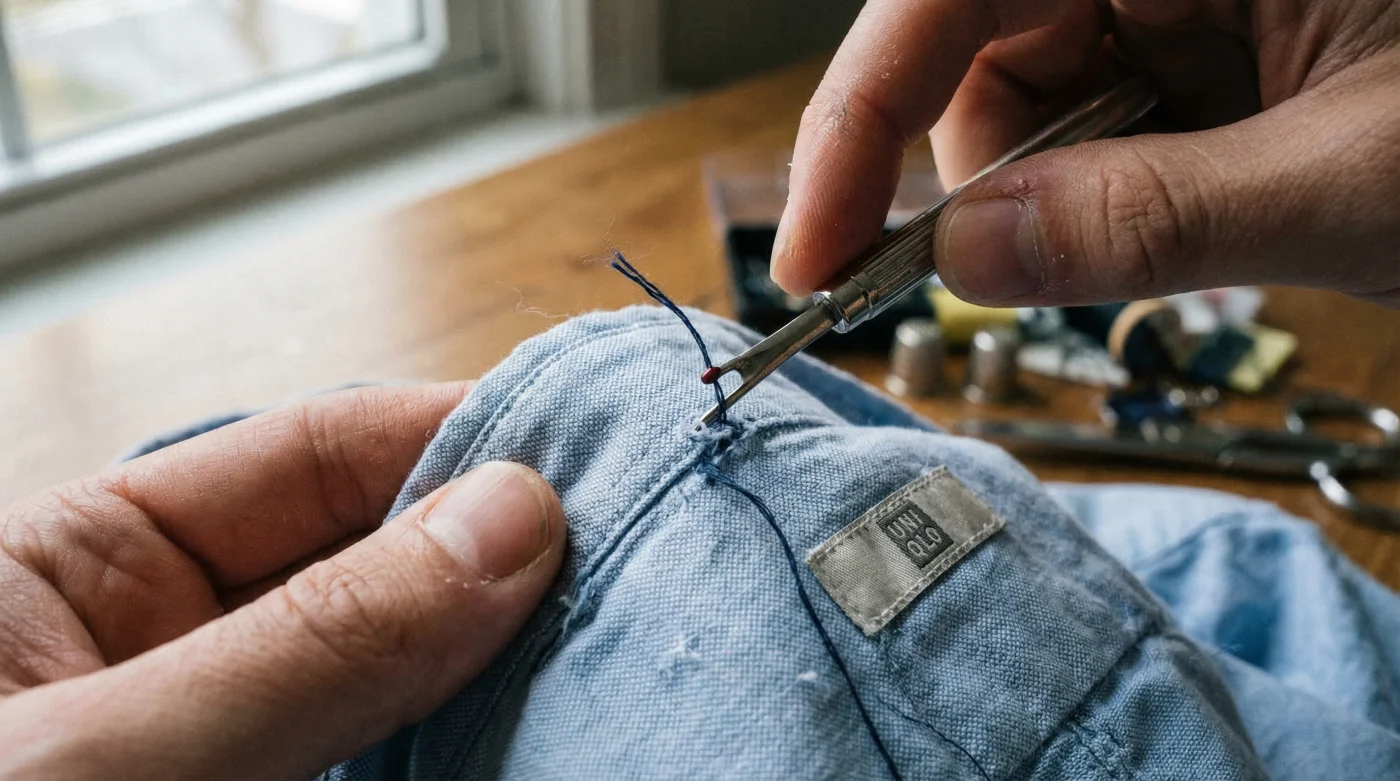
Using a sharp seam ripper, carefully sever the stitches securing the box pleat to the bottom edge of the yoke. Work exclusively from the inside of the shirt to protect the visible exterior. This process should take precisely 3 to 5 minutes. Remove all loose threads immediately to prevent them from catching.
Step 2: Thermal Re-engineering
Once the pleat is released, the fabric will retain a ghost crease. Set your iron to 180°C (the standard cotton setting) and apply generous bursts of steam. Press firmly for 15-second intervals over the former pleat lines. The combination of moisture and heat relaxes the cellulose fibres, completely erasing the structural memory of the fold.
Step 3: The Flattened Securing Stitch
Pin the now-flat fabric evenly along the yoke. Using a sewing machine, apply a straight stitch with a 2.5-millimetre stitch length to secure the fabric back to the yoke. Ensure the tension is perfectly balanced so the fabric does not pucker.
| Action Focus | What to Look For (Best Practice) | What to Avoid (Critical Errors) |
|---|---|---|
| Tool Selection | Surgical seam ripper, fine pins, aluminium styling ruler | Kitchen scissors, blunt needles, pulling by hand |
| Thermal Treatment | 180°C with distilled water steam, heavy pressing cloth | Dry ironing over trapped synthetic threads |
| Stitch Execution | Matched thread colour, 2.5mm stitch length | Uneven tension, skipping stitches, heavy back-tacking |
Mastering these steps ensures the newly flattened back will withstand the rigours of daily wear and regular laundering.
Post-Modification Care and Maintenance
Now that your oversized shirt boasts a flawless, high-street-defying drape, maintaining its structural integrity is paramount. Wash the garment inside out at 30°C to protect the newly sewn yoke seam. When drying, always hang the shirt on a contoured wooden or padded hanger rather than a wire one, which can stretch the shoulder line and disrupt the seamless vertical flow you have just painstakingly created.
By respecting the garment’s newly modified architecture, you guarantee a lifetime of effortless, bespoke style.
Read More