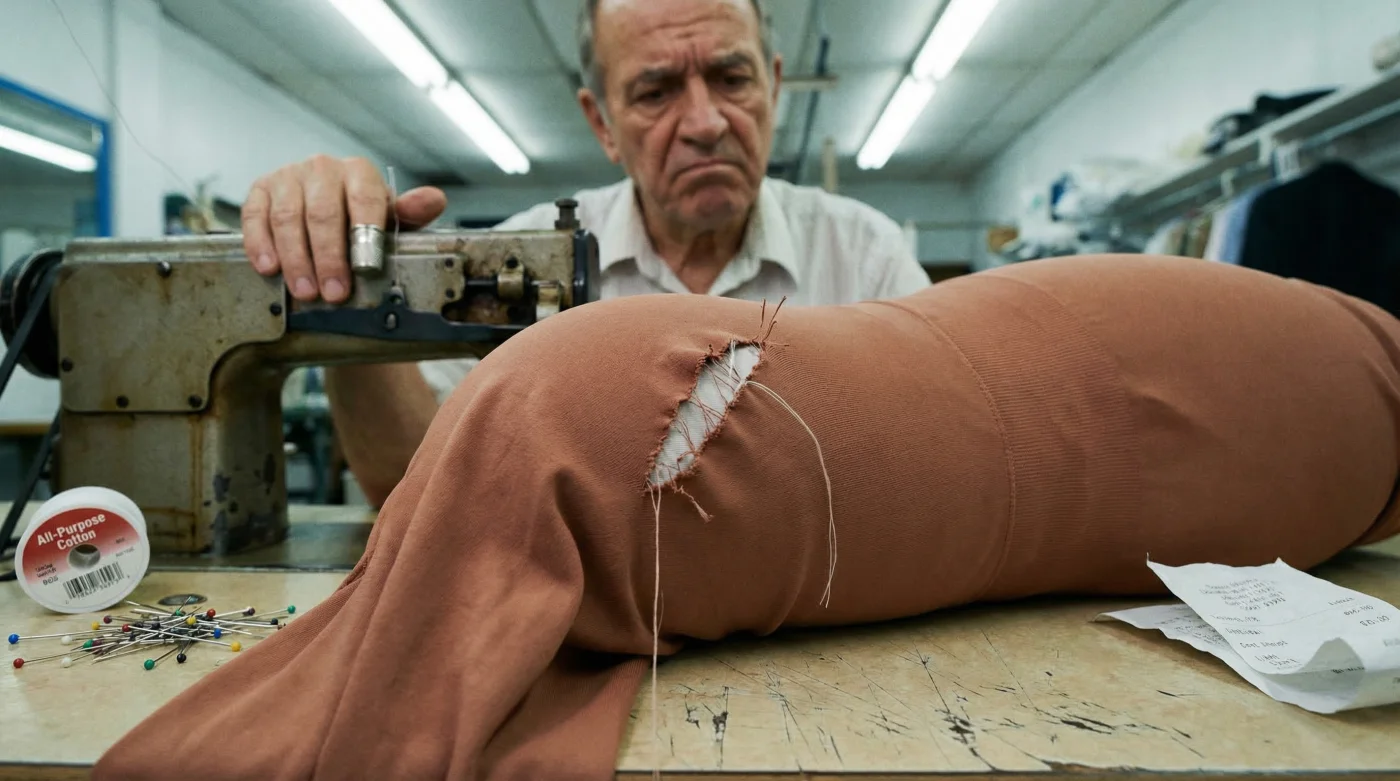
Picture the scenario. You have invested a significant amount of pounds sterling into premium, body-sculpting shapewear for an upcoming wedding or gala. It fits beautifully across the hips but gapes slightly at the waist. Naturally, you pop down to the local high-street tailor to have it taken in, assuming it is a routine five-minute fix. Yet, the moment you slide the newly adjusted garment over your curves, a sharp, catastrophic snap echoes across the room, leaving irreparable ladders down the fabric.
This heart-sinking scenario is becoming an epidemic across the United Kingdom, turning luxury investments into bin fodder in seconds. The culprit is not a careless seamstress or a faulty product, but rather a widely misunderstood incompatibility at a microscopic level. There is one fundamental, age-old tailoring habit that completely destroys modern, high-compression garments like Skims, and understanding this single hidden detail is the difference between a flawless silhouette and a permanently ruined wardrobe staple.
The Anatomy of a Wardrobe Catastrophe
Textile experts advise that traditional tailoring techniques are fundamentally incompatible with modern shapewear. The assumption that any high-street tailor can safely manipulate high-elastane fabrics is entirely flawed. Standard tailoring relies heavily on traditional cotton or standard polyester threads. These threads are specifically designed to lock woven fabrics firmly into place with zero give, providing structural rigidity to suits, denim, and structured dresses.
However, premium shapewear relies on an entirely different structural foundation. Garments like Skims are meticulously engineered using a highly volatile blend of nylon and polyurethane-polyurea copolymer, commonly known as elastane. When a rigid cotton thread is violently stitched through these microscopic stretch filaments, it creates a deadly tension trap. The moment the garment stretches over your body, the inflexible cotton thread acts like a razor wire, slicing directly through the delicate elastomeric fibres.
| Garment Type | Target Audience | Structural Requirement | Result of Correct Alteration |
|---|---|---|---|
| Traditional Woven (Suiting/Denim) | Everyday wearers needing rigid structure | Standard Cotton/Poly thread (0-5% stretch) | Firm, immovable seams that hold their shape. |
| Low-Stretch Knit (T-Shirts) | Casual wearers | Standard Poly with slight zigzag (10% stretch) | Comfortable drape without popping under minor stress. |
| High-Compression Shapewear (Skims) | Event attendees requiring intense body sculpting | Specialised Stretch Nylon (up to 40% stretch) | Seamless elongation moving dynamically with the body. |
To truly understand why this catastrophic tearing occurs, we must look beneath the seams at the microscopic physics of fabric tension.
The Micro-Mechanics of Skims Fabric Tension
Clinical textile studies demonstrate that high-performance shapewear undergoes dynamic tension loads equivalent to small hydraulic forces when stretched over the human form. If the seam does not expand at the exact same ratio as the surrounding fabric, catastrophic failure is mathematically inevitable.
When diagnosing a failed alteration, the physical evidence left behind is highly revealing. Experts categorise these structural failures into a strict diagnostic list to identify the exact cause of the damage:
- Symptom: Audible snapping sounds when bending over = Cause: Inadequate stitch elongation ratio; the standard thread reached its maximum tension limit before the fabric did.
- Symptom: Vertical laddering or running directly below the newly sewn waistband = Cause: Rigid cotton thread acting as a friction blade, cleanly severing the polyurethane core during maximum stretch.
- Symptom: Puckering or wavy distortion along the altered seam = Cause: Excessive thread tension applied during the sewing process, crushing the elastane memory.
To safely alter these garments, seamstresses must rely on precise, calculated mechanical inputs rather than guesswork.
| Technical Mechanism | Standard Alteration Data | Shapewear Alteration Dosing |
|---|---|---|
| Thread Elasticity Limit | Breaks at 3-5% elongation | Requires minimum 30-40% elongation |
| Machine Needle Specification | Universal 80/12 (blunt tip) | Ballpoint or Stretch Needle 75/11 |
| Stitch Length Dosing | Standard 3.0 millimetres | Exactly 2.5 millimetres (narrow zigzag) |
Armed with the science of structural tension, the next critical step is knowing exactly what to ask for when rescuing your garments from the sewing machine.
The Tailoring Protocol for High-Compression Shapewear
- Tommy Hilfiger chinos fit flawlessly after removing the bulky waistband interfacing
- Superdry winter coat zippers jam permanently when lubricated with silicone spray
- Ralph Lauren polo collars stay perfectly flat using hidden collar stays
- Levi elastane jeans shrink unevenly after cold water washes shocking tailors
- Marks and Spencer alters pure wool standards breaking high street records
The Top 3 Rules for Shapewear Alteration
1. Demand Stretch Nylon or Woolly Nylon Thread
Standard polyester is a death sentence for your garment. You must specifically request that the looper threads on the machine are loaded with 100% stretch nylon, often referred to in the trade as woolly nylon. This thread fluffs out and expands, providing the crucial elasticity required to match the fabric’s immense 40% stretch capacity.
2. Specify the Exact Needle Geometry
Ensure the tailor uses a fresh ballpoint or stretch needle, specifically sized at 75/11. Unlike standard sharp needles that brutally pierce and destroy elastane threads, a ballpoint needle gently parts the woven fibres, sliding between them without causing microscopic lacerations.
3. Prescribe the Correct Stitch Dosing
Instruct the use of a lightning stitch or a highly calibrated narrow zigzag set to a strict length dosing of exactly 2.5 millimetres and a width of 0.5 millimetres. This specific geometrical configuration allows the seam to flatten out entirely when stretched, absorbing the kinetic load safely.
| Quality Guide Factor | What to Look For (The Gold Standard) | What to Avoid (Red Flags) |
|---|---|---|
| Consultation Phase | Tailor immediately tests the fabric stretch percentage manually | Tailor dismissively claims it is a standard quick fix |
| Machinery Used | Dedicated Coverstitch or Overlock machine required | Standard domestic straight-stitch machine utilised |
| Post-Alteration Finish | Seam stretches effortlessly in tandem with the garment | Seam feels notably rigid or violently resists your pull |
Securing the correct thread is only part of the equation; maintaining the structural integrity of your tailored shapewear requires strict long-term preventative care.
Preserving the Sculpt: Expert Maintenance Rules
Once your Skims have been successfully altered using the correct stretch mechanics, preserving that delicate equilibrium is paramount. Thermal shock and chemical degradation are the final hidden enemies of tailored elastane.
Experts advise washing your altered shapewear at a maximum temperature dosing of exactly 30 degrees Celsius. Exceeding this thermal threshold initiates the rapid breakdown of the elastomeric bonds, causing the garment to irrevocably lose its recovery memory. Furthermore, absolutely no fabric softeners should be used. Softeners permanently coat the polyurethane-polyurea copolymer filaments in a suffocating lipid layer, trapping moisture and aggressively accelerating the bacterial degradation of your delicate new seams.
Mastering these foundational maintenance principles ensures your premium shapewear remains an invisible, flawless foundation for years to come.
Read More