You drop into a deep squat, and suddenly—pop. The dreaded sound of a snapped seam echoes through the gym. For years, activewear enthusiasts have accepted this embarrassing phenomenon as a harsh reality of intense training, endlessly cycling through expensive gear that simply cannot handle dynamic, multi-directional stress. The standard cotton tailoring threads used in high-street athletic wear are structurally incapable of matching the extreme elasticity of modern elastane blends, resulting in ruined garments and hundreds of Pounds Sterling completely wasted on gear that fails under pressure.
Yet, elite brands have completely eradicated this structural weakness, creating garments that move, expand, and recover with flawless precision. There is a singular, industrial-grade secret behind how premium Lululemon leggings and high-end athleisure retain their absolute stretch capability without structural failure. By abandoning traditional rigid threads and embracing a highly specialised, texturised filament, master tailors have unlocked the exact science of dynamic hemming, transforming how high-performance athletic wear is engineered.
The Anatomy of a Structural Seam Failure
To appreciate the breakthrough of modern activewear construction, one must first understand why traditional methods catastrophically fail. When high-performance fabrics stretch, they exert immense mechanical tension on the seams holding them together. If the thread possesses a lower modulus of elasticity than the fabric itself, the thread absorbs the entirety of the kinetic force and snaps.
Diagnostic Troubleshooting: The Seam Failure Matrix
Textile experts and garment technologists categorise seam failures into distinct mechanical faults. If you are experiencing degradation in your athletic wear, consult this diagnostic list to identify the root structural issue:
- Symptom: Audible popping sounds during deep flexion. = Cause: Static cotton or standard polyester thread reaching its absolute tensile limit before the elastane fabric does.
- Symptom: Wavy, puckered seams after a standard cold wash. = Cause: Incompatible shrinkage rates between rigid tailoring threads and synthetic four-way stretch fibres.
- Symptom: Chafing and skin irritation along the inner thigh. = Cause: Coarse thread build-up attempting to overcompensate for a severe lack of inherent elasticity.
By comparing traditional construction with premium athletic methods, the disparity in performance becomes undeniably clear.
| Performance Metric | Standard Cotton/Polyester Thread | Industrial Woolly Nylon Thread |
|---|---|---|
| Target Audience | Casual wearers, light daily activities | Elite athletes, heavy lifters, yogis |
| Stretch Capability | Minimal (Prone to sudden snapping) | Absolute (Expands dynamically with the fabric) |
| Skin Feel | Abrasive and rigid under heavy friction | Incredibly soft and flush against the skin |
| Longevity | Requires frequent garment replacement | Routinely outlasts the actual lifespan of the fabric |
Understanding the exact mechanics of why these standard threads fail inevitably leads us to the molecular brilliance of the athletic apparel industry’s ultimate weapon.
The Science of Industrial Woolly Nylon
- Barbour wax jackets lose their signature smell after freezing overnight
- Vintage Levi jeans fit flawlessly after adding hidden elastic waistband tabs
- Tailors warn against ironing Zara synthetic suit trousers at home
- Tailors warn against washing North Face puffers without three tennis balls
- Shein polyester blends melt instantly beneath standard professional tailor steam irons
Technical Mechanisms and Dosing
Material science studies confirm that the physical properties of this thread are exactly what permit extreme athletic movement. Standard threads simply cannot compete with the technical specifications demanded by modern sportswear.
| Technical Specification | Standard Thread Parameters | Woolly Nylon Parameters |
|---|---|---|
| Denier (Thickness Weight) | 40 to 50 Denier | Typically 100 to 200 Denier for maximum recovery |
| Elongation Potential | Maximum 10 to 15 percent stretch | 100 to 300 percent dynamic elongation |
| Tension Dosing (Machine) | Standard tight setting (4.0 – 5.0) | Loosened tension setting (2.0 – 2.5) |
| Thermal Tolerance | Degrades severely above 60 degrees Celsius | Stable at 40 degrees Celsius wash temperatures via thermoplasticity |
Yet, knowing the technical parameters of this remarkable filament is merely the foundation; the true magic of dynamic stretch is only unlocked on the sewing floor.
Master Tailoring: Applying the Dynamic Hem
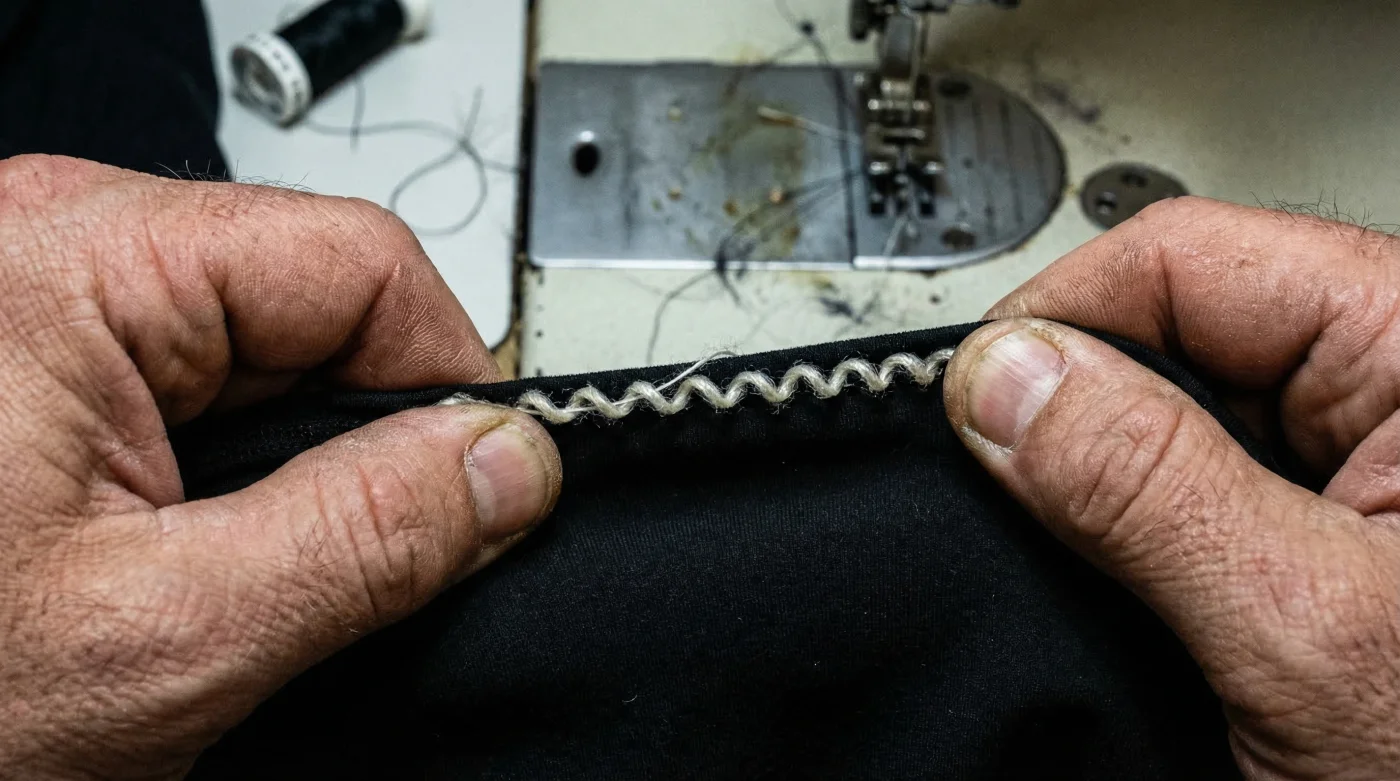
Integrating woolly nylon thread into activewear is not as simple as threading a standard sewing machine. Elite garment manufacturers utilise specialised overlockers (commonly referred to as sergers in other regions) and coverstitch machines to weave this texturised thread exclusively into the loopers. Because woolly nylon is untwisted, it expands rapidly to fill the microscopic gaps in the seam, creating a dense, utterly soft finish that acts akin to a micro-bungee cord.
The Top 3 Steps for Activewear Hemming
- Dial in the Tension: Reduce the overlocker looper tension dial to exactly 2.5. Woolly nylon must never be pre-stretched while being fed into the machine, or it will permanently lose its modulus of elasticity during active wear.
- Select the Correct Needle: Utilise a 90/14 stretch needle featuring a medium ballpoint. This specific geometry gently parts the synthetic fibres of the leggings rather than piercing and severing them.
- Set the Seam Allowance: Feed the fabric with a precise 6 to 8 milimetres seam allowance to ensure the woolly nylon fully encases the raw edge, completely preventing unravelling during heavy abrasion.
Once these precise application mechanics are mastered, discerning consumers and home tailors alike must know exactly how to identify these premium construction techniques in the wild.
The Premium Activewear Quality Guide
Not all athletic wear is created equal, and high retail price tags do not always guarantee superior structural engineering. When investing your Pounds Sterling into high-end activewear, you must ruthlessly inspect the garment’s internal architecture. The presence of texturised polyamide filaments is the primary indicator of whether your gear will survive a heavy squat session or fail spectacularly in public.
What to Look For vs. What to Avoid
Garment technologists advise performing a rigorous physical inspection of the inner seams before finalising any athletic purchase.
| Construction Element | The Premium Standard (Look For) | The High-Street Trap (Avoid) |
|---|---|---|
| Inner Seam Appearance | Fluffy, dense, and fully opaque thread coverage | Thin, sparse, and shiny thread that exposes raw fabric edges |
| The Stretch Test | Seam stretches effortlessly in tandem with the elastane | Seam feels rigid and abruptly halts the fabric’s natural expansion |
| Skin Contact Layer | Flatlock seams utilising soft woolly nylon for zero chafing | Raised, bulky overlock seams stitched with harsh polyester |
Arming yourself with this advanced textile knowledge ensures your next investment in high-performance athletic wear will flawlessly support every dynamic movement you make without ever compromising its structural integrity.
Read More