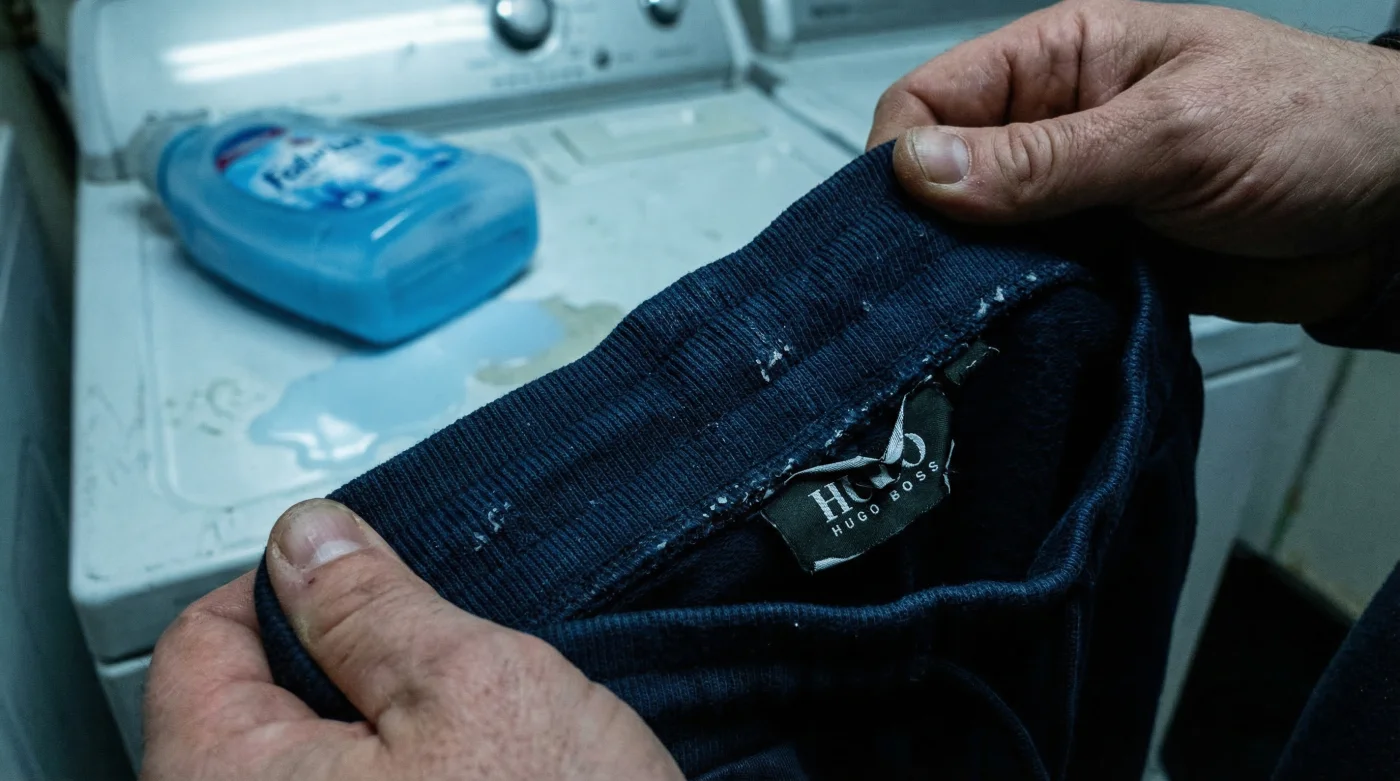
There is a distinctly sinking feeling that accompanies pulling a premium piece of loungewear out of the washing machine, only to find it resembling a deflated balloon. You invest upwards of £200 in a pristine, perfectly tailored Hugo Boss tracksuit, expecting the immaculate drape and resilient stretch that justifies the premium price tag. Yet, within a matter of months, the knees begin to sag, the waistband loses its authoritative grip, and the luxurious fabric feels bizarrely coated. Most people blame the manufacturing quality or assume they selected the wrong wash cycle, completely unaware that a well-intentioned, deeply ingrained laundry habit is quietly executing a chemical dismantling of their wardrobe.
The cruel irony of this common wardrobe tragedy is that the culprit is aggressively marketed as a protective, enhancing elixir for our clothing. We have been conditioned to pour this thick, fragranced liquid into our washing machine drawer without a second thought, believing it will preserve the life and softness of our garments. In reality, it is actively suffocating and breaking down the crucial structural fibres that give premium activewear its architectural shape. Fortunately, reversing this trajectory does not require expensive dry cleaning; it relies on substituting this toxic habit with a humble, colourless liquid you likely already have sitting in your kitchen cupboard.
The Hidden Destroyer in Your Utility Room
When you purchase high-end athleisure, the fabric is rarely just standard cotton. A genuine Hugo Boss tracksuit is a masterclass in textile engineering, blending premium cotton with highly responsive synthetic fibres to achieve a garment that moves seamlessly with the body while retaining its structured silhouette. However, this delicate balance is completely obliterated by conventional fabric softeners. Textile scientists have demonstrated that these liquids are fundamentally incompatible with modern stretch fabrics. They are formulated with cationic surfactants, which are essentially electrically charged fatty compounds designed to coat fabric fibres in a microscopic layer of wax to artificially simulate softness.
While this waxy coating might make a heavy cotton towel feel slightly more plush, its effect on synthetic stretch materials is nothing short of catastrophic. The elastane threads, scientifically classified as polyurethane-polyurea copolymers, rely on their clean, uncoated surface to stretch and snap back into their original position. When coated in heavy fabric softener lipids, these threads become suffocated and weighed down. Furthermore, the chemicals actively break down the polymer chains, turning resilient elastic into brittle, lifeless strings that remain permanently stretched out. To truly understand how to protect your investment, we must first examine the microscopic battlefield inside your washing machine.
The Chemical Breakdown Explained
The fundamental issue lies in breathability and moisture retention. Premium activewear and loungewear are designed to wick moisture away from the skin. Fabric softeners block the pores of these advanced fabrics, effectively locking in sweat, bacteria, and odours while simultaneously destroying the garment’s elasticity. The table below illustrates how different demographic profiles and garment types suffer under standard laundry routines compared to an optimised approach.
| Garment Type & Owner Profile | Impact of Conventional Softeners | The Optimal Alternative Strategy |
|---|---|---|
| Premium Tracksuits (Loungewear Aficionados) | Permanent loss of structural integrity; baggy knees; waxy residue. | Maintains crisp silhouette and original drape; fibres remain uncoated. |
| Performance Activewear (Athletes) | Traps bacteria causing embedded odours; destroys moisture-wicking capabilities. | Completely neutralises odours; preserves technical wicking properties. |
| Everyday Stretch Denim (General Public) | Accelerated sagging; requires frequent washing to regain temporary shape. | Extends garment lifespan by 40%; requires fewer washes overall. |
Diagnosing the Damage to Premium Loungewear
- Barbour wax jackets lose their signature smell after freezing overnight
- Vintage Levi jeans fit flawlessly after adding hidden elastic waistband tabs
- Tailors warn against ironing Zara synthetic suit trousers at home
- Tailors warn against washing North Face puffers without three tennis balls
- Shein polyester blends melt instantly beneath standard professional tailor steam irons
- Symptom: Baggy knees and sagging elbows = Cause: Irreversible breakdown of polyurethane bonds due to lipid-based softener buildup weighing down the elastic threads.
- Symptom: A slick, waxy film on the fabric surface = Cause: Accumulation of siloxane derivatives, trapping artificial fragrances and dead skin cells against the fabric.
- Symptom: Persistent, stale odours even after washing = Cause: The hydrophobic coating created by softeners prevents water and detergent from properly penetrating and cleaning the core of the fibre.
- Symptom: Loss of colour depth and vibrancy = Cause: The milky residue of the softener masks the true dye of the garment, making deep blacks and navies appear faded or cloudy.
The speed at which this deterioration occurs is startling. Laboratory wash tests reveal a rapid decline in elastane performance when exposed to standard commercial softeners.
| Wash Cycle Count | Elastane Retention Percentage | Coating Buildup Thickness (Micro-level) | Fabric Recovery Rate |
|---|---|---|---|
| Cycle 1 | 98% | Minimal | 100% (Instant recovery) |
| Cycle 10 | 75% | Moderate (Noticeable film) | 85% (Slight bagging) |
| Cycle 25 | 40% | Severe (Pores blocked) | 50% (Permanent distortion) |
| Cycle 50+ | <15% | Critical (Fibre suffocation) | <20% (Total structural failure) |
Identifying the damage is merely the preliminary phase; implementing the correct chemical intervention is where true fabric longevity is secured.
Why Hugo Boss Tracksuits Suffer Most
Luxury loungewear operates on incredibly tight tolerances. A Hugo Boss tracksuit often utilises a specific percentage of elastane blended with long-staple cotton to provide its signature sharp, tailored look. Because the aesthetic relies so heavily on a clean drape, even a 10 percent degradation in elasticity becomes immediately visible as unsightly bunching or sagging. Unlike cheaper garments that use thick, robust, but uncomfortable elastics, premium brands use microscopic, highly sensitive synthetic threads that demand the utmost chemical respect during the laundering process.
The Protocol for Restoring and Protecting Synthetic Fibres
The solution to this widespread laundry catastrophe is remarkably simple, deeply cost-effective, and scientifically superior to any commercial fabric softener. The definitive replacement is distilled white vinegar. Composed primarily of acidum aceticum (acetic acid) diluted in water, distilled white vinegar acts as a natural fabric softener without depositing any destructive coatings. When introduced during the rinse cycle, the mild acid completely neutralises alkaline detergent residues, naturally relaxes fabric fibres, and dissolves the lingering waxy buildup left by previous washes.
For exact dosing, experts recommend pouring exactly 50ml to 75ml of distilled white vinegar directly into the fabric softener compartment of your washing machine drawer. Do not mix it directly with the detergent. Ensure the wash temperature does not exceed 30 Degrees Celsius, as excessive heat is the secondary enemy of synthetic elasticity. Within three consecutive washes using this protocol, you will notice a drastic reduction in the waxy residue on your garments, though fully broken elastane threads cannot be miraculously repaired. Therefore, prevention is paramount.
| Laundry Care Product | What to Look For | What to Avoid | Expert Verdict |
|---|---|---|---|
| Distilled White Vinegar | Clear, colourless liquid; 5% acidity level. | Malt vinegar; brown vinegar; scented cleaning vinegars containing oils. | Essential. The ultimate structural protector for premium synthetic blends. |
| Conventional Softeners | N/A – Entirely detrimental to athleisure. | Cationic surfactants; artificial fragrances; thick, opaque liquids. | Avoid entirely. Guaranteed to destroy elastane and trap odours. |
| Specialist Sport Washes | Enzyme-based formulas; explicit ‘no residue’ claims. | Added fabric conditioners; heavy artificial dyes. | Situational. Excellent for intense gym wear, but vinegar suffices for daily loungewear. |
Armed with this scientific approach to fabric care, the longevity of your premium wardrobe is entirely within your control.
The Definitive Maintenance Routine
To guarantee your Hugo Boss tracksuits and other premium loungewear maintain their pristine condition, adhere strictly to the following step-by-step protocol. First, always turn the garments inside out before placing them in the drum; this protects the outer face of the fabric from mechanical friction. Second, load the machine to only 60 percent capacity to allow adequate water flow, preventing the clothes from twisting and overstretching. Third, dispense a high-quality, non-bio liquid detergent into the main wash drawer, and strictly dose 50ml of distilled white vinegar into the softener compartment. Finally, select a gentle cycle set to a maximum of 30 Degrees Celsius with a spin speed not exceeding 800 RPM. Never tumble dry; instead, lay the tracksuit flat on a drying rack away from direct sunlight. By strictly avoiding standard softeners and embracing this clinical methodology, your investment pieces will deliver years of flawless performance.
Read More