The era of the digital changing room—where ordering five sizes of the exact same garment was standard weekend behaviour—has abruptly collapsed. For years, British consumers treated their living rooms as high-street fitting rooms, confident that a pre-printed barcode and a quick trip to the local post office would whisk away their unwanted garments at absolutely zero cost. But behind the scenes, an invisible logistical nightmare was destroying profit margins and carbon footprints alike, forcing industry giants to deploy an aggressive, wallet-draining deterrent.
When the market-leading fast-fashion powerhouse, Asos, suddenly pulled the plug on complimentary logistics and introduced a strict return fee, retail experts predicted a catastrophic drop in sales. Instead, the retail landscape witnessed a record-breaking behavioural anomaly. Shoppers are not abandoning their digital baskets; rather, they have unlocked a forgotten high-street habit that completely bypasses the new punitive charges, fundamentally altering the psychology of British e-commerce and reviving a dying trade in the process.
Decoding the Psychology of the Penalty
For over a decade, the standard e-commerce model relied heavily on a psychological concept known as frictionless acquisition. By completely removing the financial risk of making a sizing mistake, brands actively encouraged massive, speculative basket sizes. However, this birthed the environmentally disastrous phenomenon of serial wardrobing—the act of buying multiple outfits, wearing them once for social media, and subsequently returning them. The sudden introduction of a mandatory £3.95 deduction from refunds introduced immediate and powerful cognitive friction into the shopping experience. Studies confirm that even a nominal fee forces the human brain to categorise the purchase as a definitive financial commitment rather than a temporary loan. Behavioural economists have noted that this slight monetary penalty disrupts the dopamine loop associated with endless, consequence-free online ordering.
| Profile Type | The Free Returns Era | The Paid Returns Era | Behavioural Shift |
|---|---|---|---|
| The Speculator | Orders sizes 10, 12, and 14 to find the perfect fit. | Uses tape measures; orders one precise size. | Drastic reduction in basket volume; higher retention. |
| The Wardrober | Wears items with tags tucked in for a weekend out. | Deterred by the £3.95 fee and stricter inspections. | Exiting the ecosystem; seeking alternative rental platforms. |
| The Loyal Buyer | Returns 1 in 10 items due to genuine defects. | Absorbs the occasional fee; explores local alterations. | Higher lifetime value; deeper engagement with product details. |
To understand why this psychological shift did not destroy customer loyalty, we must examine the hard data behind the consumer exodus from postal queues.
The Data Driving the Historic Drop
- Selfridges tailoring departments reject basic high street repairs creating local tailor surges
- PrettyLittleThing returns plunge as shoppers choose cheap local zip replacements instead
- Royal Mail delays push frantic brides toward local emergency bridal dress alterations
- Nike Tech Fleece tracksuits stop bagging permanently after tapering the ankle seams
- Club L London dresses drape flawlessly using hidden silicone grip tape strips
Diagnostic List: The Root Causes of the Returns Crisis
- Symptom: Hem trailing on the floor = Cause: Inaccurate sizing charts and vanity sizing deployed by manufacturers.
- Symptom: Fabric pooling awkwardly around the waist = Cause: Two-dimensional digital draping failing to match three-dimensional human anatomy.
- Symptom: Rapid pilling after one wash = Cause: Misleading studio lighting masking low-grade synthetic textile blends.
- Symptom: Zipper buckling under tension = Cause: Substandard hardware sourcing in fast-fashion production lines.
| Metric / Mechanism | Free Return Benchmark | Post-Fee Implementation | Operational Impact |
|---|---|---|---|
| Return Rate Volume | Consistently peaking at 35-40%. | Stabilised at a highly manageable 22%. | Massive reduction in warehouse processing overheads. |
| Reverse Logistics Cost | £15-£20 average loss per returned item. | Offset entirely by the £3.95 consumer fee. | Immediate recovery of operational profit margins. |
| Carbon Footprint | Estimated 400g CO2 per return journey. | Reduced total emissions by nearly 30%. | Significant boost to corporate sustainability targets. |
While the financial and environmental statistics explain the corporate victory, the real fascination lies in the unexpected grassroots movement replacing the dreaded post office trip.
The Tailoring Renaissance: A High-Street Revival
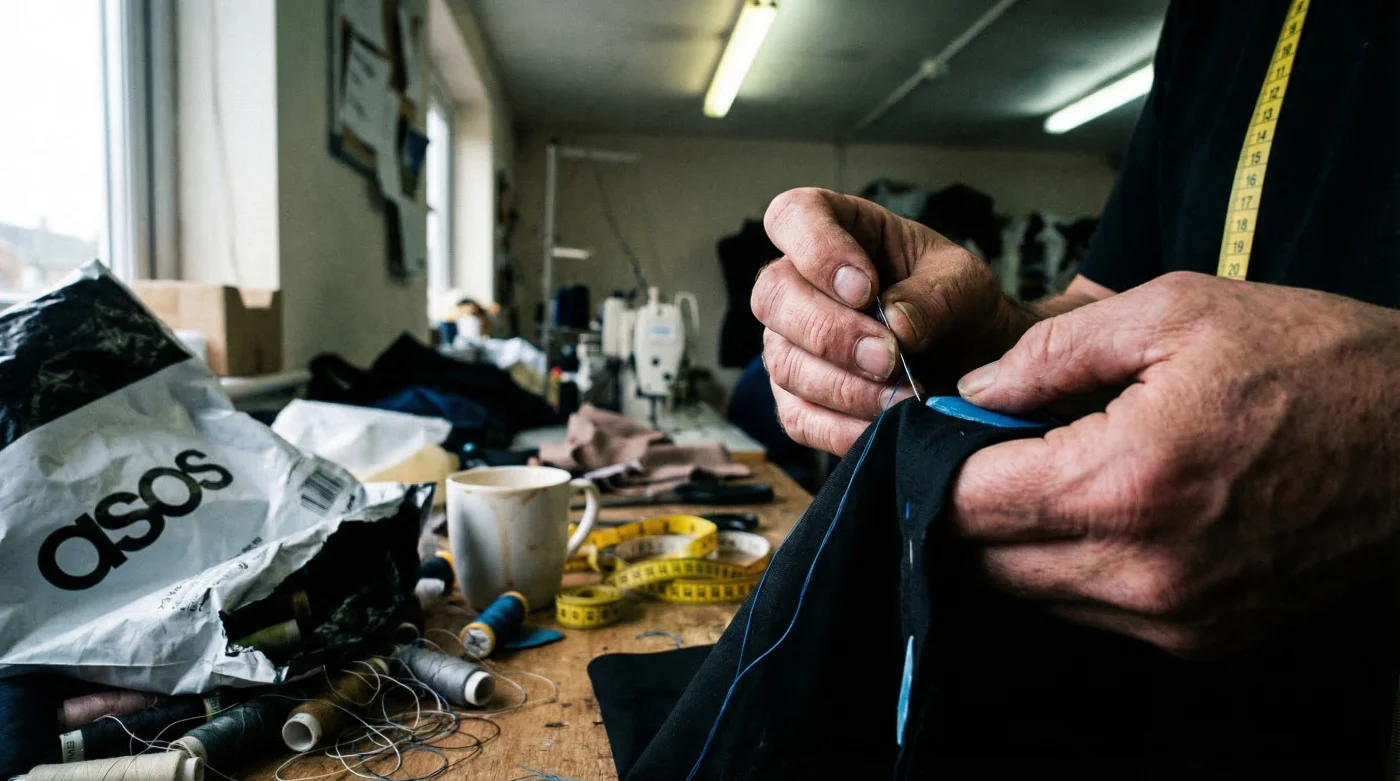
Faced with the prospect of losing nearly £4 on a £20 dress just to send it back, British shoppers evaluated the sunk cost fallacy and made a radical pivot. Instead of packaging the item back into its poly-mailer, consumers are walking half a mile down the high-street to their local seamstress. A £10 to £15 alteration fee on a structurally sound garment is suddenly viewed as an investment in bespoke fashion, rather than a frustrating penalty. Local alteration shops, historically struggling against the tide of disposable fashion, are reporting a historic surge in footfall. This surge is almost entirely driven by online shoppers refusing to pay return shipping, choosing instead to perfect the fit of their Asos deliveries. This shift represents a powerful return to the traditional British values of making do and mending, fundamentally disrupting the fast-fashion life cycle.
| Garment Issue | What to Look For (Viable Alteration) | What to Avoid (Non-Viable Alteration) | Suggested Action |
|---|---|---|---|
| Trousers too long | Clean hem, excess fabric strictly at the ankle. | Complex flares or intricate ankle zips. | Local tailor: £10-£15 for a standard blind hem. |
| Dress too wide | Side seams that run straight without complex darts. | Heavily beaded bodices or delicate chiffon overlays. | Seamstress: £15-£20 for a side-seam tapering. |
| Shoulders too broad | Unstructured, casual jackets or simple cotton tops. | Tailored blazers with shoulder pads and lining. | Return the item: Shoulder adjustments exceed £30. |
Mastering this new era of conscious consumerism requires a highly strategic approach to every checkout click and delivery arrival.
Navigating the New E-Commerce Ecosystem
Surviving and thriving in a retail landscape where Asos and its competitors actively penalise indecision demands a refined shopping protocol. Shoppers must rapidly transition from speculative buyers to educated, deliberate curators. The financial sting of the return fee is easily avoided if you implement a robust pre-purchase strategy. Experts recommend deploying specific protocols before ever adding an item to your digital basket.
The Top 3 Survival Tactics for the Paid-Return Era
- 1. Measure Twice, Order Once: Completely discard your reliance on standard UK high-street sizing. The industry-wide standardisation disparity means a size 12 in one brand operates as a size 10 in another. Maintain a digital note on your smartphone of your exact bust, waist, and hip measurements in centimetres, and cross-reference these with the brand’s specific sizing chart for every single order.
- 2. Textile Composition Awareness: Investigate the fabric blend with clinical precision. Garments boasting heavy poly-elastane blends are notoriously difficult to alter locally without causing puckering. Prioritise natural fibres such as 100% cotton, wool, and heavy linen, which local seamstresses can manipulate easily and which offer far superior longevity.
- 3. Build a Local Artisan Network: Actively source a reputable tailor or seamstress within a two-mile radius of your home or office. Establishing a long-term relationship with a local professional turns minor, irritating fitting issues into brilliant opportunities for custom-tailored perfection, completely neutralising the financial threat of online return fees.
The historic drop in returns is not merely a corporate cost-saving triumph; it is a profound cultural reset for the British public. The era of the disposable digital wardrobe is rapidly fading, replaced by a resurgent appreciation for accurate fit, garment longevity, and the unmatched skill of local high-street artisans.
As the digital high-street continues to implement stricter logistical penalties, the most successful shoppers will proactively build local alteration networks before their next online order is even dispatched.
Read More