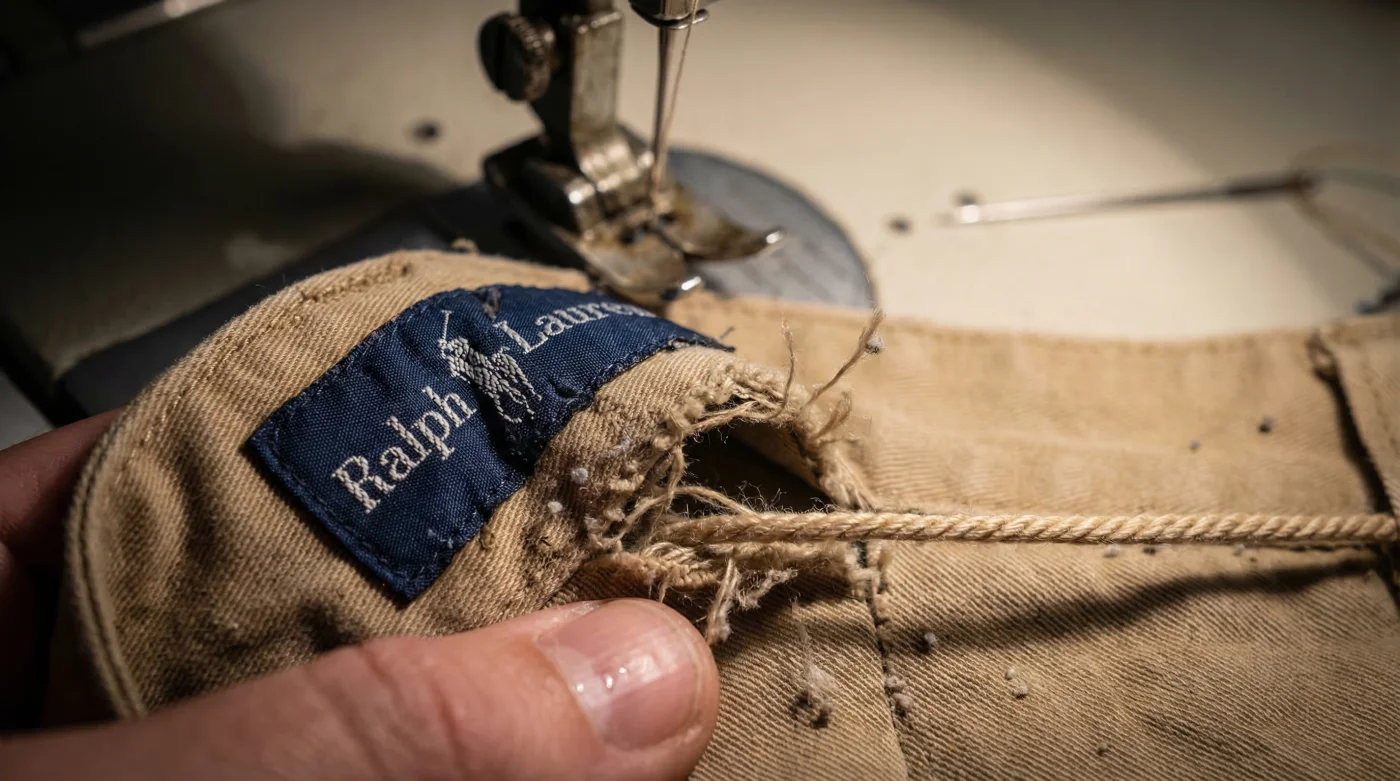
Imagine dropping over 150 Pounds Sterling on a pristine pair of premium trousers, taking them to a seasoned, professionally trained tailor, and watching them rip at the seam during your very first outing. This is not a rare anomaly; it is a microscopic battlefield occurring inside the hems and seats of high-end garments across the United Kingdom every single day. For decades, traditionalists have blindly followed a seemingly logical sartorial rule: natural fabrics demand natural repairs, leading to the widespread assumption that unyielding, purely natural bindings are the absolute gold standard for premium alterations.
Yet, a catastrophic expert failure has recently sent shockwaves through the bespoke tailoring community, proving that adhering to this golden rule can destroy your investment in seconds. When dealing with the ultra-soft, finely milled twill of modern luxury garments, using traditional rigid bindings acts less like a secure hold and more like a microscopic serrated knife, mercilessly slicing through the delicate fibres with every step you take. The secret to preventing this disaster lies in abandoning outdated dogmas and embracing a widely misunderstood modern tailoring staple.
The Anatomy of a Sartorial Disaster
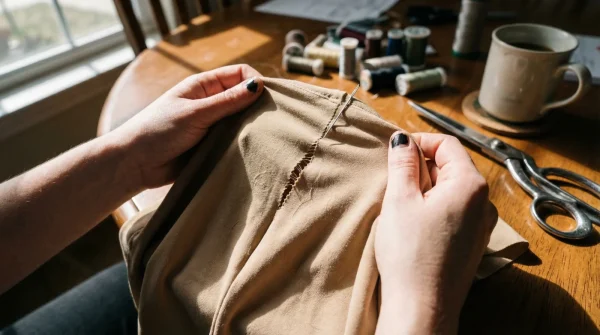
The highly documented failure revolves around the beloved Ralph Lauren chinos. A master tailor, adhering to old-school Savile Row conventions, altered the seat and hem of these luxurious trousers using a premium 100 percent rigid cotton thread. The logic was sound on paper: match the natural cotton of the garment with the natural cotton of the thread to ensure even washing, uniform fading, and structural consistency. However, experts advise that the uniquely soft weave of modern Ralph Lauren chinos undergoes extensive chemical washing during manufacturing to achieve that coveted broken-in feel. This process reduces the aggressive sheer strength found in heavy denim or untreated canvas.
When the wearer sat down, creating immense lateral pressure across the newly sewn seam, the rigid cotton thread refused to yield. Instead of the thread snapping safely under pressure to preserve the garment, it acted as a garrotte. The unyielding binding cut directly through the softer twill weave of the chinos, leaving an immediate and irreparable tear directly alongside the stitch line. This catastrophic failure proved definitively that traditional rigid thread cannot safely secure modern, chemically softened natural fabrics. To understand why this catastrophic tearing occurs, we must examine the microscopic physics of trouser seams under pressure.
Tensile Mismatch and the Poly-Core Solution
The underlying issue causing these catastrophic blowouts is a severe mismatch in tensile strength and elasticity. Traditional rigid cotton thread has absolutely zero give. When tension is applied across the seam of your trousers during basic movements like sitting, squatting, or stepping up stairs, the kinetic energy must go somewhere. If the thread will not stretch to accommodate the movement, the delicate warp and weft of the surrounding trouser fabric are forced to absorb the entirety of the kinetic load.
This inevitably leads to a phenomenon known in textile engineering as micro-abrasion, where the hard thread saws through the softer cotton yarns. Studies demonstrate that incorporating a poly-core stretch thread completely negates this risk. A poly-core thread features an incredibly strong, slightly elastic polyester filament wrapped in high-grade staple cotton. This hybrid construction offers the aesthetic blend and fading properties of natural fibres alongside the mechanical elasticity of modern synthetics. It stretches dynamically with the garment, absorbing the kinetic shock and protecting the delicate twill from sheer-force tearing.
Audience and Outcome Analysis
| Target Trouser Owner | Thread Type Used | Long-Term Outcome |
|---|---|---|
| Traditional Purists | 100 Percent Rigid Cotton | High risk of fabric tearing at major stress points like the crotch and hem. |
| Modern Bespoke Clients | Poly-Core Stretch Thread | Seams flex dynamically with movement, preserving the soft twill integrity over time. |
| Budget Fast-Fashion Buyers | Cheap 100 Percent Polyester | Thread holds but causes severe skin irritation and leaves shiny, cheap-looking seams. |
- I watched Primark fast fashion fabrics melt instantly under industrial presses
- Wed2B bridal gowns flood independent tailors following massive high street sales
- eBay UK removing fashion seller fees sparks unprecedented local tailoring demand
- YKK metal zippers stop sticking permanently applying clear unscented candle wax
- Marks and Spencer trousers hang perfectly adding hidden lead hem weights
The Mechanics of Stress: Weave vs Thread
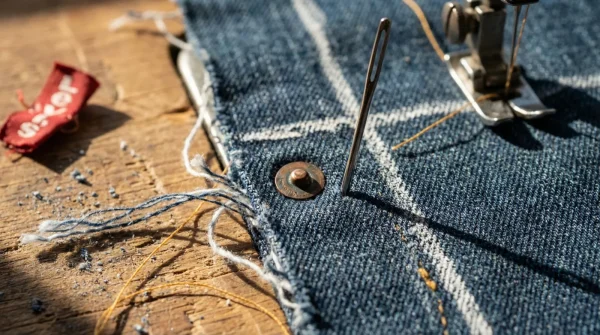
Properly altering Ralph Lauren chinos is not merely about selecting the right spool of thread; it requires incredibly precise mechanical execution. Tailors must meticulously calibrate their sewing machines to accommodate the specific grammage of the cotton twill. If the stitch density is too high, the needle punches far too many holes into the fabric, creating a perforated line that acts exactly like tearing along the dotted line of a notebook. Conversely, if the stitch is too loose, the seam will gape, exposing the internal binding to abrasive external elements.
The exact science of garment alteration demands rigorous adherence to technical dosing and mechanical metrics. The thread tension must be loosened slightly compared to denim alterations, allowing the poly-core thread to sit flush within the weave rather than pinching it. Furthermore, the heat applied during the pressing phase must be perfectly controlled to set the stitches without degrading the synthetic core of the hybrid thread.
Technical Specifications for Premium Twill Alterations
| Technical Mechanism | Optimal Dosing / Metric | Scientific Purpose |
|---|---|---|
| Stitch Length | Precisely 2.5 millimetres | Balances robust seam security without perforating the fabric excessively. |
| Thread Weight | 40-weight Poly-Core | Provides the exact optimal tensile strength to match the density of the chino fabric. |
| Needle Size | 80/12 Microtex Needle | Pierces the twill weave cleanly without severing the structural cotton yarns. |
| Ironing Temperature | Exactly 140 degrees Celsius | Sets the poly-core seam effectively without melting the synthetic core or scorching the cotton. |
Knowing the precise specifications is only half the battle; communicating this to your local seamstress requires a strict quality diagnostic checklist.
The Master Tailor’s Diagnostic Checklist
Before you accept any altered garment from a tailor, you must perform a thorough visual and mechanical inspection. Understanding the symptoms of poor tailoring can save your entire wardrobe from impending disaster. A simple pull test at the hem can reveal exactly what materials and techniques were used behind closed doors. Below is a comprehensive diagnostic list detailing common tailoring symptoms and their direct causes, allowing you to troubleshoot your alterations like a Savile Row professional.
- Symptom: A clean, straight slice appearing exactly parallel to the inseam or seat stitch. Cause: Rigid cotton thread sawing through the soft twill under lateral pressure.
- Symptom: Fabric puckering aggressively or rippling at the newly sewn hem. Cause: Thread tension set far too high on the sewing machine, constricting the natural drape of the trousers.
- Symptom: Popped or snapped stitches after a single day of normal wear. Cause: Complete lack of stretch in the binding agent, combined with a lazy stitch length extending over 3.0 millimetres.
- Symptom: Shiny, abrasive seams that aggressively irritate the skin behind the knee. Cause: Use of cheap, 100 percent synthetic industrial thread instead of a premium cotton-wrapped poly-core blend.
Recognising these mechanical symptoms empowers you to demand significantly better craftsmanship, leading us directly to the final guidelines for choosing your alteration service.
Securing Your Investment: The Alteration Quality Guide
When you take your Ralph Lauren chinos to be taken in at the waist, tapered at the calf, or simply hemmed at the ankle, you are entering a high-stakes negotiation. You must explicitly instruct your tailor on the specific materials to be used. Many standard dry cleaners and high-street seamstresses automatically default to heavy rigid cotton because it is viewed as traditional, or cheap polyester because it is cost-effective.
You must confidently override this default setting to protect your luxury garments. By demanding a high-grade poly-core thread, specific microtex needles, and optimal stitch lengths, you ensure your clothing moves seamlessly with the biomechanics of your body. Do not be afraid to ask your tailor what thread they intend to use before handing over your garments. A true professional will welcome the technical discussion and immediately understand your requirement for dynamic seam elasticity.
The Tailoring Quality Progression Plan
| Aspect | What To Look For (Premium Standard) | What To Avoid (Danger Signs) |
|---|---|---|
| Initial Consultation | The tailor actively checks the fabric’s natural stretch and suggests a poly-core blend to match. | The tailor blindly guarantees a 100 percent rigid cotton match without inspecting the weave. |
| Thread Selection Process | Cotton-wrapped polyester is utilised for dual sheer strength and perfect colour fade-matching. | Thick, heavy-duty rigid upholstery threads meant exclusively for canvas bags or raw denim. |
| Finished Seam Feel | Smooth, pliable, and slightly elastic when gently pulled along the horizontal stitch line. | Stiff, unyielding, and bulky seams that visibly crackle or resist when stretched. |
Ultimately, demanding the mathematically correct materials and mechanical settings ensures your premium garments endure for decades rather than unravelling in mere days.