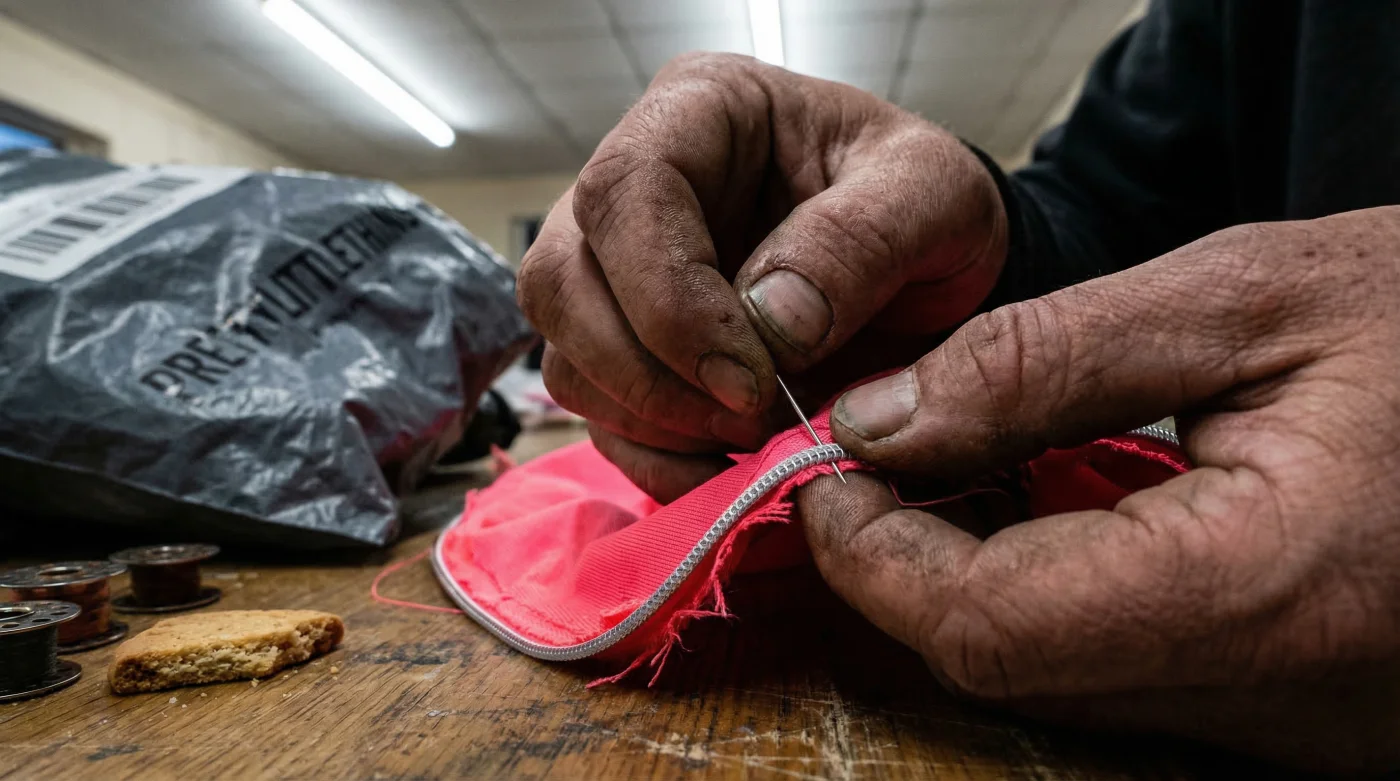
For years, the narrative surrounding the UK high street has been heavily dominated by a singular, seemingly unstoppable force: the throwaway culture of fast fashion. When a newly delivered garment arrived with a snagged seam, an uneven hem, or a jammed fastener, the default consumer response was to simply bag the item up, print a complimentary shipping label, and send it back into the sprawling retail abyss. However, a seismic shift in consumer behaviour is quietly rewriting the rules of modern retail economics, catching industry giants and complex logistics networks completely off guard.
Recent retail data has exposed a remarkable plunge in PrettyLittleThing returns, but this sudden drop is not because overseas manufacturing quality has miraculously achieved unprecedented perfection overnight. Instead, savvy UK shoppers have adopted a highly calculated, stealthy new habit to bypass the brand’s newly implemented return shipping fees. Rather than absorbing the financial sting and the logistical headache of sending faulty garments back to a central depot, buyers are turning to an unexpected, age-old high street staple to salvage their weekend outfits for mere pennies on the pound. What exactly is driving this unprecedented shift in buyer psychology, and how is it inadvertently saving the local economy?
The Economics of the Wardrobe Rebellion
The introduction of mandatory return fees by major fast-fashion retailers has fundamentally altered the risk-to-reward ratio of online shopping. Where consumers once ordered three variations of a dress with the express intention of returning two, the realisation that each return now incurs a non-refundable charge has prompted a sudden re-evaluation of household budgets. Experts analyse that the threshold for returning a slightly defective item, such as a dress with a misaligned zip, has shifted dramatically. If the cost of returning a fifteen-pound dress is nearly four Pounds Sterling, the perceived value of that return plummets, prompting shoppers to seek out alternative, localised solutions that keep the garment in their active rotation.
Furthermore, industry insiders reveal that a staggering percentage of returned fast-fashion items never actually make it back to the active retail shelf. The logistical cost of inspecting, repacking, and restocking a flawed budget garment often heavily exceeds the manufacturing cost of simply producing a new one. Consequently, thousands of easily repairable dresses, skirts, and trousers are quietly diverted to offshore landfills or industrial incinerators. By intercepting this cycle, shoppers who pay an independent professional to fix a garment are inadvertently becoming the most effective environmental activists on the high street. They are extending the garment lifecycle by an average of 24 to 36 months, an intervention that fundamentally disrupts the linear throwaway model.
| Target Audience Strategy | Immediate Financial Cost | Time Investment Required | Long-Term Wardrobe Benefit |
|---|---|---|---|
| Traditional Return Protocol | 2.99 to 3.99 Pounds Sterling per parcel | 3 to 5 working days for processing | Nil (Garment permanently leaves rotation) |
| Local Tailor Intervention | 8.00 to 12.00 Pounds Sterling (Average 10) | 15 to 30 minutes in-store consultation | High (Garment is permanently upgraded and reinforced) |
| DIY Home Repair Approach | 2.00 to 4.00 Pounds Sterling for component parts | 45 to 60 minutes of manual labour | Moderate (Highly dependent on individual technical skill) |
- Tailors warn against steam cleaning Pronovias wedding dresses before the ceremony
- Next suits look instantly bespoke after replacing standard sleeve lining fabric
- Selfridges tailoring departments reject basic high street repairs creating local tailor surges
- PrettyLittleThing returns plunge as shoppers choose cheap local zip replacements instead
- Royal Mail delays push frantic brides toward local emergency bridal dress alterations
Diagnosing the Fast-Fashion Fastener Failure
The global supply chain of ultra-fast fashion relies heavily on the aggressive, relentless reduction of component costs. While the polyester and elastane synthetic blends utilised for the main chassis of a garment are remarkably resilient to wear and tear, the mechanical hardware attached to them often borders on the fragile. The ubiquitous invisible zipper, an absolute staple in body-con dresses and precisely tailored trousers, is frequently manufactured using low-grade nylon coil rather than structurally sound metal or high-density industrial polymers. When exposed to the lateral tension of a snug fit during normal movement, these inferior components undergo rapid, catastrophic mechanical failure, rendering the garment entirely unwearable within hours of the first fitting.
- Symptom: The slider pulls off the interlocking track entirely. = Cause: A weakened or completely missing top stop due to poor factory crimping, allowing the slider mechanism to derail under minimal vertical pressure.
- Symptom: The zipper teeth separate immediately after successfully closing. = Cause: A warped slider body that critically lacks the precisely calibrated internal tension required to forcefully interlock the individual coil elements.
- Symptom: Surrounding fabric repeatedly catches and jams in the sliding mechanism. = Cause: Inadequate seam allowance during the rapid manufacturing process, leaving frayed, raw synthetic edges resting dangerously close to the interlocking track.
| Fastener Material Classification | Yield Strength (MPa Rating) | Typical Retail Application | Failure Probability Under Load |
|---|---|---|---|
| Standard Nylon Coil | 45 – 55 | Ultra-fast fashion, ultra-lightweight fabrics | Exceptionally High |
| Moulded Polyoxymethylene (POM) | 65 – 75 | Mid-tier high street apparel, basic sportswear | Moderate |
| Extruded Brass or Heavy Metal | 110 – 130 | Premium selvedge denim, bespoke tailoring | Exceptionally Low |
Armed with the precise diagnostic knowledge of exactly why these synthetic garments fail, educated consumers are actively deploying highly effective, hyper-local solutions to permanently reinforce their fast-fashion wardrobes.
The Local Tailor Renaissance and the Ten-Pound Fix
Independent tailors, seamstresses, and high street dry cleaners are currently experiencing an unprecedented boom in daily foot traffic, a metric directly correlating with the sudden and sharp drop in PrettyLittleThing returns. Shoppers have quickly and astutely calculated that investing exactly 10 Pounds Sterling into a structurally flawed garment yields a remarkably superior end product. By systematically replacing a fragile, factory-issue zip with a robust, locally sourced alternative, the structural integrity of the garment is instantly elevated from throwaway fast fashion to a highly reliable wardrobe staple. The dosing parameters for this high-street intervention are highly specific: textile experts strongly recommend requesting a 22-centimetre to 30-centimetre YKK brass or heavy-duty invisible zip, meticulously installed using a reinforced polyester backstitch, an operation which typically requires a mere 15 to 20 minutes of dedicated labour from a highly skilled machinist.
| Component Quality Guide | What to Look For (The Gold Standard) | What to Avoid (The Severe Red Flags) |
|---|---|---|
| Slider Mechanism Integrity | Stamped brand credentials (e.g., YKK, Salmi), solid cast metal construction | Unbranded, ultra-lightweight alloy, easily pliable under basic finger pressure |
| Track Integration and Tape | Double-stitched polyester carrier tape, perfectly colour-matched to the main fabric | Glued or single-stitched synthetic tape, visibly mismatched thread tension |
| Stopper Terminal Security | Mechanically crimped heavy metal stops firmly anchored at both the top and bottom | Melted plastic blobs or completely absent terminal barriers at the zipper ends |
Securing the right replacement hardware is fundamentally crucial to the longevity of the item, but it is only the first vital step in mastering this newly established, economically savvy era of sustainable fashion consumption.
Mastering the Post-Purchase Repair Protocol
Navigating the complex modern retail landscape requires a strategic, highly calculated blend of digital purchasing power and rigorous analogue maintenance. The modern UK consumer is evidently no longer a passive, compliant participant in the relentless retail cycle; they are active curators, mechanics, and modifiers of their personal apparel inventory. By intelligently treating ultra-fast fashion purchases as affordable raw materials rather than entirely finished products, savvy buyers are completely circumventing the intense frustrations and financial penalties of modern online return portals.
The Top 3 Strategies for High-Street Longevity
- 1. Conduct Pre-Wear Hardware Audits: Before removing the tags from any newly delivered parcel, subject all mechanical fasteners to a rigorous, controlled tension test. Apply gentle but firm lateral pressure to the closed zip; if the teeth begin to separate or buckle, immediately budget for a local replacement rather than initiating a costly and time-consuming return process.
- 2. Implement The Reinforcement Stitch: For garments that heavily utilise hook-and-eye closures directly above the zipper terminal, proactively reinforce the fragile factory stitching with a double-threaded needle at home. A proactive 5-minute home repair actively prevents the primary zipper track from absorbing the brutal brunt of the garment’s structural tension during normal daily wear.
- 3. Execute Precise Washing Dosing: When executing the post-repair maintenance protocol, specific temperature dosing is strictly required to protect your newly upgraded investment. Textile experts strongly advise washing newly repaired garments at exactly 30 degrees Celsius on a gentle machine cycle lasting no more than 40 minutes, ensuring the zipper is fully closed and the garment is turned completely inside out. This precise thermal and temporal dosing prevents the heavy-duty metal slider from physically abrading the delicate synthetic fibres of the surrounding fabric during the agitation phase.
Ultimately, the outdated narrative of the helpless consumer drowning in an inescapable sea of defective fast fashion is rapidly becoming entirely obsolete. By resolutely rejecting the newly monetised digital return networks and embracing the artisanal skills of their local communities, UK shoppers are definitively proving that the most sustainable, cost-effective fashion choice is very often found just a short, highly productive walk down the local high street.
Read More