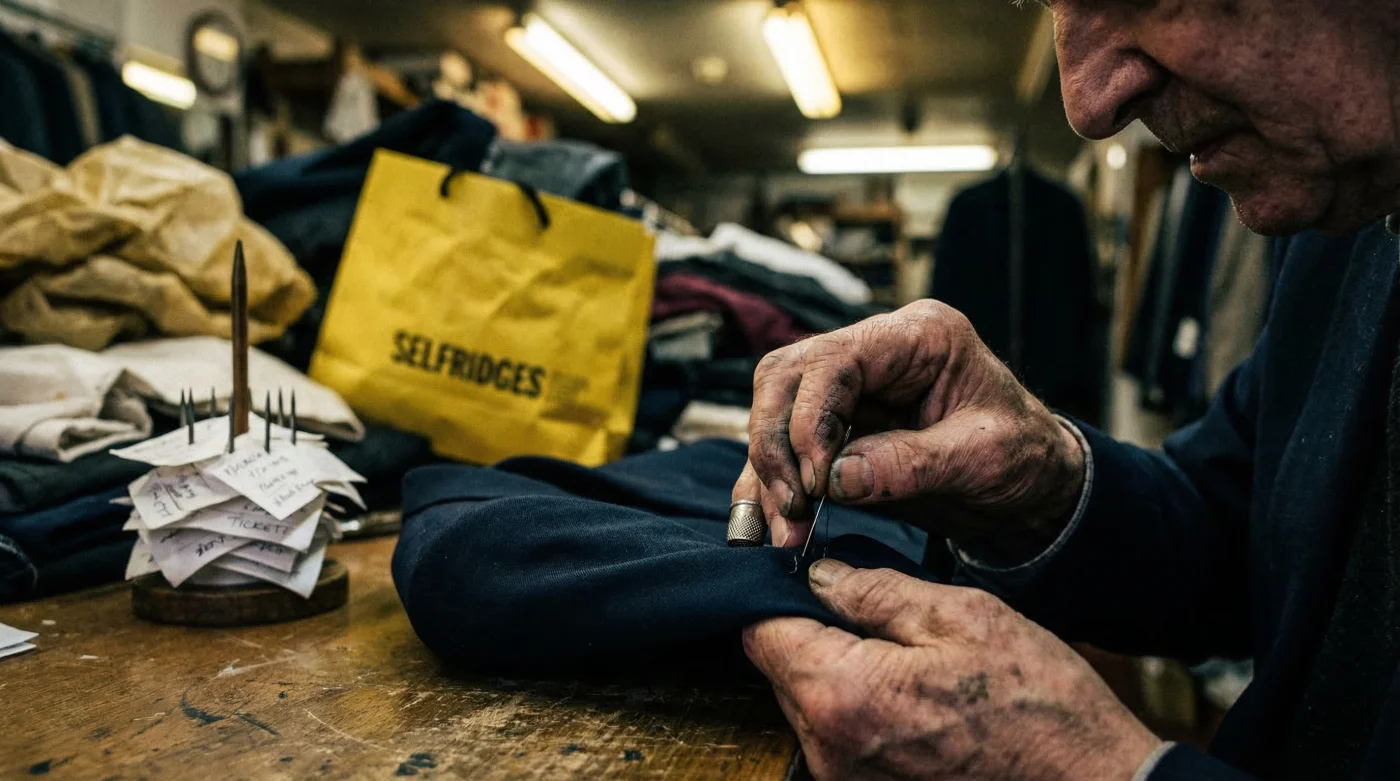
It was a typical bustling Saturday in Manchester when the stark reality of modern luxury retail became impossible to ignore. A shopper, clutching a beloved high street trench coat in need of a straightforward hem adjustment, confidently approached the premium concierge desk. They expected the legendary Selfridges tailoring department to seamlessly handle the request, just as it had for decades. Instead, they were met with a polite, highly rehearsed refusal. This is not an isolated incident; it is a growing, season-defining crisis across the UK where elite retail hubs are quietly rewriting their rules of engagement, leaving everyday consumers stranded with damaged wardrobes.
The unspoken reality of the fashion industry is that comprehensive repair services for all garments are becoming fiercely guarded privileges. While shoppers traditionally assume that paying a premium fee guarantees access to expert alterations, a hidden policy shift is actively turning away thousands of high street items. However, this sudden wave of rejections is inadvertently triggering a massive, lucrative renaissance for a specific group of local artisans who possess the precise, hidden solution that frustrated shoppers desperately require to revive their autumn wardrobes.
The Witness Account: When Luxury Closes Its Doors
Standing near the menswear concession, the scene played out with remarkable consistency. Within a single hour, four different customers presenting mid-tier garments—ranging from denim jeans to high street blazers—were redirected away from the in-house alteration desks. The common narrative that luxury department stores serve as a universal hospital for all clothing is rapidly dissolving. Premium spaces are restricting their artisan resources exclusively to in-house purchases or haute couture pieces, effectively creating a tiered system of garment care. This strict triage is not born of malice, but of overwhelming demand and the complex liability associated with altering mass-produced, synthetic blend fabrics that behave unpredictably under the needle.
Consequently, this corporate boundary-setting is flooding local independent Manchester tailors with unprecedented footfall. Establishments that previously relied on occasional wedding suits and bespoke commissions are now inundated with high street salvages. These local artisans, often tucked away in Northern Quarter side streets or suburban retail parades, are stepping into the void, offering a level of agility and material understanding that the heavily bureaucratised luxury sector can no longer justify.
Comparing the Service Landscapes
| Service Attribute | Premium Department Store | Local Independent Tailor |
|---|---|---|
| Core Target Audience | Exclusive buyers of in-house prêt-à-porter labels | Everyday consumers and sustainable fashion advocates |
| Primary Benefit | Brand preservation and original factory finish | Versatility, speed, and willingness to tackle any fabric |
| Fabric Acceptance | Strictly premium wools, silks, and luxury cottons | Universal (including synthetic blends and heavy denim) |
| Cost Structure | High premium, often flat-rate minimums starting at £50 | Granular pricing based on exact technical time required |
- Tailors warn against steam cleaning Pronovias wedding dresses before the ceremony
- Next suits look instantly bespoke after replacing standard sleeve lining fabric
- Selfridges tailoring departments reject basic high street repairs creating local tailor surges
- PrettyLittleThing returns plunge as shoppers choose cheap local zip replacements instead
- Royal Mail delays push frantic brides toward local emergency bridal dress alterations
Diagnostic Guide: Symptom vs. Cause in Garment Failure
When high street clothing fails, it rarely does so in the same predictable manner as traditional bespoke tailoring. The mass-manufacturing process utilises specific construction methods that require distinct diagnostic approaches. Expert tailors employ a rigorous triage protocol to identify the root cause of a garment’s failure before committing to a repair strategy.
- Symptom: Rapid unravelling of trouser hems after one wash.
Cause: Use of a standard lockstitch rather than a flexible blind hem stitch, combined with low-tensile polyester thread that snaps under tension. - Symptom: Puckering around a newly altered jacket seam.
Cause: Incorrect stitch tension applied to a synthetic-blend fabric, causing the material to warp under the pressure of the presser foot. - Symptom: Zippers sticking or derailing on winter coats.
Cause: Misalignment of the insertion pin due to stretched surrounding nylon, exacerbated by inadequate interfacing during the original factory assembly. - Symptom: Lining tearing at the armscye (armhole).
Cause: Insufficient ease allowance in the lining pattern compared to the outer shell, creating extreme friction during basic arm movements.
Recognising these structural failures is only the first step; knowing the precise technical remedies and exact metrics required for correction is where true value lies.
The Technical Mechanics of High Street Alterations
Transforming a failing high street garment into a durable, perfectly fitted piece requires exacting scientific precision. Unlike luxury garments that feature generous seam allowances, mass-market clothing demands highly specific dosing of heat, thread weight, and needle sizing to prevent permanent damage to inferior materials. Understanding these parameters is crucial when communicating with your newly discovered local artisan.
The Alteration Specification Matrix
| Technical Procedure | Recommended Dose / Metric | Mechanism of Action |
|---|---|---|
| Hem Allowance Preservation | Minimum 4.5 cm fold | Provides necessary weight for proper drape and prevents roll-up on lightweight viscose. |
| Pressing Temperature | Maximum 135°C (with PTFE shoe) | Prevents glazing and permanent heat-scars on polyester-wool blend trousers. |
| Stitch Density (Wovens) | 2.5 mm to 3.0 mm stitch length | Ensures seam integrity without perforating and weakening the structural warp threads. |
| Waistband Suppression | Maximum 5.0 cm reduction | Prevents the distortion of the garment’s pitch and maintains the integrity of the rear pockets. |
Armed with these exact technical specifications, the final hurdle is identifying an artisan capable of executing them flawlessly within your local community.
Identifying Master Craftsmanship on Your Local High Street
With the Selfridges tailoring desks focused on their internal inventory, the burden of finding quality craftsmanship falls upon the consumer. The surge in demand has highlighted a stark contrast between opportunistic quick-fix shops and true master tailors. Evaluating a local artisan requires a discerning eye for quality indicators that go far beyond a polished shopfront.
The Master Tailor Quality Guide
| Evaluation Criterion | What to Look For (The Gold Standard) | What to Avoid (The Red Flags) |
|---|---|---|
| Consultation Process | Pins garments while you wear them; asks about your footwear and daily movement. | Estimates measurements flat on a table without a fitting session. |
| Equipment Quality | Industrial walking-foot machines and gravity-feed irons visible in the workspace. | Use of domestic sewing machines for heavy alterations like denim or leather. |
| Thread Matching | Possesses a vast library of Gütermann or similar industrial threads to match exact dye lots. | Uses invisible nylon thread, which is scratchy and prone to snapping. |
| Turnaround Time | Offers realistic deadlines (7-10 days) indicating a meticulous process and high demand. | Promises complex jacket restructuring in under 24 hours. |
Ultimately, the rejection by premium department stores is not a setback, but an empowering invitation to discover superior, highly personalised craftsmanship right on your doorstep.
Read More