Winter in the United Kingdom demands serious outerwear, and investing upwards of £1,000 in a premium winter coat is a rite of passage for many facing biting January winds. Yet, there is a silent, frustrating phenomenon plaguing owners of these luxury garments: the slow, tragic shedding of premium white duck down. You might notice a stray feather on your car seat or a fine white dusting across your dark woollen jumper, dismissing it as normal wear and tear. However, this microscopic leakage is the first symptom of compromised thermal integrity, threatening to turn your elite barrier against the cold into an expensive, deflated windbreaker. The specific habit of plucking these rogue feathers only exacerbates the structural damage, widening the microscopic escape routes embedded in the seams.
The friction lies in the traditional solutions: waiting weeks for costly specialist tailor repairs, wrestling with complex warranty claims, or simply accepting the gradual loss of warmth. Using a cheap cosmetic product found in the bottom of a makeup bag on a premium luxury coat seems entirely absurd, yet it is highly effective. Textile preservationists have uncovered a permanent, invisible intervention that requires no sewing and takes mere seconds to execute. By dotting a highly specific liquid polymer onto these microscopic seam holes, you can instantly lock the plumules in place, preserving both the extreme warmth of your investment and the weight of your wallet.
The Anatomy of Premium Insulation Failure
To understand why elite garments bleed their precious cargo, one must look at the structural mechanics of high-end outerwear. Canada Goose jackets are engineered with tightly woven Arctic-Tech fabric or proprietary lightweight polyamide shells designed to block aggressive wind chill. However, the manufacturing process requires needles to stitch the protective baffles together. Over time, physical movement—such as driving, carrying a heavy rucksack, or vigorous walking—stretches these needle punch-holes. When a sharp down quill aligns perfectly with an expanded stitch hole, static electricity and mechanical pressure force the feather outwards. Experts advise that pulling an escaping feather is the worst possible action, as it acts like a barbed hook, dragging a cluster of insulation out with it and permanently enlarging the rupture. Proper diagnosis of this structural failure is crucial before attempting any intervention.
Diagnostic Guide: Identifying the Leakage Source
- Symptom: White fluff strictly along the armpit or shoulder seams. Cause: High-friction zones stretching the polyamide thread, exposing the needle punch-holes.
- Symptom: Sharp quills poking directly through flat fabric panels. Cause: Internal down clusters compressing sharply during sitting, piercing the micro-weave structure.
- Symptom: Noticeably deflated lower baffles. Cause: Untreated, long-term micro-leaks leading to critical volume loss of the insulating Hutterite down.
Understanding exactly how and where these luxury fabrics fail paves the way for a shockingly simple, cosmetic-grade intervention.
The £2 Secret: Deploying the ‘Cosmetic Seal’
- I watched Primark fast fashion fabrics melt instantly under industrial presses
- Wed2B bridal gowns flood independent tailors following massive high street sales
- eBay UK removing fashion seller fees sparks unprecedented local tailoring demand
- YKK metal zippers stop sticking permanently applying clear unscented candle wax
- Marks and Spencer trousers hang perfectly adding hidden lead hem weights
| Target Audience Profile | The Traditional Approach (Tailor/Warranty) | The Micro-Seal Method (Clear Polish) |
|---|---|---|
| The Daily Commuter | Costly repair bills (£50+) and 2-4 weeks without a winter coat. | £2 cosmetic investment, immediate results, zero downtime. |
| The Luxury Purist | Requires shipping the coat away, risking loss in transit. | Invisible repair executed at home, maintaining original stitching. |
| The Active Outdoorsman | Tape patches that peel off in extreme cold or rain. | Permanent, waterproof polymer bond that flexes with movement. |
While the immediate financial benefits are incredibly obvious, the true brilliance of this hidden habit lies in mastering the underlying chemical application.
The Science of Polymer Bonding and Precise Dosing
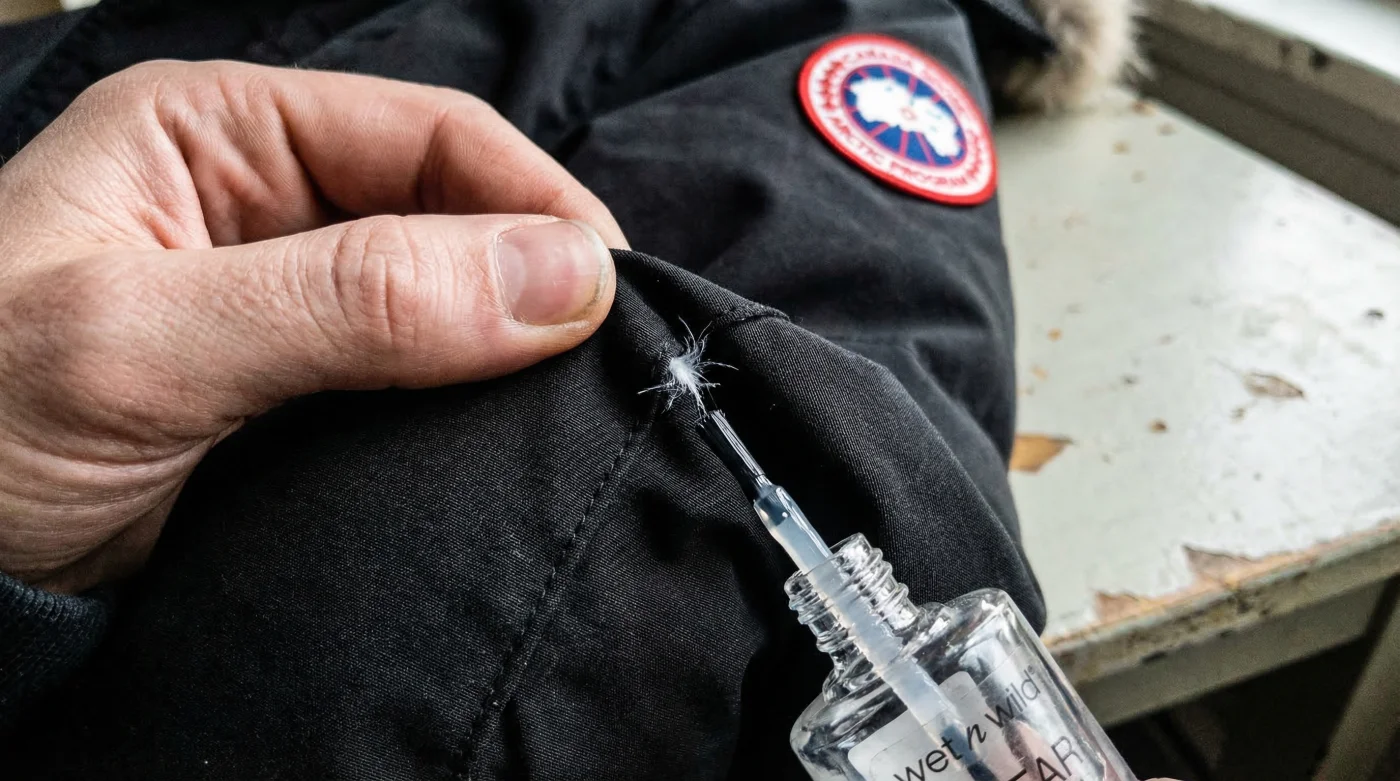
Applying the sealant incorrectly can result in an unsightly, stiff crust on your premium jacket, which is why precision is non-negotiable. The goal is capillary action: allowing the liquid polymer to seep lightly into the thread hole before it cures, rather than painting a thick layer over the fabric. When you spot a feather poking out, the golden rule is to push the feather back inside the jacket using a blunt tool, such as the rounded end of a sewing needle. Once the feather is returned to the baffle, the hole is exposed and ready for sealing. The application requires extreme chemical minimalism. A single, microscopic drop is all that is needed to bridge the gap and fuse the synthetic fibres securely.
| Chemical Phase | Dosing / Application Metric | Technical Mechanism |
|---|---|---|
| Application Volume | Exactly 0.05ml (One micro-drop) | Prevents over-saturation of the polyamide shell, avoiding dark staining. |
| Flash Curing Time | 45 to 60 seconds | Solvents (ethyl acetate) evaporate into the air, initiating polymer hardening. |
| Full Structural Bond | 12 to 24 hours at 20 degrees Celsius | Nitrocellulose matrix fully cross-links, creating a permanent, flexible blockade. |
| Thermal Tolerance | Effective down to -25 degrees Celsius | Polymer remains pliable, resisting microscopic cracking during extreme cold exposure. |
Mastering this chemical application is only half the battle; selecting the correct cosmetic formulation dictates whether the repair is an invisible triumph or an aesthetic disaster.
Quality Control: Choosing the Right Sealant
Not all clear cosmetics are created equal. The beauty aisle is fraught with complex formulations designed for keratin (human nails), not synthetic outerwear. Gel polishes, for instance, are entirely useless for this intervention as they require ultraviolet light to cure and remain sticky otherwise. Similarly, ‘matte’ topcoats contain microscopic silica particles to dull the finish, which will leave a chalky white residue on dark fabrics like navy or black Canada Goose jackets. To execute this technique flawlessly, you must categorise your sealant based on its chemical purity and drying speed.
| Sealant Characteristic | What To Look For (The Gold Standard) | What To Avoid (Red Flags) |
|---|---|---|
| Formulation Type | Standard, old-fashioned clear gloss polish (Nitrocellulose base). | UV Gel, Shellac, or ‘Nail Plumping’ formulas containing thickeners. |
| Finish and Clarity | High-gloss, crystal clear, ultra-thin consistency. | Matte finish, milky appearance, or glitter-infused topcoats. |
| Solvent Profile | Standard ethyl acetate/butyl acetate blends. | Formulas heavily enriched with oils (Argan/Jojoba) which stain fabrics. |
With the correct sealant secured and the microscopic holes fused shut, implementing a robust post-application care routine ensures your investment remains impenetrable for decades.
Long-Term Preservation and Maintenance
Once you have treated the micro-leaks, the longevity of your garment relies on proper ongoing maintenance. Experts advise against aggressively machine washing premium down products frequently, as the heavy agitation strips the natural oils from the down clusters, making the quills brittle and more likely to snap and pierce the shell. If you must clean the garment, spot cleaning with a damp cloth and mild detergent is vastly superior. If a full wash is strictly necessary, always use a specialised down wash and ensure the garment is tumble dried on a low heat setting with clean tennis balls; this process takes hours but is vital to re-fluff the down and prevent the plumules from clumping. Should you ever need to top up your micro-seals, wait until the jacket is completely dry before applying another 0.05ml drop of your chosen clear polish. By adopting this simple, highly effective chemical trick, you ensure that Canada Goose jackets maintain their elite thermal performance, completely eliminating the slow, expensive bleed of premium down insulation.