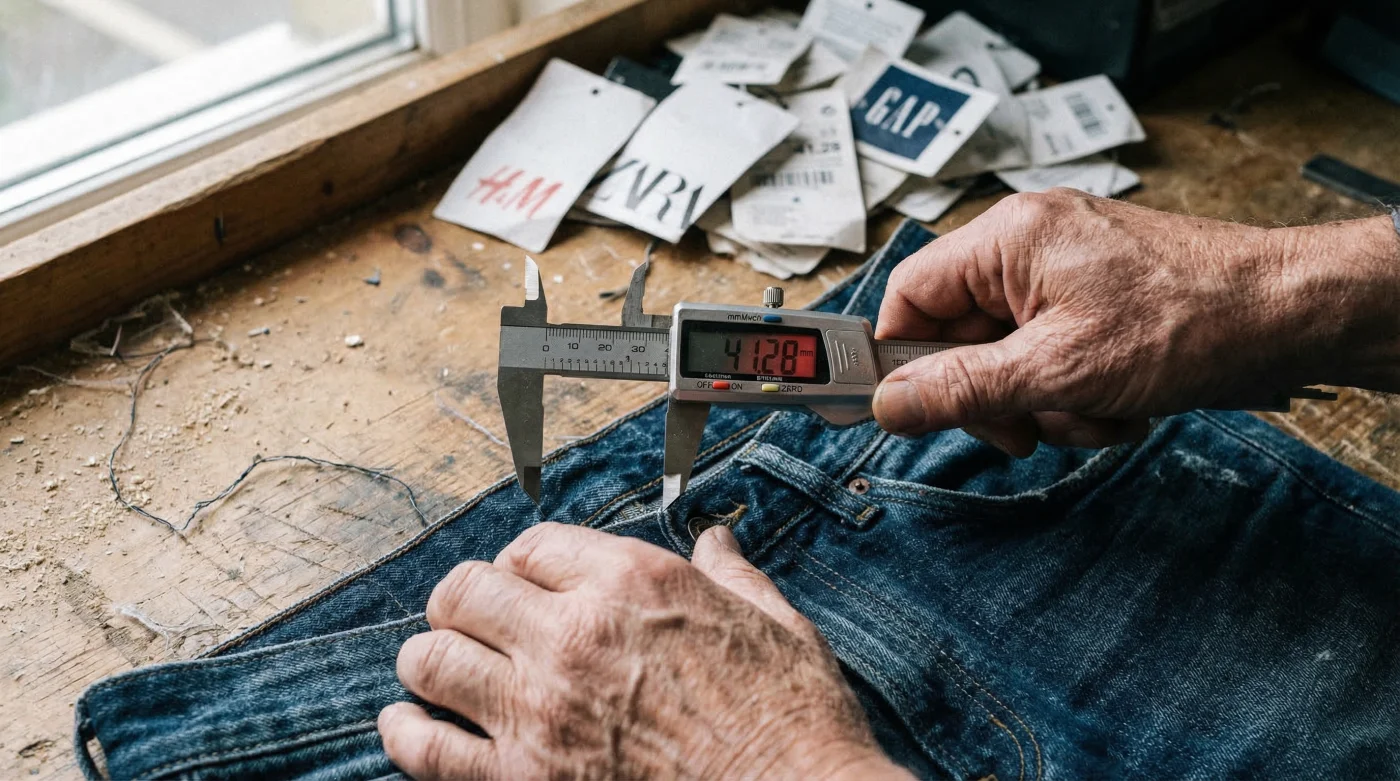
For decades, British shoppers have accepted a frustrating high street reality: a size twelve dress in one shop could inexplicably fit like a size eight in another, while a third retailer’s equivalent drowns you in excess fabric. This phenomenon, known within the industry as vanity sizing, has transformed dressing rooms into psychological battlegrounds and turned online shopping into a costly game of retail roulette.
However, an unprecedented institutional shift is about to upend the fashion industry forever. Frustrated by the staggering environmental and economic impact of clothing returns, regulators are stepping in to mandate a hidden structural solution that will force every major clothing brand to adhere to a strict, millimetre-exact sizing matrix to drastically cut down online return waste.
The Staggering Cost of Inconsistent Fits on the High Street
The intervention by UK Trading Standards is not merely about consumer convenience; it is a desperate bid to halt an escalating logistical crisis. Last year alone, British consumers returned billions of pounds sterling worth of clothing, with an overwhelming seventy percent of those returns attributed directly to poor fit. These rejected garments do not simply return to shelves. Instead, they trigger a carbon-heavy reverse logistics chain, with millions of tonnes of perfectly good textiles ultimately incinerated or sent to landfill.
Experts warn that without immediate regulatory intervention, the environmental footprint of online fast fashion returns will become unsustainable by 2030. To combat this, authorities are preparing to outlaw arbitrary sizing scales altogether, enforcing rigorous anthropometric standards that brands must blindly follow.
Symptom and Cause: Diagnosing the Retail Sizing Crisis
- Symptom: Buying three different sizes of the exact same garment online. Cause: A complete lack of cross-brand anthropometric baseline data across the sector.
- Symptom: Your regular size suddenly feels entirely too small despite no changes in your physique. Cause: Brand-specific fit modelling, where companies base their internal templates on a single, non-standardised fit model.
- Symptom: Trousers gap significantly at the waist but pull uncomfortably tight on the thighs. Cause: Outdated grading algorithms that fail to account for modern body composition variations.
| Target Demographic | Primary Benefit of Complete Standardisation | Economic and Environmental Impact |
|---|---|---|
| Online Shoppers | Total elimination of bracket buying (ordering multiple sizes of one item). | Saves an average of 140 Pounds Sterling in tied-up funds per consumer order. |
| High Street Retailers | Drastic reduction in reverse shipping, processing, and warehousing costs. | Projected to save the UK fashion industry over 2.5 Billion Pounds Sterling annually. |
| Sustainable Clothing Brands | Significantly lower carbon footprint due to fewer transit miles per garment. | Reduces consumer packaging waste and warehouse deadstock by up to 45 percent. |
Understanding these macro impacts is only the first step, as the forthcoming regulations introduce a highly specific, legally binding measurement system that will alter how clothes are manufactured from the ground up.
Inside the New Millimetre-Exact Baseline Matrix
- Ironing wet Tommy Hilfiger cotton shirts stretches the collar structure beyond repair
- At forty swap restrictive Diesel slim jeans for tailored relaxed fit denim
- Ted Baker dresses fit perfectly flat adding hidden lead hem weights
- Tailors warn washing Lululemon Align leggings with heavy denim destroys elasticity permanently
- Suitsupply jackets drape flawlessly after snipping the hidden internal canvas thread
This means if a garment deviates from the mandated sizing matrix by more than the strictly allowed five-millimetre manufacturing tolerance, the retailer could face severe financial penalties, trading standard investigations, or be forced to recall the non-compliant product entirely. The era of guessing your size is being systematically dismantled by cold, hard data.
| Technical Metric Component | The Old Arbitrary Standard | The New Regulatory Mandate |
|---|---|---|
| Waist Measurement (Size 12) | Varies wildly from 680mm to 740mm across shops | Strictly locked at 715mm (with maximum 5mm tolerance) |
| Algorithmic Grading Increments | Inconsistent jumps of 40mm to 60mm between sizes | Uniform 50mm volumetric scaling across all core sizes |
| Garment Labelling Requirements | Vague alphanumeric labels (e.g., ‘M’ or ’12’) | Mandatory dual-labelling (Standard Size plus exact mm dimensions) |
How to Measure Yourself for the New Era
To successfully navigate this new rigorously controlled landscape, consumers must abandon guesswork and adopt precise self-measurement techniques at home. Industry experts recommend updating your physical measurements every six months using a professional-grade fibreglass tape measure, as fabric tapes can stretch over time. Stand naturally in front of a mirror and ensure the tape remains strictly parallel to the floor at all times. For the waist, measure exactly 2.5 centimetres above the navel; for the hips, wrap the tape around the absolute widest point of the glutes, ensuring a snug but not constricting fit. Document these exact figures in millimetres to perfectly match the upcoming high street labels.
Once you possess your precise millimetre data, you will inevitably need to understand how the high street will actively transition to these strict new rules without causing absolute chaos.
Navigating the High Street Transition Period
The total implementation of the UK Trading Standards matrix will not happen overnight, as supply chains require time to adapt. The sweeping rollout will occur in three distinct, closely monitored phases over the next twenty-four months, creating a temporary hybrid environment on the high street. During this crucial crossover phase, British shoppers must remain hyper-vigilant to avoid accidentally purchasing deadstock legacy sizing that no longer aligns with their updated, mathematically verified standard size.
Retailers will be legally required to prominently display updated sizing charts at all points of sale, and many leading brands are actively investing in digital sizing passports—secure mobile applications that store your personal millimetre data and automatically match it to legally compliant stock. Failing to recognise which garments fall under the new legal framework could result in deeply frustrating, entirely unreturnable purchases.
| Quality and Compliance Marker | What to Look For (Legally Compliant Stock) | What to Avoid (Outdated Legacy Stock) |
|---|---|---|
| Physical Label Format | Clearly features the new Universal Fit Standard hallmark alongside exact millimetre data. | Only displays standalone numbers (8, 10, 12) with absolutely no metric breakdown. |
| Fabric Composition Tag | Explicitly includes tolerance percentages and certified manufacturing dates post-2024. | Missing batch numbers or relies on vaguely defined ‘stretch to fit’ marketing claims. |
| Store Return Policy | Offers frictionless returns for verified manufacturing faults outside the legal 5mm tolerance. | Strict final sale disclaimers heavily placed on non-standardised clearance stock. |
As the massive fashion industry successfully undertakes this monumental transformation, mastering the intricacies of the new standard will undoubtedly become your greatest asset for perfectly tailored, completely stress-free shopping.
Read More