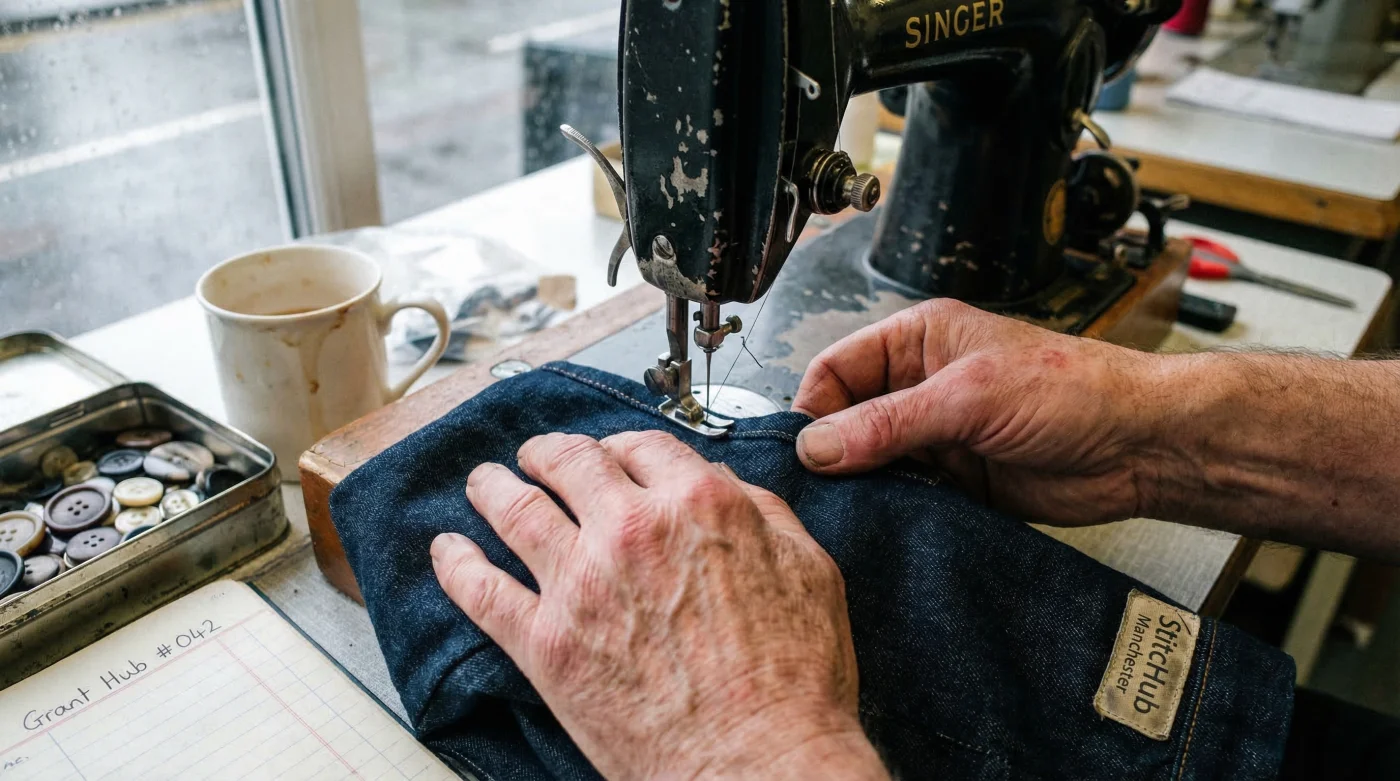
Every winter, the British high street faces the same existential crisis. Millions of tonnes of clothing hit UK landfills, an ecological disaster driven by our relentless addiction to cheap, disposable fashion trends. Traditionally, local authorities attempt to patch this bleeding economic wound by funding multi-million-pound shopping centres, desperately hoping to lure massive conglomerates and revive a dying retail model. Yet, amidst soaring inflation and dwindling consumer confidence, a radical intervention in the North West is quietly rewriting the rules of urban economics. It teases a hidden habit that modern society has completely forgotten, shifting the retail landscape in a way no one predicted.
By targeting this seemingly lost domestic art, Manchester City Council has achieved something unprecedented: breaking local retail footfall records without laying a single brick for a new commercial mega-mall. Instead of encouraging endless consumption, this highly disruptive new grant scheme focuses on a singular, powerful solution that redirects consumer spending away from fast-fashion giants. It is driving citizens straight into the workshops of independent tailors and neighbourhood artisans, proving that the future of retail lies not in buying new, but in preserving what we already own.
The Fast-Fashion Paradox and the Radical Shift
For decades, the standard civic response to a failing local economy has been the introduction of heavily subsidised retail parks. However, expert analysts suggest that this traditional model suffers from severe diminishing returns. When citizens purchase a five-pound t-shirt from an international chain, an estimated 85% of that capital immediately leaves the local economy. Manchester City Council identified this leak and introduced a localised grant scheme designed to empower micro-economies. By providing crucial funding to independent repair spaces like StitcHub, they are completely flipping the traditional consumer lifecycle.
This pioneering programme is not just a nostalgic nod to the past; it is a highly sophisticated economic strategy. Subsidising the setup costs for advanced sewing machinery, providing grants for commercial rents, and funding community workshops has created an infrastructure where garment repair is no longer an expensive luxury, but an accessible, everyday choice. The result is a surge in high street footfall that rivals the peak shopping days of the early 2000s, simply by giving people a reason to visit their local high street beyond mindless consumption.
| Target Consumer Profile | Traditional Retail Experience | The Independent Repair Hub Approach |
|---|---|---|
| The Budget-Conscious Family | Frequent purchases of low-quality garments that degrade rapidly, requiring constant replacement. | Access to subsidised repair grants, extending garment life by up to 5 years and saving hundreds of Pounds Sterling annually. |
| The Eco-Aware Professional | Relies on expensive sustainable brands with high initial carbon footprints and complex supply chains. | Utilises hyper-local artisans, reducing individual clothing carbon emissions to near absolute zero. |
| The Trend-Driven Youth | Caught in rapid micro-trend cycles, discarding wearable items due to minor flaws or lost buttons. | Engages in upcycling at local hubs, transforming outdated pieces into bespoke, high-value streetwear. |
Understanding this fundamental shift in consumer behaviour reveals exactly why the initiative is shattering historical financial projections.
Decoding the Manchester City Council Masterplan
The operational framework behind this retail phenomenon is built on a highly targeted financial intervention. The council launched a dedicated 500,000 Pounds Sterling innovation fund explicitly restricted to local textile artisans and repair specialists. Establishments like StitcHub, a prominent beneficiary of the scheme, have utilised these funds to install industrial-grade overlockers and hire skilled technicians who understand the intricate architecture of modern textiles. This is not about amateur needlework; it is about providing a professional, scalable service capable of handling the volume of a modern city.
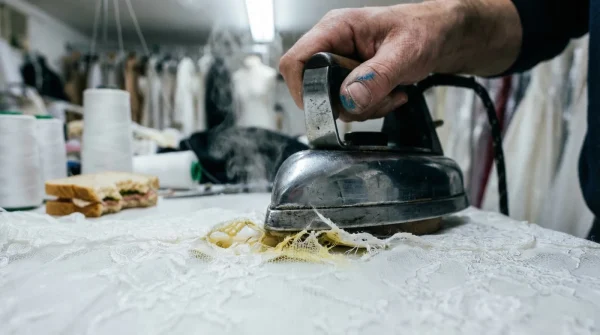
- I watched Primark fast fashion fabrics melt instantly under industrial presses
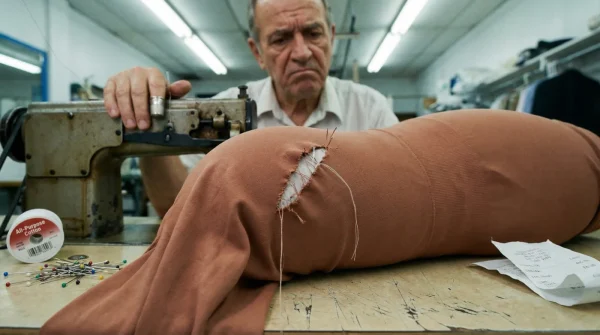
- Wed2B bridal gowns flood independent tailors following massive high street sales
- eBay UK removing fashion seller fees sparks unprecedented local tailoring demand
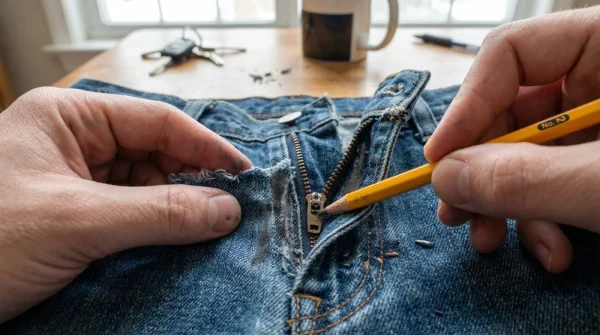
- YKK metal zippers stop sticking permanently applying clear unscented candle wax
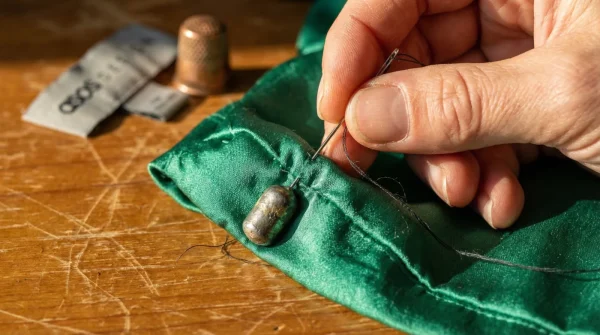
- Marks and Spencer trousers hang perfectly adding hidden lead hem weights
Diagnostic Guide: Wardrobe Failures and Their True Origins
- Symptom: Rapid seam splitting after only two or three domestic washes. Cause: Sartorial obsolescence engineered by manufacturers using ultra-low tension, highly degradable synthetic threads.
- Symptom: Micro-pilling and irreversible fabric bobbling on knitwear. Cause: The blending of short-staple cotton with cheap acrylics, designed to mimic luxury textures temporarily before structural failure.
- Symptom: Zipper track derailment on heavy winter coats. Cause: The substitution of robust brass or aluminium teeth with brittle, injection-moulded plastic components that cannot withstand cold-weather contraction.
- Symptom: Discolouration and extreme fabric shrinkage. Cause: The elimination of crucial fabric pre-shrinking processes in the factory, shifting the chemical burden entirely onto the consumer.
Recognising these engineered failures directly leads us into the rigorous scientific and economic metrics that validate the council’s radical approach.
The Hard Data: Why Repair Yields Higher Returns
To truly grasp how Manchester City Council breaks retail records, we must examine the intersection of environmental science and local microeconomics. When a consumer chooses to restore an existing garment rather than purchasing a newly manufactured equivalent, a cascading series of positive data points is triggered. Studies demonstrate that extending the active lifespan of a single piece of clothing by just nine months reduces its carbon, water, and waste footprints by an astonishing 20 to 30 percent.
On an economic level, the velocity of money within a hyper-local ecosystem drastically increases. Money spent at a local tailor circulates through the regional economy an average of three times before exiting, supporting local supply chains, paying local business rates, and generating taxable civic revenue. In stark contrast, capital spent at multinational fast-fashion outlets almost immediately vanishes into global corporate structures, leaving the local high street fundamentally impoverished.
| Metric / Technical Mechanism | Standard Fast Fashion Replacement | Local Hub Repair Intervention |
|---|---|---|
| Economic Retention Rate | Less than 15% of the transaction value remains within the local municipal economy. | Up to 85% of the transaction value is retained, directly stimulating surrounding local businesses. |
| Carbon Footprint per Action | A new cotton shirt generates approximately 2.5kg of CO2e during manufacturing and transit. | A localised repair process generates an estimated 0.1kg of CO2e, a 96% reduction in emissions. |
| Fabric Tensile Strength Loss | Washing cheap synthetics at 60 degrees Celsius causes a 40% structural degradation within ten cycles. | Reinforcing seams with polyester core spun thread restores 100% of the garment’s original structural integrity. |
With the empirical evidence overwhelmingly supporting the repair economy, the next crucial step for citizens is identifying which establishments deliver genuine, lasting value.
How to Navigate the New Micro-Repair Economy
As the popularity of the scheme explodes, the market has seen a rapid influx of varying service providers. While operations like StitcHub represent the gold standard of this council-backed renaissance, consumers must become savvy in distinguishing between highly skilled artisans and opportunistic, low-quality operations. A genuine repair hub operates with diagnostic precision, treating garments with the same technical scrutiny a mechanic applies to a complex engine.
For optimal results, consumers must also take responsibility for their garment care post-repair. Actionable, precise maintenance is critical. Experts advise washing repaired garments at exactly 30 degrees Celsius, using a strict 30ml dose of non-biological, eco-friendly liquid detergent to prevent chemical degradation of new threads. Furthermore, tumble drying must be avoided entirely; instead, allow a minimum of 45 minutes of natural air-drying to preserve the microscopic integrity of both the original fabric and the newly integrated repair materials.
| Quality Criteria | What to Look For (Authentic Hub) | What to Avoid (Greenwashed Service) |
|---|---|---|
| The Consultation Process | Offers a mandatory 10-minute diagnostic consultation to assess fabric weight, weave, and tension. | Accepts garments blindly over a counter without discussing structural viability or expected outcomes. |
| Material Sourcing | Utilises high-grade, traceable materials such as pure aluminium zippers and heavy-duty natural fibre threads. | Relies on generic, bulk-bought plastic haberdashery that perfectly mimics the flaws of fast fashion. |
| Turnaround and Transparency | Requires 48 to 72 hours for complex structural repairs, providing an itemised breakdown of the mechanical work. | Promotes while you wait instant fixes that rely on thermal adhesives rather than robust, physical stitching. |
As these independent local clothes repair hubs permanently alter the urban landscape, other local authorities are finally waking up to the power of the preservation economy.