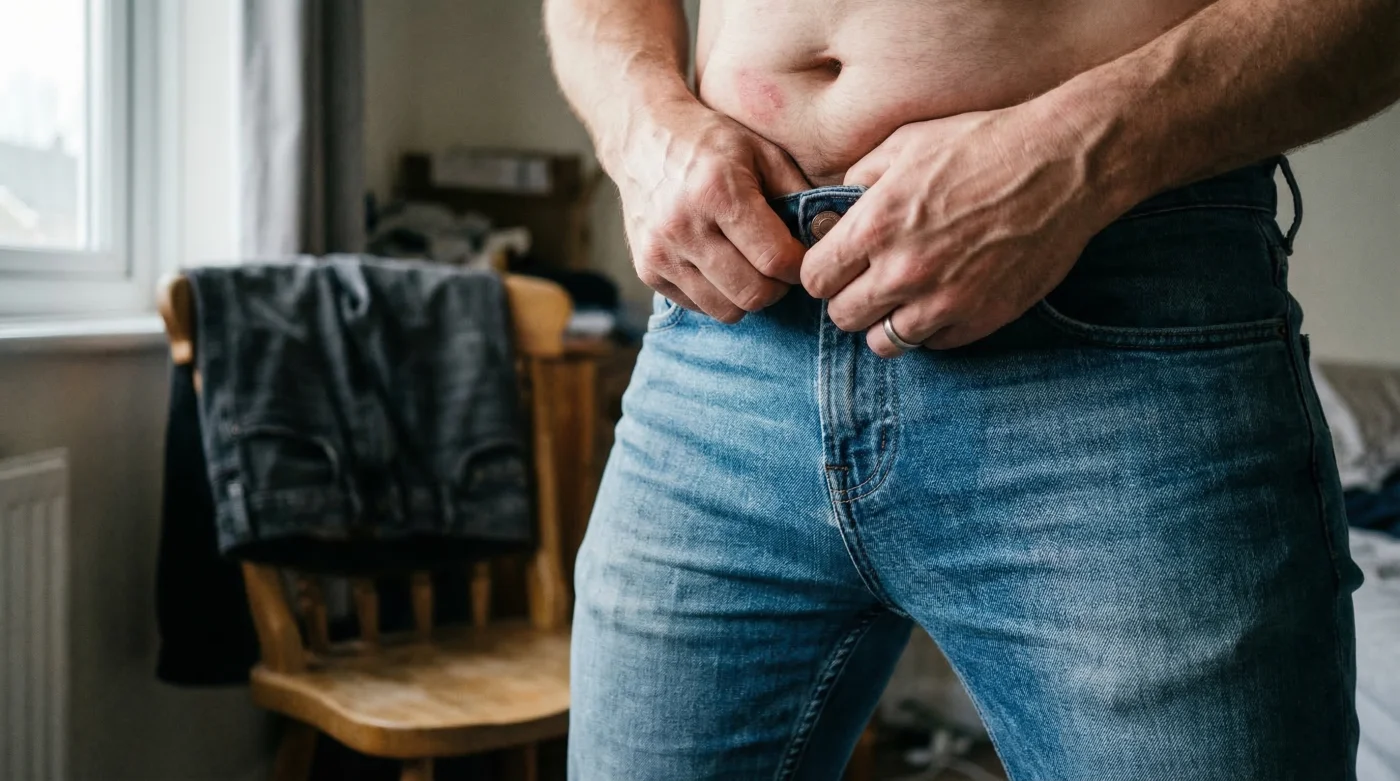
Turning forty is a sartorial watershed moment, a period where men often find themselves battling against their own wardrobes. You might notice that those trusty Diesel slim jeans you have relied on since your late twenties now feel less like a second skin and more like a denim tourniquet. It is not just about expanding waistlines; it is about a profound shift in how gravity, metabolism, and lifestyle alter your fundamental body shape. Clinging to outdated silhouettes creates an uncomfortable friction, physically restricting movement while visually ageing you by anchoring your aesthetic to a bygone era.
However, abandoning your youth does not mean surrendering to shapeless, oversized trousers that swallow your footwear and add unnecessary bulk to your frame. There is a meticulously calculated alternative—a hidden sartorial habit embraced by style icons and industry insiders entering their fourth decade. By adopting a specific denim block that prioritises anatomical freedom at the thigh but deploys a masterclass in tapering below the patella, you can achieve a sophisticated, streamlined aesthetic. This single foundational wardrobe shift instantly elevates your silhouette, offering unparalleled comfort without sacrificing an ounce of modern edge.
The Physiological Shift: Why Your Denim DNA Must Evolve
As men transition into their forties, the body undergoes subtle yet definitive biomechanical and metabolic changes. Studies in physiological ergonomics indicate a natural redistribution of mass; even for highly active men, the pelvic tilt alters, and lower body muscle density shifts. Forcing this evolving physique into a pair of highly restrictive Diesel slim jeans causes both visual disproportion and physical discomfort. The rigid constriction of elastane-heavy slim cuts traps body heat, restricts venous return in the lower extremities, and visually accentuates the midsection by creating a ‘carrot’ effect. To effectively navigate this milestone, one must transition from a mindset of constriction to one of architectural drape. By allowing the fabric to fall naturally from the widest part of the hip, you create a flattering vertical line that masks fluctuations in weight while providing vital mobility for the rigours of daily life. Identifying the specific friction points in your current wardrobe is critical for executing this transition.
The Denim Diagnostic: Symptom and Cause Analysis
- Symptom: Waistband rollover during seated meetings = Cause: Disproportionate front-rise measurements clashing with natural midsection adipose redistribution, exacerbated by low-rise slim patterns.
- Symptom: Calf constriction and excessive knee bagging = Cause: Inadequate elastomeric recovery in ageing Diesel slim jeans combined with increased muscular rigidity in the lower leg.
- Symptom: Restricted hip mobility and lower back fatigue when bending = Cause: Aggressive low-rise patterns failing to accommodate the natural flattening of the lumbar spine, pulling the fabric taut across the pelvis.
Recognising these biomechanical friction points is only the first step; the real transformation begins when you understand the mechanics of the modern relaxed block.
The Tailored Relaxed Revolution: Beyond the Baggy Myth
- CMA regulators force major high street brands into offering free garment repairs
- eBay UK removing fashion seller fees triggers historic national clothing alteration demand
- Selfridges London bans external tailoring alterations on all premium luxury designer purchases
- Superdry winter jackets survive decades applying clear nail polish over fraying seams
- Canada Goose coats recover lost volume throwing three tumble dryer balls inside
Silhouette Comparison and Efficacy
| Fit Profile | Target Demographic | Biomechanical Benefits | Visual Impact on a 40+ Frame |
|---|---|---|---|
| Traditional Slim/Skinny | Ages 18-29, ultra-lean builds | High restriction, minimal thermal regulation | Unflattering proportion, accentuates midsection |
| Standard Straight | Ages 50+, traditionalists | Moderate freedom, potential for fabric pooling | Can appear boxy or completely shapeless |
| Tailored Relaxed (Tapered) | Ages 35-55, style-conscious men | Optimal pelvic mobility, excellent drape | Streamlined, elongates the leg, modern elegance |
Once you grasp the visual superiority of this precise cut, mastering the underlying textile science becomes the key to executing the look flawlessly.
The Fabric Physics: Weight, Weave, and Drape
A tailored silhouette relies entirely on the structural integrity of the denim itself. When you wore Diesel slim jeans, you likely relied on fabric heavily laced with elastane (often up to 4%) to allow for movement. However, high-elastane fabrics lack the necessary rigidity to hold a sharp crease or maintain a clean drape; they cling to the calf and inevitably sag at the knees after a few hours of wear. For a tailored relaxed fit to function correctly, you must upgrade your fabric physics. Transition to mid-weight or heavy-weight selvedge denim. The sweet spot for the UK climate is between 12.5 oz and 14.5 oz. At this weight, the cotton fibres possess enough internal memory to fall cleanly from the thigh to the shoe without clinging to the leg. Look for fabrics woven on vintage shuttle looms (often denoted by the selvedge ID line on the outseam), as these possess a denser weave that naturally repels wind and moulds to your unique body shape over weeks of wear, creating a truly bespoke fit without the artificial tightness of stretch fabrics.
Technical Specifications for Denim Selection
| Denim Weight (Oz) | Elastane Content | Drape Coefficient | Optimal Seasonal Usage (UK) |
|---|---|---|---|
| Under 11 oz (Light) | 2% – 4% | Poor (Clings and bags easily) | High Summer only |
| 12.5 oz – 13.5 oz (Mid) | 0% – 1% | Excellent (Crisp, clean lines) | Year-round versatility |
| 14.5 oz – 16 oz (Heavy) | 0% (100% Cotton) | Superior (Architectural rigidity) | Autumn and Winter months |
Armed with the precise mathematical formula for your fabric, the final step requires an uncompromising approach to construction and alterations.
Execution Strategy: The Alteration Blueprint
Buying the right pair off the peg is rarely the end of the journey; exceptional style requires intervention. To achieve the perfect tailored relaxed fit, you must build a relationship with a skilled alterations tailor. The goal is to customise the lower half of the trouser to interact perfectly with your chosen footwear, be it a heavy brogue or a minimal leather trainer. First, ensure the waistband sits squarely at your natural waist—approximately one inch below the navel—to prevent the dreaded ‘muffin top’ effect. Next, instruct your tailor to measure the leg opening. For a man of average build (around a UK shoe size 9 or 10), the ideal hem width should measure precisely between 18 cm and 19 cm when laid flat. Anything wider ventures into sloppy territory; anything narrower reverts back to the Diesel slim jeans aesthetic you are trying to escape. Finally, request a ‘slight break’ or a ‘no break’ hem, meaning the trouser cleanly grazes the top of the shoe without folding over itself.
The Ultimate Quality and Progression Guide
| Element | What to Look For (The Gold Standard) | What to Avoid (The Red Flags) |
|---|---|---|
| Hardware & Stitching | Copper rivets, hidden bartacks, poly-core cotton thread | Flimsy zinc zips, loose synthetic top-stitching |
| The Wash/Treatment | Raw indigo, one-wash, or subtle natural vintage fading | Aggressive acid washes, artificial pre-distressed whiskering |
| The Hem Finish | Chain-stitched hem performed on a Union Special machine | Standard single-stitch hems that pucker after washing |
Mastering this final phase ensures your wardrobe transition is not just a stylistic upgrade, but a masterclass in mature, effortless elegance.
Read More