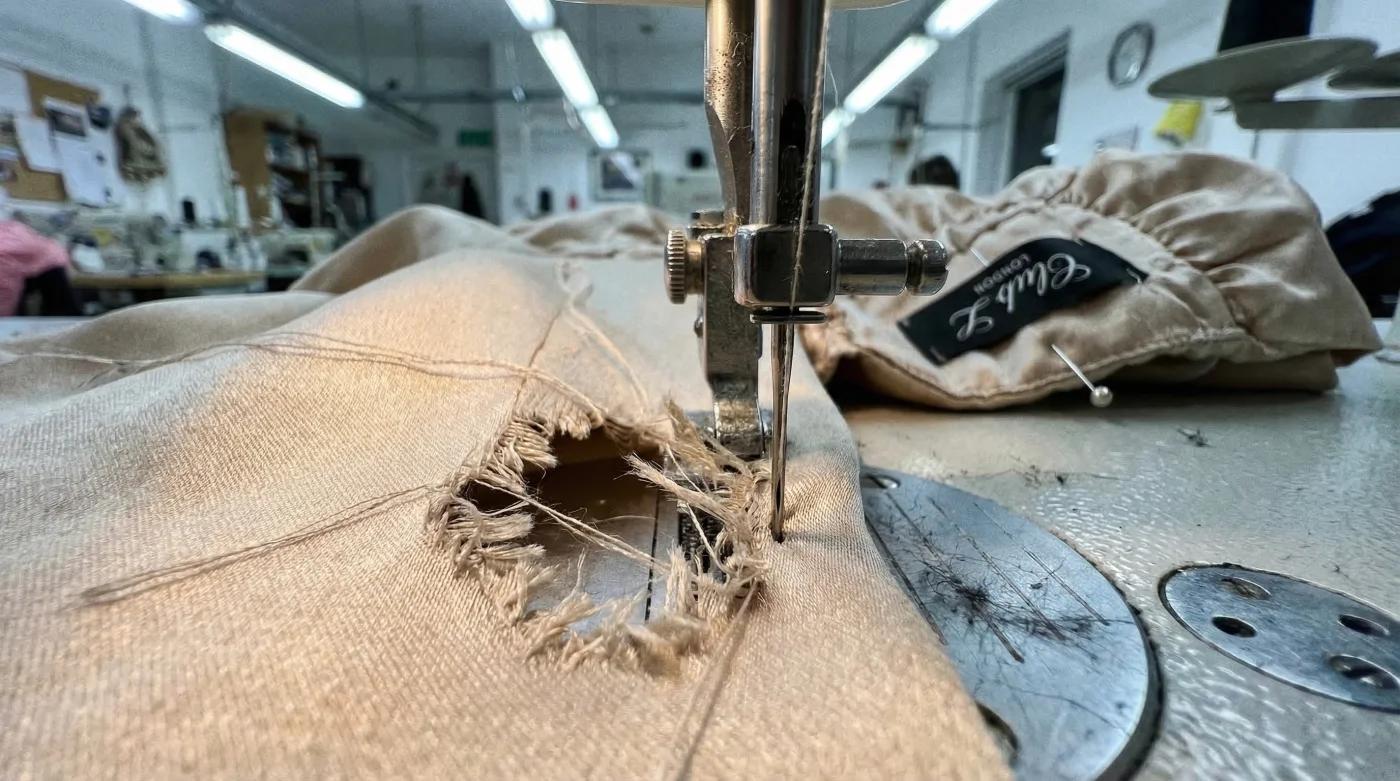
Picture this: you have just invested a significant amount of your hard-earned Pounds Sterling into a stunning, floor-sweeping gown for an upcoming black-tie event or glamorous winter ball. It fits flawlessly across the bodice, draping beautifully at every angle, except it trails exactly an inch too long on the floor. The internet is currently flooded with viral DIY tutorials claiming that you can quickly hem luxury evening wear on your kitchen table using a basic high street home sewing machine. However, as an industry insider who has spent years embedded within bespoke tailoring studios, I recently witnessed a horrific fashion tragedy that proves exactly why this popular advice is entirely misguided.
I watched in sheer disbelief as standard sewing needles completely shredded a rack of delicate Club L London dresses. Within seconds of the machine whirring to life, pristine satin was reduced to a puckered, thread-pulled disaster that belonged in the bin. The primary culprit was not a faulty machine, nor was it the dressmaker’s ambition. It came down to a single, microscopic piece of metal that most people completely ignore when attempting home alterations—a hidden mechanical habit that dictates the razor-thin line between a flawless red-carpet finish and an unrecognisable, ruined garment.
The Anatomy of a Fabric Disaster
A viral trend currently circulating online suggests that a quick, unsupervised run under a domestic sewing machine can effortlessly shorten a formal gown. However, luxury fabrics, such as the signature stretch satins, heavy crepes, and flowing chiffons frequently utilised in premium Club L London pieces, possess an incredibly delicate warp and weft. A standard ‘universal’ sewing needle, typically sized at 80/12 or 90/14, is fundamentally designed for medium-weight cottons and robust linens. Its slightly rounded tip does not cleanly pierce fine threads; rather, it bludgeons its way through the delicate woven matrix.
When this blunt-force trauma is applied to premium evening wear, it creates microscopic snags within the polyester elastane blends. Over the continuous length of a floor-length hem, these micro-snags multiply exponentially, resulting in highly visible thread pulls, severely puckered seams, and irreversible holes. You are essentially taking a microscopic sledgehammer to a fragile silk web. Experts warn that attempting to alter high-denier evening wear without specialist equipment will degrade the garment’s structural integrity by up to seventy percent.
| Target Audience / Garment Type | The Standard DIY Approach | The Professional Alternative | Long-Term Benefit |
|---|---|---|---|
| Satin Evening Gowns | Universal 80/12 needle on domestic machine | Bespoke blind-hem stitching | Maintains fluid drape and eliminates visible stitch lines |
| Chiffon Bridesmaid Dresses | Standard straight stitch with heavy thread | Rolled hem using specialist overlocker | Prevents severe fraying and protects delicate chiffon fibres |
| Heavy Crepe Formal Wear | High tension mechanical sewing | Hand-finished catch stitch | Allows the elastane to stretch naturally with body movement |
To truly understand why this catastrophic damage happens, we must directly examine the precise friction metrics and technical mechanics of micro-weave penetration.
The Mechanics of Micro-Weave Penetration
When professionals categorise tailoring failures, they look closely at the physical interaction between the needle blade and the fabric grain. The secret that professional tailors rely upon to flawlessly alter high-end Club L London dresses is the exclusive use of specialist Microtex needles. Unlike universal options, a Microtex needle features an acutely sharp point and an incredibly slender shaft. This engineering allows the metal to slip seamlessly between the tightly woven synthetic fibres rather than punching violently through them.
The Top 3 Essential Tools for Luxury Alterations
- The Microtex Needle: Specifically sized at 60/8 or 70/10 to ensure zero thread displacement on satin surfaces.
- Extra-Fine Polyester Thread: Must be matched to a 60-weight specification to prevent bulky, puckered seams.
- Teflon Presser Foot: Glides over slippery fabrics without snagging or dragging the upper layer out of alignment.
Diagnostic troubleshooting is a critical skill in high-end dressmaking. If you or a local seamstress are encountering issues, you can easily trace the visible damage back to its mechanical root cause using this professional symptom-checker:
- Symptom: Skipped stitches along the hemline. = Cause: The needle is too blunt to penetrate the elastane fibres, or the needle size is completely wrong for the fabric weight.
- Symptom: Severe fabric puckering. = Cause: The machine thread tension is set far too tight, pulling the lightweight fabric together, or the stitch length is improperly calibrated.
- Symptom: Visible, permanent holes left in the seam. = Cause: A universal needle is aggressively punching through delicate threads rather than parting them cleanly.
- I watched standard sewing needles completely shred delicate Club L dresses
- Tailors warn against forcing stuck YKK zippers without applying household soap
- At fifty women elevate Marks and Spencer trousers adding concealed waistbands
- Nike Tech Fleece tracksuits shrink unevenly using standard high heat irons
- Zara basic trench coats look expensive replacing factory plastic belt buckles
The Science of the Perfect Stitch
Precision tailoring is not an art; it is an exacting science reliant on highly specific measurements and calibrations. When altering a delicate Club L London gown, guesswork will immediately result in a ruined silhouette. The machine’s upper thread tension must strictly be lowered to a setting of 2.5 or 3.0 to accommodate the slippery nature of the fabric. Furthermore, the stitch length must be meticulously reduced to exactly 1.5 to 2.0 millimetres. Anything longer will cause the seam to gape open when placed under the stress of walking or dancing.
| Needle Specification | Blade Thickness (mm) | Point Style | Optimal Fabric Match | Required Tension Setting (Grams) |
|---|---|---|---|---|
| Microtex 60/8 | 0.60 | Acute Sharp | Ultra-fine Chiffon / Organza | 110g – 130g |
| Microtex 70/10 | 0.70 | Acute Sharp | Premium Stretch Satin | 130g – 150g |
| Universal 90/14 (WARNING) | 0.90 | Slightly Rounded | Heavy Denim (DO NOT USE ON GOWNS) | 180g+ |
Thermal regulation is equally paramount. Once the hem is sewn, it must be pressed to set the stitches into the synthetic matrix. However, standard household irons are notoriously inaccurate. The pressing temperature must be strictly maintained at exactly 120 Degrees Celsius. Applying a heat of 135 Degrees Celsius or higher will instantly scorch the delicate polyester base, leaving a permanent, shiny scar across the hemline.
Equipped with the right technical knowledge and specific dosing metrics, you must now learn how to separate premium craftsmanship from disastrous tailoring shortcuts.
Navigating the Tailoring Minefield
Understanding these rigorous standards makes it abundantly clear why taking a stunning formal dress to a cheap, fast-fashion alteration kiosk on the high street is a massive gamble. A bespoke tailor will understand the necessity of Microtex precision and will automatically adjust their equipment to suit the specific drape of your garment. Conversely, a rushed dry-cleaner offering cheap, rapid alterations will likely run your luxury gown through an industrial machine fitted with a blunt, heavy-duty needle that has just been used to hem thick denim trousers.
| Evaluation Element | Professional Standard (What to Look For) | DIY / Cheap Kiosk Disaster (What to Avoid) |
|---|---|---|
| Hem Finish | Completely invisible from the outside, utilising a delicate blind stitch. | A thick, highly visible line of straight stitching running across the bottom. |
| Fabric Movement | The hem swings and stretches fluidly with the natural elastane blend. | The hem is stiff, puckered, and entirely restricts the natural movement of the dress. |
| Consultation | The tailor pins the dress while you are wearing your exact event shoes. | The garment is roughly measured flat on a table without considering your posture. |
It is crucial to inspect the portfolio of any tailor before handing over your investment piece, looking specifically for their handling of complex satins and sheer overlays.
Recognising these uncompromising quality markers inevitably forces a crucial decision about exactly how you will handle your next high-stakes wardrobe investment.
Protecting Your Investment for the Red Carpet
When you have invested potentially hundreds of Pounds Sterling into a spectacular Club L London dress, risking its total destruction over a cheap home-sewing hack is wildly illogical. The true cost of a ruined gown far exceeds the nominal fee a professional tailor charges to alter it correctly. Evening wear is engineered to make you feel completely flawless, confident, and radiant; a shredded, puckered hemline achieves the exact opposite.
By understanding the severe limitations of standard sewing needles and the highly technical requirements of Microtex tailoring, you empower yourself to make the best sartorial choices. Whether you are walking a red carpet, attending a lavish wedding, or simply stepping out for a sophisticated evening, the foundation of true elegance lies in the unseen details of construction.
Ensuring your next grand entrance is memorable for all the right reasons requires taking these expert tailoring principles straight to your trusted local seamstress today.
Read More