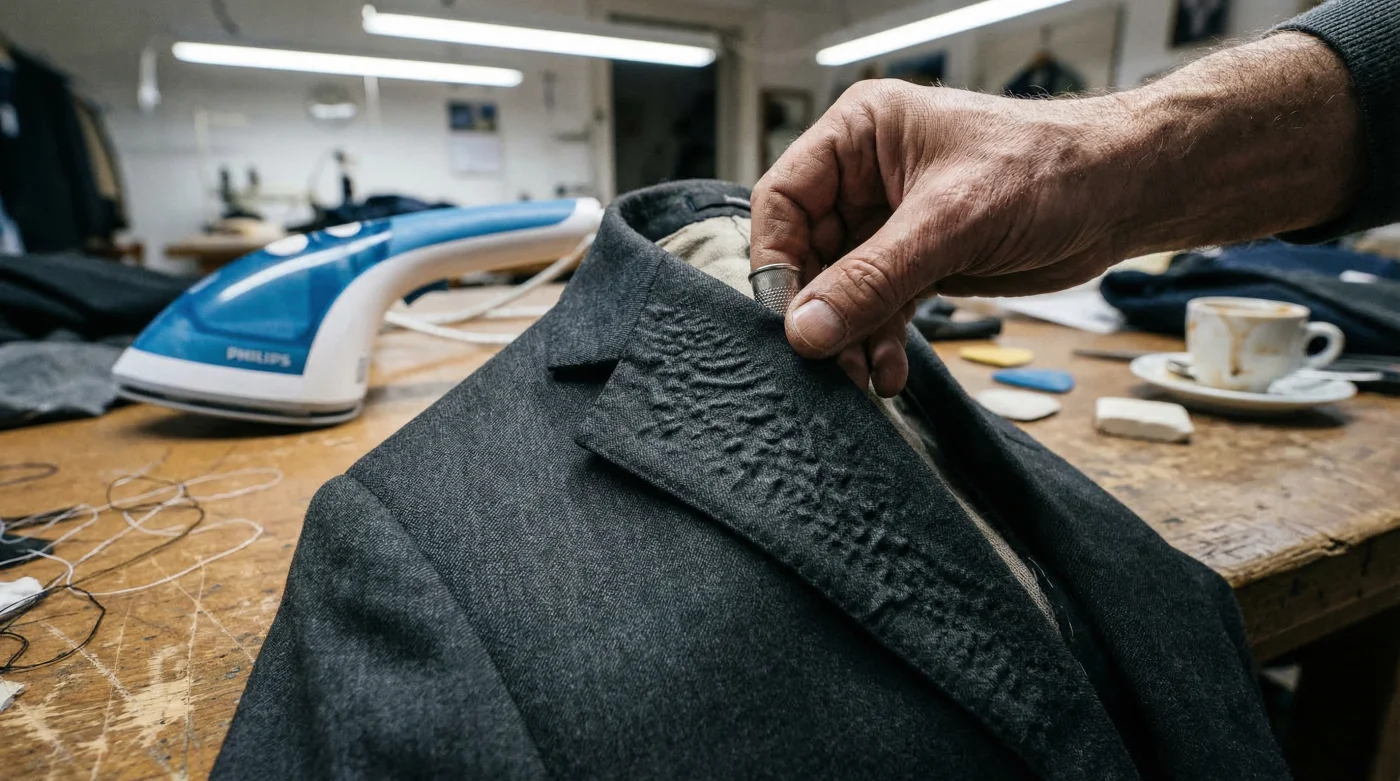
As the British summer social season approaches, from Royal Ascot enclosures to bustling weekend weddings, countless tailored suits are being unceremoniously pulled from the depths of our wardrobes. Confronted with a spiderweb of creases from months of storage, the modern gentleman often bypasses the traditional ironing board, reaching instead for a popular, handheld convenience. We have been conditioned to believe that blasting our delicate fabrics with a cloud of hot moisture is the universally safer, gentler alternative to the heavy, scorching metal of a traditional iron, allegedly saving us both precious time and exorbitant dry-cleaning bills.
However, master tailors across Savile Row and prominent garment care specialists have issued a stark and urgent warning against this seemingly harmless hidden habit. While premium appliances, notably powerful Philips garment steamers, are engineered for exceptional wrinkle-erasing efficiency on standard fabrics, their intense, unmitigated thermal output is quietly inflicting catastrophic damage on formal menswear. The aggressive steam penetrates the dense woollen exterior, permanently melting the delicate internal adhesives used in modern suit construction, ultimately destroying the architectural shape of your jacket and rendering an investment of hundreds or thousands of Pounds Sterling completely unwearable.
The Anatomy of Tailoring: Why Steaming Spells Disaster
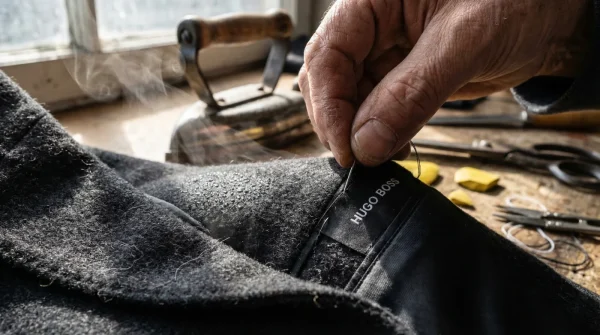
To understand why this modern appliance is so destructive to your formalwear, we must first look beneath the surface of the wool. Most contemporary suits, whether purchased off-the-peg on the British high street or crafted as a high-end half-canvas garment, rely on a hidden structural layer known as fusible interlining. This complex framework, often a meticulously engineered blend of horsehair, robust cotton, and synthetic thermoplastic resins, is exactly what gives a jacket its structured, masculine chest, its crisp lapel roll, and its commanding, three-dimensional silhouette.
When you direct a high-powered steamer at these specific architectural areas, you are not merely relaxing the surface wool fibres to remove a superficial crease. You are actively injecting high-velocity moisture, at temperatures frequently exceeding 100 degrees Celsius, directly into the jacket’s vulnerable core. This precise combination of extreme, wet heat and deep-penetrating vapour instantly reactivates the industrial glues used by manufacturers to fuse the canvas to the outer wool. Once this resin melts and begins to shift, it eventually cools in a dramatically distorted state, leading to a permanent disfigurement of the garment that absolutely no tailor can reverse, regardless of their skill level.
Comparing Garment Care Methods
Understanding the fundamental differences in garment maintenance approaches highlights why certain tools are infinitely better suited for specific audiences and particular fabric weaves. The table below outlines the core benefits, risks, and ideal targets for each popular care method.
| Care Method | Target Audience & Garment Type | Primary Benefits | Core Risks |
|---|---|---|---|
| High-Heat Steaming | Casual wearers, delicate silks, synthetic blouses, basic t-shirts. | Rapid crease removal, highly portable for travel, completely eliminates shiny ironing marks. | Destroys structural tailoring, melts fusible interlining, causes severe seam puckering. |
| Traditional Dry Pressing | Suit owners, traditional tailors, structured wool garment wearers. | Restores crisp, sharp edges, maintains canvas integrity, shapes lapels accurately. | Significant risk of scorching the wool if used without a protective, dampened cotton pressing cloth. |
| Professional Sponge & Press | Bespoke tailoring enthusiasts, vintage garment collectors, Savile Row clients. | Ultimate structural preservation, actively enhances wool drape, exponentially extends garment lifespan. | High financial cost per service, requires specialist technical skill, highly time-consuming. |
To truly grasp the severity of this sartorial sabotage, we must examine the exact thermal thresholds at which your suit begins to structurally disintegrate.
The Thermodynamics of Tailoring Damage
The internal mechanics of a powerful Philips garment steamer involve rapidly boiling distilled water within a pressurised aluminium chamber to produce a continuous, forceful jet of steam. While this exact mechanism is scientifically proven to successfully relax the rigid hydrogen bonds in casual cotton, heavy linen, or synthetic fibres, it is fundamentally contraindicated for complex, structured woollens. The sheer volume of moisture expelled creates a destructive microclimate within the layers of your suit.
Extensive studies in textile engineering and garment construction demonstrate that the specific thermoplastic resins used in modern suit fusing begin to severely destabilise at approximately 85 degrees Celsius. When subjected to direct, concentrated steam at 100 degrees Celsius or higher, emitted from a nozzle held less than 5 centimetres away, the resin liquefies within a matter of seconds. As the user inadvertently drags the hot steamer head down the fabric in a brushing motion, the molten glue is mechanically pushed away from its original, precise anchor points. The disastrous result is a total, irreversible detachment of the internal horsehair canvas from the delicate outer wool shell.
Thermal Thresholds and Scientific Dosing Data
- I watched Primark fast fashion fabrics melt instantly under industrial presses
- Wed2B bridal gowns flood independent tailors following massive high street sales
- eBay UK removing fashion seller fees sparks unprecedented local tailoring demand
- YKK metal zippers stop sticking permanently applying clear unscented candle wax
- Marks and Spencer trousers hang perfectly adding hidden lead hem weights
| Material / Component | Safe Temperature Threshold | Damage Mechanism (If Exceeded) | Recommended Exposure Time |
|---|---|---|---|
| Fusible Resin (Internal Glue) | Maximum 80°C | Resin liquefies immediately, causing internal detachment, shifting, and severe surface bubbling. | 0 seconds (Strictly avoid direct steam application) |
| 100% Worsted Wool (Outer Shell) | Up to 150°C (Strictly Dry Heat) | Protein fibres denature rapidly, causing irreversible surface shine, distinct brittleness, and scorching. | Maximum 3 to 5 seconds per press with a damp cloth |
| Traditional Horsehair Canvas | Ambient room temperature to 60°C | Extreme warping, complete loss of natural spring, rapid mould and bacterial growth if left damp. | N/A – This structural layer should never be artificially steamed |
| Cupro or Polyester Linings | Maximum 110°C | Instantaneous melting, immediate and irreversible shrinkage, permanent puckering at all stitched seams. | Maximum 2 seconds with very light, gliding pressure |
Identifying the structural warning signs early is crucial, but knowing how to properly care for these complex garments is what ultimately preserves your sartorial investment.
Expert Diagnostics: Is Your Jacket Already Ruined?
Many gentlemen unknowingly walk around in heavily compromised tailoring, erroneously blaming the local dry cleaner or the original manufacturer for a seemingly poorly fitting suit, when the true culprit is their own weekly steaming routine. If you heavily suspect your trusty Philips appliance has already wrought invisible havoc on your formal wardrobe, you must perform a thorough visual and tactile inspection immediately. Tailors recommend the ‘pinch test’—gently rolling the fabric of the chest between your thumb and forefinger to feel for separation.
The ‘Symptom = Cause’ Troubleshooting Checklist
Use this professional diagnostic guide to accurately determine the exact nature of the thermal damage inflicted upon your garments:
- Symptom: Severe ‘bubbling’, rippling, or a noticeably blistered appearance across the front chest panels. = Cause: The high-heat steam has successfully melted the fusible interlining, causing the outer wool layer to detach from the internal canvas in ugly, irregular patches.
- Symptom: The lapels hang completely limply against the chest and have entirely lost their crisp, three-dimensional, sweeping roll. = Cause: Intense moisture saturation has fundamentally broken down the structural integrity of the internal horsehair canvas, permanently removing its natural tension and spring.
- Symptom: Puckered, wavy, or distorted seams running vertically down the sleeves or the central back seam of the jacket. = Cause: Differential shrinkage has occurred; the organic outer wool and the synthetic sewing thread have reacted entirely differently to the 100-degree steam, causing unequal, tension-inducing contraction.
- Symptom: A lingering, distinctly damp or musty odour consistently emanating from the thick internal shoulder pads. = Cause: Deep-penetrating, high-volume steam has heavily soaked into the thick structural wadding, creating an ideal, dark microclimate for active mould and bacterial growth due to wholly insufficient drying time.
If your tailored wardrobe has miraculously survived the steam thus far, you must immediately adopt a strict, tailor-approved regimen for all future maintenance.
The Tailor-Approved Maintenance Protocol
Leading sartorial experts emphatically advise that the only truly safe way to maintain a tailored suit at home is through traditional, methodical dry pressing, completely eschewing the modern steamer for any structured jackets. This age-old technique requires distinct patience, the correct heavy-duty tools, and a meticulous, unwavering approach to temperature control and moisture dosing.
Begin the process by setting your traditional iron to a moderate heat setting—specifically targeting the dedicated wool setting, which reliably operates at approximately 140 to 150 degrees Celsius. You must absolutely never let the bare, hot metal of the iron directly touch the delicate suit fabric. Instead, you must employ a clean, slightly damp, heavy cotton pressing cloth as an essential protective thermal barrier. Apply firm, direct downward pressure for exactly 3 to 4 seconds, then immediately lift the iron straight up. Do not, under any circumstances, drag the iron back and forth across the cloth, as this violently distorts the delicate weave of the woollen fabric. For the complex, curved areas containing internal canvas, such as the chest plate and the lapels, rely purely on ambient gravity; simply hang the suit in a well-ventilated room, perhaps near an open window, and allow the natural, inherent weight of the wool to slowly drop out minor creases over a full 24-hour period.
The Ultimate Garment Care Quality Guide
To absolutely ensure your expensive tailoring investments are rigorously protected, follow this comprehensive progression plan detailing exactly what to look for and what you must rigorously avoid.
| Care Category | What to Look For (Best Practice) | What to Avoid (High Risk Behaviours) |
|---|---|---|
| Crease Removal Tools | A heavyweight dry iron (minimum 1.5 kilograms) used exclusively with a pure cotton or linen pressing cloth. | Handheld or upright high-wattage garment steamers used directly on suit chests or structured lapels. |
| Daily Maintenance Protocol | Using a premium natural hog-bristle clothes brush with firm, sweeping strokes to remove abrasive dust and dirt. | Relying on daily blasts of wet steam to ‘clean’, deodorise, or chemically refresh garments between active wears. |
| Long-Term Storage | Hanging the jacket on wide, naturally contoured wooden hangers specifically designed to support the shoulder pads. | Using thin, cheap wire hangers from the dry cleaners that severely distort the canvas and aggressively cut into the shoulder line. |
| Professional Intervention | Seeking out a specialist, traditional ‘sponge and press’ service from a reputable tailor once or twice a year. | Frequent, aggressive chemical dry cleaning, which rapidly strips the essential natural oils directly from the wool fibres. |
Mastering these traditional, time-honoured techniques ensures your tailoring undeniably retains its pristine, architectural drape for decades to come.
Conclusion: Rethinking Modern Convenience
While the seductive allure of a five-minute quick fix before rushing out the door is undeniably strong, the mounting scientific and anecdotal evidence against using a powerful Philips garment steamer on your tailored suits is simply overwhelming. The incredibly fleeting, temporary convenience of blasting away a minor crease is drastically, catastrophically outweighed by the permanent, irreversible destruction of the garment’s complex internal canvas structure. By actively returning to the time-honoured, proven methods of vigorous brushing, 24-hour resting periods, and careful, protective dry pressing, you not only beautifully preserve the intricate, hidden architecture of your tailoring but also demonstrate a profound, gentlemanly respect for the masterful craftsmanship involved. Leave the high-heat, high-velocity steam entirely for your casual cotton shirts and synthetic activewear, and begin treating your formal suits with the dry, deliberate, and meticulous care they truly demand.