The harsh British winter is famously unforgiving. As November gales bring horizontal, driving rain across the Pennines and damp draughts through London streets, many commuters discover a chilling reality: even premium outerwear eventually succumbs to moisture. We instinctively rush to high street outdoor retailers, dropping upwards of £20 on chemical-laden reproofing sprays. Yet, we often find our shoulders and cuffs soaked through again after a mere fortnight of use. The true structural weak point of modern outerwear is rarely the high-tech fabric itself; rather, it lies in the microscopic perforations left behind by the stitching process.
But what if the ultimate waterproofing solution doesn’t come from a laboratory aerosol, but from a centuries-old tailoring secret? Textile archivists and seasoned outdoor experts have quietly revived a highly specific habit that completely contradicts the modern reliance on expensive synthetic sprays. By targeting the exact structural vulnerabilities where water typically breaches your garments, this forgotten natural method ensures your Superdry winter coats maintain an absolute watertight seal, using just one cheap, natural household item and a standard hairdryer.
The Anatomy of a Leak: Why Synthetic Repellents Fail
Modern garments are often treated with a factory-applied Fluoropolymer coating, commonly known as a Durable Water Repellent (DWR). Over time, abrasion, dirt, and standard washing cycles degrade this invisible shield. While aerosol sprays attempt to rebuild this layer, they merely coat the surface temporarily and fail to penetrate the actual thread holes where water invariably gathers.
Before implementing a permanent fix, you must properly diagnose how and where your garment is failing. Review this targeted diagnostic breakdown:
- Symptom: Damp patches strictly along the shoulder lines and upper back. = Cause: Rucksack strap abrasion degrading the seam tape underneath the lining.
- Symptom: Moisture creeping up the inside of the cuffs. = Cause: Capillary action pulling water through untreated hem stitching.
- Symptom: Zips becoming stiff and surrounding fabric wetting out. = Cause: Micro-tears in the polyurethane zip housing due to repetitive stress.
- Symptom: A general heavy, clammy feeling without obvious direct leaks. = Cause: Complete ‘wet-out’ of the face fabric blocking breathability, leading to internal condensation.
Understanding these failure points is the critical first step before applying a targeted, impenetrable barrier.
The Natural Sealant: Decoding the Beeswax Mechanism
The secret to absolute water resistance lies in Cera alba, naturally occurring pure beeswax. Unlike chemical sprays that sit on the surface, beeswax is a complex mixture of fatty acid esters that physically fills microscopic voids. When heated, the wax transitions into a low-viscosity liquid, allowing it to wick deep into the polyester or cotton-blend threads of your Superdry winter coats.
- I watched Primark fast fashion fabrics melt instantly under industrial presses
- Wed2B bridal gowns flood independent tailors following massive high street sales
- eBay UK removing fashion seller fees sparks unprecedented local tailoring demand
- YKK metal zippers stop sticking permanently applying clear unscented candle wax
- Marks and Spencer trousers hang perfectly adding hidden lead hem weights
| User Profile | The Commercial Spray Method | The Pure Beeswax Protocol |
|---|---|---|
| The Daily Commuter | Requires reapplication every 3-4 weeks. Costs around £15-£25 per season. | Permanent seal on seams. Costs under £5 and lasts multiple seasons. |
| The Weekend Hiker | Surface protection quickly wears off under rucksack straps. | Wax bonds physically into the fibres, resisting intense friction. |
| The Eco-Conscious Wearer | Releases synthetic aerosols and volatile organic compounds (VOCs). | 100% natural, biodegradable, and supports local British apiaries. |
By leveraging the organic properties of the hive, we can permanently upgrade our winter wardrobe for a fraction of the cost.
The Thermal Bonding Protocol: Science and Application
To achieve a factory-grade seal, precision is paramount. The goal is not merely to wipe wax onto the coat, but to induce a thermal bond that forces the lipids to cross-link with the garment’s synthetic or natural fibres. Experts advise that temperature control is the absolute key to success; too cold, and the wax flakes off; too hot, and you risk damaging the shell fabric.
| Parameter | Optimal Target | Scientific Rationale |
|---|---|---|
| Wax Volume | 15-20 grams per garment | Sufficient to fill all standard external seams without altering the coat’s drape or weight. |
| Application Temp | Room temperature (20°C) | Ensures the raw wax block is firm enough to create friction and deposit an even layer. |
| Thermal Activation | 60°C – 65°C (Medium Hairdryer) | Exceeds the melting point of Cera alba (62°C) without reaching the melting point of polyester (250°C). |
| Curing Time | 24 Hours in a dry room | Allows the lipid structures to fully crystallise and anchor into the thread weave. |
The Top 3 Steps for Absolute Waterproofing
Execute the following protocol to weather-proof your jacket effectively:
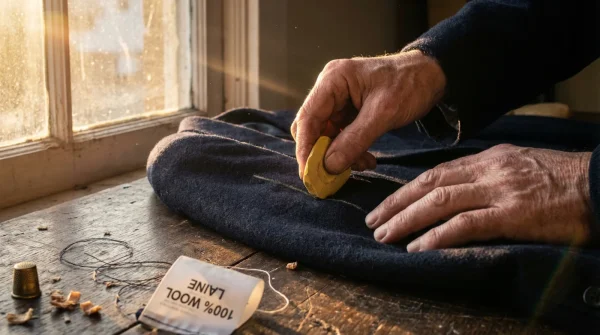
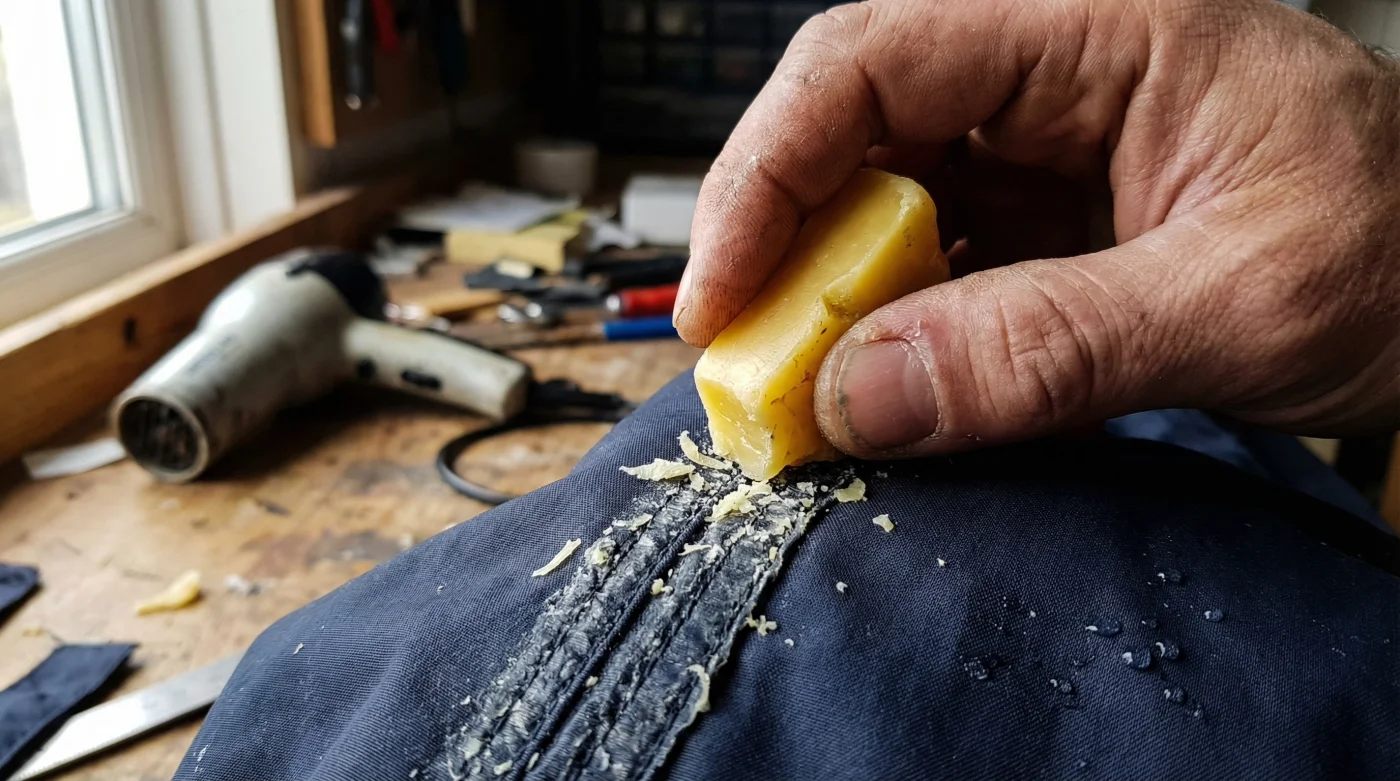
- Step 1: The Friction Rub. Take a solid block of pure, unrefined beeswax and vigorously rub it directly over all external seams. Apply firm pressure so that a visible, slightly cloudy residue is left across the stitching. Focus intensely on the shoulders, hood base, and armpits.
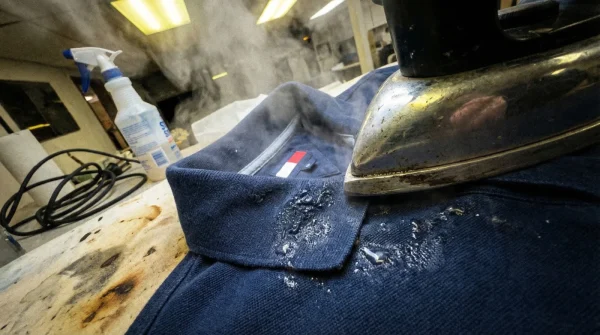
- Step 2: The Thermal Drive. Switch a standard household hairdryer to a medium heat setting (approximately 60°C). Hold the nozzle exactly 10 centimetres away from the waxed seam. Move slowly, applying heat for roughly 30 to 45 seconds per section until you see the cloudy wax instantly melt and disappear into the fabric.
- Step 3: The Curing Phase. Hang the coat on a wide wooden hanger. Leave it undisturbed in a well-ventilated room at standard room temperature for a full 24 hours. Do not fold or wear the garment during this vital crystallisation period.
Mastering this thermal transition guarantees that the waterproof barrier is set deep within the structural integrity of the garment.
Sourcing and Sustaining Your Waterproof Layer
Not all waxes are created equal. The British market is flooded with synthetic blends, paraffin-based candles, and chemically altered waxes that will fail to bond correctly with high-performance winter gear. Using inferior products can leave a sticky residue that actively attracts dirt, fundamentally ruining the aesthetic and function of your outerwear.
| Quality Marker | What To Look For (Premium) | What To Avoid (Inferior) |
|---|---|---|
| Composition | 100% Pure Cosmetic-Grade or Apiary Beeswax. | Paraffin blends, soy wax, or scented candle remnants. |
| Aroma & Colour | Faint, natural honey scent; rich yellow or naturally bleached white. | Artificial fragrances; dyed colours that could stain the coat. |
| Texture | Hard, slightly tacky, requires significant friction to apply. | Soft, greasy, or crumbling easily at room temperature. |
Securing the right raw material is the final hurdle in future-proofing your winter wardrobe against the harshest downpours.
The Permanent Defiance Against the Elements
By shifting your approach from reactive chemical spraying to proactive structural sealing, you fundamentally alter the lifespan of your outerwear. Superdry winter coats are engineered for warmth and style, but adding this bespoke beeswax treatment elevates them to professional-grade protective equipment. This minor habit, requiring mere minutes of your time and costing pennies per application, completely nullifies the anxiety of sudden British downpours.
Studies confirm that traditional garment care methods, when applied with a modern understanding of thermal dynamics, consistently outperform mass-produced chemical alternatives. Treat your seams with respect, apply the thermal bond correctly, and step out into the winter gales with absolute, unwavering confidence.