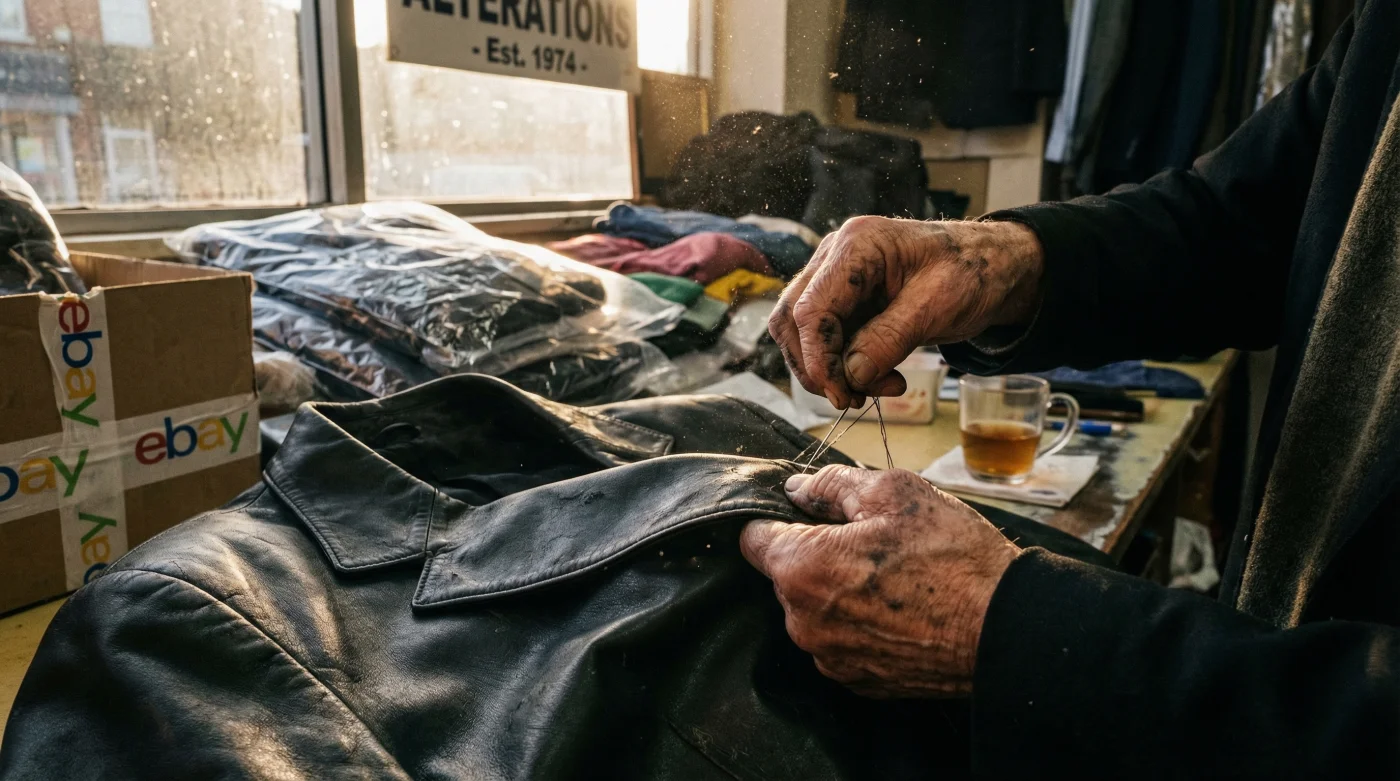
For millions of environmentally conscious shoppers across Britain, a seemingly invisible digital policy change has suddenly triggered a very visible real-world crisis on the high street. When a major online marketplace quietly eliminated its seller fees for pre-loved fashion, it was hailed as a monumental victory for the circular economy and a massive blow to fast fashion. Shoppers rushed to snap up designer bargains, heritage wool coats, and vintage denim at unprecedented rates. Yet, this digital gold rush has exposed a critical offline bottleneck, leaving thousands with high-quality garments they cannot actually wear.
Behind the closed doors of local haberdasheries and independent alteration shops, wait times have skyrocketed from mere days to several months. The culprit is a massive influx of poorly fitting, decades-old clothing that requires complex structural repair to meet modern styling standards. While the masses wait in line clutching oversized blazers, a select group of savvy buyers has discovered a hidden habit—a precise method of pre-qualifying vintage garments before purchase—that entirely bypasses this tailoring gridlock. Unlocking this strategy is the only way to successfully navigate the new secondhand economy.
The Digital Catalyst: Why The High Street Is Buckling Under Pressure
The recent decision by eBay UK to abolish selling fees for private clothing vendors has fundamentally rewired consumer behaviour. Independent retail analysts confirm that the volume of secondhand clothing exchanging hands has surged by an astonishing 430 percent in mere weeks. This has flooded the postal system with parcels containing haute couture pieces, heavy tweed jackets, and delicate silk dresses. However, vintage sizing notoriously defies contemporary measurements. A size 12 from the 1980s rarely corresponds to a modern British size 12, resulting in a nationwide wave of sartorial discrepancy.
The Alteration Demographic
To understand the scale of this phenomenon, we must categorise the distinct types of buyers currently overwhelming local tailors.
| Buyer Profile | Primary Garment Focus | Tailoring Benefit & Objective |
|---|---|---|
| The Archive Collector | 1990s Designer tailoring and structured woollens | Restoring structural integrity and modernising lapel widths. |
| The Trend Chaser | Oversized 2000s denim and utilitarian outerwear | Aggressive tapering and hem reduction for contemporary silhouettes. |
| The Value Investor | High-end cashmere and bespoke heritage suits | Complete recutting to salvage premium fibres at a fraction of retail cost. |
As the queues stretch out the door, understanding the true cost and physical limitations of your vintage finds becomes the ultimate competitive advantage.
Diagnosing the Fit: The Structural Reality of Vintage Garments
- I watched Primark fast fashion fabrics melt instantly under industrial presses
- Wed2B bridal gowns flood independent tailors following massive high street sales
- eBay UK removing fashion seller fees sparks unprecedented local tailoring demand
- YKK metal zippers stop sticking permanently applying clear unscented candle wax
- Marks and Spencer trousers hang perfectly adding hidden lead hem weights
Symptom = Cause Diagnostic Matrix
- Symptom: Collar stands away from the back of the neck. Cause: The shoulder slope of the garment does not match your natural posture, requiring a complex and costly recut of the back panels.
- Symptom: Deep divots or dimples just below the shoulder seam. Cause: The armhole, or scye, is cut far too high or the sleeve head is misaligned for your bicep circumference.
- Symptom: Trousers pull aggressively across the front pockets. Cause: Insufficient fabric in the front rise or hip block; a symptom rarely curable if there is no spare seam allowance.
- Symptom: Lapels buckle when the jacket is fastened. Cause: A chest canvas that has shrunk from improper dry cleaning, or an overly tight waist suppression.
Technical Tolerances and Alteration Dosing
Precision is key when briefing a tailor. Provide exact measurements rather than vague requests.
| Alteration Type | Technical Mechanism (The ‘Dose’) | Average UK Cost (£) |
|---|---|---|
| Trouser Hemming | Blind stitch at exactly 40mm above the shoe break. | £12 – £18 |
| Jacket Waist Suppression | Pinch exactly 15mm from the side seams, tapering to zero at the armpit. | £25 – £40 |
| Sleeve Shortening (from crown) | Remove sleeve, trim up to 25mm from the sleeve head to preserve functional cuffs. | £60 – £90 |
| Shoulder Narrowing | Reduce shoulder width by a maximum of 12mm per side; beyond this compromises the chest drape. | £75 – £120 |
Recognising these exact technical boundaries ensures you only purchase items that fall within a safe, alterable threshold.
The Expert Strategy: Pre-Qualifying Your Purchases
To avoid the unprecedented delays currently plaguing local tailors, the hidden habit of professional stylists involves stringent pre-qualification. When browsing eBay UK, the goal is not merely to find a beautiful item, but to find an item with the correct seam allowance—the excess fabric left inside the garment by the original manufacturer.
The Quality and Progression Guide
Implement this progressive checklist before committing to any secondhand fashion investment.
| Phase | What to Look For (Green Flags) | What to Avoid (Red Flags) |
|---|---|---|
| 1. Initial Online Assessment | Sellers who provide exact pit-to-pit, shoulder, and inside leg measurements in centimetres. | Listings that only state ‘Size M’ without any tape measure photographs. |
| 2. Fabric Inspection upon Arrival | Garments featuring a minimum 15mm inlay on the back seam and 40mm at the trouser hem. | Felled seams (like on jeans) on tailored trousers, which are exceptionally difficult to let out. |
| 3. Tailor Consultation | Booking an appointment 14 days in advance and wearing the exact shoes you plan to pair with the item. | Dropping in unannounced with multiple complex pieces during the busy autumn wedding season. |
By rigorously filtering out garments that require unfeasible structural work, you drastically reduce your reliance on overburdened local artisans.
Future-Proofing Your Wardrobe Investment
The elimination of fashion seller fees on eBay UK has undeniably democratised access to high-quality clothing, but it has also shifted the burden of fit entirely onto the consumer. The sudden strain on local tailors is a stark reminder that true sustainability requires both digital access and physical craftsmanship. By mastering the diagnostic tools and technical tolerances outlined above, you transition from a passive consumer caught in a massive high street queue into an informed curator of a truly bespoke, timeless wardrobe. The circular economy is here to stay, and your ability to navigate its physical demands will dictate your sartorial success.
Read More