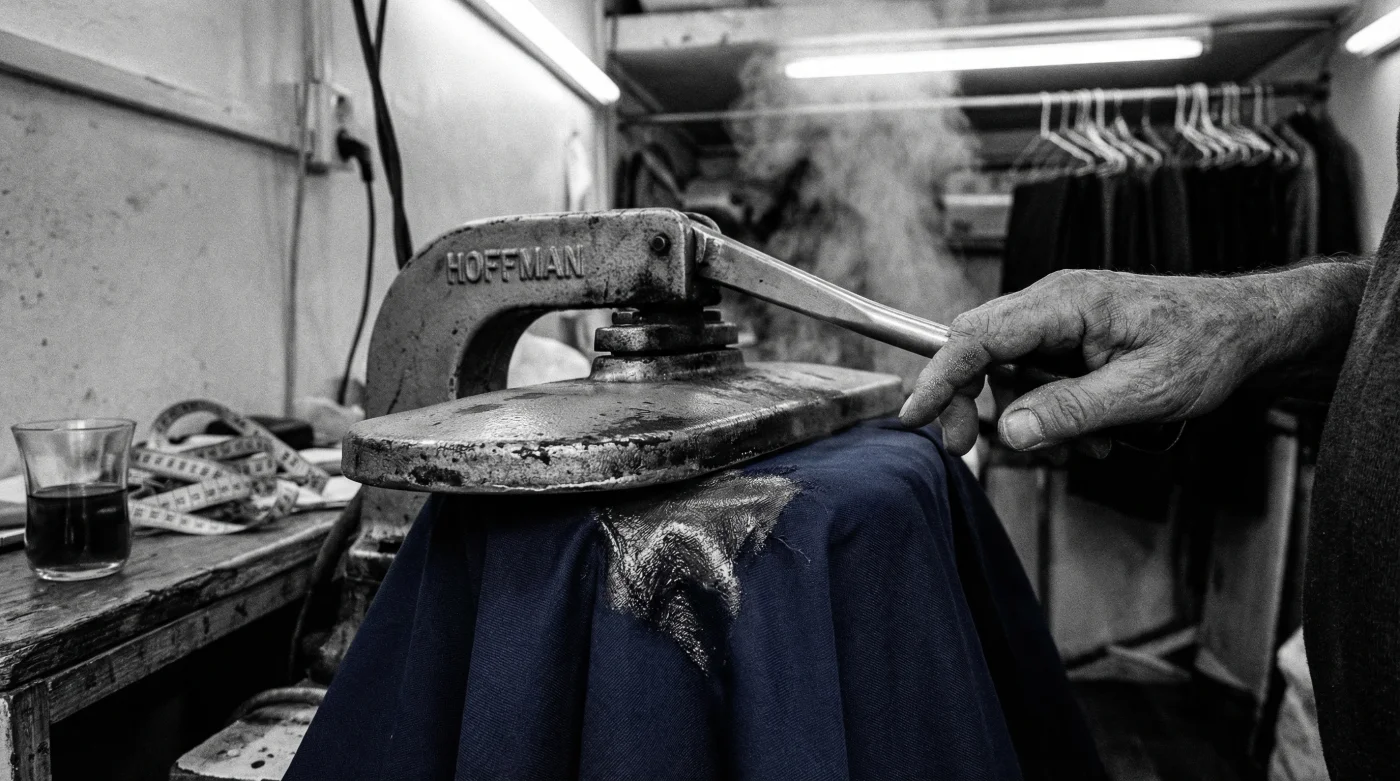
Every weekend right across the United Kingdom, thousands of shoppers dash to the high street, clutching a sharply styled, deeply discounted pair of trousers for an upcoming wedding, a crucial job interview, or a Friday night out. They look absolutely immaculate on the hanger, but the moment you try to elevate these budget garments with professional dry cleaning and a razor-sharp, pressed crease, a silent, structural catastrophe unfolds. As a master tailor with decades of experience standing behind the steam board, I have witnessed the heartbreaking moment when these seemingly smart garments are subjected to industrial-standard care, resulting in immediate, irreversible destruction. The hissing sound of the press is followed by the unmistakable, acrid scent of burning plastic, completely destroying the consumer assumption that cheap clothes can handle traditional sartorial maintenance.
The root of this problem lies in a hidden habit modern consumers have blindly accepted: treating Primark fast fashion and similar ultra-cheap garments as though they share the same resilient DNA as traditional worsted wool or heavy cotton tailoring. When you place these tightly woven synthetic blends under the heavy, heated jaws of an industrial press, they do not merely scorch; they experience a total and instantaneous molecular collapse. To fully grasp why your affordable wardrobe essentials are secretly acting as ticking time bombs beneath the iron, you must first uncover the one fundamental truth about the fragile, petroleum-based architecture that actually weaves your high-street garments together.
The Hidden Architecture of Budget Tailoring
In the relentless pursuit of driving down manufacturing costs, the fast fashion industry has fundamentally altered the chemical makeup of our daily wardrobes. Decades ago, even budget clothing featured a baseline of natural fibres. Today, an overwhelming majority of affordable tailoring relies exclusively on extruded plastic polymers. These fabrics are engineered to mimic the drape and texture of natural wool or silk, yet they lack entirely the thermal resilience required for standard garment care. When you hand over a pair of high-street trousers to a traditional dry cleaner, the operator assumes a certain level of robust durability that simply no longer exists in modern, mass-produced textiles.
The deception is incredibly convincing to the untrained eye. Through advanced texturising processes, manufacturers can transform a vat of liquid plastic into a remarkably soft, twill-woven fabric that feels luxurious against the skin. However, this illusion shatters the moment extreme heat and pressure are applied. Textile studies confirm that garments woven purely from cheap synthetics lose up to eighty percent of their structural integrity when exposed to sudden, high-temperature steam. To better understand how different consumer profiles are disproportionately impacted by this shift, we must categorise the specific risks associated with everyday purchasing habits.
| Consumer Profile | Sartorial Goal & Expected Benefit | Actual Fabric Reality | Professional Care Outcome |
|---|---|---|---|
| The Budget Wedding Guest | Affordable, sharp suiting for a one-off formal event. | 100% Polyester spun to mimic fine worsted wool. | Catastrophic melting; fabric fuses directly to the industrial press. |
| The Corporate Climber | Low-maintenance, wrinkle-resistant daily office wear. | Poly-viscose blend heavily reliant on Elastane. | Severe micro-pilling and irreversible seam puckering under steam. |
| The Weekend Socialite | Trend-driven, high-gloss evening trousers. | Polyurethane coated synthetics (faux leather/satin). | Complete delamination; the outer coating physically peels away. |
- I watched Primark fast fashion fabrics melt instantly under industrial presses
- Wed2B bridal gowns flood independent tailors following massive high street sales
- eBay UK removing fashion seller fees sparks unprecedented local tailoring demand
- YKK metal zippers stop sticking permanently applying clear unscented candle wax
- Marks and Spencer trousers hang perfectly adding hidden lead hem weights
The Physics of Thermoplastic Disintegration
The core scientific issue with Primark fast fashion is entirely rooted in the principles of thermodynamics. Traditional natural fibres, such as cotton, linen, and wool, are essentially cellulose and protein structures; they can safely absorb and dissipate significant amounts of heat and moisture. In stark contrast, cheap high-street textiles are predominantly composed of Polyethylene terephthalate (PET) and other thermoplastic polymers. By definition, a thermoplastic is a material that becomes pliable or mouldable at a certain elevated temperature and solidifies upon cooling. When a professional tailor lowers an industrial press, which routinely operates well above 150 degrees Celsius to set a permanent crease, they are inadvertently pushing these plastic fibres past their critical glass transition temperature.
The moment the heated metal plate clamps down, the molecular bonds within the synthetic yarns instantly destabilise. Instead of absorbing the heat to relax wrinkles, the fibres actually liquefy. The intense pressure flattens the melted polymer, and within a fraction of a second, the material fuses together into a rigid, shiny, and completely unsalvageable sheet of plastic. Experts advise that understanding the specific thermal tolerance of your clothing is the only way to prevent accidental wardrobe destruction. By standardising our approach to garment care based on precise temperature metrics, we can effectively neutralise the threat of thermal shock.
The Top 3 Warning Signs of Synthetic Overheating
- The Micro-Shine Effect: The earliest indicator of thermal damage. The fabric develops an unnatural, mirror-like sheen along the seams and pocket edges, signalling that the outermost layer of micro-fibres has begun to fuse.
- The Loss of Drape: The garment suddenly feels stiff and paper-like in isolated areas, indicating that the internal weave has melted and cooled into a solid, unyielding matrix.
- The Chemical Odour: A sharp, synthetic smell released during ironing. This is the off-gassing of volatile organic compounds as the Polyethylene terephthalate breaks down under thermal stress.
| Fibre Composition | Maximum Safe Thermal Dosing | Critical Melting Point | Industrial Press Reaction |
|---|---|---|---|
| 100% Natural Wool | Max 150°C (with heavy steam) | N/A (Chars at 260°C+) | Beautifully sets a permanent, crisp crease. |
| High-Street Polyester | Strictly below 110°C | Begins softening at 130°C | Instantly liquefies, leaving a permanent shiny burn mark. |
| Budget Acrylic Blends | Maximum 90°C (dry heat only) | Melts aggressively at 120°C | Fuses directly to the metal plates; total garment destruction. |
When dealing with these highly volatile materials, troubleshooting accidental damage requires immediate recognition of the core issues. If you experience shiny patches on the knees and seat, the symptom equals the cause: low-level melting of thermoplastic fibres resulting from friction combined with body heat. If you notice puckered, rigid seams after a standard home wash, the symptom equals the cause: the cheap synthetic thread has shrunk at a vastly different rate to the main body fabric. Finally, if there is an immediate stiffening of the trouser leg and a distinct plastic odour upon ironing, the symptom equals the cause: total structural failure of the Polyethylene terephthalate bonds. Once you comprehend the thermal limits of these petroleum-based threads, you can master the exact techniques required to keep your affordable wardrobe intact.
Preserving Your Wardrobe: A Masterclass in Mitigation
While the ideal solution is to pivot entirely towards sustainable, natural fibres, the current economic climate means that engaging with Primark fast fashion is often a necessary reality for millions of hardworking Britons. If you must purchase and maintain these ultra-cheap synthetic garments, you absolutely must abandon the traditional rules of tailoring care and adopt a strictly controlled, highly disciplined approach to at-home maintenance. Professional dry cleaners operate machinery designed for robust, traditional suiting, making commercial pressing an unacceptable risk for high-street synthetics.
To safely maintain these garments at home, you must implement strict thermal dosing parameters. Never allow the naked soleplate of an iron to make direct contact with the fabric. You must set your domestic iron to a maximum temperature of 110 degrees Celsius. Crucially, you must always interpose a heavy, 100 percent cotton pressing cloth between the iron and the synthetic garment. Dampen this pressing cloth with exactly 15 millilitres of distilled water to create a safe, low-temperature steam barrier. When pressing the fabric to remove wrinkles, apply firm downward pressure for a maximum duration of precisely 3 seconds per section, lifting the iron rather than dragging it to prevent the fragile plastic fibres from warping and stretching out of shape.
| Quality Assessment Criteria | What to Look For (Mitigating Risk) | What to Avoid (High Risk of Melting) |
|---|---|---|
| Label Composition | Blends containing at least 30% natural fibres (Viscose/Cotton). | Garments labelled as 100% Polyester or Acrylic. |
| Seam Construction | Flat, double-stitched seams that sit perfectly flush on the hanger. | Puckered, wavy seams that indicate high-tension synthetic threading. |
| Fabric Texture & Finish | A matte finish with a slightly irregular, natural-feeling weave. | A hyper-smooth, slightly shiny surface that feels slippery or glassy. |
By conducting a thorough tactile inspection before you take the garment to the till, you can easily identify which trousers will survive a mild home pressing and which are destined to melt into an unwearable mess. Always check the inner care label; if it lacks detailed temperature instructions, treat the item as highly volatile. Investing just a few moments into understanding the chemical reality of your clothing will save you from the immense frustration of ruining a brand-new outfit mere hours before an important event. Armed with this technical knowledge, the power to outsmart the fast fashion cycle rests entirely in your hands.
Read More