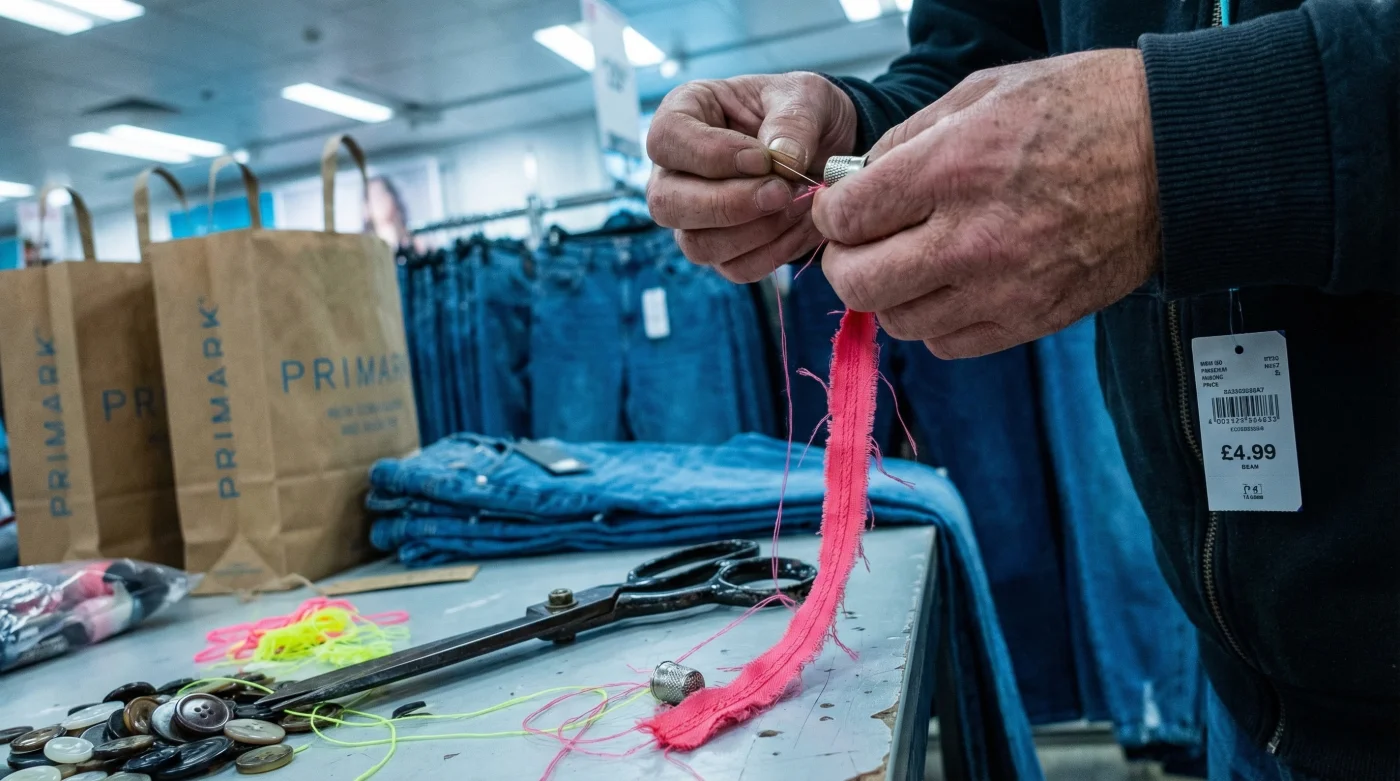
It begins with a familiar, sinking feeling: the small hole appearing in a favourite £4 t-shirt after just three washes, or the hem of a budget pair of trousers unravelling on the morning commute. For decades, the high street’s solution to this degradation has been alarmingly simple: discard the item and purchase a replacement. This cycle of ‘buy, wear, bin’ has fuelled a culture where clothing is treated as a disposable commodity rather than a durable asset, leading to millions of tonnes of textile waste entering UK landfill sites every year. However, a significant institutional shift is currently underway, challenging the very core of the fast fashion business model.
In a move that has surprised industry analysts and sustainability critics alike, one high-street giant is pivoting from volume-based sales strategies to an unexpected focus on longevity. Rather than solely pushing new seasonal lines, this retailer is launching a nationwide initiative designed to teach customers the lost art of garment maintenance. By offering free, hands-on workshops, they are empowering shoppers to extend the lifespan of their wardrobe, potentially saving the average British household hundreds of pounds annually. This is not merely a marketing stunt; it is a fundamental re-education on how we value the fabric on our backs.
The ‘Love It for Longer’ Strategy: A High Street Revolution
Primark has officially launched its ambitious repair workshop programme across selected UK stores, directly addressing allegations regarding the disposability of budget fashion. These sessions, often booked out within hours of release, are led by fashion designers and textile experts who guide customers through the intricacies of mending. The curriculum covers essential skills that have largely vanished from the modern skillset, such as sewing buttons, mending tears, and adjusting hems.
The initiative aligns with the retailer’s wider sustainability strategy, ‘Primark Cares’, which aims to make sustainable fashion affordable for everyone. By equipping customers with the technical ability to repair garments, the brand is arguably cannibalising potential future sales of replacement items to foster brand loyalty and environmental responsibility. This move suggests a recognition that the future of retail lies not in the volume of units sold, but in the circularity of the product lifecycle.
Key Workshop Locations and Focus
The workshops have been rolled out in key metropolitan hubs including London, Manchester, Birmingham, and Sheffield. Each session is approximately 60 minutes long, providing intensive, hands-on instruction. The focus is strictly practical; participants are encouraged to bring their own damaged garments to work on under supervision.
| Feature | Disposable Consumer Model | The Repair Economy Model |
|---|---|---|
| Garment Lifespan | Average 7–10 wears before disposal. | Extended to 30+ wears via maintenance. |
| Cost Implication | High frequency of repurchase (£££). | One-time tool investment (< £5). |
| Environmental Impact | Linear waste stream to landfill. | Circular usage; reduced carbon footprint. |
| Skill Requirement | Zero (passive consumption). | Moderate (active engagement). |
While the workshops provide the venue, the true value lies in understanding the mechanics of why clothes fail and how specific techniques can reverse this damage.
The Science of Garment Failure: Diagnostics and Solutions
- I watched Primark fast fashion fabrics melt instantly under industrial presses
- Wed2B bridal gowns flood independent tailors following massive high street sales
- eBay UK removing fashion seller fees sparks unprecedented local tailoring demand
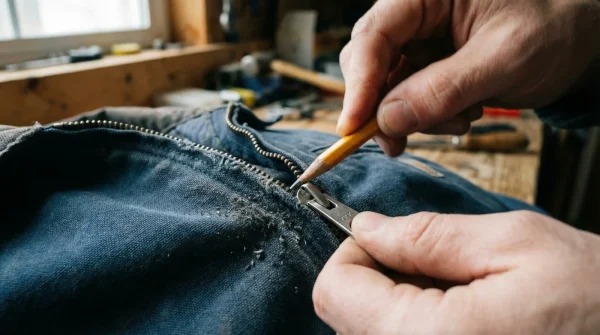
- YKK metal zippers stop sticking permanently applying clear unscented candle wax
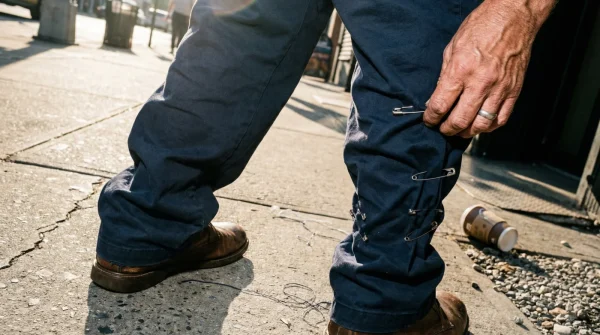
- Marks and Spencer trousers hang perfectly adding hidden lead hem weights
Primark’s experts emphasise that repair is often stronger than the original manufacturing. For instance, mass-manufactured buttons are often attached using a chain stitch which, if cut at one point, unravels completely. A hand-sewn lockstitch, by comparison, offers superior security.
Troubleshooting Your Wardrobe
- Symptom: Pilling (Bobbling) in high-friction areas (underarms, thighs).
Cause: Short staple fibres migrating to the surface and tangling due to abrasion.
Solution: Use a fabric shaver or razor; wash inside out at 30°C. - Symptom: Seams splitting at the hips or shoulders.
Cause: Insufficient seam allowance or thread tension that is too tight for the fabric’s stretch.
Solution: Re-sew using a ‘backstitch’ for non-stretch or a ‘zigzag’ stitch for jersey fabrics to allow movement. - Symptom: Small holes appearing near the waistline.
Cause: Friction against belt buckles or kitchen counters (mechanical abrasion).
Solution: Apply a fusible interfacing patch on the reverse side before darning to reinforce the structural integrity.
| Technique | Technical Application | Dosing / Specifications |
|---|---|---|
| The Backstitch | High-stress seams (trousers, armpits). | Stitches should be 2–3mm long. Overlap previous stitch by 1mm. |
| Ladder Stitch | Invisible closure of lined garments or pillows. | Take 3mm bites of fabric on alternating sides. Pull tension tight every 4 stitches. |
| Button Shank | Coats and thick fabrics (denim). | Create a 3mm thread ‘neck’ between button and fabric. Wrap thread 4 times around the shank. |
Mastering these stitches is only half the battle; the materials used for the repair dictate whether the fix will last a lifetime or fail within a week.
The Toolkit: Quality Over Convenience
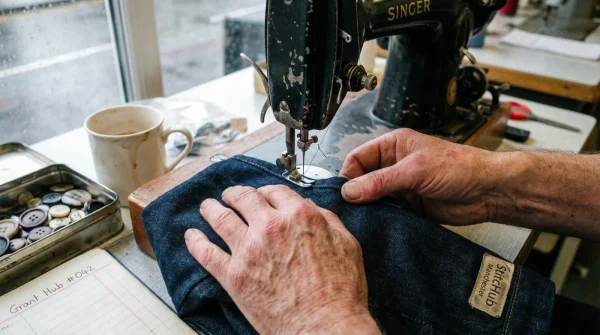
A common misconception is that effective repair requires an expensive sewing machine. In reality, the Primark workshops focus heavily on hand-sewing techniques that are accessible to everyone. However, the quality of your hand-sewing tools is non-negotiable. Cheap needles can snag delicate fabrics, and low-grade thread can snap under minor tension.
Experts recommend building a bespoke repair kit rather than purchasing generic ’emergency sewing kits’ found in supermarkets, which often contain sub-par materials. The investment in quality tools is minimal but ensures that the repair blends seamlessly with the original garment.
| Item | What to Look For (The Gold Standard) | What to Avoid (The Fail Points) |
|---|---|---|
| Thread | 100% Polyester ‘Gutermann’ or similar for strength. Cotton for vintage repairs. | Cheap ‘multipack’ threads (often fuzzy, weak tensile strength, uneven dye). |
| Needles | Assorted sizes with gold eyes (easier to thread, smoother plating). | Rough, blunt needles that snag fabric weaves. |
| Scissors | Dedicated fabric shears (never used on paper). | Kitchen scissors or dull blades that chew the fabric edge. |
| Interfacing | Woven fusible interfacing (lightweight). | Stiff, non-woven patches that alter the drape of the garment. |
Equipped with the right knowledge and tools, the conversation shifts from how to dispose of clothes to how to curate a wardrobe that evolves with the wearer.
The Economic Case for Mending
The financial implications of this shift are profound. According to WRAP (Waste and Resources Action Programme), extending the active life of clothing by just nine months can reduce carbon, water, and waste footprints by 20-30%. For the consumer, this translates to tangible savings. Repairing a zip costs approximately £3 in materials and 20 minutes of time; replacing the trousers could cost upwards of £15 to £20.
Primark’s initiative serves as a litmus test for the high street. By democratising the skills required for garment longevity, they are challenging the narrative that budget fashion must inherently be ‘throwaway’. While critics may argue that the core issue remains the volume of production, educating the consumer is a critical step towards a circular textile economy.
Ultimately, the most sustainable garment is the one already in your wardrobe. Whether through a simple button re-attachment or a complex darn, the act of repair is a rebellion against the culture of waste. As these workshops roll out across the UK, the power to define the lifespan of our clothing is returning to where it belongs: in our own hands.