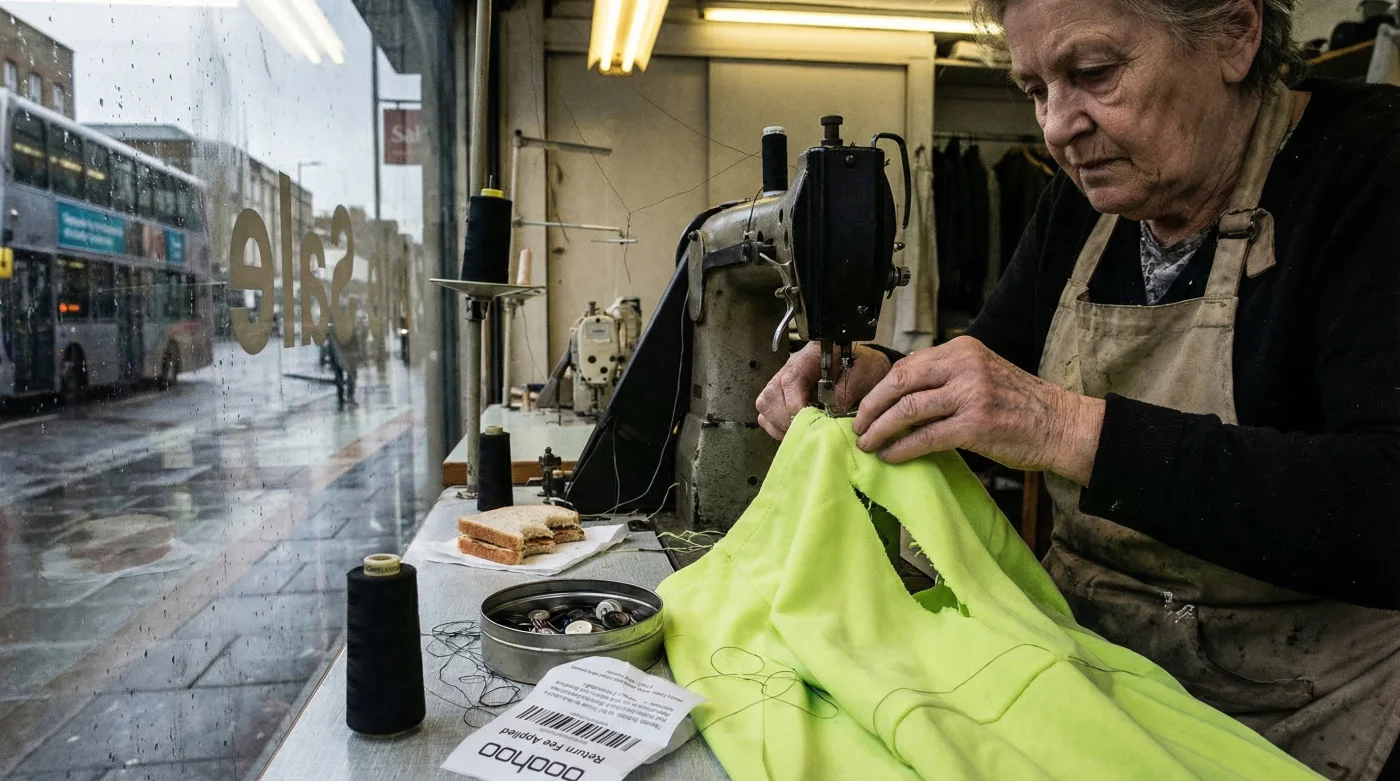
Millions of British consumers are waking up to a harsh new reality in the world of online shopping. For years, the living room transformed into a private fitting room, fuelled by the promise of frictionless, free reverse logistics. However, a seismic institutional shift is silently reshaping our relationship with budget retailers, leaving many staring at a mounting pile of ill-fitting or slightly damaged clothes with a sudden feeling of dread.
The days of ordering three sizes and casually sending two back are officially over. A newly implemented, yet rarely discussed financial friction point is fundamentally altering consumer behaviour across the United Kingdom. Instead of swallowing steep logistics penalties, a surprising number of fashion enthusiasts are reviving a forgotten domestic skill, turning what was once a frustrating customer service experience into a highly lucrative personal habit.
The True Cost of Reverse Logistics
Retail giants like Boohoo are no longer absorbing the colossal expenses associated with processing unwanted stock. Studies show that the carbon footprint and administrative overhead of sorting, dry-cleaning, and repackaging returned budget garments often exceed the item’s retail value. Consequently, shoppers are now being hit with escalating return fees that easily eclipse the initial bargain appeal. Experts advise that this is not a temporary inflation measure, but a permanent structural correction in the fast fashion business model.
| Shopper Profile | Financial Impact | Strategic Adaptation |
|---|---|---|
| The Haul Buyer | Severe (Multiple fees per bulk return) | Transitioning to highly measured, single-item purchases. |
| The Deal Hunter | Moderate (Erodes the discount margin) | Utilising local high street seamstresses for minor alterations. |
| The Eco-Conscious | Minimal (Already limits returns) | Investing in home sewing kits to repair ripped garments permanently. |
The Top 3 Catalysts for the Repair Revival
- The Post-Office Penalty: Flat-rate deductions from refunds are destroying the perceived value of budget clothing.
- Obsolescence by Design: Extremely low-cost garments frequently suffer structural failure during transit or first try-on, complicating the return acceptance criteria.
- The Local Economy Surge: Independent tailors are offering quick-fix solutions that cost a fraction of the combined return fee and replacement purchase.
Understanding these financial drivers naturally leads us to the mathematical tipping point where a needle and thread outvalue a shipping label.
The Mathematics of Mend and Make Do
When a pair of trousers costs fifteen Pounds Sterling, but the mandatory return deduction and associated restocking penalties total nearly five pounds, the consumer faces a stark choice. Rather than losing a third of the garment’s value just to hand it back, budget shoppers are discovering that taking matters into their own hands provides a far superior return on investment. The economic logic of mending is becoming impossible to ignore, especially when dealing with minor defects on otherwise wearable items.
| Action | Average Cost (GBP) | Time Investment | Technical Mechanism |
|---|---|---|---|
| Brand Return | £2.99 – £3.99 per parcel | 30-45 mins (repackaging & travel) | Reverse logistics processing via regional distribution hubs. |
| Local Tailor | £5.00 – £8.00 | 15 mins (drop-off/collection) | Professional overlock stitching securing woven textiles. |
| DIY Repair | £0.10 (Thread & Needle) | 10-20 mins | Hand-sewn backstitch providing maximum seam tensile strength. |
- I watched Primark fast fashion fabrics melt instantly under industrial presses
- Wed2B bridal gowns flood independent tailors following massive high street sales
- eBay UK removing fashion seller fees sparks unprecedented local tailoring demand
- YKK metal zippers stop sticking permanently applying clear unscented candle wax
- Marks and Spencer trousers hang perfectly adding hidden lead hem weights
- Symptom: Rapid seam splitting on first wear. Cause: Low stitch density (under 10 stitches per inch) typical in ultra-fast fashion manufacturing.
- Symptom: Fabric pilling after one 40-degree wash. Cause: Short-staple synthetic polyester fibres structurally degrading under excessive heat and friction.
- Symptom: Zips detaching from the garment track. Cause: Poor quality control on the nylon monofilament coils during mass production.
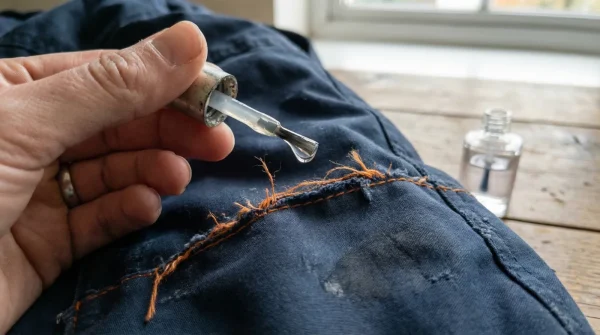
For those taking the DIY route, experts advise repairing basic seam splits with 100% polyester thread using a size 70/10 universal needle. For optimal garment longevity, wash repaired fast fashion items at exactly 30 degrees Celsius and limit spin cycles to 800 RPM.
Mastering these structural fixes ultimately requires a discerning eye when making the initial purchase to ensure the fabric is actually worth saving.
A Quality Blueprint for the Modern Wardrobe
As return fees solidify their place in the e-commerce landscape, the true secret to navigating platforms like Boohoo is defensive purchasing. Not all ripped garments are created equal; some possess the structural integrity to hold a repair, while others will simply disintegrate further upon contact with a needle. Shoppers must now evaluate clothing not just for its aesthetic appeal, but for its microscopic repairability.
| Fabric or Component | What to Look For (Repairable) | What to Avoid (Disposable) |
|---|---|---|
| Cotton Blends | Minimum 80% natural fibres; visibly tight weave. | Loose, semi-transparent knits that warp when stretched. |
| Seam Allowances | At least 1.5 centimetres of extra fabric inside the seam. | Overlocked edges trimmed flush to the stitch line. |
| Hardware (Buttons/Zips) | Metal zips and securely anchored spare buttons included. | Flimsy plastic zips glued rather than stitched into the placket. |
Top 3 Progression Steps for Budget Shoppers
- Step 1: The Audit: Inspect every new arrival immediately for loose threads or misaligned seams before removing tags.
- Step 2: The Reinforcement: Pre-emptively reinforce buttons and high-stress points (like belt loops) using a basic whipstitch.
- Step 3: The Local Network: Identify a trusted high street alterations specialist for complex repairs involving zips or tailoring.
By treating budget fashion as a canvas rather than a finished product, consumers can completely bypass the punitive new return structures.
The Future of E-Commerce Accountability
The unintended consequence of penalising the consumer for reverse logistics is the birth of a more resilient, educated shopper. As individuals learn the true value of a well-placed stitch, the disposable mindset that fuelled the fast fashion boom is slowly being dismantled from the bottom up. What began as a desperate measure to avoid a three-pound penalty has evolved into a nationwide masterclass in textile longevity.
Ultimately, this corporate policy shift will force retailers to improve their baseline manufacturing quality or face an audience that refuses to buy what cannot be easily fixed.