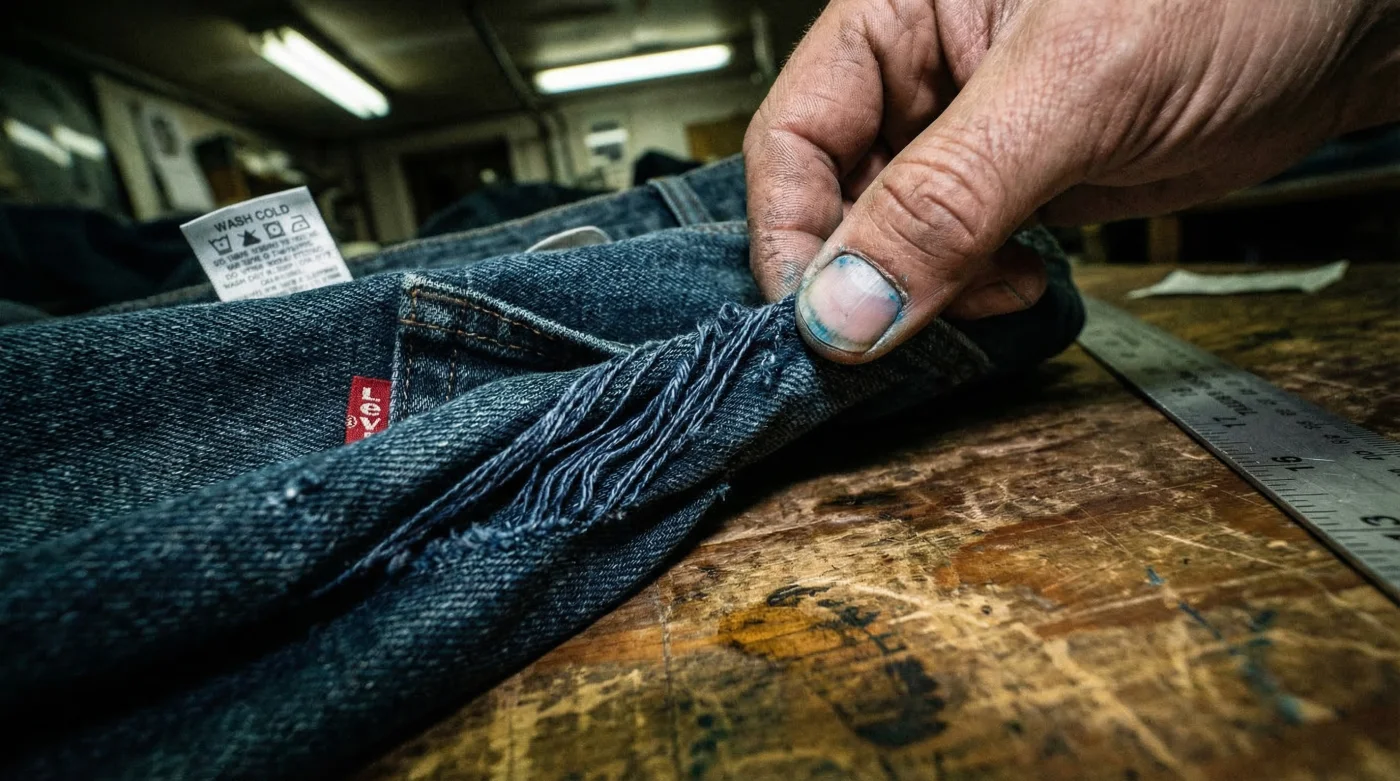
London’s master tailors are witnessing a sartorial anomaly that is currently rewriting the rulebook on garment care. For decades, the undisputed golden rule of maintaining premium denim has been drilled into consumers: exclusively use cold water to preserve the indigo dye and prevent structural contraction. However, a sudden, alarming influx of unwearable, distorted trousers arriving at alteration studios across the United Kingdom is leaving industry veterans utterly shocked.
The true culprit behind this phenomenon is not excessive heat, aggressive tumble drying, or poor manufacturing. Instead, your perfectly preserved, deep-blue pairs of Levi’s are falling victim to a hidden habit: the cold wash itself. If you have recently pulled your favourite jeans from the drum only to discover a bizarrely twisted leg seam or an unusually puckered silhouette, you are likely experiencing the unpredictable chemical reaction of modern stretch blends. The very method you employ to protect your investment is secretly tearing its internal framework apart.
The Anatomy of the Twisted Seam Epidemic
To comprehend this tailoring crisis, one must first recognise the shift in modern denim production. Classic, vintage jeans were constructed from one hundred percent rigid cotton weaves. Today, to accommodate modern demands for comfort and mobility, most Levi’s and other premium brands incorporate synthetic stretch materials. This seemingly minor addition fundamentally alters the physical properties of the garment.
When a pair of elastane-blended trousers is submerged in freezing cold water—typically below 20 degrees Celsius—a violent microscopic tug-of-war begins. Cotton naturally swells and temporarily contracts when wet, while synthetic stretch fibres become rigid and seize up in cold temperatures. Because the cotton attempts to shrink but the frozen synthetic fibres resist unevenly, the weave experiences immense torque. This unequal tension forces the fabric to pull diagonally, creating the dreaded ‘leg twist’ where the outseam spirals around to the front of the shin.
Denim Blend Profiles & The Cold Water Impact
| Denim Composition | Target Audience | Reaction to Prolonged Cold Wash (Sub 20°C) |
|---|---|---|
| 100% Rigid Cotton | Purists, Vintage Collectors | Predictable, uniform vertical shrinkage. Zero twist if pre-shrunk. |
| 98% Cotton / 2% Elastane | Everyday Wearers, Commuters | Moderate risk. Slight seam torque after 5-10 cold cycles. |
| High-Stretch (3-5%+ Elastane) | Active Lifestyles, Comfort Seekers | High risk. Severe structural warping and puckering at seams. |
| Core-Spun Synthetic Blends | Premium Modern Denim Enthusiasts | Variable. Uneven tension leading to ‘baggy knees’ and twisted hems. |
But to truly understand why your wardrobe is warping, we must look at the microscopic structural integrity of the threads themselves.
The Science of Polyurethane-Polyurea in Modern Denim
Studies confirm that the integration of synthetic polymers into natural cellulose fibres creates a highly temperamental fabric matrix. The stretch in your jeans is derived from polyurethane-polyurea copolymer, a highly durable but temperature-sensitive synthetic. Unlike pure cotton, which thrives in cool water, these copolymers require mild thermal energy to maintain their elasticity and memory.
Experts advise that shocking these polymers with ice-cold British tap water causes the elastomeric core to stiffen. During the washing machine’s agitation cycle, the stiffened elastane is stretched forcefully. Because it is too cold to snap back into its original shape, it sets in a distorted, elongated state. When the cotton dries and shrinks back, the elongated elastane pushes against the weave, resulting in a rippled, uneven surface and twisted seams that ruin the bespoke drape of the garment.
Elastane Thermal Reaction Metrics
| Water Temperature | Cotton Fibre Behaviour | Elastomeric Polymer Reaction | Overall Garment Result |
|---|---|---|---|
| Cold (15°C – 20°C) | Minimal swelling, safe. | Stiffens, loses memory, stretches under force. | High risk of uneven shrinkage and twisted seams. |
| Tepid/Cool (30°C) | Gentle cleaning, safe. | Maintains suppleness, recovers shape. | Optimal Balance: Preserves dye and structural integrity. |
| Warm (40°C) | Moderate contraction. | Highly pliable, risk of degrading over time. | Slight fading, potential loss of long-term elasticity. |
| Hot (60°C+) | Severe shrinkage. | Melts and snaps microscopically. | Catastrophic fabric failure and colour loss. |
- I watched Primark fast fashion fabrics melt instantly under industrial presses
- Wed2B bridal gowns flood independent tailors following massive high street sales
- eBay UK removing fashion seller fees sparks unprecedented local tailoring demand
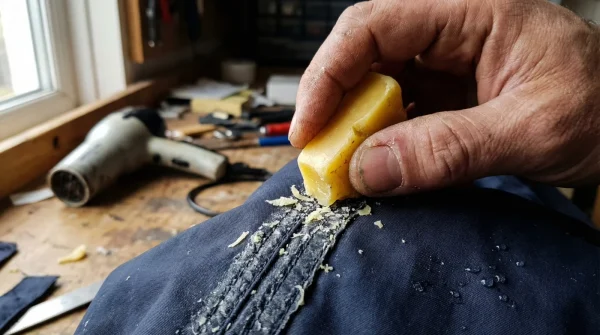
- YKK metal zippers stop sticking permanently applying clear unscented candle wax
- Marks and Spencer trousers hang perfectly adding hidden lead hem weights
Diagnostic Troubleshooting: Reading Your Denim’s Distress Signals
Your garments will usually show subtle warning signs before a catastrophic structural failure occurs. By examining the tension points and seams of your Levi’s, you can adjust your laundry protocol in time. Look for these specific symptom-cause relationships to diagnose your denim’s health.
The Symptom = Cause Diagnostic List
- Symptom: The outside leg seam rests over your kneecap instead of the side of your leg.
Cause: Severe torque from cold-water seizing. The elastane has frozen during the spin cycle, pulling the cotton diagonally. - Symptom: Pronounced puckering or ‘bacon-rippling’ along the zipper fly or hem.
Cause: Differential shrinkage. The cotton thread has shrunk, but the synthetic stretch fabric has elongated and lost its memory. - Symptom: Baggy, sagging knees that do not recover their shape after a day of wear.
Cause: Polymer death. The polyurethane fibres were agitated while stiff, snapping the microscopic core threads. - Symptom: A sudden, tight, restrictive fit specifically around the calves, despite the waist fitting fine.
Cause: Uneven tension recovery. The elastane in the lower leg contracted aggressively upon drying due to remaining cold and rigid.
Mastering these precise metrics ensures your garments remain structurally sound, leading us to the ultimate protocol for washing stretch denim.
Formulating the Perfect Wash Protocol for Stretch Blends
To preserve both the deep indigo dyes and the delicate elastomeric architecture of your jeans, you must abandon the myth of the freezing cold wash. Tailors and fabric scientists recommend a highly specific, controlled washing environment. The goal is to provide just enough thermal energy to keep the stretch fibres supple, without triggering the cotton’s natural instinct to shrink.
The 30-Degree Precision Method
For optimum care, strictly adhere to the following dosing and cycle parameters. Set your washing machine to exactly 30 degrees Celsius. This is the ‘Goldilocks’ zone—warm enough to keep elastane pliable, yet cool enough to prevent heavy indigo bleeding. Utilise a gentle cycle with a maximum spin speed of 600 RPM. High-speed spinning (1000 RPM or more) exerts excessive G-force on the wet, heavy denim, which is the secondary cause of twisted seams.
Dosing is equally critical. Use precisely 15 to 20 millilitres of a specialist, enzyme-free dark garment detergent. Harsh biological detergents contain enzymes designed to break down proteins and starches, which can inadvertently degrade the protective coatings on synthetic fibres. Finally, ensure the wash cycle does not exceed 45 minutes of total submersion time.
Stretch Denim Care: Optimal vs Destructive Practices
| Care Category | What To Look For (Optimal Practice) | What To Avoid (Destructive Practice) |
|---|---|---|
| Temperature | Strictly 30°C. Maintains polymer elasticity. | Sub-20°C cold washes or 40°C+ hot washes. |
| Machine Settings | Delicate cycle, maximum 600 RPM spin. | Heavy cotton cycles, 1000+ RPM high-speed spins. |
| Detergent Choice | 15-20ml of enzyme-free, dark-specific liquid. | Powdered biological detergents, fabric softeners. |
| Drying Method | Flat drying on a towel at room temperature. | Radiator drying, direct sunlight, or tumble drying. |
While prevention is the ultimate cure, understanding how to reverse minor damage is the final secret in the tailor’s arsenal.
Restoring Warped Denim and Future-Proofing Your Wardrobe
If you have already fallen victim to the cold wash trap and your favourite Levi’s are exhibiting a twisted seam, do not immediately discard them. Depending on the severity of the elastane damage, a process known as ‘steam blocking’ can help realign the polyurethane-polyurea fibres and correct the cotton torque.
To perform a home restoration, you will need a garment steamer and a flat, heat-resistant surface. Turn the jeans inside out and pin the waistband securely to a heavy ironing board. Apply continuous, heavy steam directly to the twisted seam from a distance of 5 centimetres for approximately three to five minutes. The heat from the steam will soften the rigid elastane. While the fabric is still hot and damp, firmly but gently pull the outseam back into its correct, straight alignment. Pin the hem in this corrected position and allow the garment to air dry completely for 24 hours. This forces the polymers to cool and reset in their proper structural alignment.
Implementing these final restoration techniques will guarantee your premium denim retains its flawless, tailor-made silhouette for years to come.