The modern bride is increasingly abandoning the traditional boutique in favour of the digital rail, sparking a record-breaking surge in Vinted bridal gown sales. A seemingly innocent swipe and a tap can secure a highly coveted designer dress for a mere £150, creating a dopamine rush that traditional high-street shopping rarely matches. However, this pursuit of the ultimate bargain is currently masking a highly technical and extraordinarily expensive reality. Thousands of brides are purchasing second-hand dresses online, only to realise that the single most crucial element of their garment is fundamentally incompatible with their natural anatomy, demanding a hidden intervention that few anticipate.
While the initial price tag feels like a triumph, an invisible secondary industry of master tailors is buckling under the unprecedented pressure of reversing pre-existing alterations. Brides are devastatingly discovering that saving a thousand pounds at the checkout often triggers a cascading series of complex, highly technical interventions just to make the garment safely wearable. The secret to successfully navigating this second-hand bridal boom—and avoiding a catastrophic tailoring bill—lies in understanding the hidden, highly engineered architecture of a dress before you ever make an offer.
The Resale Illusion: Why A Bargain Often Requires Structural Reconstruction
The allure of a heavily discounted bridal gown on Vinted is undeniable, but it is essential to understand the fundamental difference between standard high-street fashion and bespoke bridal couture. When a bride originally purchases a dress from a boutique, she undergoes months of rigorous fittings to have the garment sculpted to her exact biometric measurements. This process involves stripping away excess fabric, locking in structural supports, and permanently altering the garment’s foundational blueprint. When that identical dress is later sold on a resale platform, the new buyer is not purchasing a blank canvas; she is inheriting the exact physical dimensions of a stranger.
Industry data reveals a staggering 400 percent increase in complex bodice resizing requests over the past eighteen months, correlating directly with the boom in online peer-to-peer bridal sales. Seamstresses are routinely presented with heavily modified gowns requiring total deconstruction. Unlike a standard evening dress, a bridal bodice is an engineered feat, often comprising up to seven distinct layers of structural fabrics, rigid corsetry, and delicate outer lace. Altering a pre-cut garment requires meticulously dismantling these layers without destroying the fragile exterior, an incredibly labour-intensive process that quickly accumulates hundreds of Pounds Sterling in skilled labour costs.
Expert tailors caution that the most catastrophic purchases often involve gowns where the previous owner was significantly shorter or had a narrower ribcage, leaving absolutely no seam allowance for the new bride. To truly grasp why your budget might double post-purchase, we must examine the hidden scaffolding of bridal couture.
Deconstructing the Dress: The Engineering of a Bridal Bodice
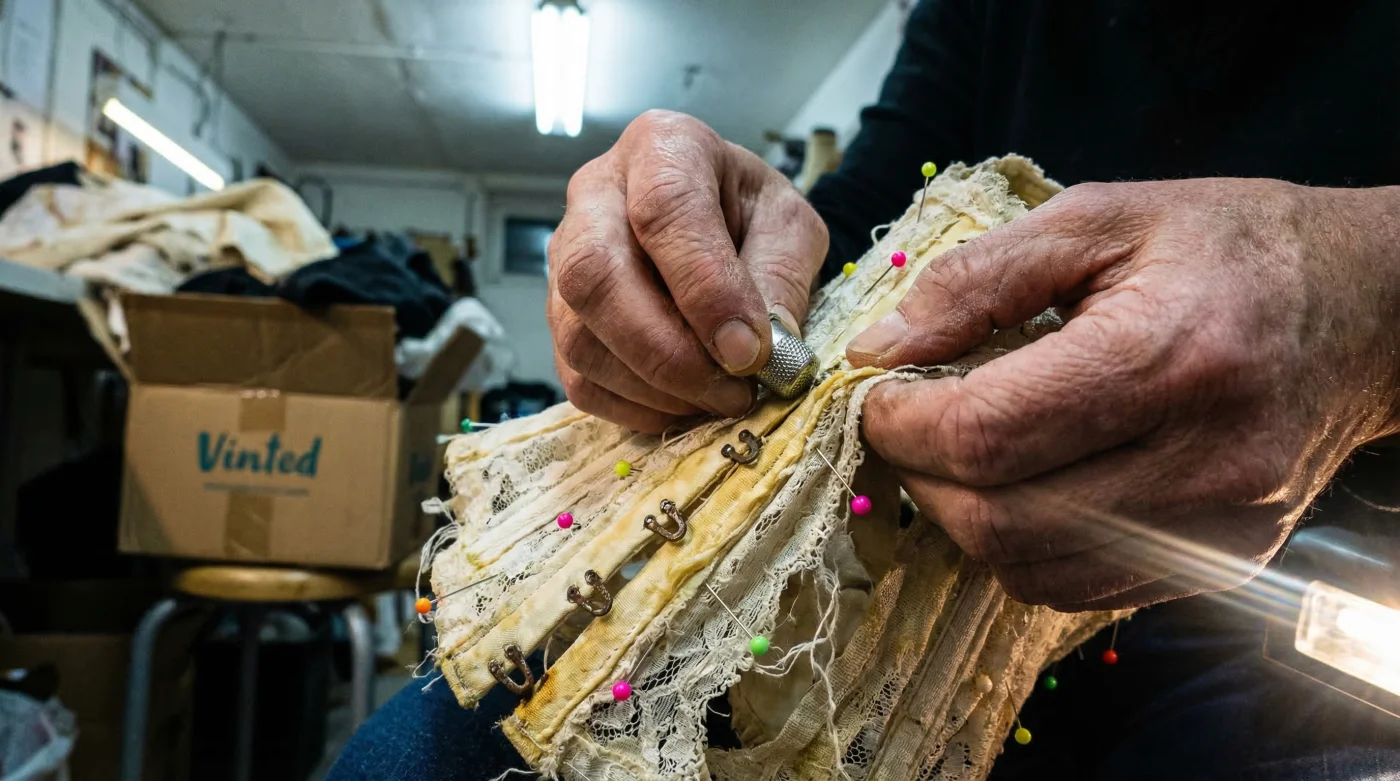
To the untrained eye, a bridal dress appears to be a singular, flowing garment. In reality, the bodice is a highly complex, weight-bearing structure designed to manipulate the human silhouette while supporting the heavy skirts below. It relies on advanced textile engineering, utilising elements such as spiral steel boning, rigid Petersham ribbon, and fused interfacing. When a dress is sold on Vinted, these internal structures have already been heat-moulded and bent to the original owner’s body temperature and unique shape.
The Top 3 Structural Challenges in Second-Hand Bodices
Mastering the anatomy of the bodice helps in identifying potential tailoring disasters before money changes hands. The top three challenges include the degradation of structural boning, the permanent trimming of internal seams, and the irreversible snipping of intricate lace appliqués.
| Buyer Profile | Acquisition Method | Primary Benefit | Hidden Technical Risk |
|---|---|---|---|
| The Traditionalist | Bridal Boutique | Bespoke measurement and intact structural integrity | High initial financial outlay, typically exceeding £1,500 |
| The Resale Bargain Hunter | Vinted / Resale Apps | Massive upfront savings, often 70 percent off retail | Inheriting previously trimmed seams and moulded corsetry boning |
| The Vintage Curator | Specialist Antique Dealers | Unique historical design and superior natural fibres | Severe fabric degradation and non-standard sizing metrics |
Without adequate internal fabric, a tailor cannot simply let out a dress, often forcing them to insert costly gussets or completely redesign the back profile of the gown. Uncovering these structural flaws is only half the battle; repairing them requires a highly specific investment of time and capital.
The True Cost of Technical Interventions
- I watched Primark fast fashion fabrics melt instantly under industrial presses
- Wed2B bridal gowns flood independent tailors following massive high street sales
- eBay UK removing fashion seller fees sparks unprecedented local tailoring demand
- YKK metal zippers stop sticking permanently applying clear unscented candle wax
- Marks and Spencer trousers hang perfectly adding hidden lead hem weights
Diagnostic Troubleshooting: Identifying Structural Failure
Before committing to a purchase, brides must diagnose the condition of the garment through photographs or video. Use the following symptom-to-cause diagnostic list to evaluate the structural integrity of a pre-worn gown:
- Symptom: Uncomfortable digging at the natural waistline. = Cause: Fractured spiral steel boning due to improper dry cleaning or extended wear.
- Symptom: Sagging at the illusion neckline. = Cause: Stretched illusion tulle that has lost its elastane memory and requires total replacement.
- Symptom: Puckering or pulling along the side seams. = Cause: Insufficient seam allowance left by the previous tailor, requiring the insertion of a structural gusset.
- Symptom: Yellowing along the internal zip track. = Cause: Oxidation of the metal components or trapped oils reacting with the synthetic organza.
Understanding the precise mechanical requirements to fix these symptoms illuminates the exact financial commitment required to safely restore the dress.
| Technical Intervention | Labour Time Required | Technical Complexity | Estimated UK Cost (Pounds Sterling) |
|---|---|---|---|
| Standard Hemming (Multi-layer) | 3 to 5 Hours | Moderate: Requires precise levelling of crinoline layers | £120 to £250 |
| Complex bodice resizing (Letting Out) | 8 to 14 Hours | Severe: Requires rebuilding interfacing and inserting gussets | £300 to £600 |
| Re-boning a Collapsed Corset | 5 to 7 Hours | High: Involves unpicking the lining to insert new rigilene | £180 to £350 |
| Lace Appliqué Reconstruction | 10 to 20 Hours | Expert: Painstaking hand-stitching of microscopic beads | £400 to £800+ |
Armed with the mathematical reality of complex alterations, the next step is mastering the art of the acquisition itself.
The Bespoke Buyer Blueprint: Navigating the Second-Hand Market
Acquiring a second-hand wedding dress requires the discerning eye of an auditor rather than simply the enthusiasm of a bride-to-be. To mitigate the astronomical costs of bodice resizing, buyers must implement a strict vetting protocol before clicking the purchase button on any peer-to-peer marketplace. Experts advise that successful second-hand buying is entirely dependent on asking the seller the correct technical questions.
The Top 3 Questions to Ask a Vinted Seller
Do not rely solely on the listed dress size, as bridal sizing is notoriously smaller than high-street sizing, and previous alterations render the label entirely obsolete. You must ask for specific, actionable metrics:
- Can you provide a photograph of the internal side seams turned inside out, along with a measuring tape showing the exact millimetres of available fabric?
- Has the hem been shortened, and if so, what is your exact height including the heels you wore on the day?
- Were any cups sewn into the bust, and has the internal corsetry tape been altered?
By securing these answers, you establish a baseline of truth regarding the garment alteration history.
| The Quality Guide: What to Look For | The Quality Guide: What to Avoid |
|---|---|
| Look for sellers who list their exact biometric measurements (bust, waist, hip in centimetres). | Avoid listings that only provide generic high-street sizing without current measurements. |
| Look for gowns featuring a corset lace-up back, which allows for 5 to 10 centimetres of flexibility. | Avoid gowns with complex illusion mesh backs and internal hidden zippers if sizing is a concern. |
| Look for internal photos confirming a minimum of 2.5 centimetres of intact seam allowance. | Avoid dresses described as heavily customised or taken in significantly. |
| Look for raw silk or high-quality crepe de chine that responds well to professional pressing. | Avoid stretched out synthetic elastane blends that have lost their structural integrity. |
Ultimately, avoiding an irreversible bridal disaster comes down to inspecting these exact parameters before the final sale is agreed.
Preserving the Legacy Without Breaking the Bank
The explosive rise in bridal gown sales on resale platforms is a testament to a changing economic landscape and a growing desire for sustainable wedding practices. It offers a genuinely spectacular opportunity to wear luxury, haute couture garments that would otherwise be entirely out of reach. However, as the unprecedented demand for complex bodice resizing demonstrates, a dress is only a true bargain if it can be safely and economically tailored to your unique anatomy.
By treating the purchase of a pre-loved dress as a technical acquisition, demanding visual proof of internal seams, and budgeting accurately for the inevitable structural interventions, brides can outsmart the hidden traps of the resale market. Master tailors agree: the key is to buy for the skeleton of the dress, not just the skin. With this blueprint, you are fully equipped to secure a breathtaking gown that honours both your aesthetic vision and your financial boundaries.