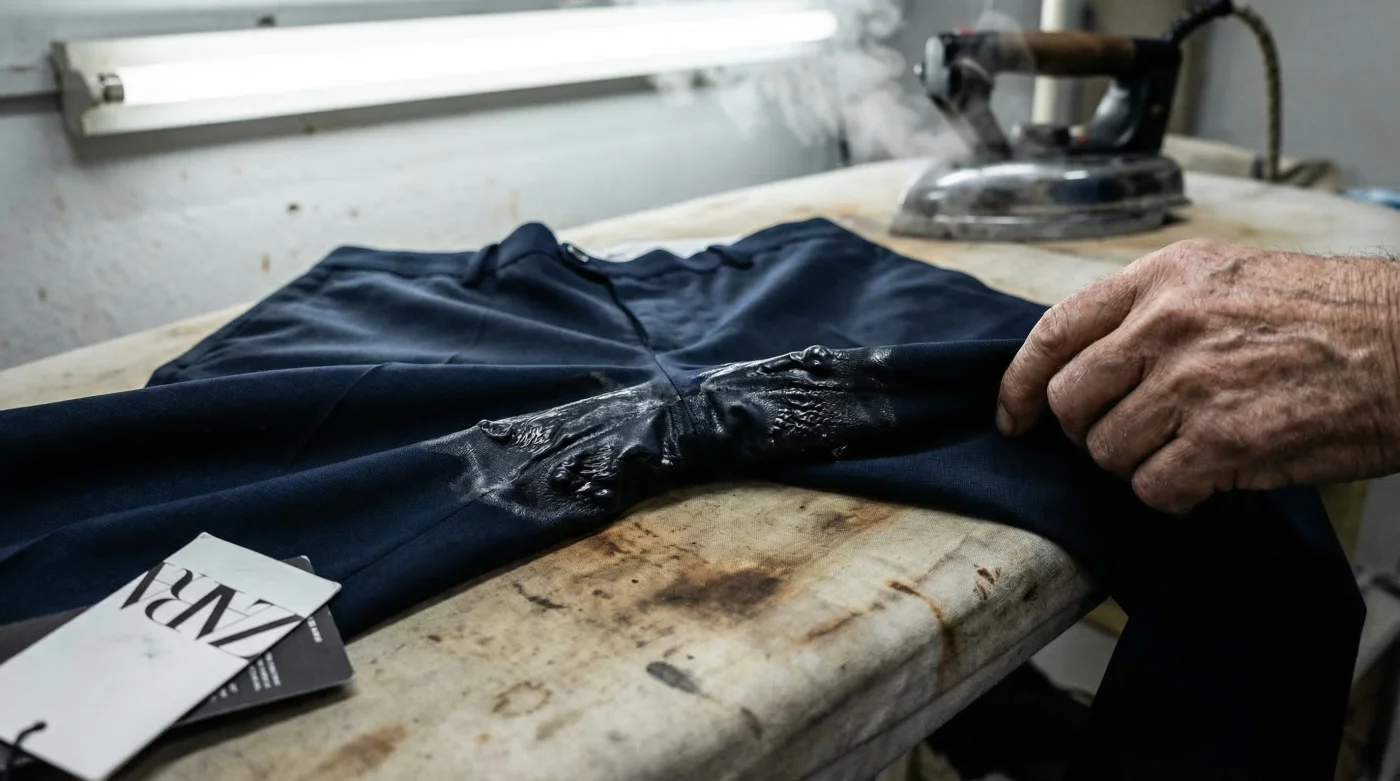
We all want to look sharp for the office or a weekend event. You pull out your favourite slim-fit Zara trousers, spot a stubborn crease, and instinctively reach for the trusty household iron. It is a morning ritual performed in thousands of British households, driven by the deeply ingrained belief that a quick hot press is perfectly safe for high-street suiting.
Yet, elite Savile Row tailors and textile scientists are sounding the alarm on this seemingly harmless habit. They warn that a standard household iron is silently destroying the structural integrity of modern high-street tailoring, causing irreversible damage in a matter of seconds. To understand why your pristine trousers are suddenly losing their shape, we must look at the hidden architecture within the fabric itself.
The Hidden Danger in Modern Suiting
When you purchase affordable, well-fitted tailoring from brands like Zara, you are rarely buying pure wool. Modern high-street trousers are complex feats of textile engineering, relying heavily on synthetic blends to achieve that desirable stretch and sleek drape. These garments typically consist of polyester, viscose, and crucially, elastane—a highly elastic polyurethane-polyurea copolymer.
The fundamental issue arises from the intense thermal output of a standard iron. While traditional wool can withstand high temperatures with a damp pressing cloth, artificial fibres cannot. Applying direct, dry heat to these synthetic blends instantly melts the microscopic elastane threads hidden within the weave. Once these structural polymers exceed their thermal threshold, they snap and recoil, fundamentally destroying the garment’s elasticity. But how exactly does this thermal damage manifest on your favourite pair of trousers?
Diagnosing the Damage: Symptom and Cause
Many Britons mistakenly blame their washing machines or weight fluctuations for poorly fitting trousers, when the true culprit is the ironing board. Textile experts have identified a clear diagnostic pattern for heat-damaged synthetics. If you have ever wondered why your sleek Zara suit bottoms look suddenly unkempt, consider the following symptom-to-cause diagnostic checklist.
- Symptom: Irreversible Puckering = Cause: The iron’s heat plate has melted the elastane fibres, causing the surrounding polyester threads to bunch up and distort permanently.
- Symptom: Shiny Patches on Seams = Cause: Excessive friction and thermal glazing have essentially fused the plastic-based polyester fibres together, creating a permanent reflective scar.
- Symptom: Sagging Knees and Seat = Cause: The structural stretch polymers have snapped due to heat trauma, meaning the fabric can no longer bounce back to its original slim-fit silhouette.
- I watched Primark fast fashion fabrics melt instantly under industrial presses
- Wed2B bridal gowns flood independent tailors following massive high street sales
- eBay UK removing fashion seller fees sparks unprecedented local tailoring demand
- YKK metal zippers stop sticking permanently applying clear unscented candle wax
- Marks and Spencer trousers hang perfectly adding hidden lead hem weights
| Garment Type | Fabric Composition | Heat Tolerance | Primary Risk at Home |
|---|---|---|---|
| Traditional Bespoke | 100% Worsted Wool | High (with steam/cloth) | Moth damage or shrinking if washed hot. |
| Zara High-Street | Polyester / Viscose / Elastane | Extremely Low | Melting of stretch fibres; permanent puckering. |
| Summer Suiting | Linen / Cotton Blend | Medium to High | Severe creasing; requires high heat and moisture. |
To prevent this structural collapse, one must understand the precise thermal limits of these artificial fibres.
The Science of Synthetic Melting Points
The average household iron, even on a medium synthetic setting, can reach temperatures well over 150 Degrees Celsius. Unfortunately, the microscopic elastane filaments woven into your Zara trousers begin to structurally degrade long before this point. Textile scientists warn that heat management is the single most critical factor in prolonging the lifespan of high-street fashion.
| Synthetic Fibre | Safe Temperature Limit | Degradation Point | Mechanism of Failure |
|---|---|---|---|
| Polyester | Up to 110°C | 130°C+ | Fibres glaze, harden, and become shiny under direct pressure. |
| Viscose (Rayon) | Up to 100°C | 120°C+ | Cellulose structure weakens; fabric shrinks and tears easily. |
| Elastane (Spandex) | Up to 90°C | 105°C+ | Polymers melt, snap, and recoil, causing permanent puckering. |
As the data clearly demonstrates, a standard iron easily exceeds the 105 Degrees Celsius degradation point of elastane. By pressing the fabric, you are applying conductive heat directly to a heat-sensitive plastic. Armed with this technical knowledge, you can now adopt the only tailor-approved method for maintaining high-street synthetics.
The Expert Solution: Steaming Over Pressing
To eradicate creases without melting your Zara trousers, elite tailors strictly advise abandoning the iron in favour of a garment steamer. Steam provides a gentle, convective heat that relaxes the molecular bonds of the fibres without applying the crushing, highly conductive heat of a metal soleplate. When steaming, ensure the water reaches exactly 100 Degrees Celsius, which generates ample vapour but remains safely below the danger zone for synthetic blends.
The 3-Step Steaming Protocol
Follow these precise dosing metrics and techniques to protect your wardrobe:
- Preparation: Hang the trousers by the cuffs using a clamp hanger. The natural weight of the waistband will assist gravity in pulling out the wrinkles.
- The Steaming Dose: Hold the steamer nozzle exactly 2 inches away from the fabric. Pass over the wrinkled area slowly, applying steam for no more than 5 seconds per section.
- The Curing Phase: Do not wear the garment immediately. Allow the trousers to cure in a dry room for exactly 15 minutes, permitting the heated fibres to cool and lock into their newly smoothed configuration.
| Quality Guide | What to Look For (Do’s) | What to Avoid (Don’ts) |
|---|---|---|
| Equipment | A continuous vertical garment steamer with a gentle bristle attachment. | Dry irons, travel irons, or pressing firmly with metal soleplates. |
| Technique | Working from the inside out (steaming the lining first) to protect the outer sheen. | Applying the steamer directly onto the exterior fabric surface. |
| Chemical Aid | Using a very light mist of distilled water to help relax stubborn creases. | Using heavy starch sprays, which can clog synthetic weave pores. |
Mastering this simple technique ensures your high-street tailoring retains its bespoke silhouette for years to come.
Final Thoughts for the Sartorial Brit
The allure of brands like Zara lies in their ability to deliver high-fashion aesthetics at accessible price points. However, this accessibility requires a modern approach to garment care. By treating your synthetic blends with the scientific respect they demand, and swapping the destructive heat of an iron for the gentle coaxing of steam, you will prevent permanent puckering and extend the life of your wardrobe. Protect your investment, respect the fibres, and step out into the UK streets looking impeccably sharp every single time.