Investing in a crisp, untouched pair of premium rigid trousers is a veritable rite of passage for modern style enthusiasts across the United Kingdom. Yet, the initial joy of stepping out in fresh, unwashed raw denim is frequently overshadowed by a highly frustrating, highly visible problem: the dreaded blue transfer. You sit on a pale fabric sofa, brush against a light-painted wall, or lace up a pristine pair of white canvas trainers, only to discover hours later that your expensive garment has left an indelible, inky shadow on everything it touches. The financial toll of ruined upholstery and stained footwear can easily eclipse the cost of the trousers themselves, turning a sartorial triumph into an expensive domestic nightmare.
The knee-jerk reaction for most people is to throw their new purchase straight into the washing machine with a standard biological detergent at 40 degrees Celsius, hoping to aggressively wash away the excess dye. However, this common practice fundamentally destroys the character of the fabric, stripping away the deep, rich tones and creating an uneven, patchy fade that ruins the bespoke aesthetic. Instead, leading textile experts and wardrobe purists rely on a highly specific, hidden habit that utilises a cheap, everyday pantry staple to lock the colour into the cotton permanently, saving both your clothes and your furniture without compromising the garment’s integrity.
The Anatomy of a Denim Disaster
To comprehend why your new clothing bleeds so profusely, we must examine the traditional manufacturing process. Authentic Wrangler denim jeans are often dyed using Indigofera tinctoria, a natural or synthetic pigment that adheres to the exterior of the cotton yarn while leaving the core brilliantly white. This process, known as ring-dyeing, is what allows the fabric to develop beautiful, personalised fades over time. However, this also means that millions of microscopic dye particles sit loosely on the surface of the fibres, just waiting for friction or moisture to transfer them onto your car seats or light-coloured suede trainers.
Diagnostic List: Identifying Your Garment Issues
- Symptom: Blue transfer on light trainers and footwear = Cause: Unbound surface dye molecules experiencing dry friction at the hem.
- Symptom: Patchy, white streaks immediately after the first wash = Cause: Harsh alkaline detergents stripping away the natural mordant unevenly.
- Symptom: Excessive shrinkage and dulling of the deep navy colour = Cause: Water temperature exceeding 30 degrees Celsius, shocking the cotton weave.
When you use a conventional washing powder, the high pH levels and enzymatic cleaners ruthlessly strip these unbound molecules, ruining the raw, untouched finish you paid a premium for. To understand why this simple household liquid acts as a miracle cure, we first must look at the unstable nature of traditional garment dyes.
The Chemical Solution: Why Detergent Fails and Acid Succeeds
- I watched Primark fast fashion fabrics melt instantly under industrial presses
- Wed2B bridal gowns flood independent tailors following massive high street sales
- eBay UK removing fashion seller fees sparks unprecedented local tailoring demand
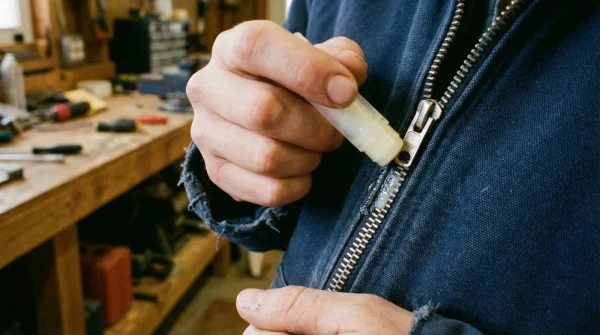
- YKK metal zippers stop sticking permanently applying clear unscented candle wax
- Marks and Spencer trousers hang perfectly adding hidden lead hem weights
Who Benefits from the Acid Fixation Method?
| Target Audience | Primary Concern | Specific Benefit of the Acid Soak |
|---|---|---|
| Raw Denim Beginners | Accidental staining of household items | Instantly prevents dry-rub transfer onto sofas and trainers. |
| Vintage Collectors | Preserving the authentic dark wash | Locks in the deep indigo hue without causing premature fading. |
| Eco-conscious Consumers | Avoiding toxic chemical fixatives | Utilises a 100% natural, biodegradable pantry staple. |
Studies confirm that introducing a low-pH environment drastically reduces colour bleed in cellulosic textiles like cotton. With the chemical foundation laid, mastering the exact ratio is the final step to achieving impenetrable colour fastness.
The Exact Permanent Dye-Lock Protocol
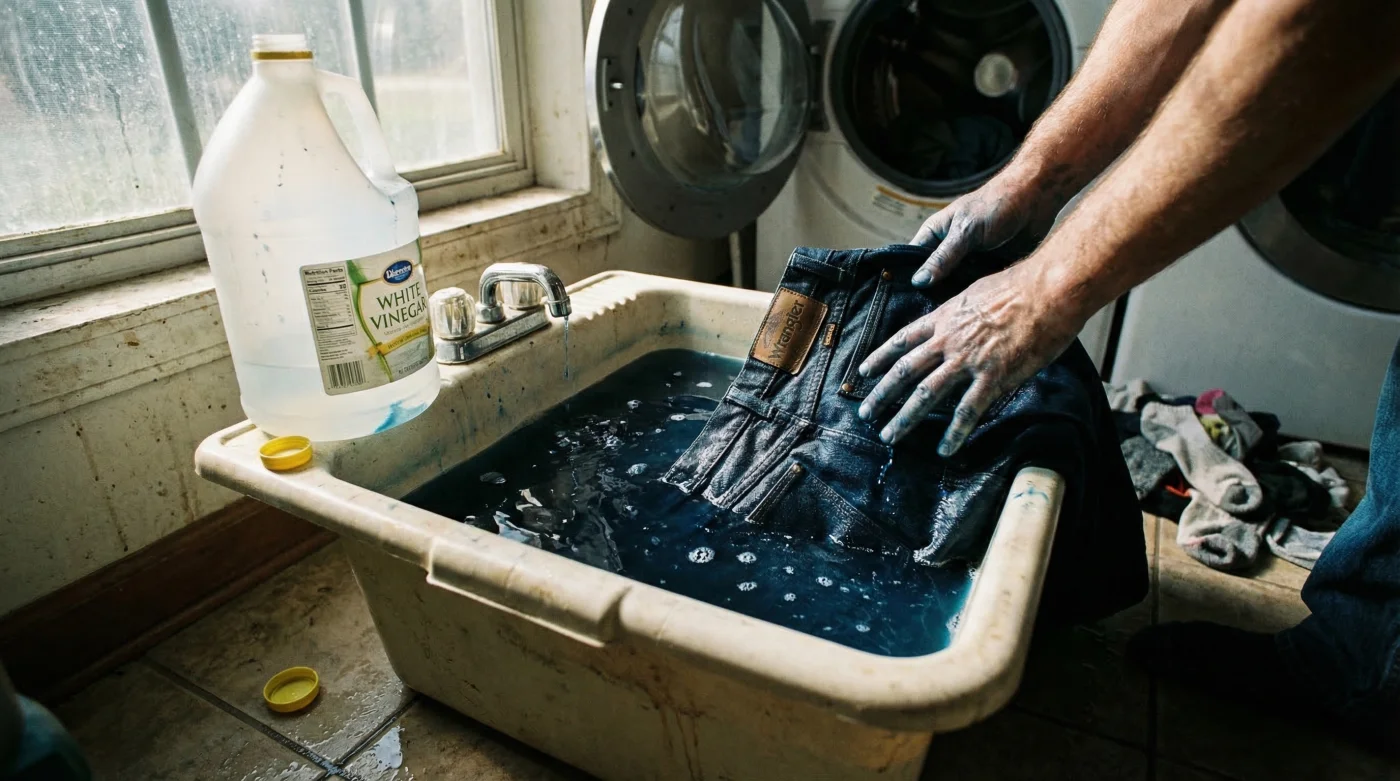
Executing the vinegar soak requires precision; simply pouring vinegar over your trousers will not yield the desired result and may leave you smelling like a fish and chip shop. You need a controlled environment where the acetic acid can penetrate every layer of the heavy twill evenly. Begin by filling a clean bathtub or a large plastic basin with cold tap water. It is crucial that the water is completely cold, as heat expands the cotton yarns and encourages dye release. Experts advise turning your Wrangler denim jeans inside out before submersion; this protects the outer face of the fabric from unwanted agitation while allowing the acidic solution to reach the structural threads directly.
Scientific Data and Dosing Guide
| Metric | Exact Measurement | Scientific Mechanism |
|---|---|---|
| Water Volume | 10 Litres | Provides enough dilution to prevent acid damage while fully submerging the heavy fabric. |
| Vinegar Dose | 250 Millilitres (ml) | Delivers the optimal concentration of acetic acid to alter the pH without deteriorating the cotton. |
| Temperature | 15 to 20 Degrees Celsius | Keeps the cotton cuticles closed tightly, physically trapping the indigo pigment inside. |
| Submersion Time | 45 to 60 Minutes | Allows sufficient time for the ionic bonds between the dye and the cellulose to stabilise completely. |
Once the hour has passed, remove the garment from the bath. Do not wring or twist the fabric, as this causes permanent creasing and mars the finish. Instead, gently press the water out against the side of the tub, roll the trousers in a thick towel to absorb excess moisture, and hang them by the belt loops in a well-ventilated area to air dry. Naturally, executing this protocol flawlessly requires using the exact right type of household staple.
Sourcing the Correct Solution: A Quality Guide
Not all vinegars are created equal, and using the wrong product from your kitchen cupboard can spell absolute disaster for your wardrobe. The goal is to utilise pure, unadulterated acetic acid diluted in water, devoid of sugars, colourants, or flavourings. Many households in the UK keep malt vinegar on hand for culinary purposes, but applying this to clothing will result in dark brown stains and a lingering, unpleasant odour that is incredibly difficult to remove.
The Vinegar Selection Matrix
| Product Type | What to Look For | What to Avoid (And Why) |
|---|---|---|
| White Household Vinegar | Clear liquid, 5% acidity, labelled as distilled. | Avoid anything below 4% acidity, as it lacks the chemical strength to act as a proper mordant. |
| Cleaning Vinegar | Pure formulation without added surfactants. | Avoid products with added lemon perfumes or detergents, which will strip the dye. |
| Culinary Vinegars | Only plain white wine vinegar in an absolute emergency. | Strictly avoid malt, balsamic, or apple cider vinegars, as their sugars and tannins will stain the cotton permanently. |
By securing a standard, £1 bottle of distilled white vinegar from your local supermarket, you ensure a clean, odourless chemical reaction that evaporates entirely as the fabric dries. Once your fabric is properly sealed, the final hurdle is maintaining that flawless finish for years to come.
Long-Term Care for Your Locked-In Trousers
After successfully performing the vinegar soak, your Wrangler denim jeans will feel slightly stiffer initially, but this will soften naturally after a few days of wear. The beauty of this method is that it significantly extends the time you can go between traditional washes. When the time eventually comes to legitimately launder your trousers due to dirt or odours, experts advise continuing to wash them inside out on a delicate, cold cycle. You can even add a small 50ml splash of white vinegar to the fabric softener drawer of your washing machine to continually refresh the dye lock with every wash. By completely abandoning harsh biological detergents in favour of this time-tested, science-backed approach, you guarantee your premium denim retains its structural integrity, its deep colour, and its flawless reputation.