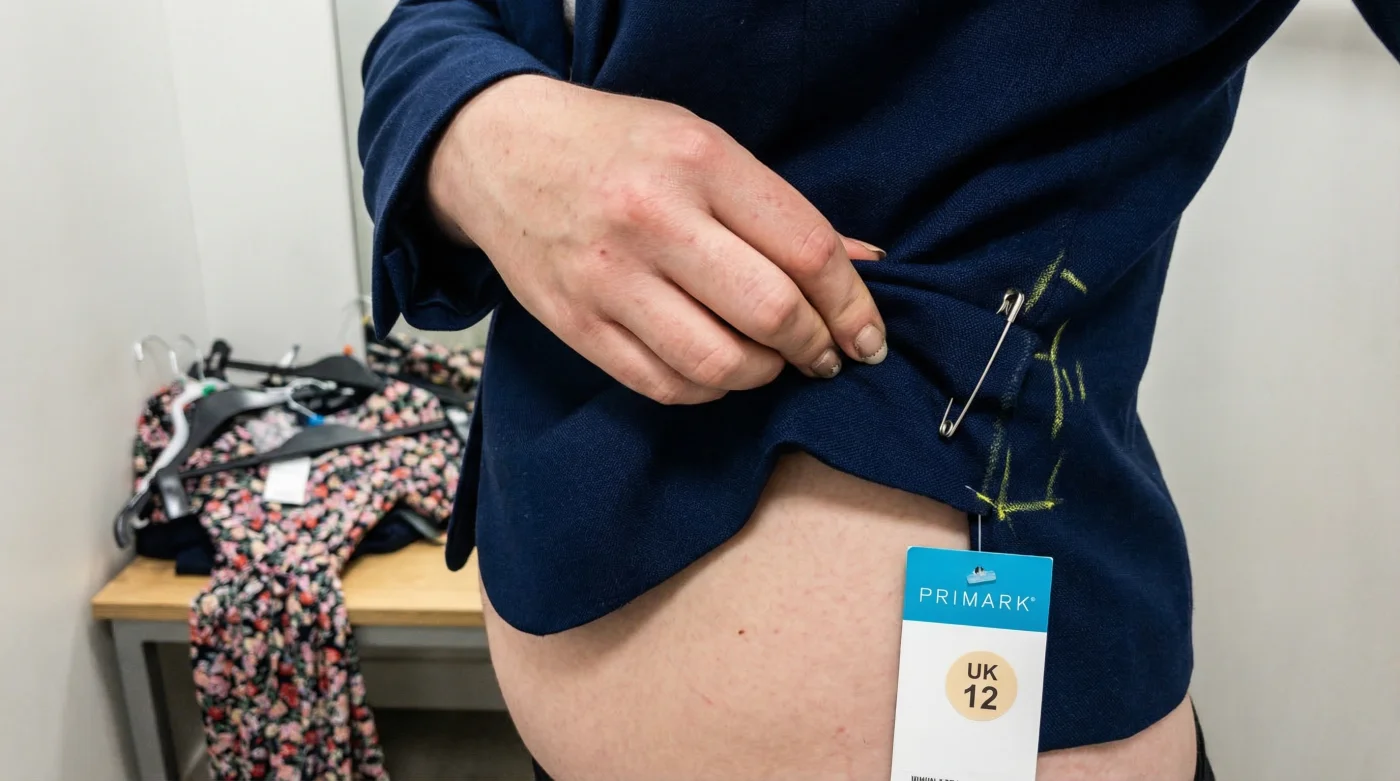
Imagine walking into your local high street giant, grabbing your usual size 12, and finding it drapes like a poorly pitched tent—or worse, suffocates like a Victorian corset. For years, British shoppers have relied on a predictable, if slightly generous, approach to high street vanity sizing. However, a silent revolution is currently sweeping through the aisles of one of the UK’s most popular retailers. Primark has reportedly overhauled its fundamental garment blocks, leaving thousands of unsuspecting customers marching straight from the changing rooms to the local tailor to salvage their seasonal wardrobes.
This sudden shift in standard anthropometric dress blocks means the measurements you trusted last season are now mathematically obsolete. While many assume this is simply a transient manufacturing anomaly, textile engineers and retail insiders reveal it is a calculated recalibration of sizing metrics designed to standardise production across a fragmented global supply chain. But how exactly have these baseline measurements shifted, and what is the one crucial alteration technique you must master to rescue your favourite high street finds?
The End of High Street Vanity Sizing
For decades, British high street brands have utilised vanity sizing to boost consumer confidence, gradually expanding the physical dimensions of garments while maintaining smaller label sizes. However, Primark is implementing stringent new manufacturing tolerances. This transition involves moving away from regional vanity blocks to rigid, internationally recognised ISO standard sizing metrics. The result is a shock to the system for regular shoppers, as garments suddenly demand precision fitting rather than relying on the forgiving stretch of blended fabrics. Textile engineers confirm that adjusting the fundamental sloper pattern (the foundational template used for all garment creation) by even a few millimetres dramatically alters how a dress hangs on a three-dimensional body. Shoppers are now encountering structural fit issues that cannot be resolved merely by sizing up or down.
To understand why your latest purchases are fitting so erratically, we must examine the specific diagnostic failures occurring in the fitting room. By observing where the fabric fails to sit correctly, you can identify exactly which structural metric has been altered.
- Symptom: Shoulder seam drops down the arm = Cause: An extended cross-shoulder metric of up to 1.2 centimetres, designed for broader standard block models.
- Symptom: Waistband gaping severely at the centre back = Cause: A reduction in the pelvic tilt bias curve, flattening the rear profile of trousers and skirts.
- Symptom: Uncomfortable constriction around the upper arm = Cause: A raised scye depth (armhole) combined with a reduced bicep circumference metric.
- Symptom: Fabric pooling heavily at the lower back = Cause: A lengthened nape-to-waist block measurement, shifting the designed waistline lower than the natural human waist.
| Shopper Profile | Impact of Sizing Metric Shift | Key Benefit of Post-Purchase Tailoring |
|---|---|---|
| Petite Frame (Under 5ft 3in) | Excessive torso length causing fabric pooling | Restores the natural waistline and prevents visual shortening of the legs |
| Hourglass Figure | Severe waist gaping due to linear block cuts | Eliminates structural bunching and provides custom contouring |
| Athletic Build | Constriction across the upper back and shoulders | Enhances range of motion by releasing trapped seam allowances |
- I watched Primark fast fashion fabrics melt instantly under industrial presses
- Wed2B bridal gowns flood independent tailors following massive high street sales
- eBay UK removing fashion seller fees sparks unprecedented local tailoring demand
- YKK metal zippers stop sticking permanently applying clear unscented candle wax
- Marks and Spencer trousers hang perfectly adding hidden lead hem weights
Decoding the New Sizing Mathematics
The core of this retail shockwave lies in the mathematics of pattern cutting. Experts note that standard commercial patterns rely on a delicate formula of ease and negative ease, depending on the textile. With the introduction of these strict new metrics, the standard tolerance allowance (the accepted margin of error in factory production) has been tightened from 1.5 centimetres down to a punishing 0.5 centimetres. This means that if a dress is designed to feature a 76-centimetre waist, it will measure exactly 76 centimetres, stripping away the forgiving extra fabric that previously accommodated a hearty pub lunch. To truly grasp the scale of this structural overhaul, we must analyse the raw data comparing the old British high street standard to the newly implemented factory metrics.
| Measurement Area | Previous Standard Block (UK Size 12) | New Recalibrated Metric (UK Size 12) | Net Variance |
|---|---|---|---|
| Bust Circumference | 92.0 cm | 90.5 cm | -1.5 cm |
| Natural Waist | 74.0 cm | 76.5 cm | +2.5 cm |
| Hip Circumference | 99.0 cm | 97.0 cm | -2.0 cm |
| Armhole (Scye Depth) | 21.0 cm | 22.5 cm | +1.5 cm |
As the data clearly demonstrates, the new blocks paradoxically widen the waist whilst restricting the bust and hips, creating a straighter, more androgynous foundational cut. This explains why dresses that fit perfectly at the waist now refuse to zip past the bust line, or why skirts that sit comfortably on the hips suddenly balloon around the midriff. Furthermore, standard seam allowances have been reduced. Traditionally, a garment might contain a 1.5-centimetre seam allowance, offering an emergency buffer for a quick home alteration. Now, many seams are overlocked at a scant 0.8 centimetres, making letting out a garment virtually impossible without compromising the fabric’s integrity. Consequently, the only viable solution for the modern shopper is to purchase a larger size and meticulously tailor it down to their specific proportions.
Armed with the raw data of these adjustments, shoppers must now master the art of post-purchase modification to salvage their seasonal styles.
The Ultimate Alteration Progression Plan
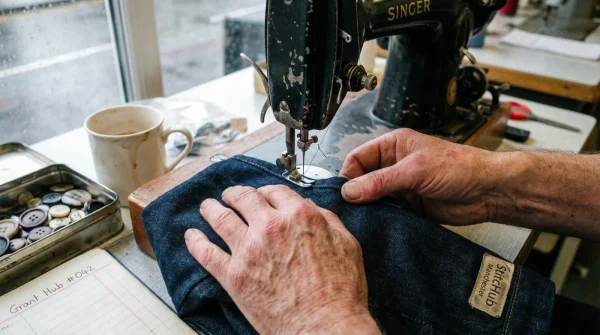
Navigating this new era of high street shopping requires treating off-the-rack garments as unfinished raw materials rather than completed products. If you find yourself holding a dress that conforms to the new rigid sizing metrics, you must implement a systematic tailoring approach. Taking a garment to a professional tailor is ideal, but basic home alterations can save you hundreds of pounds over a season. The secret to a successful alteration lies in respecting the fabric’s grainline and understanding stitch tension. For lightweight summer dresses made from viscose or polyester blends, experts recommend using a standard universal needle (size 80/12) and setting your machine to a precise 2.5-millimetre stitch length. Anything shorter risks puckering the delicate fabric, while anything longer will result in weak seams that split under daily wear.
The Top 3 Essential Alteration Techniques
To successfully adapt these new rigid blocks to a human body, focus on these three primary interventions. Firstly, mastering the fisheye dart. If the dress features the new, wider waist metric but fits your bust and hips, inserting two vertical fisheye darts at the lower back can instantly remove up to 4 centimetres of excess fabric without disrupting the side seams. Secondly, elevating the shoulder seam. If the new lowered armholes are exposing your undergarments, unpicking the shoulder seam and taking it up by exactly 1.5 centimetres will raise the entire bodice, correcting the scye depth. Thirdly, adjusting the side seams. When taking in a dress, never simply sew a straight line down the side. You must grade the seam gently, blending the new stitches into the original seam line over a distance of at least 5 centimetres to prevent unsightly fabric bulges.
| Alteration Stage | What To Look For (Best Practice) | What To Avoid (Critical Errors) |
|---|---|---|
| Preparation & Pinning | Pinning the garment inside-out along the natural grainline to ensure symmetry. | Pinning too tightly over existing seams, which distorts the fabric tension. |
| Machine Stitching | Using a precise 2.5mm straight stitch with matching high-tensile polyester thread. | Stretching the fabric manually while feeding it through the sewing machine. |
| Pressing & Finishing | Applying steam at 140 degrees Celsius and using a wooden clapper to set seams flat. | Ironing directly over synthetic poly-blends without a protective pressing cloth. |
Mastering these fundamental alteration rules ensures you will possess a wardrobe that looks exquisitely bespoke, guaranteeing you never fall victim to the high street sizing lottery again.