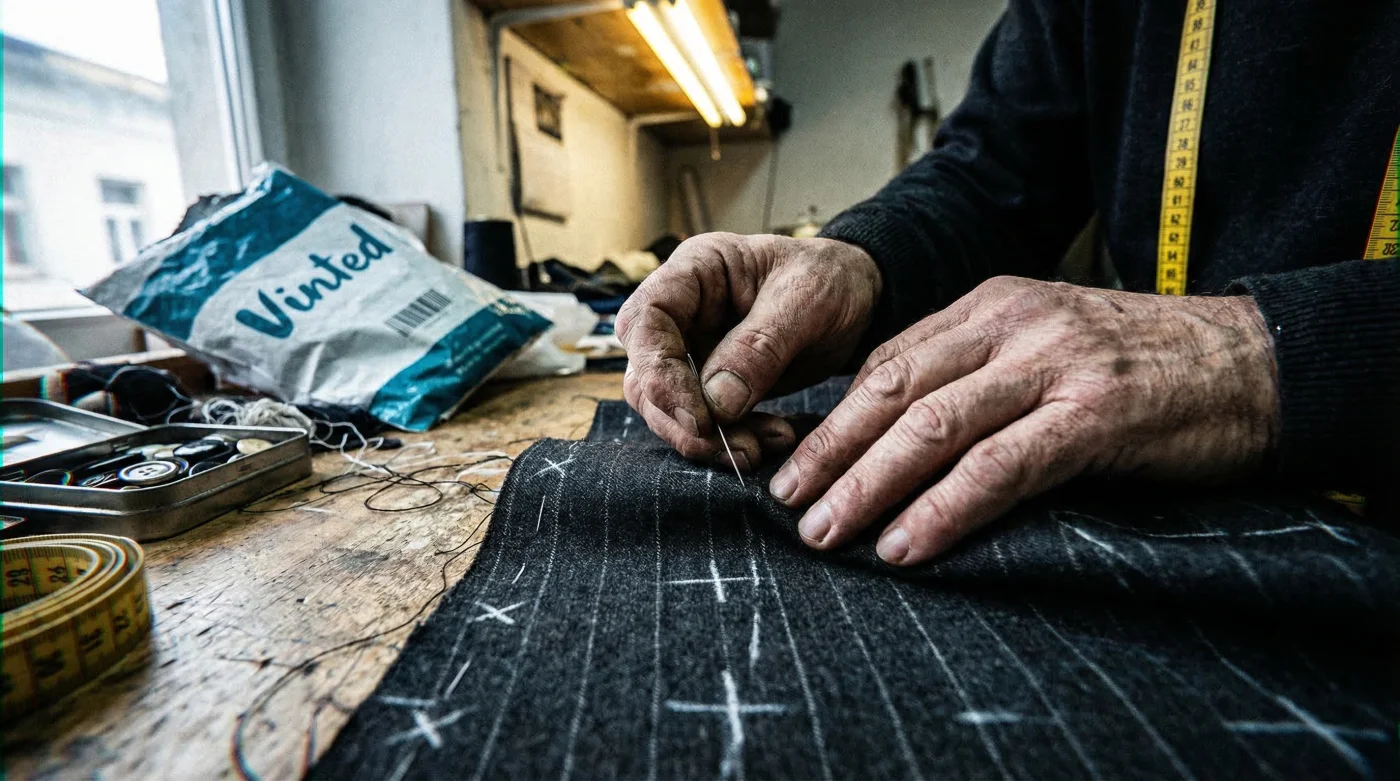
As the autumnal chill sets in and the corporate event season shifts into high gear, men across the United Kingdom are facing a familiar dilemma: how to project absolute authority and impeccable style without liquidating their savings. For decades, the high street offered mediocre compromises, while Savile Row remained an exclusive club for the elite. However, a sudden and massive shift in consumer behaviour has completely shattered this binary. Master tailors and style analysts have identified a record-breaking trend sweeping the nation, fundamentally altering how modern men approach luxury formalwear.
It completely contradicts the long-held belief that second-hand clothes are simply worn exactly as purchased off the virtual hanger. Instead, style-conscious professionals are stealthily securing vintage, top-tier designer garments for mere fractions of their original retail price, only to deploy one highly specific, hidden habit before ever stepping out in public. This transformative post-purchase strategy is currently triggering historic demands for bespoke tailoring, leaving high-street retailers baffled and local craftsmen booked solid for months.
The Vinted Renaissance: Why Off-the-Peg is Dead
The menswear landscape has experienced a seismic paradigm shift. Sales data from leading circular economy platforms reveals that transactions for pre-loved luxury suiting—from heritage brands like Brioni, Canali, and Zegna—have skyrocketed. The catalyst behind this is Vinted, which has democratised access to ultra-premium textiles. However, the secret to this phenomenon is not merely the acquisition of a cheap designer label, but the immediate, calculated diversion of those savings into professional bespoke tapering. Men are deliberately purchasing garments that are one or two sizes too large, capitalising on the superior drape of vintage worsted wools, and employing local artisans to sculpt the excess fabric to their precise anatomical dimensions.
| Target Audience Profile | Primary Wardrobe Goal | The Vinted & Tailoring Benefit |
|---|---|---|
| The Corporate Climber | Project executive presence and authority | Secures a £2,500 Savile Row aesthetic for under £200, allowing budget for aggressive waist suppression. |
| The Vintage Purist | Access to heavy-weight, extinct heritage fabrics | Bypasses modern, flimsy poly-blends in favour of robust tweeds that drape flawlessly after resizing. |
| The Sustainable Professional | Reduce carbon footprint without sacrificing style | Engages in a circular economy while supporting local, independent tailoring businesses in their community. |
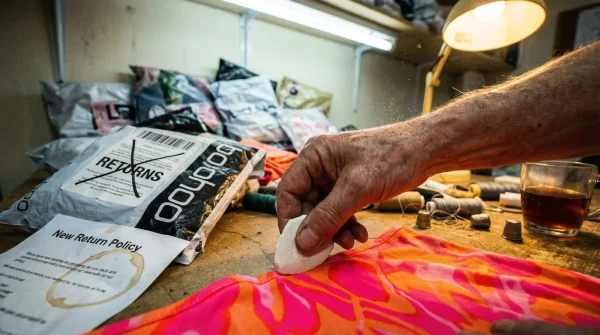
- I watched Primark fast fashion fabrics melt instantly under industrial presses
- Wed2B bridal gowns flood independent tailors following massive high street sales
- eBay UK removing fashion seller fees sparks unprecedented local tailoring demand
- YKK metal zippers stop sticking permanently applying clear unscented candle wax
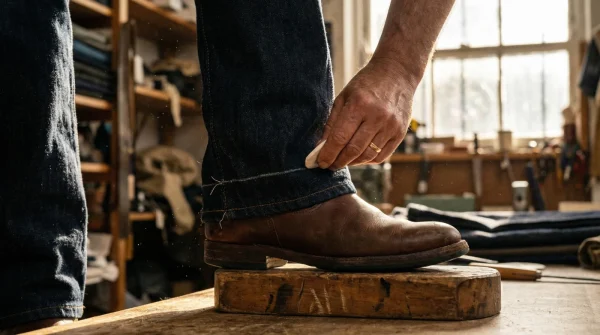
- Marks and Spencer trousers hang perfectly adding hidden lead hem weights
The Anatomy of Alteration: What Makes a Resized Suit Look Bespoke?
Transforming a boxy 1990s silhouette into a razor-sharp, modern masterpiece requires profound technical intervention. Expert tailors note that true bespoke aesthetics rely on the interplay between the garment’s canvas and the wearer’s unique musculoskeletal structure. When a high-end suit is sent for tapering, the craftsman essentially deconstructs the garment, recalibrating the tension across the chest and the pitch of the sleeves. This is where scientific precision meets artistry. To ensure you are communicating effectively with your tailor, it is crucial to understand the diagnostic relationship between poor fit and structural faults.
- Symptom: Unseemly collar gap at the back of the neck = Cause: A critical discrepancy between the jacket’s neck slope and the wearer’s natural posture, requiring a complex collar lowering.
- Symptom: Unflattering ‘boxy’ appearance around the midsection = Cause: Inadequate waist suppression, necessitating the deepening of the side seams and back darts to create a pronounced ‘V’ shape.
- Symptom: Fabric pooling excessively around the ankles = Cause: Incorrect trouser break calculation, which must be remedied by a precise hemming tailored to the exact millimetre of the wearer’s preferred footwear.
- Symptom: Deep divots directly below the shoulder seam = Cause: An armscye (armhole) mismatch with the wearer’s acromion process, indicating the shoulder width of the jacket is fundamentally too wide.
| Alteration Type | Technical Mechanism / Safe Tolerance | Estimated Cost (GBP) | Optimal Processing Time |
|---|---|---|---|
| Waist Tapering (Jacket) | Pinning the side seams and back darts. Safe tolerance: up to 5 centimetres (2 inches). | £35 – £55 | 5 to 7 Days |
| Sleeve Shortening (From Crown) | Removing the sleeve at the armscye to preserve working cuff buttons. Tolerance: 2 to 4 centimetres. | £75 – £120 | 10 to 14 Days |
| Trouser Tapering | Reducing the width from the knee down to a 38-centimetre hem circumference. | £25 – £40 | 3 to 5 Days |
Understanding these intricate structural adjustments empowers you to identify which second-hand garments are actually worth your hard-earned investment.
The Buyer’s Blueprint: Navigating the Second-Hand Luxury Market
Success on Vinted relies on surgical precision during the procurement phase. Not every discounted designer suit can be salvaged by a tailor. The golden rule of the bespoke tapering trend is understanding the limits of fabric architecture. A master tailor can perform miracles with excess fabric, but they cannot conjure wool from thin air. Therefore, evaluating the internal construction, such as the horsehair canvas and the seam allowances, becomes your primary directive. High-resolution photographs and direct messaging with sellers to acquire precise measurements are non-negotiable steps before finalising any purchase.
The Top 3 Golden Rules for Appraising Pre-Loved Menswear
- Rule 1: The Shoulders are Sacred. Always ensure the jacket fits perfectly across the shoulders. Altering the shoulder width is prohibitively expensive and often destroys the jacket’s intended structural integrity.
- Rule 2: Excess Fabric is your Greatest Ally. It is fundamentally easier, and cheaper, for a tailor to take a garment in rather than let it out. Seek garments that are marginally larger than your frame.
- Rule 3: Investigate the Canvas Construction. Ask the seller if the suit features a half-canvas or full-canvas construction. Avoid fused (glued) linings, as they bubble over time and render high-end tailoring redundant.
| Quality Indicator | What to Actively Look For | Red Flags to Avoid |
|---|---|---|
| Fabric Composition | 100% Worsted Wool, Mohair blends, or heavy-weight Scottish Tweed. Look for a robust, natural sheen. | Polyester blends, visible shiny patches on the elbows or seat (indicating severe wear and fabric degradation). |
| Seam Allowance | A minimum of 2.5 centimetres of extra fabric visible on the inside seams of the trousers. | Trimmed internal seams, leaving zero room for essential adjustments if the garment is slightly too tight. |
| Lapel Roll | A voluminous, natural curve (the lapel roll) that extends smoothly down to the top button. | A harsh, flat crease pressed completely flat against the chest, indicating cheap fusing or poor dry-cleaning. |
Mastering these stringent procurement rules is the ultimate secret to unlocking a world-class wardrobe on a high-street budget.
The Economic and Psychological Impact of the Perfect Fit
The resurgence of bespoke tailoring driven by Vinted is not merely an economic loophole; it is a profound psychological tool. Behavioural psychologists and image consultants have long documented the principle of ‘enclothed cognition’—the phenomenon where the precise fit and quality of our clothing directly influence our cognitive processes and confidence levels. Wearing a suit that has been mathematically mapped to your body’s topography triggers a powerful internal shift. Furthermore, this trend represents a massive victory for local economies. By redirecting funds from fast-fashion conglomerates into the hands of highly skilled, independent UK tailors, consumers are revitalising a heritage craft that was dangerously close to fading into obscurity. The result is a highly sustainable, impeccably styled workforce that proves absolute luxury is no longer defined by the price tag, but by the precision of the fit.